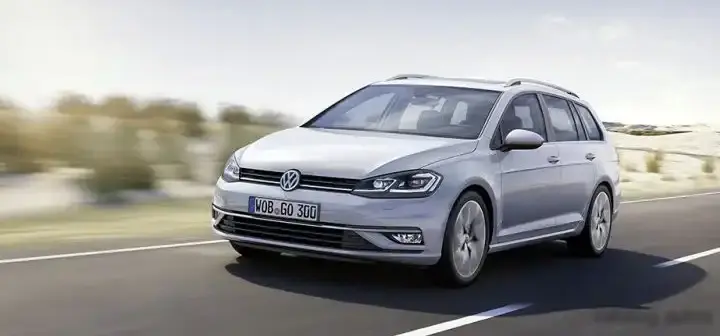
The Volkswagen Golf VII Variant 1.6 TDI (115 hp) represents a significant offering within the seventh generation Golf lineup, specifically the facelifted model introduced in April 2017 and continuing through 2019. Positioned as a fuel-efficient and practical option, this variant catered to buyers seeking the versatility of a station wagon (estate) body style combined with a diesel engine known for its economy. It played a key role in Volkswagen’s strategy to offer a broad range of Golf models to suit diverse customer needs, particularly in European markets where wagons remain highly popular. This specific configuration, with its 1.6-liter diesel engine and five-speed manual transmission, aimed to balance affordability with acceptable performance and low running costs.
Technical Specifications
| Brand | Volkswagen |
| Model | Golf |
| Generation | Golf VII Variant (facelift 2017) |
| Type (Engine) | 1.6 TDI (115 Hp) |
| Start of production | April, 2017 |
| End of production | 2019 |
| Powertrain Architecture | Internal Combustion engine |
| Body type | Station wagon (estate) |
| Seats | 5 |
| Doors | 5 |
| Fuel consumption (urban) | 4.6-4.7 l/100 km (51.1 – 50 US mpg, 61.4 – 60.1 UK mpg, 21.7 – 21.3 km/l) |
| Fuel consumption (extra urban) | 3.8-3.9 l/100 km (61.9 – 60.3 US mpg, 74.3 – 72.4 UK mpg, 26.3 – 25.6 km/l) |
| Fuel consumption (combined) | 4.1-4.2 l/100 km (57.4 – 56 US mpg, 68.9 – 67.3 UK mpg, 24.4 – 23.8 km/l) |
| CO2 emissions | 106-109 g/km |
| Fuel Type | Diesel |
| Acceleration 0 – 100 km/h | 10.7 sec |
| Acceleration 0 – 62 mph | 10.7 sec |
| Acceleration 0 – 60 mph | 10.2 sec |
| Maximum speed | 200 km/h (124.27 mph) |
| Emission standard | Euro 6 |
| Weight-to-power ratio | 11.3 kg/Hp, 88.4 Hp/tonne |
| Weight-to-torque ratio | 5.2 kg/Nm, 192.2 Nm/tonne |
| Power | 115 Hp @ 3250-4000 rpm |
| Power per litre | 72 Hp/l |
| Torque | 250 Nm @ 1500-3200 rpm (184.39 lb.-ft. @ 1500-3200 rpm) |
| Engine layout | Front, Transverse |
| Engine Model/Code | DDYA, DGTE |
| Engine displacement | 1598 cm3 (97.52 cu. in.) |
| Number of cylinders | 4 |
| Engine configuration | Inline |
| Number of valves per cylinder | 4 |
| Fuel injection system | Diesel Commonrail |
| Engine aspiration | Turbocharger, Intercooler |
| Engine oil capacity | 4.7 l (4.97 US qt | 4.14 UK qt) |
| Kerb Weight | 1301 kg (2868.21 lbs.) |
| Max. weight | 1930 kg (4254.92 lbs.) |
| Max load | 629 kg (1386.71 lbs.) |
| Trunk (boot) space – minimum | 605 l (21.37 cu. ft.) |
| Trunk (boot) space – maximum | 1620 l (57.21 cu. ft.) |
| Fuel tank capacity | 50 l (13.21 US gal | 11 UK gal) |
| Max. roof load | 75 kg (165.35 lbs.) |
| Permitted trailer load with brakes (8%) | 1800 kg (3968.32 lbs.) |
| Permitted trailer load with brakes (12%) | 1500 kg (3306.93 lbs.) |
| Permitted trailer load without brakes | 680 kg (1499.14 lbs.) |
| Permitted towbar download | 80 kg (176.37 lbs.) |
| Length | 4567 mm (179.8 in.) |
| Width | 1799 mm (70.83 in.) |
| Width including mirrors | 2027 mm (79.8 in.) |
| Height | 1515 mm (59.65 in.) |
| Wheelbase | 2620 mm (103.15 in.) |
| Front track | 1549 mm (60.98 in.) |
| Rear (Back) track | 1520 mm (59.84 in.) |
| Ride height (ground clearance) | 140 mm (5.51 in.) |
| Minimum turning circle (turning diameter) | 10.9 m (35.76 ft.) |
| Drive wheel | Front wheel drive |
| Number of gears and type of gearbox | 5 gears, manual transmission |
| Front brakes | Ventilated discs |
| Rear brakes | Disc |
| Assisting systems | ABS (Anti-lock braking system) |
| Steering type | Steering rack and pinion |
| Power steering | Electric Steering |
| Tires size | 205/55 R16 |
| Wheel rims size | 6.5 J x 16 |
INTRODUCTION
The Golf VII Variant 1.6 TDI (115 hp) is a front-wheel-drive, five-door station wagon that formed part of Volkswagen’s comprehensive Golf Mk7 range. Introduced during the 2017 facelift, this model aimed to provide a practical and economical option for families and individuals needing extra cargo space. Built on the versatile MQB platform (specifically the 1HX0/A3 variant), it shared its core structure with other models in the Volkswagen Group, including the Audi A3 and SEAT Leon. The 1.6 TDI engine was a mainstay of the Golf lineup, offering a balance between fuel efficiency and acceptable performance, making it a popular choice in Europe where diesel engines were favored.
Powertrain & Engine Architecture
At the heart of the Golf VII Variant 1.6 TDI lies the 1.6-liter inline-four cylinder diesel engine, identified by engine codes DDYA or DGTE. This engine utilizes a common rail direct injection system, delivering fuel directly into the combustion chamber at extremely high pressure for optimized combustion. A turbocharger with an intercooler is employed to boost power output and improve torque across a wider rev range. The engine features four valves per cylinder and is known for its relatively quiet operation compared to older diesel designs. The five-speed manual transmission was the standard offering for this variant, providing a straightforward and reliable gear-changing experience. The transmission’s gear ratios were tuned to prioritize fuel economy, with a relatively long final drive.
Driving Characteristics
The 115 hp output and 250 Nm (184 lb-ft) of torque delivered by the 1.6 TDI engine provided adequate, though not exhilarating, performance. Acceleration from 0-60 mph took around 10.2 seconds, and top speed was limited to 124 mph. In real-world driving, the engine felt most comfortable in the mid-range, offering sufficient power for overtaking and highway cruising. The five-speed manual transmission, while simple, meant that engine speeds could be relatively high at highway speeds, potentially impacting refinement. Compared to higher-output Golf variants like the GTI or even the 2.0 TDI, the 1.6 TDI felt noticeably less powerful, but it excelled in fuel economy, achieving combined figures of around 56-57 mpg.
Equipment & Trim Levels
The Golf VII Variant 1.6 TDI (115 hp) typically came equipped with a reasonable level of standard features. These included air conditioning, electric front windows, a touchscreen infotainment system, and alloy wheels. Safety features such as ABS, electronic stability control, and multiple airbags were also standard. Higher trim levels offered additional features like automatic climate control, parking sensors, a larger infotainment screen with navigation, and upgraded interior upholstery. Optional extras included a panoramic sunroof, adaptive cruise control, and a premium sound system.
Chassis & Braking
The Golf VII Variant’s chassis featured independent suspension at the front (MacPherson strut) and a multi-link rear suspension, providing a comfortable and controlled ride. The braking system consisted of ventilated discs at the front and solid discs at the rear. ABS (Anti-lock Braking System) was standard, enhancing braking performance and stability. The suspension setup was tuned to prioritize comfort and ride quality, making it well-suited for long journeys. Stabilizer bars were fitted to both the front and rear axles to reduce body roll during cornering.
Market Reception & Comparison
The Golf VII Variant 1.6 TDI (115 hp) was generally well-received by automotive critics as a practical and economical choice. It was praised for its fuel efficiency, spacious interior, and comfortable ride. However, some reviewers noted that the engine lacked outright power, particularly when fully loaded. Compared to other Golf variants, such as the 2.0 TDI, the 1.6 TDI offered lower running costs but compromised on performance. Against competitors like the Ford Focus Estate and Peugeot 308 SW, the Golf Variant 1.6 TDI held its own in terms of fuel economy and overall refinement.
Legacy
The 1.6 TDI engine, while not known for being particularly exciting, proved to be a reliable and durable powertrain. The Golf VII Variant 1.6 TDI (115 hp) remains a popular choice in the used car market, particularly for buyers seeking an affordable and economical station wagon. While some early 1.6 TDI engines were affected by Dieselgate emissions issues, many have been updated with software fixes. Regular maintenance, including oil changes and filter replacements, is crucial for ensuring the long-term reliability of this powertrain. Today, these models represent a good value proposition for those prioritizing practicality and fuel efficiency over outright performance.