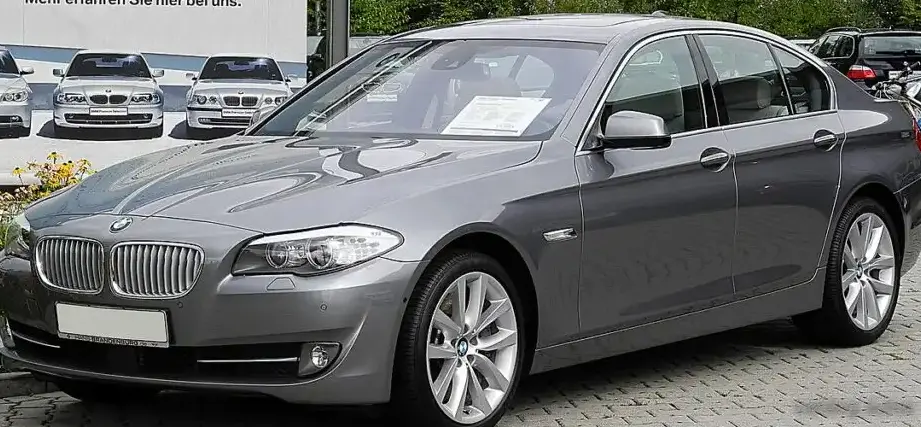
Technical Specifications
| Brand | BMW |
| Model | 5 Series |
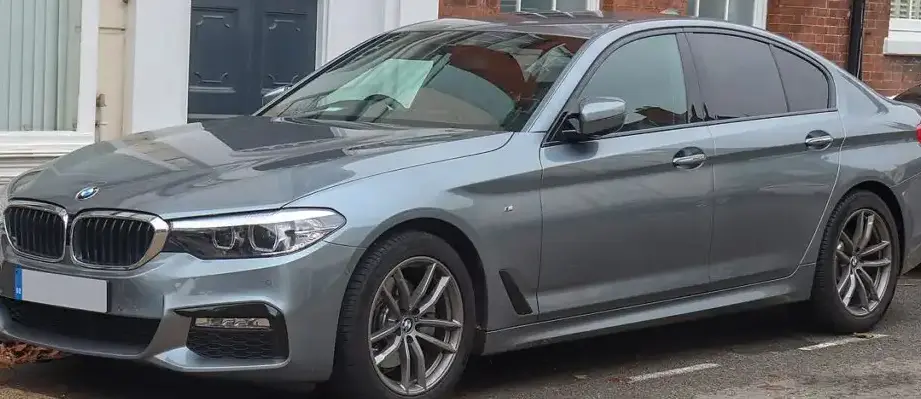
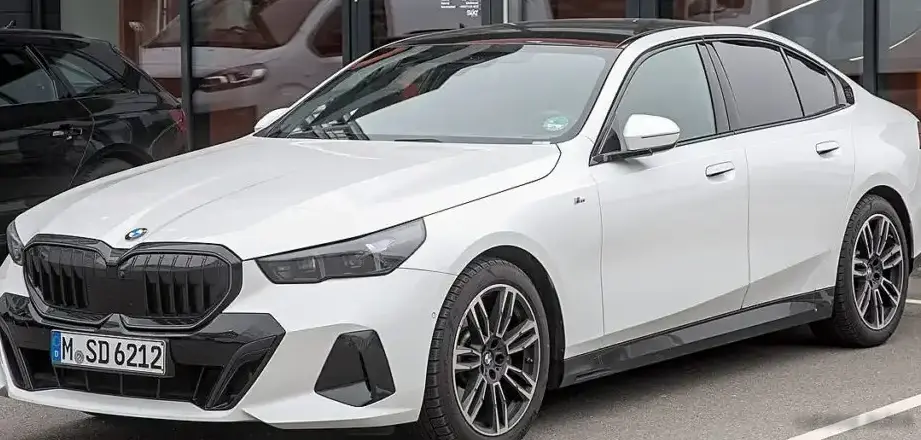
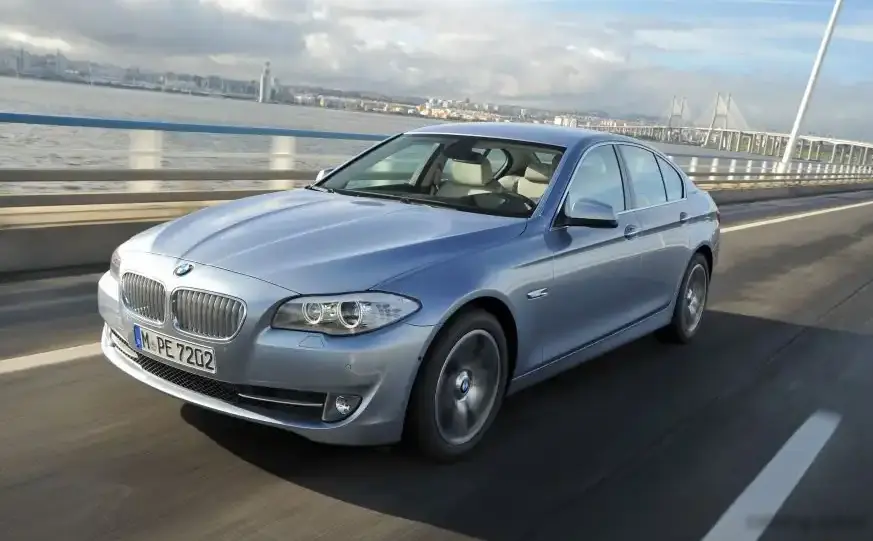
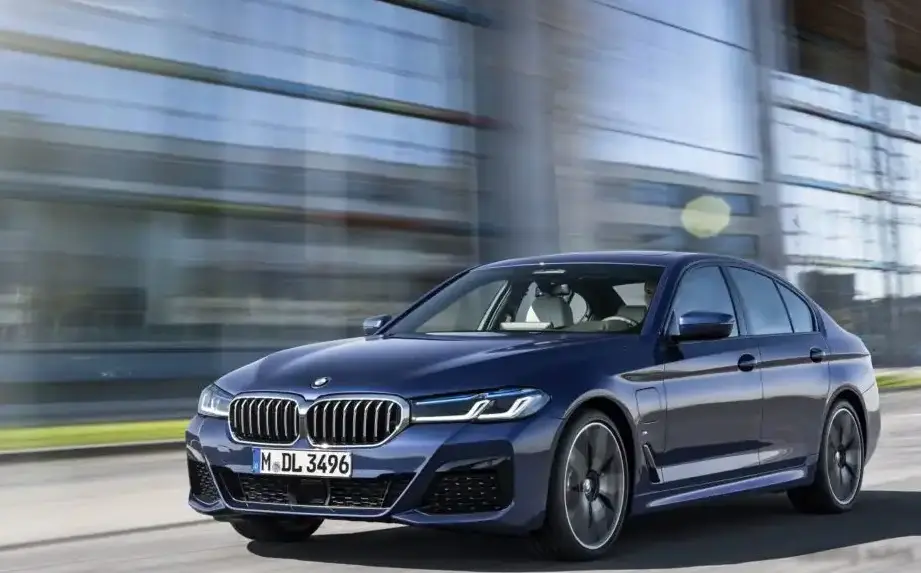
| Generation | 5 Series Sedan (G30 LCI, facelift 2020) |
| Type (Engine) | 520i (184 Hp) Mild Hybrid Steptronic |
| Start of production | 2020 |
| End of production | 2023 |
| Powertrain Architecture | MHEV (Mild Hybrid Electric Vehicle) |
| Body type | Sedan |
| Seats | 5 |
| Doors | 4 |
| Fuel consumption (urban) | 6.5-6.8 l/100 km (36.2 – 34.6 US mpg) |
| Fuel consumption (extra urban) | 4.6-4.7 l/100 km (51.1 – 50 US mpg) |
| Fuel consumption (combined) | 5.3-5.5 l/100 km (44.4 – 42.8 US mpg) |
| CO2 emissions | 120-125 g/km |
| Fuel Type | Petrol (Gasoline) |
| Acceleration 0 – 100 km/h | 7.9 sec |
| Acceleration 0 – 62 mph | 7.9 sec |
| Acceleration 0 – 60 mph | 7.5 sec |
| Maximum speed | 235 km/h (146.02 mph) |
| Emission standard | EURO 6d |
| Weight-to-power ratio | 8.8 kg/Hp |
| Weight-to-torque ratio | 5.6 kg/Nm |
| Gross battery capacity | 0.528 kWh |
| Electric motor power | 11 Hp |
| Power | 184 Hp @ 5000-6500 rpm |
| Torque | 290 Nm @ 1350-4250 rpm (213.89 lb.-ft. @ 1350-4250 rpm) |
| Engine layout | Front, Longitudinal |
| Engine Model/Code | B48B20A |
| Engine displacement | 1998 cm3 (121.93 cu. in.) |
| Number of cylinders | 4 |
| Engine configuration | Inline |
| Cylinder Bore | 82 mm (3.23 in.) |
| Piston Stroke | 94.6 mm (3.72 in.) |
| Compression ratio | 11:1 |
| Number of valves per cylinder | 4 |
| Fuel injection system | Direct injection |
| Engine aspiration | Twin-power turbo, Intercooler |
| Valvetrain | VALVETRONIC |
| Engine oil capacity | 5.25 l (5.55 US qt | 4.62 UK qt) |
| Coolant | 9.9 l (10.46 US qt | 8.71 UK qt) |
| Kerb Weight | 1610 kg (3549.44 lbs.) |
| Max. weight | 2285 kg (5037.56 lbs.) |
| Max load | 675 kg (1488.12 lbs.) |
| Trunk (boot) space – minimum | 530 l (18.72 cu. ft.) |
| Fuel tank capacity | 68 l (17.96 US gal | 14.96 UK gal) |
| Max. roof load | 100 kg (220.46 lbs.) |
| Permitted trailer load with brakes (12%) | 2000 kg (4409.25 lbs.) |
| Permitted trailer load without brakes | 750 kg (1653.47 lbs.) |
| Permitted towbar download | 90 kg (198.42 lbs.) |
| Length | 4963 mm (195.39 in.) |
| Width | 1868 mm (73.54 in.) |
| Height | 1479 mm (58.23 in.) |
| Wheelbase | 2975 mm (117.13 in.) |
| Front track | 1605 mm (63.19 in.) |
| Rear (Back) track | 1630 mm (64.17 in.) |
| Ride height (ground clearance) | 144 mm (5.67 in.) |
| Drag coefficient (Cd) | 0.23 |
| Minimum turning circle (turning diameter) | 12.0 m (39.37 ft.) |
| Drivetrain Architecture | Rear wheel drive. MHEV. ICE and electric motor drive rear wheels. |
| Number of gears and type of gearbox | 8 gears, automatic transmission Steptronic |
| Front suspension | Double wishbone |
| Rear suspension | Independent multi-link suspension |
| Front brakes | Ventilated discs |
| Rear brakes | Ventilated discs |
| Assisting systems | ABS (Anti-lock braking system) |
| Steering type | Steering rack and pinion |
| Power steering | Electric Steering |
| Tires size | 225/55 R17 101Y XL |
| Wheel rims size | 7.5J x 17 |
The BMW 520i (G30 LCI) represents a significant step in blending efficiency with the luxury and driving experience expected from the 5 Series. Introduced as part of the 2020 facelift, this model incorporates a 48V mild-hybrid system to enhance fuel economy and reduce emissions. The G30 generation, launched in 2016, aimed to recapture the sporting character of earlier 5 Series models while incorporating modern technology and comfort features. The 520i specifically targeted buyers seeking a refined and economical sedan without sacrificing the BMW badge’s prestige. It occupied the entry-level position in the G30 range, below the 530i and higher-performance models like the M550i.
Powertrain & Engine Architecture
At the heart of the 520i lies the BMW B48B20A 2.0-liter inline-four cylinder engine. This engine utilizes direct fuel injection and a single twin-scroll turbocharger, along with BMW’s VALVETRONIC variable valve timing and variable valve lift technology. The B48 engine is known for its responsiveness and efficiency. The addition of the 48V mild-hybrid system, featuring a 48V starter-generator, allows for extended engine-off coasting, regenerative braking, and a smoother start-stop function. This system adds approximately 11 horsepower and assists the engine during acceleration. The Steptronic eight-speed automatic transmission is a crucial component, offering smooth and quick shifts. It’s programmed for efficiency in default modes but can be shifted manually via steering wheel paddles or the gear selector. The transmission’s gear ratios are optimized for both fuel economy and responsive acceleration, with a relatively tall final drive to aid highway cruising.
Driving Characteristics
The 520i delivers a comfortable and refined driving experience. While not as overtly sporty as the 530i or M550i, it provides ample power for everyday driving and highway overtaking. The mild-hybrid system contributes to a seamless power delivery, masking some of the turbo lag inherent in smaller displacement engines. Acceleration from 0-60 mph takes approximately 7.5 seconds. Compared to manual transmission versions (which were less common in this configuration), the Steptronic automatic prioritizes smoothness and ease of use. The automatic transmission, while efficient, can sometimes feel less engaging than a manual, particularly for drivers seeking a more connected driving experience. The 520i’s suspension tuning leans towards comfort, providing a compliant ride over most road surfaces.
Equipment & Trim Levels
The 520i typically came standard with features such as BMW’s iDrive infotainment system with a 10.25-inch touchscreen display, navigation, Apple CarPlay and Android Auto compatibility, and a suite of driver-assistance systems including lane departure warning and forward collision warning. Interior upholstery was typically Sensatec leatherette, with optional upgrades to genuine leather available. Standard trim included wood or aluminum interior accents. Common optional extras included a premium sound system, a head-up display, adaptive cruise control, and parking assistance features. The 520i was often offered in various packages, such as the Luxury Line or Sport Line, which added cosmetic enhancements and additional features.
Chassis & Braking
The G30 5 Series utilizes a sophisticated chassis design featuring a double-wishbone front suspension and an independent multi-link rear suspension. This setup provides a good balance between ride comfort and handling precision. The 520i typically came equipped with ventilated disc brakes on all four wheels, providing adequate stopping power for its weight class. ABS (Anti-lock Braking System) and electronic stability control are standard features. The rear suspension geometry and stabilizer bar thickness were tuned to accommodate the 520i’s lower weight compared to higher-powered models. The steering system is an electric power-steering setup, offering precise and responsive control.
Market Reception & Comparison
The 520i was generally well-received by automotive critics as a practical and efficient entry point into the 5 Series range. It was praised for its comfortable ride, refined interior, and fuel economy. However, some reviewers noted that the 2.0-liter engine, while capable, lacked the outright performance of the 530i’s six-cylinder engine. Compared to the 530i, the 520i offered significantly better fuel economy but at the expense of acceleration and overall driving excitement. The 520d (diesel variant) was a popular alternative in Europe, offering even greater fuel efficiency but with a different driving character. The 520i’s reliability has been generally good, with the B48 engine proving to be a robust and dependable unit.
Legacy
The BMW 520i (G30 LCI) represents a key step in BMW’s strategy to offer more fuel-efficient and environmentally friendly vehicles. The integration of the 48V mild-hybrid system demonstrated BMW’s commitment to electrification and laid the groundwork for future hybrid and electric models. On the used car market, the 520i remains a popular choice for buyers seeking a well-equipped and reliable executive sedan at a reasonable price. Its combination of comfort, efficiency, and the BMW brand reputation ensures continued demand. The B48 engine’s proven reliability and relatively low maintenance costs contribute to its long-term appeal.