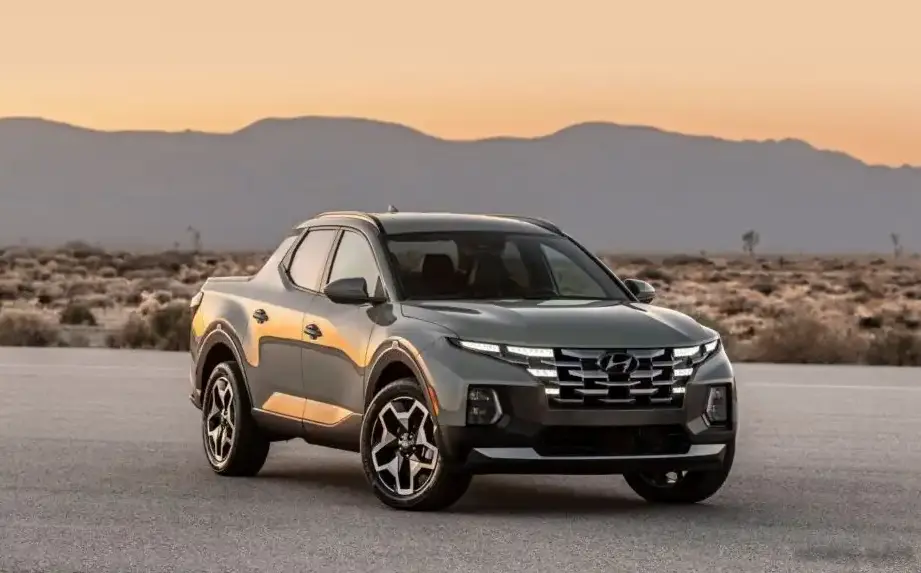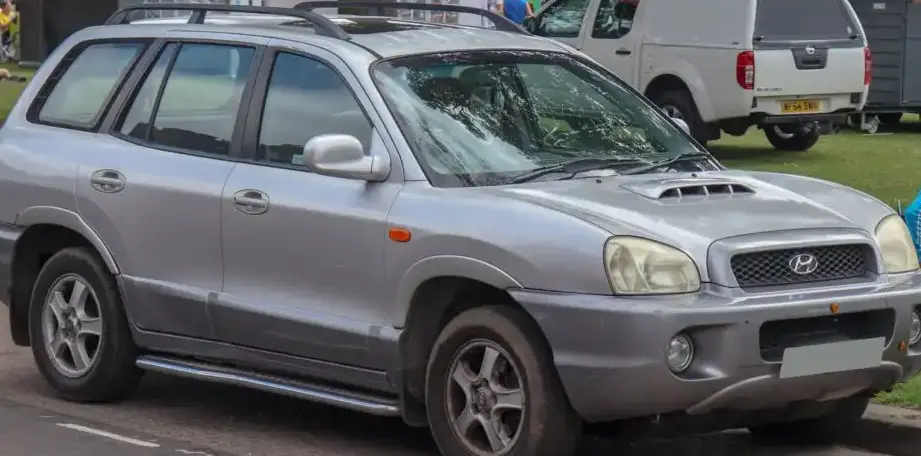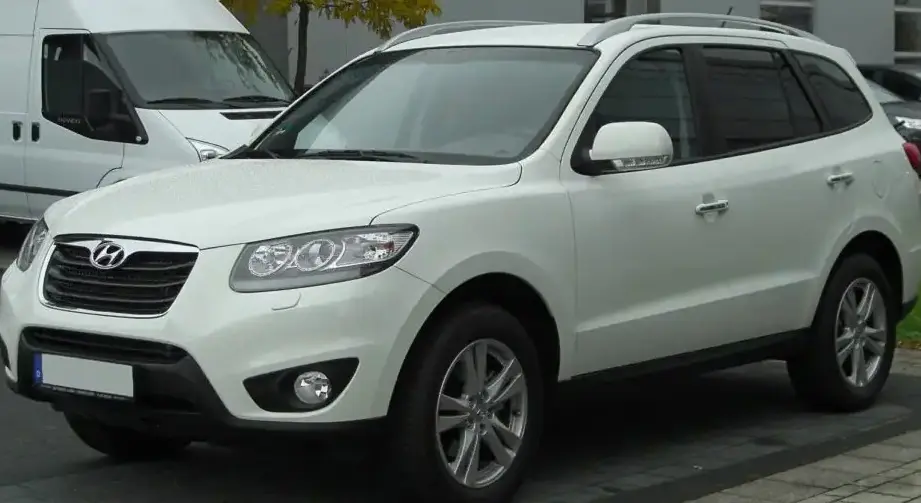
The Hyundai Santa Fe II (CM) facelift, specifically the 2.4-liter variant producing 174 horsepower, was a key model in Hyundai’s lineup from 2009 to 2012. Positioned as a mid-range offering within the second-generation Santa Fe (CM) series, this version aimed to balance affordability with a reasonable level of equipment and performance. The CM facelift brought styling updates and refinements to the original Santa Fe, enhancing its appeal in the competitive crossover SUV segment. This particular engine and transmission combination was primarily sold in North America and select international markets, offering a gasoline-powered alternative to diesel options available in Europe and other regions.
Technical Specifications
| Brand | Hyundai |
| Model | Santa Fe |
| Generation | Santa Fe II (CM, facelift 2009) |
| Type (Engine) | 2.4 (174 Hp) |
| Start of production | 2009 |
| End of production | 2012 |
| Powertrain Architecture | Internal Combustion engine |
| Body type | SUV |
| Seats | 5 |
| Doors | 5 |
| Fuel consumption (economy) – urban (NEDC) | 11.5 l/100 km (20.5 US mpg, 24.6 UK mpg, 8.7 km/l) |
| Fuel consumption (economy) – extra urban (NEDC) | 6.8 l/100 km (34.6 US mpg, 41.5 UK mpg, 14.7 km/l) |
| Fuel consumption (economy) – combined (NEDC) | 8.5 l/100 km (27.7 US mpg, 33.2 UK mpg, 11.8 km/l) |
| CO2 emissions (NEDC) | 203 g/km |
| Fuel Type | Petrol (Gasoline) |
| Acceleration 0 – 100 km/h | 10.7 sec |
| Acceleration 0 – 62 mph | 10.7 sec |
| Acceleration 0 – 60 mph | 10.2 sec |
| Maximum speed | 190 km/h (118.06 mph) |
| Emission standard | Euro 5 |
| Weight-to-power ratio | 9.5 kg/Hp, 105.5 Hp/tonne |
| Weight-to-torque ratio | 7.3 kg/Nm, 137 Nm/tonne |
| Power | 174 Hp @ 6000 rpm |
| Power per litre | 73.8 Hp/l |
| Torque | 226 Nm @ 3750 rpm (166.69 lb.-ft. @ 3750 rpm) |
| Engine layout | Front, Transverse |
| Engine Model/Code | Theta II / G4KE |
| Engine displacement | 2359 cm3 (143.96 cu. in.) |
| Number of cylinders | 4 |
| Engine configuration | Inline |
| Cylinder Bore | 88 mm (3.46 in.) |
| Piston Stroke | 97 mm (3.82 in.) |
| Compression ratio | 10.5:1 |
| Number of valves per cylinder | 4 |
| Fuel injection system | Multi-port manifold injection |
| Engine aspiration | Naturally aspirated engine |
| Valvetrain | DOHC |
| Engine oil capacity | 4.6 l (4.86 US qt | 4.05 UK qt) |
| Coolant | 6.5 l (6.87 US qt | 5.72 UK qt) |
| Kerb Weight | 1650-1730 kg (3637.63 – 3814 lbs.) |
| Max. weight | 2505 kg (5522.58 lbs.) |
| Max load | 775-855 kg (1708.58 – 1884.95 lbs.) |
| Trunk (boot) space – minimum | 528 l (18.65 cu. ft.) |
| Fuel tank capacity | 75 l (19.81 US gal | 16.5 UK gal) |
| Max. roof load | 100 kg (220.46 lbs.) |
| Permitted trailer load with brakes (8%) | 2400 kg (5291.09 lbs.) |
| Permitted trailer load with brakes (12%) | 2000 kg (4409.25 lbs.) |
| Permitted trailer load without brakes | 750 kg (1653.47 lbs.) |
| Permitted towbar download | 80 kg (176.37 lbs.) |
| Length | 4660 mm (183.46 in.) |
| Width | 1890 mm (74.41 in.) |
| Height | 1760 mm (69.29 in.) |
| Wheelbase | 2700 mm (106.3 in.) |
| Front track | 1615 mm (63.58 in.) |
| Rear (Back) track | 1620 mm (63.78 in.) |
| Front overhang | 930 mm (36.61 in.) |
| Rear overhang | 1030 mm (40.55 in.) |
| Ride height (ground clearance) | 200 mm (7.87 in.) |
| Drag coefficient (Cd) | 0.38 |
| Minimum turning circle (turning diameter) | 10.9 m (35.76 ft.) |
| Approach angle | 24.6° |
| Departure angle | 21.6° |
| Ramp-over (brakeover) angle | 17.9° |
| Wading depth | 500 mm (19.69 in.) |
| Drivetrain Architecture | The Internal combustion engine (ICE) drives the front wheels of the vehicle. |
| Drive wheel | Front wheel drive |
| Number of gears and type of gearbox | 6 gears, manual transmission |
| Front suspension | Independent, type McPherson with coil spring and anti-roll bar |
| Rear suspension | Independent multi-link spring suspension with stabilizer |
| Front brakes | Ventilated discs |
| Rear brakes | Disc |
| Assisting systems | ABS (Anti-lock braking system) |
| Steering type | Steering rack and pinion |
| Power steering | Hydraulic Steering |
| Tires size | 235/65 R17 |
| Wheel rims size | 7J x 17 |
Powertrain & Engine Architecture
The heart of this Santa Fe variant is the Hyundai Theta II 2.4-liter inline-four cylinder engine, designated G4KE. This engine utilizes a cast iron block with an aluminum cylinder head, a common configuration for balancing durability and weight. The Theta II series represented a significant upgrade over the earlier Theta engine, incorporating dual continuously variable valve timing (D-CVVT) on both intake and exhaust camshafts. This system optimizes valve timing based on engine speed and load, improving both performance and fuel efficiency. Fuel delivery is managed by a multi-port fuel injection system. The engine produces 174 horsepower at 6000 rpm and 226 Nm (166.69 lb-ft) of torque at 3750 rpm. The engine’s relatively high compression ratio of 10.5:1 contributes to its efficiency. The 6-speed manual transmission was standard, offering a balance between fuel economy and driver engagement.
Driving Characteristics
The 2.4-liter Santa Fe offered a comfortable, if not particularly sporty, driving experience. Acceleration from 0-60 mph took around 10.2 seconds, making it adequate for everyday driving but not exceptionally quick. The manual transmission provided decent control, but the engine’s peak torque arriving at 3750 rpm meant that frequent downshifts were necessary for brisk acceleration. Compared to the more powerful V6 options available in the Santa Fe lineup, the 2.4-liter felt noticeably less responsive. However, it offered a smoother and more refined driving experience than the diesel variants, particularly in terms of noise and vibration. The gear ratios were tuned for fuel economy, prioritizing cruising comfort over outright performance.
Equipment & Trim Levels
The 2.4-liter Santa Fe typically came equipped with a respectable array of standard features. These generally included air conditioning, power windows and locks, a basic audio system with CD player and auxiliary input, and cloth upholstery. Higher trim levels added features such as alloy wheels, a sunroof, upgraded audio systems, and leather upholstery. Safety features like ABS, front airbags, and side curtain airbags were standard across the range. Optional extras included a navigation system, rearview camera, and heated seats.
Chassis & Braking
The Santa Fe II utilized a front-wheel-drive platform with independent suspension at all four corners. The front suspension employed a McPherson strut design, while the rear featured a multi-link setup. This configuration provided a comfortable ride quality, absorbing bumps and irregularities in the road surface effectively. The braking system consisted of ventilated discs at the front and solid discs at the rear, providing adequate stopping power for the vehicle’s weight. ABS was standard, enhancing braking performance in emergency situations.
Market Reception & Comparison
The 2.4-liter Santa Fe was generally well-received by critics as a practical and affordable crossover SUV. It offered a good balance of space, comfort, and fuel economy. However, some reviewers noted that the engine lacked the power and refinement of its competitors, particularly those from Japanese manufacturers. Compared to the V6-powered Santa Fe, the 2.4-liter offered better fuel economy but significantly less performance. The diesel variants, available in Europe, provided superior torque and fuel efficiency but often came with a higher price tag.
Legacy
The Hyundai Santa Fe II 2.4-liter has proven to be a relatively reliable vehicle in the used car market. The Theta II engine, while not without its issues (some early versions experienced oil consumption problems), is generally considered durable when properly maintained. The availability of parts and relatively low maintenance costs make it an attractive option for budget-conscious buyers. Today, these vehicles can be found with reasonable mileage and are often valued for their practicality and affordability. The CM facelift Santa Fe helped solidify Hyundai’s reputation for building well-equipped and reliable vehicles, paving the way for the brand’s continued success in the crossover SUV segment.