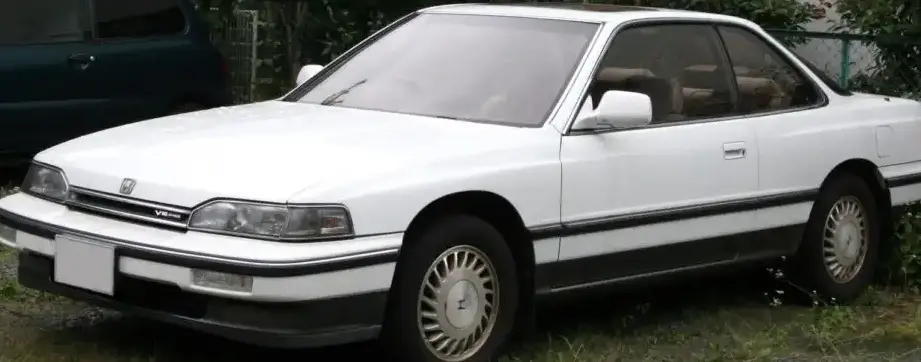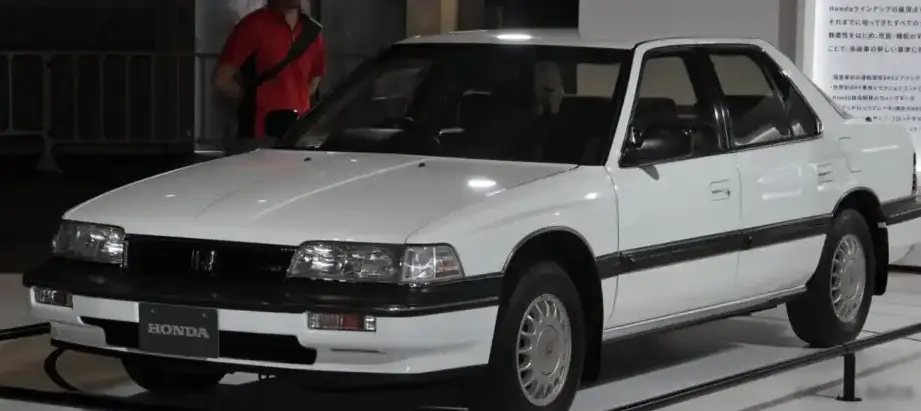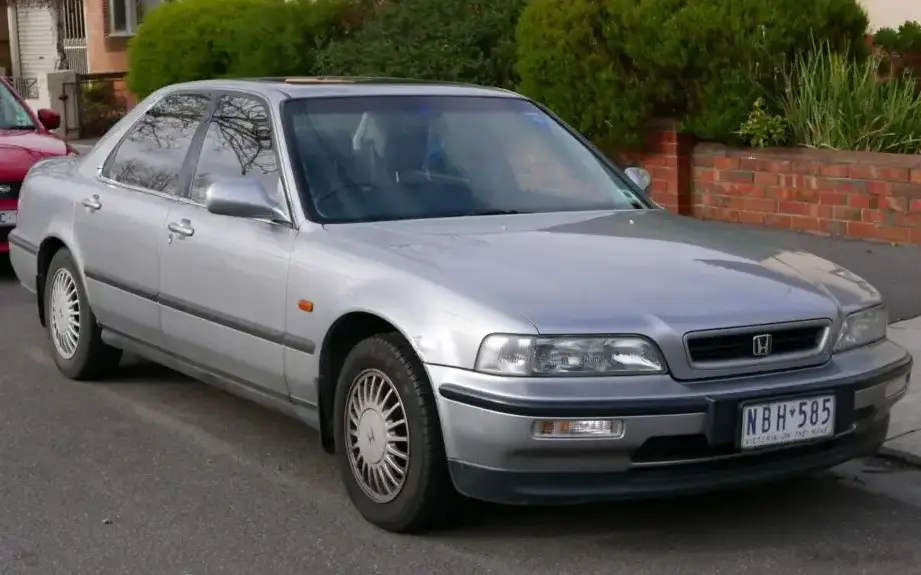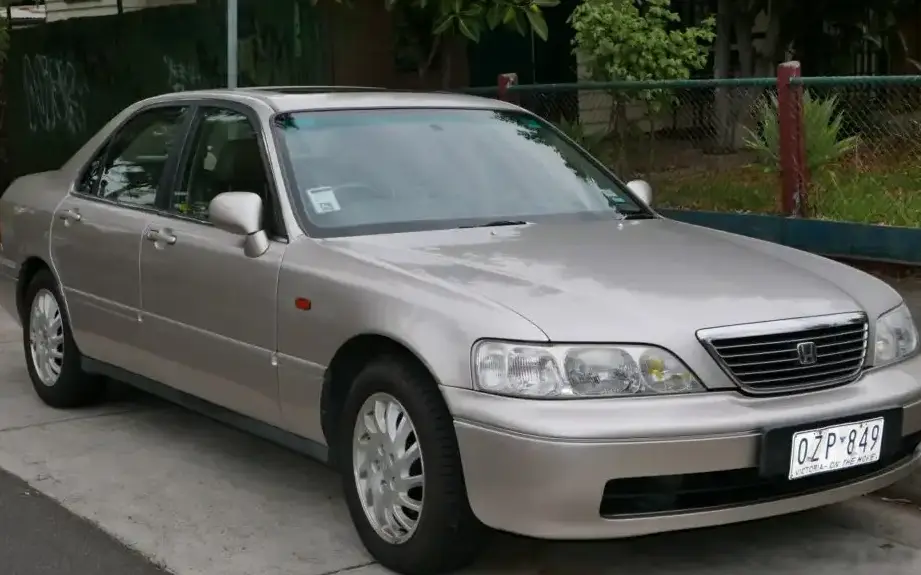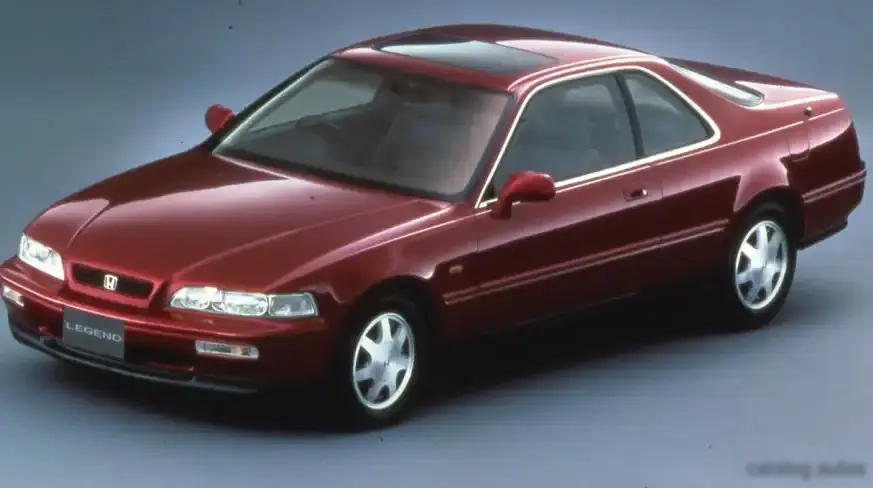
The Honda Legend II Coupe (KA8) 3.2i 24V, produced between 1991 and 1996, represented a sophisticated entry into the personal luxury coupe segment for Honda. This variant, powered by a 3.2-liter V6 engine, was positioned as the performance-oriented offering within the second-generation Legend lineup, which also included sedan models. The KA8 chassis code designates this specific coupe body style. It aimed to blend Honda’s reputation for reliability with a more sporting driving experience and upscale features, primarily targeting the North American market where larger coupes were popular.
Technical Specifications
| Brand | Honda |
| Model | Legend |
| Generation | Legend II Coupe (KA8) |
| Type (Engine) | 3.2i 24V (205 Hp) |
| Start of production | 1991 |
| End of production | 1996 |
| Powertrain Architecture | Internal Combustion engine |
| Body type | Coupe |
| Seats | 5 |
| Doors | 2 |
| Fuel consumption (combined) | 10.8 l/100 km (21.8 US mpg, 26.2 UK mpg, 9.3 km/l) |
| Fuel Type | Petrol (Gasoline) |
| Acceleration 0 – 100 km/h | 7.3 sec |
| Acceleration 0 – 62 mph | 7.3 sec |
| Acceleration 0 – 60 mph | 6.9 sec |
| Maximum speed | 226 km/h (140.43 mph) |
| Weight-to-power ratio | 7.5 kg/Hp, 132.7 Hp/tonne |
| Weight-to-torque ratio | 5.3 kg/Nm, 189.6 Nm/tonne |
| Power | 205 Hp @ 5500 rpm |
| Power per litre | 63.9 Hp/l |
| Torque | 293 Nm @ 4400 rpm (216.11 lb.-ft. @ 4400 rpm) |
| Engine layout | Front, Longitudinal |
| Engine displacement | 3206 cm3 (195.64 cu. in.) |
| Number of cylinders | 6 |
| Engine configuration | V-engine |
| Cylinder Bore | 90 mm (3.54 in.) |
| Piston Stroke | 84 mm (3.31 in.) |
| Compression ratio | 9.6:1 |
| Number of valves per cylinder | 4 |
| Fuel injection system | Multi-port manifold injection |
| Engine aspiration | Naturally aspirated engine |
| Valvetrain | OHC |
| Kerb Weight | 1545 kg (3406.14 lbs.) |
| Max. weight | 2150 kg (4739.94 lbs.) |
| Max load | 605 kg (1333.8 lbs.) |
| Trunk (boot) space – minimum | 417 l (14.73 cu. ft.) |
| Fuel tank capacity | 68 l (17.96 US gal | 14.96 UK gal) |
| Length | 4885 mm (192.32 in.) |
| Width | 1810 mm (71.26 in.) |
| Height | 1370 mm (53.94 in.) |
| Wheelbase | 2830 mm (111.42 in.) |
| Front track | 1550 mm (61.02 in.) |
| Rear (Back) track | 1540 mm (60.63 in.) |
| Drivetrain Architecture | The Internal combustion engine (ICE) drives the front wheels of the vehicle. |
| Drive wheel | Front wheel drive |
| Number of gears and type of gearbox | 5 gears, manual transmission |
| Front suspension | Double wishbone |
| Rear suspension | Double wishbone |
| Front brakes | Ventilated discs |
| Rear brakes | Disc |
| Assisting systems | ABS (Anti-lock braking system) |
| Steering type | Steering rack and pinion |
| Power steering | Hydraulic Steering |
| Tires size | 205/65 R15 |
Powertrain & Engine Architecture
The heart of the Legend II Coupe 3.2i was the Honda G25A engine, a 3.2-liter (3206 cc) naturally aspirated V6. This engine featured a 90-degree V-angle, contributing to a smoother power delivery and reduced vibrations. The engine utilized a single overhead camshaft (OHC) design per cylinder bank, operating four valves per cylinder. Fuel delivery was managed by a multi-port fuel injection system, optimizing combustion efficiency. The G25A engine was known for its robust construction and relatively high specific output for a naturally aspirated engine of its era. The 5-speed manual transmission was the only transmission option available with this engine, providing a direct connection to the engine’s power.
Driving Characteristics
The 3.2i Coupe offered a noticeably more engaging driving experience than the four-cylinder Legend models. The 205 horsepower and 216 lb-ft of torque provided brisk acceleration, with 0-60 mph times consistently around 6.9 seconds. The manual transmission allowed for precise control over the engine’s powerband, making it enjoyable to drive on winding roads. While not a dedicated sports car, the Legend Coupe offered a good balance of comfort and performance. The front-wheel-drive configuration, while common for its time, did exhibit some understeer when pushed hard, but the well-tuned suspension helped to mitigate this. The gear ratios were well-matched to the engine’s characteristics, providing strong acceleration in each gear.
Equipment & Trim Levels
The Legend II Coupe 3.2i was generally well-equipped, reflecting its positioning as a premium vehicle. Standard features typically included leather upholstery, power-adjustable front seats, a premium sound system, air conditioning, power windows and locks, and an anti-lock braking system (ABS). Optional extras could include a sunroof, upgraded audio systems, and alloy wheels. The interior design was focused on comfort and ergonomics, with a clean and uncluttered dashboard layout. The overall aesthetic aimed for a sophisticated and understated luxury feel.
Chassis & Braking
The KA8 Legend Coupe utilized a front-engine, front-wheel-drive layout. The suspension system employed an independent double wishbone configuration at both the front and rear, providing a comfortable ride and good handling characteristics. Ventilated disc brakes were used at the front, while solid discs were fitted at the rear. The ABS system enhanced braking performance and stability, particularly in adverse conditions. The chassis was designed to provide a good balance of rigidity and weight, contributing to the car’s overall handling dynamics.
Market Reception & Comparison
The Honda Legend II Coupe 3.2i was generally well-received by automotive critics. It was praised for its smooth engine, comfortable ride, and well-appointed interior. However, some reviewers noted that its front-wheel-drive configuration limited its ultimate handling potential compared to rear-wheel-drive competitors. Compared to the base model Legend sedans with the 2.5-liter engine, the 3.2i Coupe offered a significant performance upgrade. It competed with other personal luxury coupes such as the Acura Integra GS-R, Nissan Maxima, and Toyota Camry Coupe. Fuel economy, at around 21.8 US mpg combined, was reasonable for a V6-powered vehicle of its size and performance.
Legacy
The Honda Legend II Coupe 3.2i has developed a following among enthusiasts, particularly those who appreciate its blend of reliability, performance, and luxury. The G25A engine is known for its durability, and well-maintained examples can still provide years of reliable service. However, like any older vehicle, maintenance costs can increase over time, particularly for components such as the timing belt and suspension bushings. Finding replacement parts can sometimes be challenging, but a dedicated aftermarket support network exists. Today, the KA8 Legend Coupe represents a unique and often overlooked chapter in Honda’s history, offering a compelling alternative to more common sports coupes of the era.