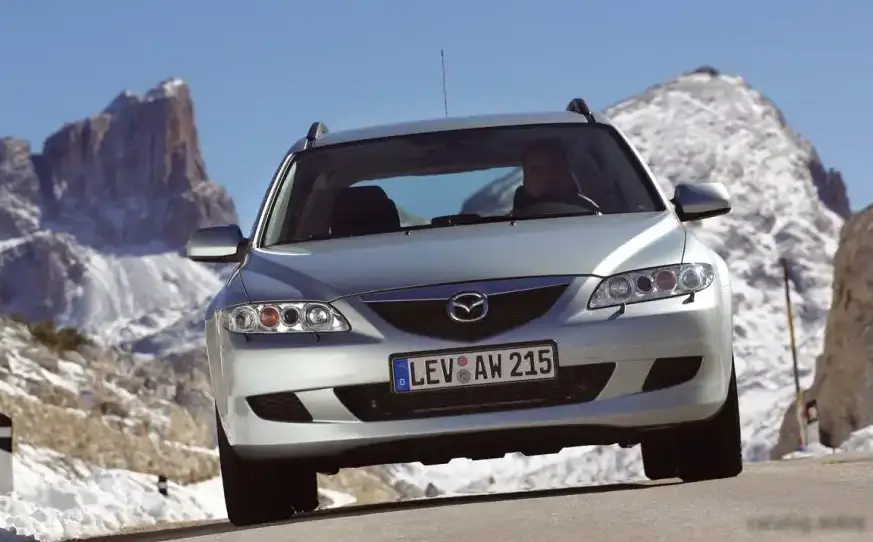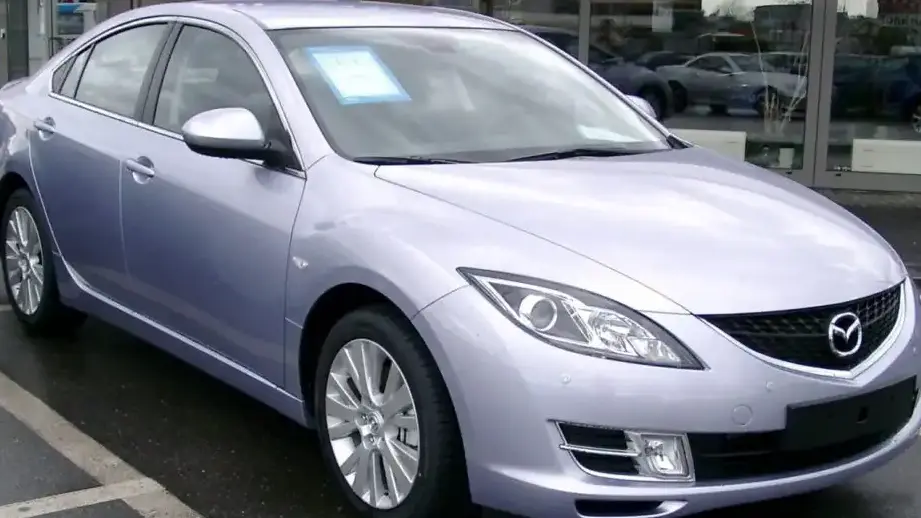
The Mazda 6 II Sedan (GH) 3.7 V6 Automatic, produced from 2008 to 2010, represented the top-tier performance offering within the second generation (GH) Mazda 6 lineup. Positioned as the flagship trim, it aimed to provide a more engaging driving experience and a premium feel compared to the more commonly available four-cylinder variants. This model was primarily targeted towards the North American market, where larger displacement engines were favored, and offered a blend of sporty handling and comfortable cruising. It sat above the 2.5L four-cylinder and 2.3L turbocharged options in terms of both price and performance.
Technical Specifications
| Brand | Mazda |
| Model | 6 |
| Generation | 6 II Sedan (GH) |
| Type (Engine) | 3.7 V6 (272 Hp) Automatic |
| Start of production | 2008 |
| End of production | 2010 |
| Powertrain Architecture | Internal Combustion engine |
| Body type | Sedan |
| Seats | 5 |
| Doors | 4 |
| Fuel consumption (urban) | 13.8 l/100 km (17 US mpg, 20.5 UK mpg) |
| Fuel consumption (extra urban) | 9.4 l/100 km (25 US mpg, 30.1 UK mpg) |
| Fuel Type | Petrol (Gasoline) |
| Weight-to-power ratio | 5.9 kg/Hp, 169 Hp/tonne |
| Weight-to-torque ratio | 4.4 kg/Nm, 226.8 Nm/tonne |
| Power | 272 Hp @ 6250 rpm |
| Power per litre | 73 Hp/l |
| Torque | 365 Nm @ 4250 rpm (269.21 lb.-ft. @ 4250 rpm) |
| Engine layout | Front, Transverse |
| Engine Model/Code | CAY1 |
| Engine displacement | 3726 cm3 (227.37 cu. in.) |
| Number of cylinders | 6 |
| Engine configuration | V-engine |
| Cylinder Bore | 95.5 mm (3.76 in.) |
| Piston Stroke | 86.7 mm (3.41 in.) |
| Compression ratio | 10.3:1 |
| Number of valves per cylinder | 4 |
| Fuel injection system | Multi-port manifold injection |
| Engine aspiration | Naturally aspirated engine |
| Valvetrain | DOHC |
| Engine oil capacity | 5.2 l (5.49 US qt | 4.58 UK qt) |
| Coolant | 8.9 l (9.4 US qt | 7.83 UK qt) |
| Kerb Weight | 1609 kg (3547.24 lbs.) |
| Trunk (boot) space – minimum | 470 l (16.6 cu. ft.) |
| Fuel tank capacity | 70 l (18.49 US gal | 15.4 UK gal) |
| Length | 4920 mm (193.7 in.) |
| Width | 1839 mm (72.4 in.) |
| Height | 1471 mm (57.91 in.) |
| Wheelbase | 2725 mm (107.28 in.) |
| Front track | 1585-1595 mm (62.4 – 62.8 in.) |
| Rear (Back) track | 1585-1595 mm (62.4 – 62.8 in.) |
| Minimum turning circle | 10.8 m (35.43 ft.) |
| Drivetrain Architecture | Front wheel drive |
| Number of gears and type of gearbox | 6 gears, automatic transmission |
| Front suspension | Double wishbone, Transverse stabilizer |
| Rear suspension | Independent multi-link suspension, Transverse stabilizer |
| Front brakes | Ventilated discs |
| Rear brakes | Disc |
| Assisting systems | ABS (Anti-lock braking system) |
| Steering type | Steering rack and pinion |
| Power steering | Electric Steering |
| Tires size | 215/55 R17; 225/45 R18 |
| Wheel rims size | 7J x 17; 7.5J x 18 |
INTRODUCTION
The Mazda 6 II Sedan (GH) 3.7 V6 Automatic was introduced as a response to consumer demand for a more powerful and refined Mazda 6. The GH generation, launched in 2008, represented a significant step up in terms of interior quality and driving dynamics compared to its predecessor. The 3.7L V6 engine, sourced from Ford (with whom Mazda had a close partnership at the time), was a key differentiator, offering a substantial power increase over the standard engine options. This variant was primarily sold in the United States and Canada, catering to buyers who desired a mid-size sedan with near-premium performance characteristics.
Powertrain & Engine Architecture
At the heart of this Mazda 6 variant lies the CAY1 3.7-liter V6 engine. This engine, while bearing a Mazda badge, was fundamentally a Ford Duratec 37 engine. It features a 60-degree V-angle, aluminum cylinder heads and block, and a dual overhead camshaft (DOHC) valvetrain with four valves per cylinder. The engine utilizes multi-port fuel injection, delivering fuel directly into the intake ports. The 6-speed automatic transmission, also sourced from Ford, was specifically tuned to handle the V6’s increased torque output. This transmission featured a conventional torque converter and offered manual shift control via a gated shifter. The transmission’s gear ratios were optimized for a balance of acceleration and highway cruising efficiency.
Driving Characteristics
The 3.7 V6 Automatic Mazda 6 offered a noticeably different driving experience compared to the four-cylinder models. The increased horsepower and torque resulted in brisk acceleration, with 0-60 mph times estimated around 6.2 seconds. The automatic transmission, while smooth, wasn’t particularly quick to downshift, but provided adequate responsiveness for most driving situations. The suspension, tuned for a balance of comfort and handling, provided a stable and controlled ride. While not as sporty as some of its European rivals, the Mazda 6 V6 offered a more engaging driving experience than many other mid-size sedans. The front-wheel-drive configuration, however, could exhibit some torque steer under hard acceleration.
Equipment & Trim Levels
The 3.7 V6 Automatic trim typically came well-equipped with features such as leather upholstery, a premium sound system (often Bose), automatic climate control, power-adjustable front seats, and alloy wheels. Optional extras included a sunroof, navigation system, and advanced safety features like blind-spot monitoring. Interior trim levels varied, but generally featured woodgrain accents and a more upscale aesthetic compared to the base models. The dashboard layout was consistent across the GH generation, but the V6 models often received unique badging and interior trim details.
Chassis & Braking
The chassis of the Mazda 6 II Sedan utilized a MacPherson strut front suspension and a multi-link rear suspension. The V6 models often featured slightly stiffer springs and dampers to better manage the increased weight and power. Braking duties were handled by ventilated discs at the front and solid discs at the rear, equipped with an Anti-lock Braking System (ABS). The steering system was a rack-and-pinion setup with electric power steering, providing a responsive and precise feel. Wheel sizes typically ranged from 17 to 18 inches, depending on the specific trim package.
Market Reception & Comparison
Critics generally praised the Mazda 6 3.7 V6 for its powerful engine and comfortable ride. However, some reviewers noted that the fuel economy was relatively poor compared to the four-cylinder models. Compared to competitors like the Honda Accord V6 and Toyota Camry V6, the Mazda 6 offered a more engaging driving experience but lacked the same level of brand recognition. The 2.5L four-cylinder Mazda 6 offered significantly better fuel economy, while the turbocharged 2.3L provided a performance compromise between the two. Reliability was generally good, although some owners reported minor issues with the automatic transmission.
Legacy
The Mazda 6 II Sedan 3.7 V6 Automatic remains a relatively uncommon sight on the used car market today. While the engine itself has proven to be reasonably durable, the age of these vehicles means that maintenance costs can be higher. The Ford-sourced automatic transmission, while generally reliable, is a potential area for concern. Despite its age, the 3.7 V6 Mazda 6 is still appreciated by enthusiasts for its unique combination of performance, comfort, and value. It represents a distinctive chapter in Mazda’s history, showcasing the brand’s willingness to offer a more powerful and engaging driving experience in the mid-size sedan segment.