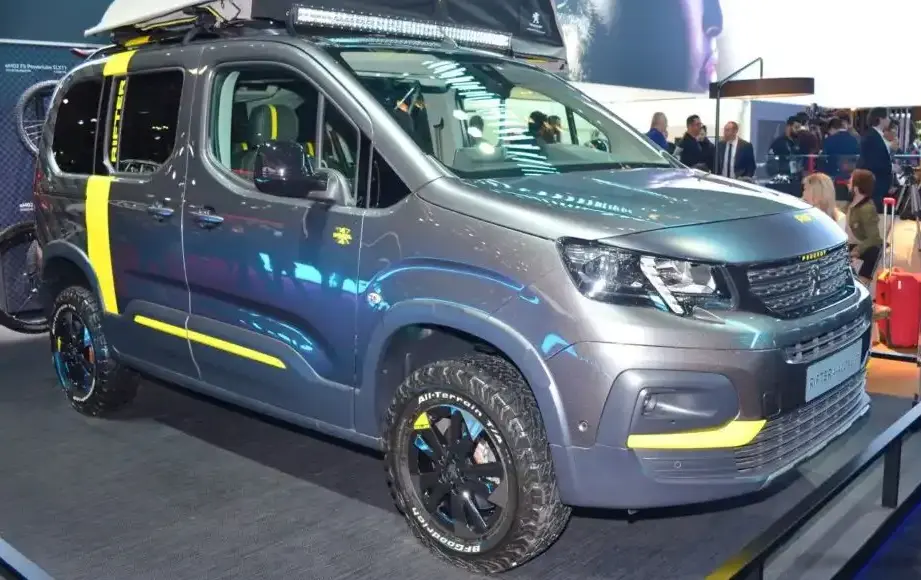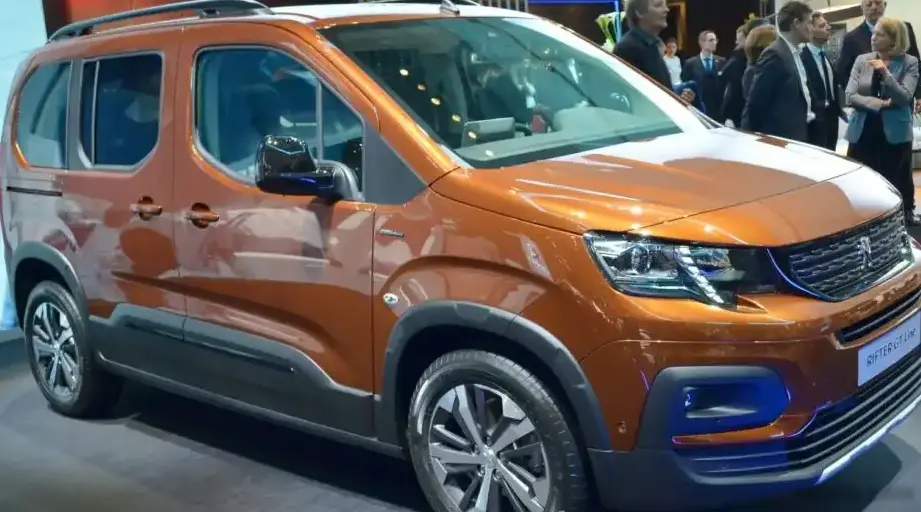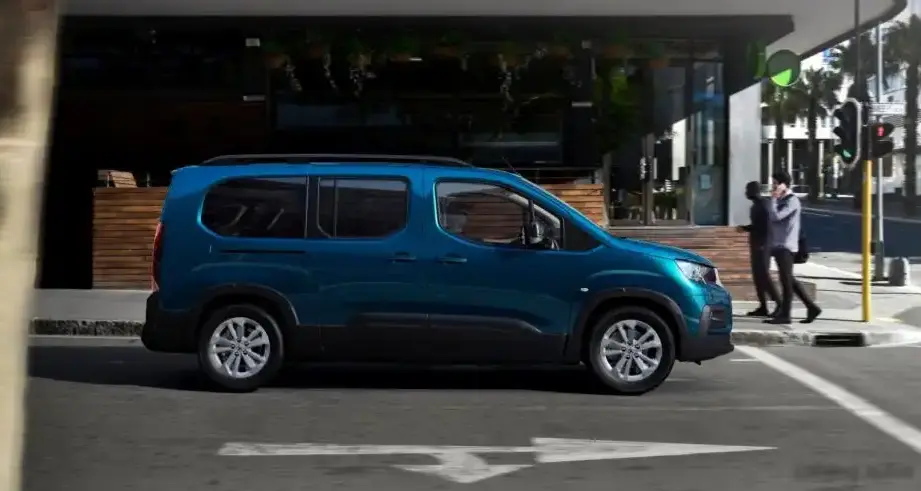
The Peugeot Rifter L2 e-Rifter 50 kWh (136 Hp) is a battery electric vehicle (BEV) introduced by Peugeot in June 2021 and produced through March 2024. It represents Peugeot’s entry into the electric minivan segment, building upon the success of the standard Rifter and offering a zero-emission alternative within the broader Rifter L2 (Long Wheelbase) range. Positioned as a practical and versatile family vehicle, the e-Rifter aimed to cater to environmentally conscious buyers seeking spaciousness and functionality. It is based on the EMP2 platform, shared with other Stellantis vehicles like the Citroën Berlingo and Opel/Vauxhall Combo Life.
Technical Specifications
| Brand | Peugeot |
| Model | Rifter |
| Generation | Rifter L2 |
| Type (Engine) | e-Rifter 50 kWh (136 Hp) |
| Start of production | June, 2021 |
| End of production | March, 2024 |
| Powertrain Architecture | BEV (Electric Vehicle) |
| Body type | Minivan |
| Seats | 7 |
| Doors | 5 |
| Fuel Type | Electricity |
| Acceleration 0 – 100 km/h | 11.7 sec |
| Acceleration 0 – 62 mph | 11.7 sec |
| Acceleration 0 – 60 mph | 11.1 sec |
| Maximum speed | 135 km/h (83.89 mph) |
| Weight-to-power ratio | 13.3 kg/Hp, 75.2 Hp/tonne |
| Weight-to-torque ratio | 7 kg/Nm, 143.7 Nm/tonne |
| Gross battery capacity | 50 kWh |
| Net (usable) battery capacity | 45 kWh |
| Battery technology | Lithium-ion (Li-Ion) |
| Battery location | Below the floor |
| All-electric range (WLTP) | 268-269 km (166.53 – 167.15 mi) |
| Average Energy consumption (WLTP) | 20.7-20.8 kWh/100 km (33.31 – 33.47 kWh/100 mi) |
| Average Energy consumption (MPGe) | 101 – 101 |
| Average Energy consumption (km/kWh) | 4.8 – 4.8 |
| Average Energy consumption (mi/kWh) | 3 – 3 |
| Electric motor power | 136 Hp @ 5500 rpm |
| Electric motor Torque | 260 Nm @ 0-3674 rpm (191.77 lb.-ft. @ 0-3674 rpm) |
| Electric motor model/code | ZK01 |
| Electric motor location | Front axle, Transverse |
| System power | 136 Hp @ 5500 rpm |
| System torque | 260 Nm @ 0-3674 rpm (191.77 lb.-ft. @ 0-3674 rpm) |
| Kerb Weight | 1809 kg (3988.16 lbs) |
| Max. weight | 2455 kg (5412.35 lbs) |
| Max load | 646 kg (1424.19 lbs) |
| Trunk (boot) space – minimum | 1050 l (37.08 cu. ft) |
| Trunk (boot) space – maximum | 3500 l (123.6 cu. ft) |
| Permitted trailer load with brakes (12%) | 750 kg (1653.47 lbs) |
| Permitted trailer load without brakes | 750 kg (1653.47 lbs) |
| Permitted towbar download | 50 kg (110.23 lbs) |
| Length | 4753 mm (187.13 in) |
| Width | 1848 mm (72.76 in) |
| Width with mirrors folded | 1921 mm (75.63 in) |
| Width including mirrors | 2107 mm (82.95 in) |
| Height | 1879-1882 mm (73.98 – 74.09 in) |
| Wheelbase | 2975 mm (117.13 in) |
| Front track | 1553 mm (61.14 in) |
| Rear (Back) track | 1567 mm (61.69 in) |
| Front overhang | 892 mm (35.12 in) |
| Rear overhang | 886 mm (34.88 in) |
| Ride height (ground clearance) | 216 mm (8.5 in) |
| Minimum turning circle (turning diameter) | 10.8 m (35.43 ft) |
| Approach angle | 17.5° |
| Departure angle | 25.7° |
| Drivetrain Architecture | One electric motor drives the front wheels |
| Drive wheel | Front wheel drive |
| Number of gears and type of gearbox | 1 gears, automatic transmission |
| Front suspension | Independent type McPherson |
| Front brakes | Ventilated discs |
| Rear brakes | Disc |
| Assisting systems | ABS (Anti-lock braking system) |
| Steering type | Steering rack and pinion |
| Power steering | Electric Steering |
| Tires size | 215/65 R16; 215/60 R17 |
| Wheel rims size | 6.5J x 16; 7J x 17 |
Powertrain & Engine Architecture
The e-Rifter L2 utilizes a single electric motor, designated ZK01, producing 136 horsepower at 5500 rpm and 260 Nm (191.77 lb-ft) of torque available from 0 to 3674 rpm. This motor is transversely mounted on the front axle, driving the front wheels. The powertrain is powered by a 50 kWh battery pack, providing a usable capacity of 45 kWh. The lithium-ion battery is located under the vehicle floor, contributing to a lower center of gravity and maximizing interior space. The e-Rifter employs a single-speed automatic transmission, typical for electric vehicles, delivering seamless acceleration. The charging system supports both AC and DC fast charging, allowing for flexible charging options at home or on the road.
Driving Characteristics
The 136 hp electric powertrain in the Rifter L2 e-Rifter delivers adequate performance for everyday driving. Acceleration from 0 to 100 km/h (0-62 mph) takes approximately 11.7 seconds. While not particularly sporty, the instant torque characteristic of electric motors provides brisk acceleration at lower speeds, making it well-suited for urban environments. The single-speed automatic transmission ensures smooth and effortless driving. Compared to internal combustion engine (ICE) Rifter variants, the e-Rifter offers a quieter and more refined driving experience. The lower center of gravity, due to the battery pack’s placement, contributes to improved handling and stability. The range of 268-269 km (166.53 – 167.15 mi) on the WLTP cycle is sufficient for many daily commutes and errands, but may require careful planning for longer journeys.
Equipment & Trim Levels
The e-Rifter L2 typically came equipped with a generous level of standard features, reflecting its position as a modern family vehicle. These included air conditioning, a touchscreen infotainment system with smartphone integration (Apple CarPlay and Android Auto), and a suite of safety features such as automatic emergency braking, lane departure warning, and cruise control. Higher trim levels offered additional features such as a larger touchscreen display, navigation system, panoramic sunroof, and premium upholstery. The seven-seat configuration was standard, providing ample space for passengers and cargo. Optional extras included parking sensors, a rearview camera, and various driver assistance systems.
Chassis & Braking
The e-Rifter L2 utilizes an independent McPherson strut suspension at the front and a disc brake setup on the rear wheels. The front brakes are ventilated for improved cooling. The suspension is tuned to provide a comfortable ride, absorbing bumps and imperfections in the road surface effectively. The electric powertrain’s added weight compared to ICE versions necessitated slightly stiffer spring rates and dampers to maintain stability and handling. The steering is electrically assisted, providing light and precise control. ABS (Anti-lock Braking System) is standard, enhancing braking performance and safety.
Market Reception & Comparison
The Peugeot Rifter L2 e-Rifter was generally well-received by critics for its practicality, spaciousness, and zero-emission credentials. It was praised for its comfortable ride, quiet cabin, and user-friendly technology. However, some reviewers noted its relatively modest range compared to some competitors and its somewhat uninspiring driving dynamics. Compared to the petrol and diesel Rifter variants, the e-Rifter offered lower running costs due to the elimination of fuel expenses and reduced maintenance requirements. The e-Rifter competed with other electric minivans such as the Citroën ë-Berlingo and Opel/Vauxhall Combo-e Life, offering a similar blend of practicality and affordability.
Legacy
The Peugeot Rifter L2 e-Rifter represents an important step in Peugeot’s electrification strategy. While production ended in March 2024, the model has established itself as a viable option for families seeking a spacious and environmentally friendly vehicle. The powertrain, while not groundbreaking in terms of range or performance, has proven to be relatively reliable. On the used car market, the e-Rifter L2 holds its value reasonably well, appealing to buyers seeking a practical and affordable electric vehicle with ample space and versatility. Its long-term reliability is still being assessed, but early indications suggest that the electric powertrain is durable and requires minimal maintenance.