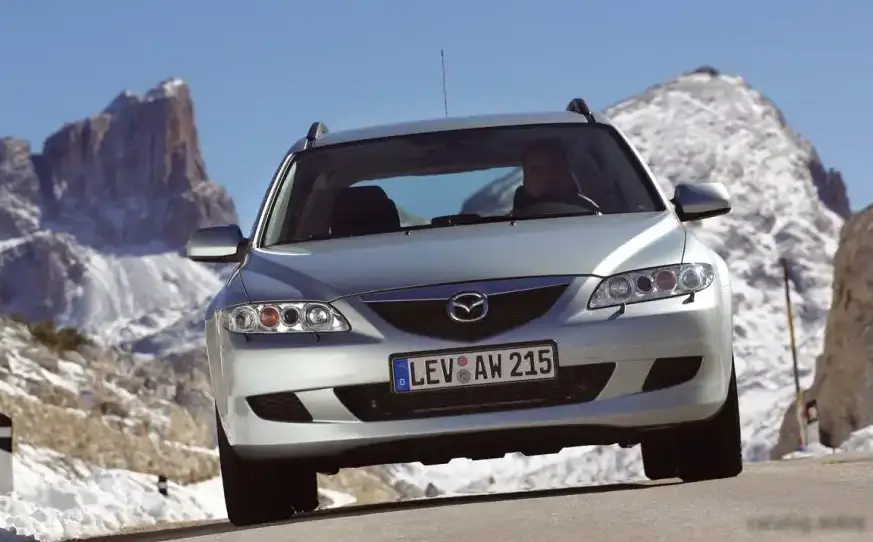
The Mazda 6 II Sedan (GH series, post-facelift 2010) 2.0-liter variant, producing 155 horsepower, represented a key offering in Mazda’s mid-size sedan lineup from 2010 to 2012. Positioned as a mainstream choice within the second generation (GH) Mazda 6 range, it aimed to balance fuel efficiency, reasonable performance, and affordability. This facelifted model, introduced to address criticisms of the original GH platform, featured revised styling, improved interior materials, and refinements to the chassis and powertrain. The 2.0-liter engine, paired with a six-speed manual transmission, was intended to appeal to buyers seeking a practical and economical family sedan.
Technical Specifications
| Brand | Mazda |
| Model | 6 |
| Generation | 6 II Sedan (GH, facelift 2010) |
| Type (Engine) | 2.0 (155 Hp) |
| Start of production | 2010 |
| End of production | 2012 |
| Powertrain Architecture | Internal Combustion engine |
| Body type | Sedan |
| Seats | 5 |
| Doors | 4 |
| Fuel consumption (urban) | 9.6 l/100 km (24.5 US mpg) |
| Fuel consumption (extra urban) | 5.3 l/100 km (44.4 US mpg) |
| Fuel consumption (combined) | 6.9 l/100 km (34.1 US mpg) |
| CO2 emissions | 159 g/km |
| Fuel Type | Petrol (Gasoline) |
| Acceleration 0 – 100 km/h | 10 sec |
| Acceleration 0 – 60 mph | 9.5 sec |
| Maximum speed | 217 km/h (134.84 mph) |
| Emission standard | Euro 5 |
| Weight-to-power ratio | 9 kg/Hp |
| Weight-to-torque ratio | 7.3 kg/Nm |
| Power | 155 Hp @ 6200 rpm |
| Torque | 193 Nm @ 4500 rpm (142.35 lb.-ft. @ 4500 rpm) |
| Engine layout | Front, Transverse |
| Engine Model/Code | LF-VD |
| Engine displacement | 1999 cm3 (121.99 cu. in.) |
| Number of cylinders | 4 |
| Engine configuration | Inline |
| Cylinder Bore | 87.5 mm (3.44 in.) |
| Piston Stroke | 83.1 mm (3.27 in.) |
| Compression ratio | 11.2:1 |
| Number of valves per cylinder | 4 |
| Fuel injection system | Direct injection |
| Engine aspiration | Naturally aspirated |
| Valvetrain | DOHC |
| Engine oil capacity | 4.3 l (4.54 US qt | 3.78 UK qt) |
| Coolant capacity | 7.5 l (7.93 US qt | 6.6 UK qt) |
| Kerb Weight | 1400 kg (3086.47 lbs.) |
| Max. weight | 1915 kg (4221.85 lbs.) |
| Max load | 515 kg (1135.38 lbs.) |
| Trunk (boot) space | 519 l (18.33 cu. ft.) |
| Fuel tank capacity | 64 l (16.91 US gal | 14.08 UK gal) |
| Length | 4755 mm (187.2 in.) |
| Width | 1795 mm (70.67 in.) |
| Height | 1440 mm (56.69 in.) |
| Wheelbase | 2725 mm (107.28 in.) |
| Front track | 1560-1570 mm (61.42 – 61.81 in.) |
| Rear track | 1560-1570 mm (61.42 – 61.81 in.) |
| Minimum turning circle | 11.8 m (38.71 ft.) |
| Drivetrain | Front wheel drive |
| Number of gears | 6 |
| Gearbox type | Manual transmission |
| Front suspension | Double wishbone, Transverse stabilizer |
| Rear suspension | Independent multi-link suspension, Transverse stabilizer |
| Front brakes | Ventilated discs, 299 mm |
| Rear brakes | Disc, 280 mm |
| Assisting systems | ABS (Anti-lock braking system) |
| Steering type | Steering rack and pinion |
| Power steering | Electric |
| Tires size | 205/60 R16; 215/50 R17; 225/45 R18 |
| Wheel rims size | 6.5J x 16; 7J x 17; 7.5J x 18 |
Powertrain & Engine Architecture
The heart of this Mazda 6 variant was the LF-VD engine, a 1.999-liter inline-four cylinder gasoline engine. This engine utilized direct injection technology, a key feature for improving fuel efficiency and power output. The direct injection system allowed for more precise fuel delivery, optimizing combustion and reducing knocking. The engine featured a double overhead camshaft (DOHC) valvetrain with four valves per cylinder, contributing to its relatively high specific output. The compression ratio was set at 11.2:1, a balance between performance and the ability to run on readily available gasoline. The six-speed manual transmission was chosen for its efficiency and driver engagement, offering precise gear changes and contributing to the car’s overall responsiveness.
Driving Characteristics
The 155 hp 2.0-liter engine, coupled with the six-speed manual, provided adequate performance for everyday driving. Acceleration from 0-60 mph took approximately 9.5 seconds, and top speed was rated at 134.84 mph. While not a sports car, the engine delivered a usable amount of torque, making it easy to navigate city streets and maintain highway speeds. The six-speed gearbox allowed drivers to keep the engine in its optimal power band, enhancing responsiveness. Compared to the more powerful 2.5-liter engine option, this variant felt less urgent, but it offered a more fuel-efficient and economical driving experience. The manual transmission provided a more engaging driving experience than an automatic, offering greater control over the engine’s power delivery.
Equipment & Trim Levels
The 2.0-liter Mazda 6 typically came with a respectable level of standard equipment. This included air conditioning, power windows and locks, a basic audio system with CD player, and ABS brakes. Higher trim levels, such as the Touring or Grand Touring, added features like alloy wheels, a sunroof, upgraded audio systems, and leather upholstery. Interior upholstery was typically cloth in the base models, with leather options available on higher trims. The dashboard layout was functional and straightforward, with easy-to-read gauges and intuitive controls. Optional extras included navigation systems, premium sound systems, and advanced safety features.
Chassis & Braking
The Mazda 6 II Sedan utilized a front-engine, front-wheel-drive layout. The front suspension consisted of a double wishbone setup with a transverse stabilizer bar, while the rear suspension employed an independent multi-link design, also with a stabilizer bar. This suspension configuration provided a good balance between ride comfort and handling. The braking system featured ventilated discs on the front wheels and solid discs on the rear, providing adequate stopping power for most driving situations. ABS (Anti-lock Braking System) was standard, enhancing safety and control during emergency braking.
Market Reception & Comparison
The 2.0-liter Mazda 6 was generally well-received by automotive critics as a practical and well-rounded family sedan. It was praised for its fuel efficiency, comfortable ride, and spacious interior. However, some reviewers noted that the engine lacked the punch of the larger 2.5-liter option. Compared to competitors like the Honda Accord and Toyota Camry, the Mazda 6 offered a more engaging driving experience and a more stylish design. Fuel economy was competitive, with combined figures around 34.1 US mpg. Reliability was generally good, although some owners reported minor issues with the direct injection system over time.
Legacy
The Mazda 6 II Sedan 2.0-liter variant remains a popular choice in the used car market due to its affordability, fuel efficiency, and reliability. The LF-VD engine, while not known for being exceptionally powerful, has proven to be relatively durable with proper maintenance. Common maintenance items include regular oil changes, spark plug replacements, and occasional cleaning of the direct injection system. These cars represent a good value for buyers seeking a dependable and economical mid-size sedan. The 2.0-liter engine’s longevity and relatively low running costs contribute to its continued appeal in the used car market.