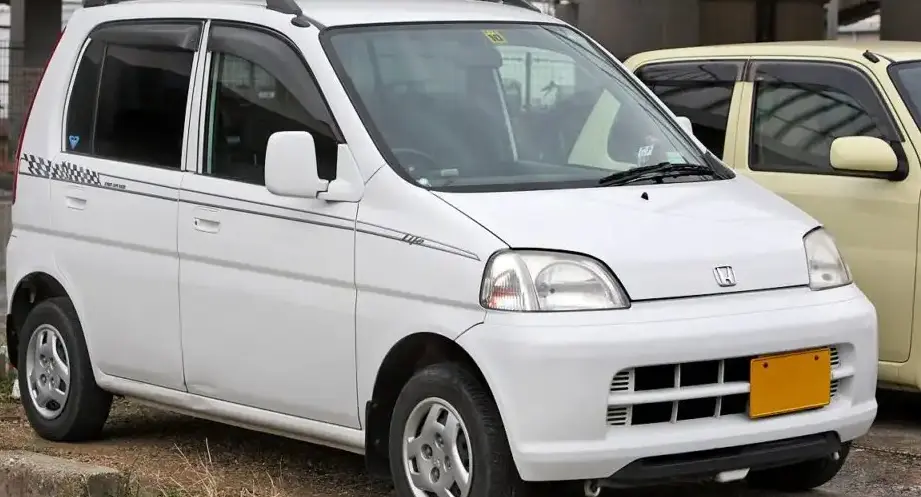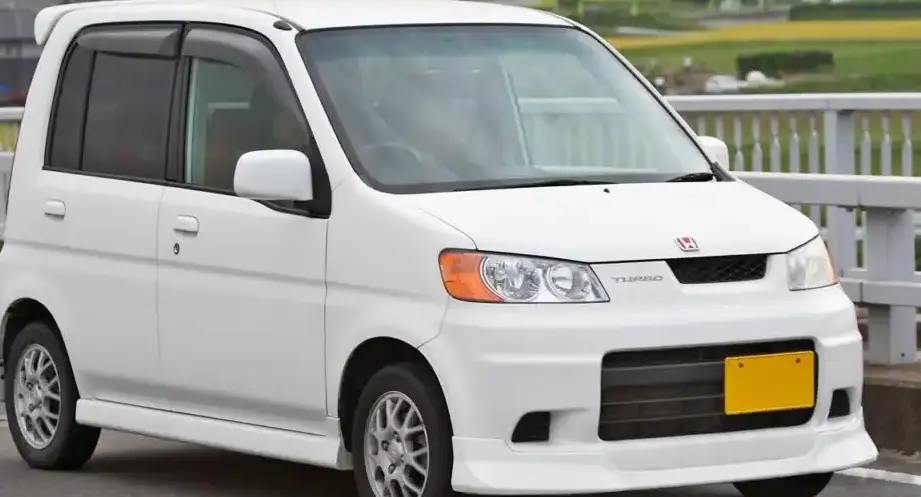
The Honda Life III 0.7 Dunk Ts 4WD (64 hp) is a micro-hatchback produced by Honda between 1998 and 2003. Part of the third generation of the Life series (1997-2008), this particular variant occupied the lower end of the lineup, offering an affordable and practical transportation solution primarily aimed at the Japanese domestic market (JDM). The “Dunk” trim level denoted a slightly more equipped version compared to the base models, while the “Ts” designation indicated a specific level of features. The 4WD system was a key selling point, providing enhanced traction in Japan’s often challenging weather conditions. This generation of Life, built on the HM4 platform, was notable for its efficient packaging and focus on maximizing interior space within a diminutive footprint.
Technical Specifications
| Brand | Honda |
| Model | Life |
| Generation | Life III |
| Type | 0.7 Dunk Ts 4WD (64 Hp) |
| Start of production | 1998 |
| End of production | 2003 |
| Powertrain Architecture | Internal Combustion engine |
| Body type | Hatchback |
| Seats | 4 |
| Doors | 5 |
| Fuel consumption (combined) | 5.3 l/100 km (44.4 US mpg, 53.3 UK mpg, 18.9 km/l) |
| Fuel Type | Petrol (Gasoline) |
| Maximum speed | 130 km/h (80.78 mph) |
| Weight-to-power ratio | 14.4 kg/Hp, 69.6 Hp/tonne |
| Weight-to-torque ratio | 9.9 kg/Nm, 101.1 Nm/tonne |
| Power | 64 Hp @ 6000 rpm |
| Power per litre | 97.6 Hp/l |
| Torque | 93 Nm @ 4000 rpm (68.59 lb.-ft. @ 4000 rpm) |
| Engine layout | Front, Transverse |
| Engine displacement | 656 cm3 (40.03 cu. in.) |
| Number of cylinders | 3 |
| Engine configuration | Inline |
| Cylinder Bore | 66 mm (2.6 in.) |
| Piston Stroke | 64 mm (2.52 in.) |
| Compression ratio | 8.5:1 |
| Number of valves per cylinder | 4 |
| Fuel injection system | Multi-port manifold injection |
| Engine aspiration | Naturally aspirated engine |
| Valvetrain | OHC |
| Kerb Weight | 920 kg (2028.25 lbs.) |
| Max. weight | 1140 kg (2513.27 lbs.) |
| Max load | 220 kg (485.02 lbs.) |
| Fuel tank capacity | 31 l (8.19 US gal | 6.82 UK gal) |
| Length | 3395 mm (133.66 in.) |
| Width | 1475 mm (58.07 in.) |
| Height | 1605 mm (63.19 in.) |
| Wheelbase | 2360 mm (92.91 in.) |
| Front track | 1305 mm (51.38 in.) |
| Rear track | 1295 mm (50.98 in.) |
| Minimum turning circle | 9 m (29.53 ft.) |
| Drive wheel | All wheel drive (4×4) |
| Number of gears | 3 |
| Gearbox type | Automatic transmission |
| Front suspension | Spring Strut |
| Rear suspension | Coil spring |
| Front brakes | Ventilated discs |
| Rear brakes | Drum |
| Assisting systems | ABS (Anti-lock braking system) |
| Steering type | Steering rack and pinion |
| Power steering | Hydraulic Steering |
| Tires size | 155/65 R13 |
Powertrain & Engine Architecture
The heart of the Life Dunk Ts 4WD is a 656cc inline-three cylinder engine, internally designated as part of the Honda P07A family. This engine utilizes a single overhead camshaft (OHC) valvetrain and a multi-point fuel injection system. The relatively high compression ratio of 8.5:1, for a small displacement engine, helped to extract a reasonable amount of power. The engine’s design prioritized fuel efficiency and smooth operation over outright performance. The three-speed automatic transmission was a common choice for this segment, offering ease of use and convenience, particularly in urban environments. While not known for its speed, the transmission was designed for durability and reliability. The 4WD system employed a viscous coupling to distribute torque between the front and rear axles, engaging the rear wheels only when slip was detected.
Driving Characteristics
The 64 horsepower and 68.59 lb-ft of torque produced by the 0.7-liter engine resulted in modest acceleration. The automatic transmission, with its three forward gears, further emphasized fuel economy over spirited driving. Compared to the manual transmission versions of the Life, the automatic offered less driver engagement and slightly slower acceleration. However, it provided a more relaxed driving experience, particularly in stop-and-go traffic. The 4WD system provided noticeable improvements in traction on slippery surfaces, making it a popular choice in regions with inclement weather. The steering was light and easy, contributing to the car’s maneuverability in tight spaces. Overall, the driving experience was geared towards practicality and ease of use rather than performance.
Equipment & Trim Levels
The “Dunk Ts” trim level offered a step up in features compared to the base Life models. Standard equipment typically included power steering, air conditioning, and a basic audio system. The interior featured cloth upholstery and a functional, if spartan, dashboard layout. Optional extras could include upgraded audio systems, power windows, and central locking. The Dunk trim also often featured slightly more refined interior trim details compared to the more basic versions. The focus was on providing essential comfort and convenience features at an affordable price point.
Chassis & Braking
The Life III utilized a simple but effective chassis design. Front suspension consisted of MacPherson strut springs, while the rear employed a coil spring setup. The front brakes were ventilated discs, providing adequate stopping power for the vehicle’s weight and performance. However, the rear brakes were drums, a cost-saving measure common in this class of vehicle. The relatively lightweight construction of the Life helped to offset the limitations of the braking system. The suspension was tuned for comfort, prioritizing a smooth ride over sporty handling. A stabilizer bar was included in the front suspension to reduce body roll during cornering.
Market Reception & Comparison
The Honda Life III 0.7 Dunk Ts 4WD was well-received in the Japanese market as an affordable and practical micro-hatchback. Critics praised its fuel efficiency, spacious interior, and ease of driving. Compared to other trims in the Life lineup, the 4WD version offered enhanced traction and versatility, making it a popular choice for drivers in areas with harsh winters or challenging road conditions. The automatic transmission, while not as engaging as the manual, appealed to drivers seeking convenience. Compared to competitors like the Suzuki Alto and Daihatsu Mira, the Life offered a slightly more refined driving experience and a reputation for reliability.
Legacy
The Honda Life III 0.7 Dunk Ts 4WD, while not a performance icon, has proven to be a remarkably durable and reliable vehicle. The P07A engine is known for its longevity, and the three-speed automatic transmission is generally considered to be robust. In the used car market, these vehicles are still sought after for their affordability, fuel efficiency, and practicality. While maintenance costs can increase with age, the readily available parts and relatively simple mechanical design make them relatively easy to keep on the road. The Life III represents a significant example of Honda’s engineering prowess in creating efficient and reliable transportation solutions for the Japanese market.