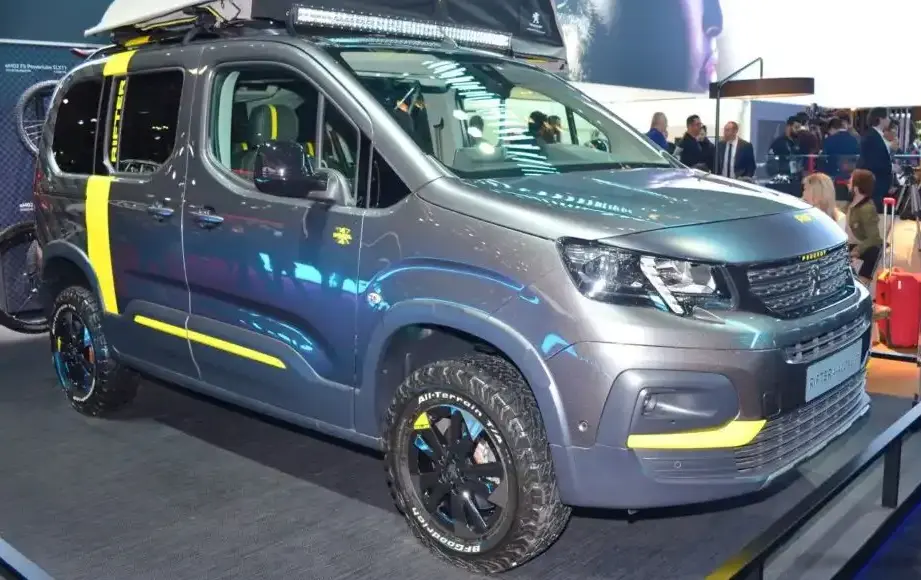
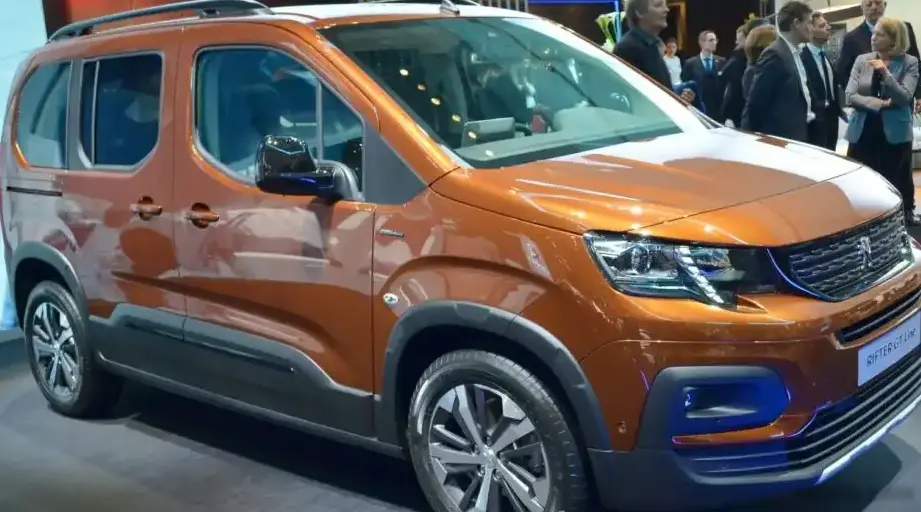
The Peugeot Rifter L2 e-Rifter 50 kWh, introduced with the facelift in March 2024, represents Peugeot’s entry into the electric minivan segment, specifically targeting families and those requiring versatile passenger and cargo space. This long-wheelbase (L2) version expands upon the original Rifter platform (introduced in 2018 as part of the PSA Group’s multi-brand strategy alongside the Citroën Berlingo and Opel/Vauxhall Combo Life), offering increased interior volume and practicality. The “e-Rifter” designation signifies its fully electric powertrain, utilizing a 50 kWh battery pack to deliver a balance of range and affordability within the electric vehicle market. Positioned as a mid-range offering within the Rifter lineup, it slots below potential future, higher-capacity battery variants.
Technical Specifications
| Brand | Peugeot |
| Model | Rifter |
| Generation | Rifter L2 (facelift 2024) |
| Type (Engine) | e-Rifter 50 kWh (136 Hp) |
| Start of production | March, 2024 |
| Powertrain Architecture | BEV (Electric Vehicle) |
| Body type | Minivan |
| Seats | 5 |
| Doors | 5 |
| Fuel Type | Electricity |
| Acceleration 0 – 100 km/h | 11.5 sec |
| Acceleration 0 – 62 mph | 11.5 sec |
| Acceleration 0 – 60 mph | 10.9 sec |
| Maximum speed | 132 km/h (82.02 mph) |
| Weight-to-power ratio | 13.4 kg/Hp, 74.5 Hp/tonne |
| Weight-to-torque ratio | 6.8 kg/Nm, 147.9 Nm/tonne |
| Gross battery capacity | 50 kWh |
| Battery technology | Lithium-ion (Li-Ion) |
| Battery location | Below the floor |
| All-electric range (WLTP) | 326-334 km (202.57 – 207.54 mi) |
| Average Energy consumption (WLTP) | 19.2 kWh/100 km (30.9 kWh/100 mi, 109 MPGe, 5.2 km/kWh, 3.2 mi/kWh) |
| Electric motor power | 136 Hp @ 6000 rpm |
| Electric motor Torque | 270 Nm (199.14 lb.-ft.) |
| Electric motor location | Front axle, Transverse |
| Electric motor type | Synchronous |
| System power | 136 Hp @ 6000 rpm |
| System torque | 270 Nm (199.14 lb.-ft.) |
| Kerb Weight | 1826-1959 kg (4025.64 – 4318.86 lbs.) |
| Max. weight | 2390 kg (5269.05 lbs.) |
| Max load | 431-564 kg (950.19 – 1243.41 lbs.) |
| Trunk (boot) space – minimum | 1050 l (37.08 cu. ft.) |
| Trunk (boot) space – maximum | 3500 l (123.6 cu. ft.) |
| Max. roof load | 100 kg (220.46 lbs.) |
| Permitted trailer load with brakes (12%) | 750 kg (1653.47 lbs.) |
| Permitted trailer load without brakes | 750 kg (1653.47 lbs.) |
| Permitted towbar download | 50 kg (110.23 lbs.) |
| Length | 4755 mm (187.2 in.) |
| Width | 1848 mm (72.76 in.) |
| Width with mirrors folded | 1921 mm (75.63 in.) |
| Width including mirrors | 2107 mm (82.95 in.) |
| Height | 1837 mm (72.32 in.) |
| Wheelbase | 2975 mm (117.13 in.) |
| Front track | 1553 mm (61.14 in.) |
| Rear (Back) track | 1567 mm (61.69 in.) |
| Front overhang | 894 mm (35.2 in.) |
| Rear overhang | 886 mm (34.88 in.) |
| Minimum turning circle | 11.5 m (37.73 ft.) |
| Drivetrain Architecture | One electric motor drives the front wheels. |
| Drive wheel | Front wheel drive |
| Number of gears and type of gearbox | 1 gears, automatic transmission |
| Front suspension | Independent type McPherson |
| Rear suspension | Elastic beam |
| Front brakes | Disc |
| Rear brakes | Disc |
| Assisting systems | ABS (Anti-lock braking system) |
| Steering type | Steering rack and pinion |
| Power steering | Electric Steering |
| Tires size | 215/65 R16; 215/60 R17 |
| Wheel rims size | 16; 17 |
Powertrain & Engine Architecture
The e-Rifter L2 utilizes a single electric motor, positioned transversely at the front axle, delivering 136 horsepower at 6000 rpm and 270 Nm (199.14 lb.-ft.) of torque. This synchronous motor is powered by a 50 kWh lithium-ion battery pack located under the vehicle floor, contributing to a lower center of gravity and improved stability. The powertrain employs a single-speed automatic transmission, typical of most electric vehicles, providing seamless acceleration. The charging system supports both AC and DC fast charging, allowing for convenient replenishment of the battery at home or on the go. The vehicle’s energy consumption is rated at 19.2 kWh per 100 kilometers (WLTP), translating to a real-world range of approximately 326-334 kilometers (202.57 – 207.54 miles) on a full charge.
Driving Characteristics
The 136 hp electric motor provides adequate, though not exhilarating, performance for everyday driving. Acceleration from 0 to 100 km/h (0-62 mph) takes approximately 11.5 seconds. The instant torque characteristic of electric motors delivers brisk acceleration at lower speeds, making it well-suited for urban environments. The single-speed transmission ensures smooth and linear power delivery. Compared to potential internal combustion engine (ICE) variants of the Rifter, the e-Rifter offers a quieter and more refined driving experience, with significantly reduced vibrations. While higher-output ICE versions might offer quicker acceleration, the e-Rifter compensates with its smooth, silent operation and zero tailpipe emissions.
Equipment & Trim Levels
The e-Rifter L2 typically comes standard with features such as air conditioning, a touchscreen infotainment system with smartphone integration (Apple CarPlay and Android Auto), and a suite of safety features including ABS, electronic stability control, and multiple airbags. Higher trim levels may add features like a larger touchscreen, navigation system, rear parking sensors, and automatic climate control. Interior upholstery is typically cloth, with options for upgraded materials. The long wheelbase of the L2 variant provides ample space for passengers and cargo, with flexible seating configurations to accommodate varying needs. Optional extras often include panoramic sunroof, advanced driver-assistance systems (ADAS), and alloy wheels.
Chassis & Braking
The e-Rifter L2 utilizes an independent McPherson strut suspension at the front and an elastic beam suspension at the rear. This setup provides a comfortable ride quality, balancing handling and passenger comfort. Disc brakes are fitted on all four wheels, providing adequate stopping power. The vehicle is equipped with ABS (Anti-lock Braking System) and electronic stability control to enhance safety. The electric powertrain’s battery pack, located under the floor, contributes to a lower center of gravity, improving stability and handling characteristics. Steering is rack and pinion with electric power assistance.
Market Reception & Comparison
The Peugeot Rifter L2 e-Rifter has been generally well-received by critics as a practical and versatile electric minivan. Its spacious interior, comfortable ride, and zero-emission powertrain are key selling points. Compared to other electric vehicles in its class, the e-Rifter offers a competitive range and price point. However, some reviewers have noted that its acceleration is not as brisk as some other EVs. Fuel economy, expressed as energy consumption, is competitive with other electric minivans, offering a cost-effective alternative to gasoline-powered vehicles. Reliability is still being established, as it is a relatively new model, but Peugeot’s reputation for build quality is generally positive.
Legacy
The Peugeot Rifter L2 e-Rifter represents a significant step towards electrification for Peugeot’s commercial and passenger vehicle lineup. Its long-term reliability will depend on the durability of the battery pack and electric motor. As the electric vehicle market continues to grow, the e-Rifter is likely to become an increasingly popular choice for families and businesses seeking a practical, versatile, and environmentally friendly transportation solution. The powertrain’s simplicity, with fewer moving parts than an ICE engine, suggests the potential for lower maintenance costs over the vehicle’s lifespan. On the used car market, the e-Rifter is expected to hold its value well, particularly as demand for electric vehicles continues to increase.