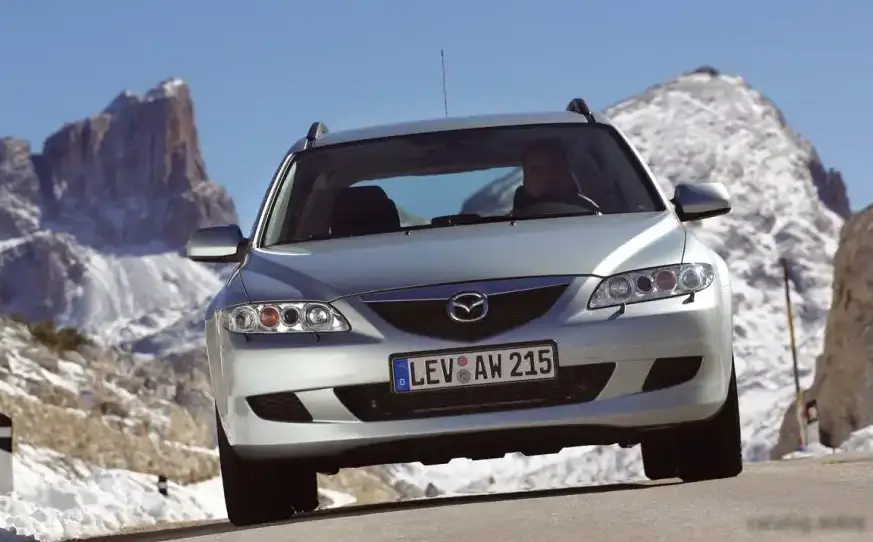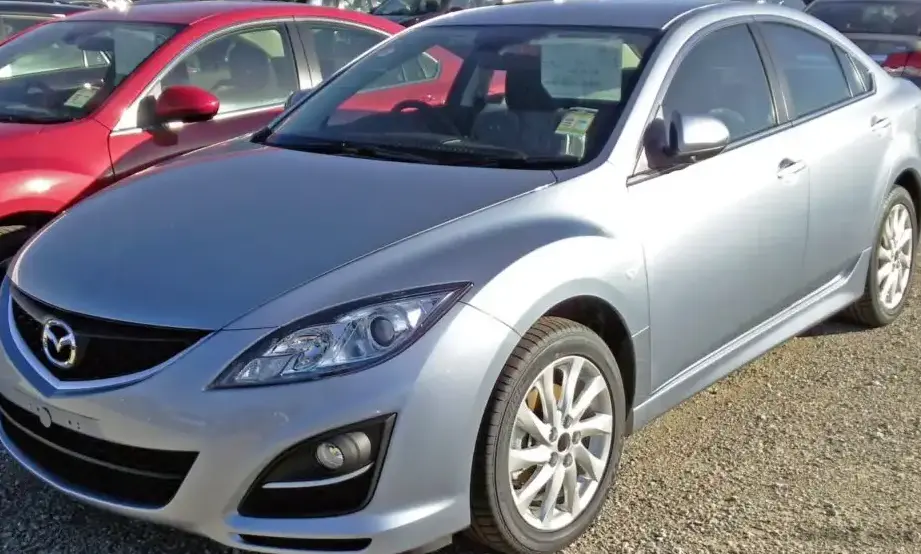
The Mazda 6 II Sedan (GH series, facelifted in 2010) equipped with the 3.7-liter V6 engine and automatic transmission represents the top-tier performance offering within the second generation of Mazda’s mid-size sedan. Produced from 2010 to 2012, this variant aimed to provide a more engaging driving experience and a premium feel compared to the more common four-cylinder options. It was positioned as a direct competitor to vehicles like the Honda Accord V6 and Toyota Camry V6 in the North American market, where larger displacement engines were still favored. The GH facelift brought revised styling, improved interior materials, and enhanced technology, solidifying the Mazda 6’s reputation as a driver-focused sedan.
Technical Specifications
| Brand | Mazda |
| Model | 6 |
| Generation | 6 II Sedan (GH, facelift 2010) |
| Type (Engine) | 3.7 V6 (272 Hp) Automatic |
| Start of production | 2010 |
| End of production | 2012 |
| Powertrain Architecture | Internal Combustion engine |
| Body type | Sedan |
| Seats | 5 |
| Doors | 4 |
| Fuel consumption (urban) | 13.1 l/100 km (18 US mpg, 21.6 UK mpg) |
| Fuel consumption (extra urban) | 8.7 l/100 km (27 US mpg, 32.5 UK mpg) |
| Fuel Type | Petrol (Gasoline) |
| Weight-to-power ratio | 6 kg/Hp, 167.8 Hp/tonne |
| Weight-to-torque ratio | 4.4 kg/Nm, 225.2 Nm/tonne |
| Power | 272 Hp @ 6250 rpm |
| Power per litre | 73 Hp/l |
| Torque | 365 Nm @ 4250 rpm (269.21 lb.-ft. @ 4250 rpm) |
| Engine layout | Front, Transverse |
| Engine Model/Code | CAY1 |
| Engine displacement | 3726 cm3 (227.37 cu. in.) |
| Number of cylinders | 6 |
| Engine configuration | V-engine |
| Cylinder Bore | 95.5 mm (3.76 in.) |
| Piston Stroke | 86.7 mm (3.41 in.) |
| Compression ratio | 10.3:1 |
| Number of valves per cylinder | 4 |
| Fuel injection system | Multi-port manifold injection |
| Engine aspiration | Naturally aspirated engine |
| Valvetrain | DOHC |
| Engine oil capacity | 5.2 l (5.49 US qt | 4.58 UK qt) |
| Coolant capacity | 8.9 l (9.4 US qt | 7.83 UK qt) |
| Kerb Weight | 1621 kg (3573.69 lbs.) |
| Trunk (boot) space (minimum) | 470 l (16.6 cu. ft.) |
| Fuel tank capacity | 70 l (18.49 US gal | 15.4 UK gal) |
| Length | 4920 mm (193.7 in.) |
| Width | 1839 mm (72.4 in.) |
| Height | 1471 mm (57.91 in.) |
| Wheelbase | 2725 mm (107.28 in.) |
| Front track | 1585-1595 mm (62.4 – 62.8 in.) |
| Rear track | 1585-1595 mm (62.4 – 62.8 in.) |
| Minimum turning circle | 10.8 m (35.43 ft.) |
| Drivetrain Architecture | Front wheel drive, Internal Combustion engine |
| Number of gears | 6 |
| Gearbox type | Automatic transmission |
| Front suspension | Double wishbone, Transverse stabilizer |
| Rear suspension | Independent multi-link suspension, Transverse stabilizer |
| Front brakes | Ventilated discs |
| Rear brakes | Disc |
| Assisting systems | ABS (Anti-lock braking system) |
| Steering type | Steering rack and pinion |
| Power steering | Electric Steering |
| Tires size | 215/55 R17; 235/45 R18 |
| Wheel rims size | 7J x 17; 8J x 18 |
Powertrain & Engine Architecture
The heart of this Mazda 6 variant is the CAY1 3.7-liter V6 engine. This engine, derived from Mazda’s AJ series of V6s, is a naturally aspirated powerplant featuring a 60-degree V-angle. It utilizes a multi-port fuel injection system and a double overhead camshaft (DOHC) valvetrain with four valves per cylinder. The engine’s design prioritizes smooth power delivery and responsiveness. The automatic transmission paired with this engine is a six-speed unit, designed to handle the engine’s substantial torque output. While not offering the lightning-fast shifts of some dual-clutch transmissions, it provides smooth and comfortable gear changes suitable for everyday driving. The transmission’s programming is tuned for a balance between fuel efficiency and performance.
Driving Characteristics
The 3.7L V6 automatic Mazda 6 delivers a noticeably different driving experience compared to the more common 2.5L four-cylinder models. Acceleration is brisk, with the V6 providing ample power for merging onto highways and overtaking. The automatic transmission, while smooth, can feel slightly less engaging than the available manual transmission. Gear ratios are optimized for a blend of performance and fuel economy, but the car truly shines in situations where the engine can operate within its optimal power band. Compared to the 2.5L engine, the V6 offers a more refined and powerful driving experience, but at the cost of increased fuel consumption.
Equipment & Trim Levels
The 3.7L V6 automatic trim typically represented the highest level of equipment available for the Mazda 6. Standard features often included leather upholstery, a premium sound system (often Bose), automatic climate control, power-adjustable front seats, and alloy wheels. Optional extras could include a navigation system, sunroof, and advanced safety features like blind-spot monitoring. Interior trim levels were generally upscale, with a focus on providing a comfortable and luxurious cabin environment. The overall aesthetic aimed for a sporty yet sophisticated feel.
Chassis & Braking
The Mazda 6 chassis was designed to provide a balance between comfort and handling. The front suspension utilizes a double wishbone setup, while the rear features an independent multi-link suspension. Both ends incorporate a transverse stabilizer bar to reduce body roll during cornering. Braking duties are handled by ventilated discs at the front and solid discs at the rear, providing adequate stopping power for the vehicle’s weight and performance. The inclusion of ABS (Anti-lock Braking System) is standard, enhancing safety during emergency braking situations.
Market Reception & Comparison
The 3.7L V6 Mazda 6 received generally positive reviews from automotive critics. It was praised for its powerful engine, comfortable ride, and well-appointed interior. However, fuel economy was often cited as a drawback compared to the four-cylinder models. In comparison to competitors like the Honda Accord V6 and Toyota Camry V6, the Mazda 6 offered a more engaging driving experience, but sometimes lacked the brand recognition and perceived reliability of its rivals. The V6 model appealed to buyers who prioritized performance and refinement over fuel efficiency.
Legacy
The 3.7L V6 engine in the Mazda 6, while not a high-volume seller, has developed a reputation for relative reliability. The engine itself is generally robust, but like any older vehicle, regular maintenance is crucial. Common issues can include oil leaks and sensor failures. In the used car market, these V6-powered Mazda 6 sedans are often sought after by enthusiasts who appreciate their unique combination of performance and value. While fuel economy isn’t exceptional by modern standards, the driving experience and overall refinement continue to make this variant a desirable option for those seeking a sporty and comfortable mid-size sedan.