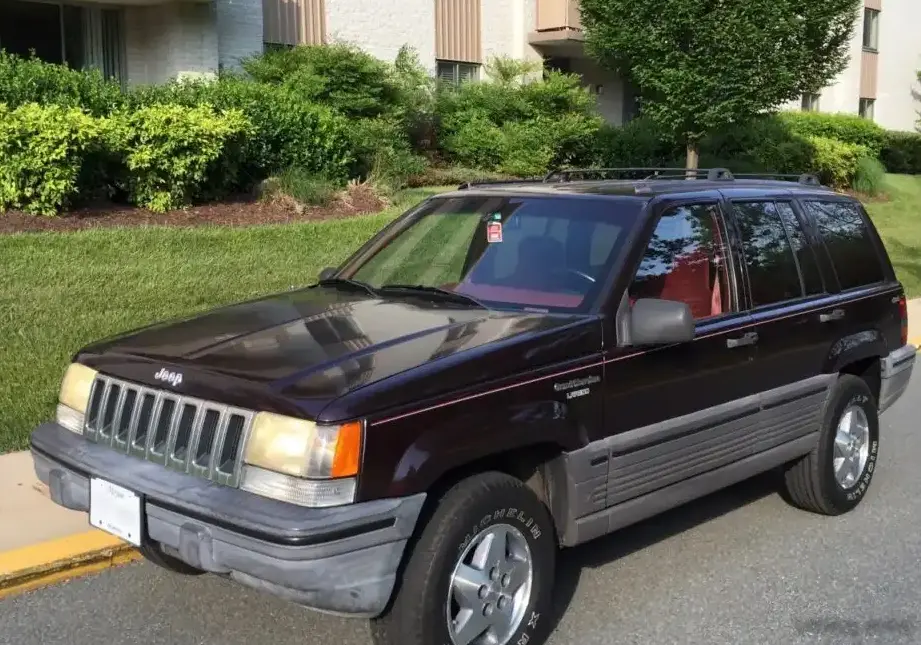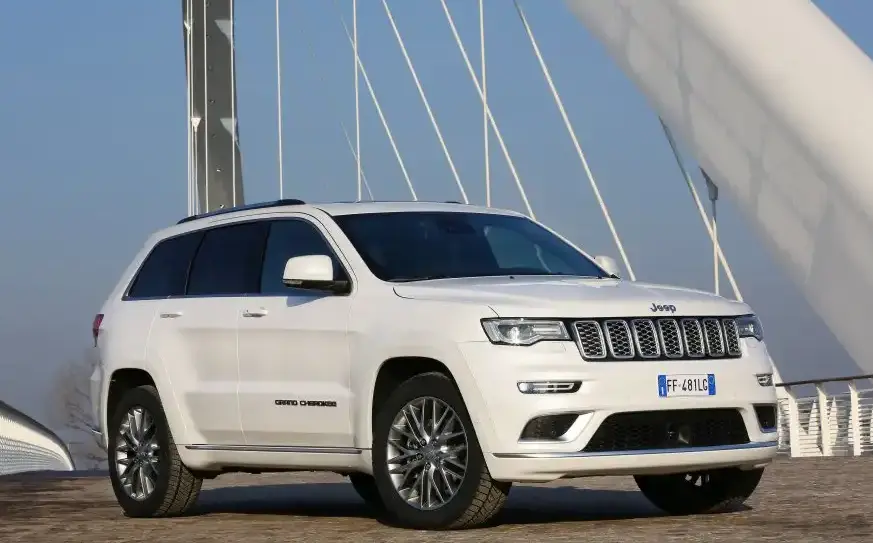
The Jeep Grand Cherokee IV (WK2), particularly the facelifted version introduced in 2017, represents a significant evolution in the iconic American SUV. Produced from 2017 through 2022, this generation continued the Grand Cherokee’s tradition of blending off-road capability with on-road refinement. The 3.6-liter V6 4×4 Automatic variant occupied a central position in the lineup, offering a balance of performance, fuel efficiency, and price. It served as the mainstay for buyers seeking a well-rounded Grand Cherokee experience, appealing to families and individuals alike. This model year saw updates to the exterior styling, interior technology, and safety features, further solidifying the WK2’s position in the competitive mid-size SUV segment.
Technical Specifications
| Brand | Jeep |
| Model | Grand Cherokee |
| Generation | Grand Cherokee IV (WK2, facelift 2017) |
| Type (Engine) | 3.6 V6 (295 Hp) 4×4 Automatic |
| Start of production | 2017 year |
| End of production | 2022 year |
| Powertrain Architecture | Internal Combustion engine |
| Body type | SUV |
| Seats | 5 |
| Doors | 5 |
| Fuel consumption (economy) – urban (EPA) | 13.1 l/100 km (18 US mpg, 21.6 UK mpg, 7.6 km/l) |
| Fuel consumption (economy) – extra urban (EPA) | 9.4 l/100 km (25 US mpg, 30.1 UK mpg, 10.6 km/l) |
| Fuel consumption (economy) – combined (EPA) | 11.2 l/100 km (21 US mpg, 25.2 UK mpg, 8.9 km/l) |
| Fuel Type | Petrol (Gasoline) |
| Weight-to-power ratio | 7.1 kg/Hp, 140.6 Hp/tonne |
| Weight-to-torque ratio | 5.9 kg/Nm, 168.3 Nm/tonne |
| Power | 295 Hp @ 6400 rpm |
| Power per litre | 81.9 Hp/l |
| Torque | 353 Nm @ 4000 rpm (260.36 lb.-ft. @ 4000 rpm) |
| Maximum engine speed | 6400 rpm |
| Engine layout | Front, Longitudinal |
| Engine Model/Code | Pentastar / ERB |
| Engine displacement | 3604 cm3 (219.93 cu. in.) |
| Number of cylinders | 6 |
| Engine configuration | V-engine |
| Cylinder Bore | 96 mm (3.78 in.) |
| Piston Stroke | 83 mm (3.27 in.) |
| Compression ratio | 10.2:1 |
| Number of valves per cylinder | 4 |
| Fuel injection system | Multi-port manifold injection |
| Engine aspiration | Naturally aspirated engine |
| Valvetrain | DOHC |
| Engine oil capacity | 5.7 l (6.02 US qt | 5.02 UK qt) |
| Coolant | 9.9 l (10.46 US qt | 8.71 UK qt) |
| Kerb Weight | 2098-2270 kg (4625.3 – 5004.49 lbs.) |
| Max. weight | 2948 kg (6499.23 lbs.) |
| Max load | 678-850 kg (1494.73 – 1873.93 lbs.) |
| Trunk (boot) space – minimum | 1028 l (36.3 cu. ft.) |
| Trunk (boot) space – maximum | 1934 l (68.3 cu. ft.) |
| Fuel tank capacity | 93.1 l (24.59 US gal | 20.48 UK gal) |
| Permitted trailer load with brakes (12%) | 2818 kg (6212.63 lbs.) |
| Length | 4822 mm (189.84 in.) |
| Width | 1943 mm (76.5 in.) |
| Width including mirrors | 2154 mm (84.8 in.) |
| Height | 1761 mm (69.33 in.) |
| Wheelbase | 2914 mm (114.72 in.) |
| Front track | 1623 mm (63.9 in.) |
| Rear (Back) track | 1627 mm (64.06 in.) |
| Ride height (ground clearance) | 218-264 mm (8.58 – 10.39 in.) |
| Drag coefficient (Cd) | 0.371 |
| Minimum turning circle (turning diameter) | 11.6 m (38.06 ft.) |
| Approach angle | 26.2-36.1° |
| Departure angle | 24-27.1° |
| Ramp-over (brakeover) angle | 19-22.8° |
| Drivetrain Architecture | The Internal combustion engine (ICE) drives permanently the four wheels of the vehicle. |
| Drive wheel | All wheel drive (4×4) |
| Number of gears and type of gearbox | 8 gears, automatic transmission |
| Front suspension | Coil spring, Double wishbone, Transverse stabilizer, Air Suspension – Optional |
| Rear suspension | Independent multi-link spring suspension with stabilizer, Air Suspension – Optional |
| Front brakes | Ventilated discs, 330×32 mm |
| Rear brakes | Disc, 330×14 mm |
| Assisting systems | ABS (Anti-lock braking system) |
| Steering type | Steering rack and pinion |
| Power steering | Electric Steering |
| Tires size | 265/60 R18; 265/50 R20 |
| Wheel rims size | 8J x 18; 8J x 20 |
Powertrain & Engine Architecture
The heart of this Grand Cherokee variant is the 3.6-liter “Pentastar” V6 engine, designated as the ERB code. This engine is a naturally aspirated, 60-degree V6 featuring a lightweight aluminum block and cylinder heads. It utilizes a multi-port fuel injection system, delivering fuel directly into the intake ports. The engine employs a double overhead camshaft (DOHC) valvetrain with four valves per cylinder, optimizing airflow for improved performance. The 8-speed automatic transmission, sourced from ZF, is a key component of this powertrain. This transmission offers smooth and efficient gear changes, contributing to both fuel economy and drivability. The transmission’s wide gear ratio spread allows the engine to operate in its optimal power band more frequently.
Driving Characteristics
The 3.6L V6 with the 8-speed automatic provides a comfortable and capable driving experience. While not as quick as the higher-output V8 options, it delivers adequate power for everyday driving and highway cruising. The automatic transmission is well-tuned, offering responsive shifts and minimizing hunting for the right gear. The gear ratios are optimized for both acceleration and fuel efficiency. Compared to the manual transmission versions (available in other Grand Cherokee trims), the automatic prioritizes ease of use and convenience over outright performance. The 4×4 system provides confident traction in various conditions, making it suitable for light off-road adventures.
Equipment & Trim Levels
The 3.6L V6 Automatic Grand Cherokee typically came standard with features like air conditioning, power windows and locks, a touchscreen infotainment system, and a rearview camera. Higher trim levels, such as the Limited and Overland, added features like leather upholstery, heated seats, a premium sound system, and advanced safety technologies. Optional extras included a panoramic sunroof, navigation system, and various driver-assistance features. The interior design was generally upscale, with comfortable seating and a well-laid-out dashboard.
Chassis & Braking
The WK2 Grand Cherokee features an independent front suspension with a double wishbone setup and a multi-link independent rear suspension. Many models were equipped with optional air suspension, which allowed for adjustable ride height and improved off-road capability. The braking system consists of ventilated discs at the front and discs at the rear. Anti-lock brakes (ABS) are standard, providing enhanced stopping power and control. Stabilizer bars are fitted to both the front and rear axles to reduce body roll during cornering.
Market Reception & Comparison
The 3.6L V6 Automatic Grand Cherokee was generally well-received by critics and consumers. It was praised for its comfortable ride, spacious interior, and capable 4×4 system. Fuel economy was considered reasonable for a vehicle of its size and class. Compared to the V8-powered Grand Cherokees, the V6 offered a more affordable entry point and better fuel efficiency, but at the expense of some performance. The V6 was also a more practical choice for buyers who didn’t require the extra power of the V8 for towing or off-roading.
Legacy
The 3.6L Pentastar V6 engine has proven to be a reliable and durable powertrain. While some minor issues have been reported, such as oil leaks and coolant system problems, these are generally not widespread. The 8-speed automatic transmission has also demonstrated good reliability. In the used car market, the 3.6L V6 Grand Cherokee represents a good value proposition, offering a blend of comfort, capability, and affordability. Regular maintenance and timely repairs are essential to ensure the long-term reliability of this powertrain.