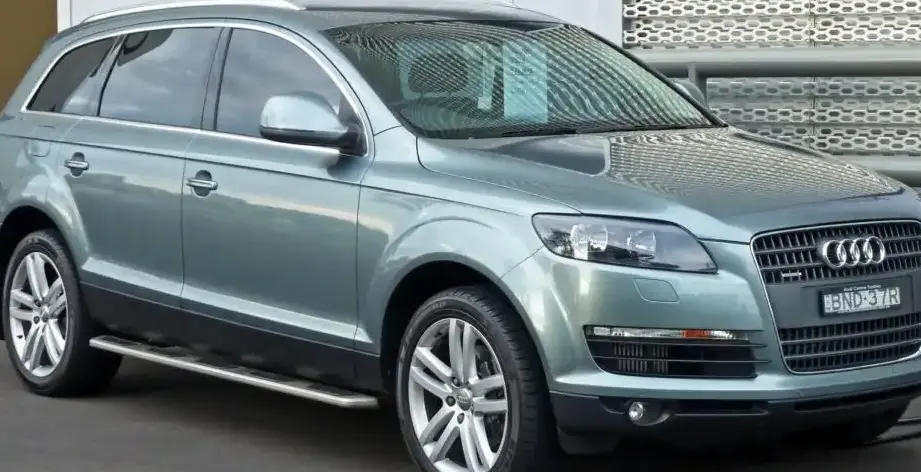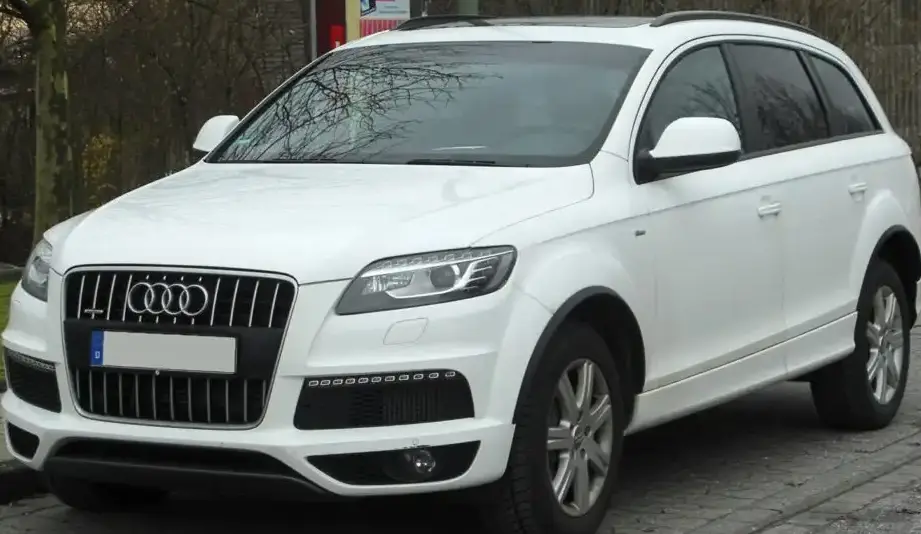
The Audi Q7 6.0 V12 TDI quattro, produced from 2009 to May 2014, represented the pinnacle of performance and luxury within the Typ 4L Q7 facelift range. Positioned as the flagship model, it offered a substantial step up in power and refinement compared to the more common 3.0 TDI and 4.2 FSI variants. This variant was primarily aimed at buyers seeking a high-performance SUV with diesel efficiency and the all-weather capability of Audi’s quattro all-wheel-drive system. It was sold primarily in Europe and select international markets, with limited availability in the United States.
Technical Specifications
| Brand | Audi |
| Model | Q7 |
| Generation | Q7 (Typ 4L, facelift 2009) |
| Type (Engine) | 6.0 V12 TDI (500 Hp) quattro DPF tiptronic |
| Start of production | 2009 |
| End of production | May, 2014 |
| Powertrain Architecture | Internal Combustion engine |
| Body type | SUV |
| Seats | 5 |
| Doors | 5 |
| Fuel consumption (urban) | 14.8 l/100 km (15.9 US mpg, 19.1 UK mpg, 6.8 km/l) |
| Fuel consumption (extra urban) | 9.3 l/100 km (25.3 US mpg, 30.4 UK mpg, 10.8 km/l) |
| Fuel consumption (combined) | 11.3 l/100 km (20.8 US mpg, 25 UK mpg, 8.8 km/l) |
| Fuel Type | Diesel |
| Acceleration 0 – 100 km/h | 5.5 sec |
| Acceleration 0 – 62 mph | 5.5 sec |
| Acceleration 0 – 60 mph | 5.2 sec |
| Maximum speed | 250 km/h (155.34 mph) |
| Emission standard | Euro 4 |
| Weight-to-power ratio | 5.4 kg/Hp, 186.6 Hp/tonne |
| Weight-to-torque ratio | 2.7 kg/Nm, 373.1 Nm/tonne |
| Power | 500 Hp @ 3750 rpm |
| Power per litre | 84.3 Hp/l |
| Torque | 1000 Nm @ 1750-3250 rpm (737.56 lb.-ft. @ 1750-3250 rpm) |
| Maximum engine speed | 4750 rpm |
| Engine layout | Front, Longitudinal |
| Engine Model/Code | CCGA |
| Engine displacement | 5934 cm3 (362.11 cu. in.) |
| Number of cylinders | 12 |
| Engine configuration | V-engine |
| Cylinder Bore | 83 mm (3.27 in.) |
| Piston Stroke | 91.4 mm (3.6 in.) |
| Compression ratio | 16:1 |
| Number of valves per cylinder | 4 |
| Fuel injection system | Diesel Commonrail |
| Engine aspiration | Twin-Turbo, Intercooler |
| Valvetrain | DOHC |
| Engine oil capacity | 12.5 l (13.21 US qt | 11 UK qt) |
| Kerb Weight | 2680 kg (5908.39 lbs.) |
| Max. weight | 3475 kg (7661.06 lbs.) |
| Max load | 795 kg (1752.67 lbs.) |
| Trunk (boot) space – minimum | 775 l (27.37 cu. ft.) |
| Trunk (boot) space – maximum | 2035 l (71.87 cu. ft.) |
| Fuel tank capacity | 100 l (26.42 US gal | 22 UK gal) |
| Max. roof load | 100 kg (220.46 lbs.) |
| Permitted towbar download | 130 kg (286.6 lbs.) |
| Length | 5089 mm (200.35 in.) |
| Width | 1983 mm (78.07 in.) |
| Width including mirrors | 2177 mm (85.71 in.) |
| Height | 1737 mm (68.39 in.) |
| Wheelbase | 3002 mm (118.19 in.) |
| Front track | 1651 mm (65 in.) |
| Rear (Back) track | 1681 mm (66.18 in.) |
| Front overhang | 962 mm (37.87 in.) |
| Rear overhang | 1125 mm (44.29 in.) |
| Ride height (ground clearance) | 240 mm (9.45 in.) |
| Drag coefficient (Cd) | 0.35 |
| Minimum turning circle | 12 m (39.37 ft.) |
| Drive wheel | All wheel drive (4×4) |
| Number of gears and type of gearbox | 6 gears, automatic transmission Tiptronic |
| Front suspension | Independent multi-link suspension |
| Rear suspension | Double wishbone |
| Front brakes | Ventilated discs |
| Rear brakes | Ventilated discs |
| Assisting systems | ABS (Anti-lock braking system) |
| Steering type | Steering rack and pinion |
| Tires size | 295/40 R20 |
| Wheel rims size | 20 |
Powertrain & Engine Architecture
The heart of the Q7 6.0 TDI was the CCGA engine, a 6.0-liter V12 diesel engine. This engine utilized a cast iron block and aluminum cylinder heads, featuring four valves per cylinder and a double overhead camshaft (DOHC) configuration. The engine employed a sophisticated common rail direct injection system, delivering fuel at extremely high pressures for optimized combustion. Crucially, the CCGA engine was equipped with twin turbochargers, sequentially activated to provide both low-end responsiveness and high-end power. An intercooler further cooled the compressed intake air, increasing density and improving performance. The six-speed Tiptronic automatic transmission, a torque converter-based unit, was specifically calibrated to handle the immense 1000 Nm (737 lb-ft) of torque produced by the V12 engine. This transmission offered both fully automatic operation and manual gear selection via steering wheel-mounted paddles.
Driving Characteristics
The Q7 6.0 TDI delivered a unique driving experience for a vehicle of its size. The prodigious torque output, available from a remarkably low 1750 rpm, provided effortless acceleration in virtually any situation. The 0-60 mph sprint was dispatched in around 5.2 seconds, making it genuinely quick for a large SUV. While not as overtly sporty as some competitors, the Q7 offered a composed and stable ride, thanks to its air suspension and quattro all-wheel-drive system. The Tiptronic transmission, while smooth, wasn’t as quick-shifting as some dual-clutch transmissions found in rival vehicles. Compared to the 3.0 TDI, the V12 offered a significantly more relaxed driving experience, requiring less frequent gear changes. Against the 4.2 FSI gasoline engine, the V12 provided superior fuel economy and a broader, more usable powerband.
Equipment & Trim Levels
As the range-topping model, the Q7 6.0 TDI came standard with a comprehensive list of features. These included leather upholstery, heated and ventilated front seats with massage function, a premium sound system, navigation system, and a panoramic sunroof. Standard exterior features included 20-inch alloy wheels, adaptive air suspension, and LED headlights. Optional extras included rear seat entertainment, advanced driver-assistance systems (such as adaptive cruise control and lane keeping assist), and various customization options for interior trim and exterior paint.
Chassis & Braking
The Q7 6.0 TDI featured a fully independent suspension system, with multi-link setups at the front and rear. The air suspension allowed for adjustable ride height and damping settings, providing a comfortable ride and improved off-road capability. Braking duties were handled by ventilated disc brakes on all four wheels, providing ample stopping power. The quattro all-wheel-drive system utilized a Torsen center differential, distributing torque between the front and rear axles as needed. Electronic Stability Control (ESC) and Anti-lock Braking System (ABS) were standard safety features.
Market Reception & Comparison
The Q7 6.0 TDI was generally well-received by automotive critics, who praised its powerful engine, luxurious interior, and comfortable ride. However, its high price tag and relatively low fuel economy (compared to the 3.0 TDI) were noted as drawbacks. Compared to rivals like the Porsche Cayenne S Diesel and the BMW X5 xDrive30d, the Q7 offered a more spacious interior and a more comfortable ride, but lacked the same level of sporting agility. The V12 TDI was often seen as a statement of intent, a demonstration of Audi’s engineering prowess rather than a purely rational purchase.
Legacy
The CCGA engine, while powerful and refined, proved to be complex and potentially expensive to maintain. The twin turbochargers and common rail injection system required careful servicing, and the particulate filter (DPF) could be prone to clogging if the vehicle was primarily used for short trips. Today, the Q7 6.0 TDI remains a relatively rare sight on the used car market. Well-maintained examples command a premium price, appealing to enthusiasts who appreciate its unique combination of performance, luxury, and exclusivity. However, potential buyers should be aware of the potential maintenance costs associated with this high-performance diesel engine.