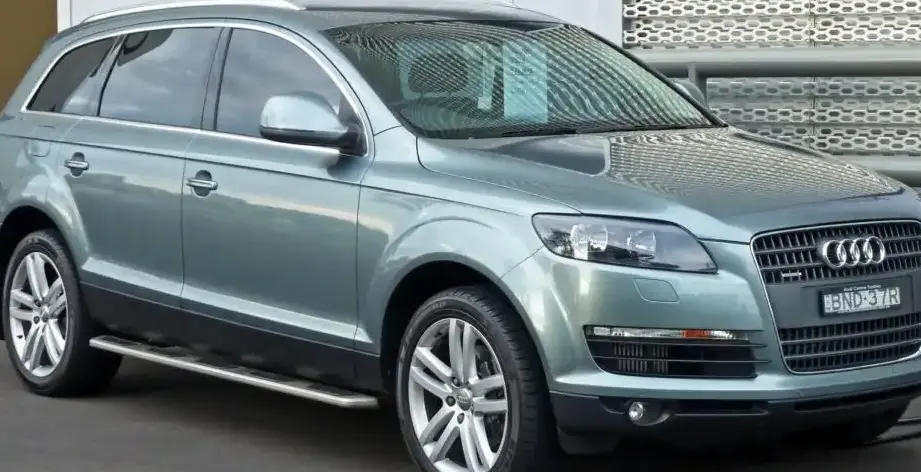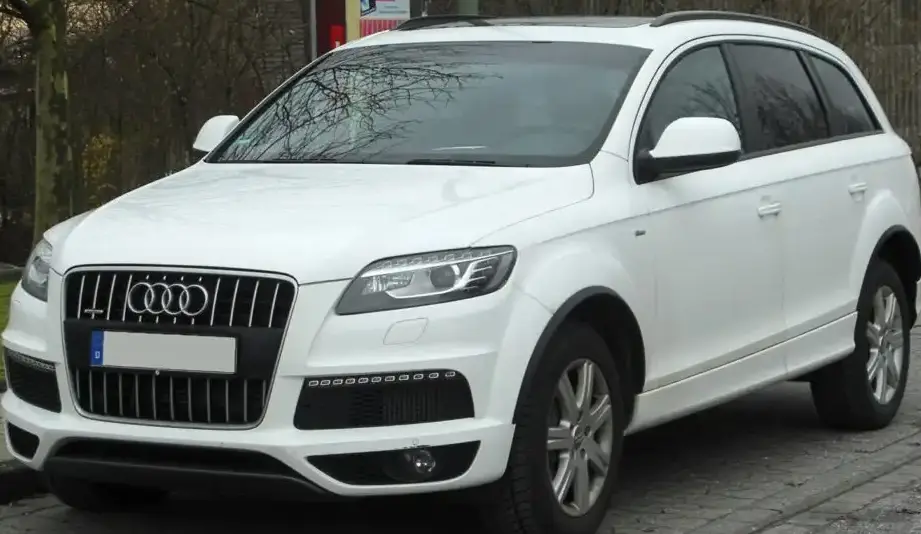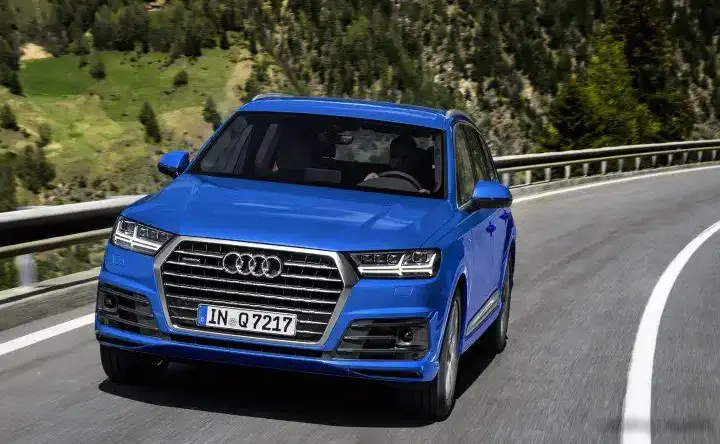
The Audi Q7 (Typ 4M) 45 TDI V6 quattro Mild Hybrid tiptronic represents a significant iteration of Audi’s popular luxury SUV, produced from 2018 to 2019. Positioned as a mid-range offering within the broader Typ 4M Q7 lineup, this variant combined a potent diesel engine with a sophisticated mild-hybrid system and an eight-speed automatic transmission, all while delivering Audi’s signature quattro all-wheel drive. It was designed to balance performance, fuel efficiency, and luxury, appealing to buyers seeking a capable and refined family SUV. The 45 TDI trim level denoted a specific power output within the Q7 range, differentiating it from the more powerful 50 TDI and 55 TFSI models.
Technical Specifications
| Brand | Audi |
| Model | Q7 |
| Generation | Q7 (Typ 4M) |
| Type (Engine) | 45 TDI V6 (231 Hp) quattro Mild Hybrid tiptronic |
| Start of production | 2018 |
| End of production | 2019 |
| Powertrain Architecture | MHEV (Mild Hybrid Electric Vehicle) |
| Body type | SUV |
| Seats | 5 |
| Doors | 5 |
| Fuel consumption (urban) | 7.1-7.2 l/100 km (33.1 – 32.7 US mpg) |
| Fuel consumption (extra urban) | 6.2-6.4 l/100 km (37.9 – 36.8 US mpg) |
| Fuel consumption (combined) | 6.5-6.7 l/100 km (36.2 – 35.1 US mpg) |
| CO2 emissions | 172-175 g/km |
| Fuel Type | Diesel |
| Acceleration 0 – 100 km/h | 7.1 sec |
| Acceleration 0 – 62 mph | 7.1 sec |
| Acceleration 0 – 60 mph | 6.7 sec |
| Maximum speed | 229 km/h (142.29 mph) |
| Emission standard | Euro 6d-Temp |
| Weight-to-power ratio | 9 kg/Hp |
| Weight-to-torque ratio | 4.1 kg/Nm |
| Power | 231 Hp @ 3250-4750 rpm |
| Torque | 500 Nm @ 1750-3250 rpm (368.78 lb.-ft.) |
| Engine layout | Front, Longitudinal |
| Engine Model/Code | DHXC |
| Engine displacement | 2967 cm3 (181.06 cu. in.) |
| Number of cylinders | 6 |
| Engine configuration | V-engine |
| Cylinder Bore | 83 mm (3.27 in.) |
| Piston Stroke | 91.4 mm (3.6 in.) |
| Compression ratio | 16:1 |
| Number of valves per cylinder | 4 |
| Fuel injection system | Diesel Commonrail |
| Engine aspiration | Turbocharger, Intercooler |
| Engine oil capacity | 6.1 l (6.45 US qt | 5.37 UK qt) |
| Coolant capacity | 12.3 l (13 US qt | 10.82 UK qt) |
| Kerb Weight | 2070 kg (4563.57 lbs.) |
| Max. weight | 2815 kg (6206.01 lbs.) |
| Max load | 745 kg (1642.44 lbs.) |
| Trunk (boot) space – minimum | 890 l (31.43 cu. ft.) |
| Trunk (boot) space – maximum | 2075 l (73.28 cu. ft.) |
| Fuel tank capacity | 75 l (19.81 US gal | 16.5 UK gal) |
| AdBlue tank capacity | 24 l (6.34 US gal | 5.28 UK gal) |
| Max. roof load | 100 kg (220.46 lbs.) |
| Permitted trailer load with brakes (8%) | 2700 kg (5952.48 lbs.) |
| Permitted trailer load without brakes | 750 kg (1653.47 lbs.) |
| Length | 5052 mm (198.9 in.) |
| Width | 1968 mm (77.48 in.) |
| Height | 1740 mm (68.5 in.) |
| Wheelbase | 2994 mm (117.87 in.) |
| Number of gears | 8 |
| Type of gearbox | automatic transmission Tiptronic |
Powertrain & Engine Architecture
At the heart of the Q7 45 TDI lies the DHXC engine, a 3.0-liter V6 turbocharged diesel engine. This engine is part of Audi’s modular engine family, known for its robust construction and refined operation. The engine utilizes a common-rail direct injection system, delivering fuel at extremely high pressures for optimized combustion. A single turbocharger, coupled with an intercooler, provides ample boost, contributing to the engine’s 500 Nm (368.78 lb.-ft.) of torque. The mild-hybrid system, a 48-volt electrical system, incorporates a belt alternator-starter (BAS) unit. This system allows for extended engine-off coasting, regenerative braking to recoup energy, and smoother start-stop operation, improving fuel economy. The eight-speed Tiptronic automatic transmission is a torque-converter type, offering smooth and responsive shifts. It features adaptive shift programs that adjust to the driver’s style and road conditions.
Driving Characteristics
The 45 TDI’s powertrain delivers a balanced driving experience. While not as overtly sporty as the higher-powered variants, the 231 hp and 500 Nm of torque provide ample power for everyday driving and confident overtaking. Acceleration from 0 to 60 mph takes approximately 6.7 seconds. The eight-speed Tiptronic transmission is well-tuned, providing seamless gear changes and keeping the engine within its optimal power band. The quattro all-wheel-drive system ensures excellent traction in all weather conditions. Compared to the more powerful 50 TDI, the 45 TDI feels slightly less urgent in its acceleration, but the difference is often negligible in real-world driving. The mild-hybrid system contributes to a refined and quiet driving experience, particularly in urban environments.
Equipment & Trim Levels
The Q7 45 TDI typically came well-equipped as standard. Features included leather upholstery, tri-zone automatic climate control, a panoramic sunroof, and Audi’s MMI infotainment system with a touchscreen display. Standard safety features included Audi pre sense basic, lane departure warning, and parking sensors. Optional extras included adaptive cruise control, a head-up display, a Bang & Olufsen sound system, and various interior trim upgrades. The specific trim level could vary depending on the market, but generally, the 45 TDI sat in the middle of the Q7 range, offering a good balance of features and price.
Chassis & Braking
The Q7 (Typ 4M) features an independent multi-link suspension system at both the front and rear axles. This setup provides a comfortable ride and good handling characteristics. The suspension is tuned to prioritize comfort, but still offers a reasonable level of body control. Braking duties are handled by ventilated discs on all four wheels. The braking system is assisted by ABS (Anti-lock Braking System) and electronic stability control. The steering is an electric power steering system, providing precise and responsive steering feel.
Market Reception & Comparison
The Audi Q7 45 TDI was generally well-received by automotive critics. It was praised for its comfortable ride, spacious interior, and refined powertrain. The mild-hybrid system was seen as a positive step towards improved fuel efficiency. Compared to the 50 TDI, the 45 TDI offered a more affordable entry point into the Q7 range, while still providing a luxurious and capable driving experience. Fuel economy figures of around 36 mpg combined were competitive for its class. Reliability reports suggest that the DHXC engine is generally robust, but like all modern diesel engines, it is susceptible to issues with the diesel particulate filter (DPF) if not driven on longer journeys regularly.
Legacy
The Audi Q7 (Typ 4M) 45 TDI V6 quattro Mild Hybrid tiptronic remains a popular choice in the used car market. Its combination of luxury, practicality, and fuel efficiency continues to appeal to buyers. The DHXC engine, while requiring careful maintenance (particularly regarding the DPF), is known for its durability. The mild-hybrid technology, while not as advanced as full hybrid systems, represented an important step in Audi’s electrification strategy. Today, well-maintained examples of this Q7 variant can provide years of reliable service, offering a comfortable and capable driving experience.