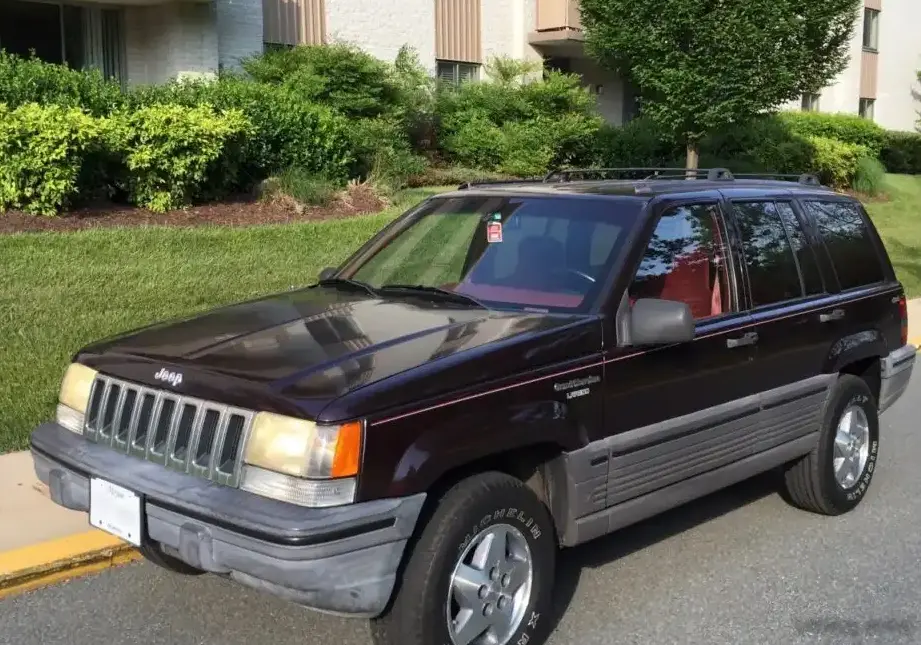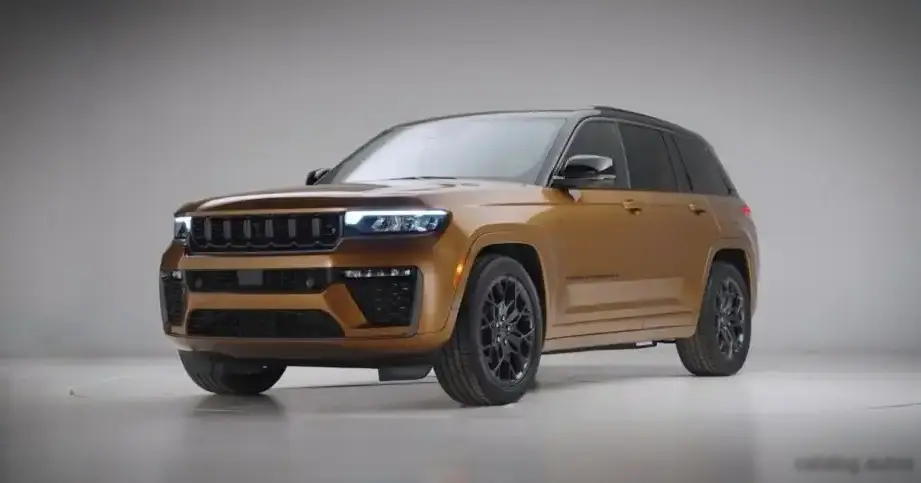
The Jeep Grand Cherokee V (WL), specifically the facelift model introduced in late 2025, represents a significant evolution of Jeep’s flagship SUV. This variant, powered by a 2.0-liter turbocharged inline-four engine producing 324 horsepower and paired with a TorqueFlite eight-speed automatic transmission, occupies a key position in the Grand Cherokee lineup, offering a balance of performance, efficiency, and technology. Production commenced in October 2025, aiming to cater to buyers seeking a more fuel-conscious option without sacrificing the Grand Cherokee’s renowned capability and refinement. This model builds upon the foundation of the WL platform, first introduced as a substantial redesign, and incorporates styling and technology updates for the 2025 model year.
Technical Specifications
| Brand | Jeep |
| Model | Grand Cherokee |
| Generation | Grand Cherokee V (WL, facelift 2025) |
| Type (Engine) | 2.0 Turbo (324 Hp) TorqueFlite |
| Start of production | October, 2025 |
| Powertrain Architecture | Internal Combustion engine |
| Body type | SUV |
| Seats | 5 |
| Doors | 5 |
| Fuel Type | Petrol (Gasoline) |
| Power | 324 Hp @ 6000 rpm |
| Power per litre | 162.4 Hp/l |
| Torque | 450 Nm @ 3000-4500 rpm |
| Torque (lb.-ft.) | 331.9 lb.-ft. @ 3000-4500 rpm |
| Maximum engine speed | 6500 rpm |
| Engine layout | Front, Longitudinal |
| Engine Model/Code | Hurricane |
| Engine displacement | 1995 cm3 |
| Engine displacement (cu. in.) | 121.74 cu. in. |
| Number of cylinders | 4 |
| Engine configuration | Inline |
| Cylinder Bore | 84 mm |
| Cylinder Bore (in.) | 3.31 in. |
| Piston Stroke | 90 mm |
| Piston Stroke (in.) | 3.54 in. |
| Compression ratio | 12:1 |
| Number of valves per cylinder | 4 |
| Fuel injection system | Direct injection and Multi-port manifold injection |
| Engine aspiration | Turbocharger, Intercooler |
| Valvetrain | DOHC |
| Engine oil capacity | 4.7 l |
| Engine oil capacity (US qt/UK qt) | 4.97 US qt | 4.14 UK qt |
| Coolant capacity | 10 l |
| Coolant capacity (US qt/UK qt) | 10.57 US qt | 8.8 UK qt |
| Engine systems | Start & Stop System |
| Max. weight | 2744 kg |
| Max. weight (lbs.) | 6049.48 lbs. |
| Trunk (boot) space – minimum | 1068 l |
| Trunk (boot) space – minimum (cu. ft.) | 37.72 cu. ft. |
| Trunk (boot) space – maximum | 2005 l |
| Trunk (boot) space – maximum (cu. ft.) | 70.81 cu. ft. |
| Fuel tank capacity | 87 l |
| Fuel tank capacity (US gal/UK gal) | 22.98 US gal | 19.14 UK gal |
| Permitted trailer load with brakes (12%) | 2818 kg |
| Permitted trailer load with brakes (12%) (lbs.) | 6212.63 lbs. |
| Length | 4914 mm |
| Length (in.) | 193.46 in. |
| Width | 1968 mm |
| Width (in.) | 77.48 in. |
| Width with mirrors folded | 1968 mm |
| Width with mirrors folded (in.) | 77.48 in. |
| Width including mirrors | 2149 mm |
| Width including mirrors (in.) | 84.61 in. |
| Height | 1799-1801 mm |
| Height (in.) | 70.83 – 70.91 in. |
| Wheelbase | 2964 mm |
| Wheelbase (in.) | 116.69 in. |
| Front track | 1660 mm |
| Front track (in.) | 65.35 in. |
| Rear (Back) track | 1660 mm |
| Rear (Back) track (in.) | 65.35 in. |
| Ride height (ground clearance) | 214-276 mm |
| Ride height (ground clearance) (in.) | 8.43 – 10.87 in. |
| Drag coefficient (Cd) | 0.357 |
| Minimum turning circle (turning diameter) | 11.58 m |
| Minimum turning circle (turning diameter) (ft.) | 37.99 ft. |
| Approach angle | 20.5-30.1° |
| Departure angle | 19.1-24° |
| Ramp-over (brakeover) angle | 26.6° |
| Drivetrain Architecture | The Internal combustion engine (ICE) drives the rear wheels of the vehicle. |
| Drive wheel | Rear wheel drive |
| Number of gears and type of gearbox | 8 gears, automatic transmission TorqueFlite |
| Front suspension | Coil spring, Independent multi-link suspension, Transverse stabilizer, Air Suspension – Optional |
| Rear suspension | Independent multi-link spring suspension with stabilizer, Air Suspension – Optional |
| Front brakes | Ventilated discs, 354×28 mm |
| Rear brakes | Ventilated discs, 350×22 mm |
| Assisting systems | ABS (Anti-lock braking system) |
| Steering type | Steering rack and pinion |
| Power steering | Electric Steering |
| Tires size | 245/70 R17; 265/60 R18; 265/50 R20; 275/45 R21 |
| Wheel rims size | 8J x 17; 8J x 18; 8.5J x 20; 9J x 21 |
Powertrain & Engine Architecture
The heart of this Grand Cherokee variant is the Hurricane 2.0-liter turbocharged inline-four engine. This engine utilizes a combination of direct injection and multi-port fuel injection, optimizing combustion efficiency and power delivery. The engine’s turbocharger, coupled with an intercooler, provides increased air density for enhanced performance. The engine produces 324 horsepower at 6000 rpm and 450 Nm (331.9 lb-ft) of torque between 3000 and 4500 rpm. The TorqueFlite eight-speed automatic transmission is specifically tuned to complement the engine’s characteristics, providing smooth and responsive shifts. This transmission features a wide gear ratio spread, aiding both acceleration and fuel economy. The engine also incorporates a Start & Stop system to further improve efficiency in city driving.
Driving Characteristics
The 2.0-liter Turbo with the TorqueFlite automatic delivers a noticeably different driving experience compared to the higher-output V6 or V8 Grand Cherokee models. While lacking the outright acceleration of its siblings, it provides ample power for everyday driving and highway cruising. The TorqueFlite transmission’s programming prioritizes smooth shifts and fuel efficiency, resulting in a comfortable and refined ride. The gear ratios are optimized for mid-range torque, making it easy to maintain speed on inclines and during overtaking maneuvers. Compared to a manual transmission, the automatic offers convenience and ease of use, particularly in stop-and-go traffic. However, drivers seeking a more engaging driving experience may find the automatic less responsive than a manual counterpart.
Equipment & Trim Levels
The 2.0-liter Turbo Grand Cherokee typically comes standard with a well-appointed interior, including cloth upholstery, a user-friendly infotainment system with a touchscreen display, and a suite of driver-assistance features such as automatic emergency braking and lane departure warning. Higher trim levels offer upgrades such as leather upholstery, premium audio systems, and advanced safety technologies like adaptive cruise control and blind-spot monitoring. Optional extras include a panoramic sunroof, heated and ventilated seats, and a rear-seat entertainment system.
Chassis & Braking
The Grand Cherokee V utilizes a robust chassis with a coil spring, independent multi-link suspension at all four corners. An optional air suspension system is available, providing adjustable ride height and enhanced off-road capability. The braking system consists of ventilated discs on all wheels, with larger rotors at the front (354×28 mm) compared to the rear (350×22 mm). The vehicle is equipped with an Anti-lock Braking System (ABS) for improved stopping power and stability. Stabilizer bars are fitted to both the front and rear suspension to minimize body roll during cornering.
Market Reception & Comparison
The 2.0-liter Turbo Grand Cherokee has been generally well-received by critics as a viable option for buyers prioritizing fuel efficiency and value. While not as powerful as the V6 or V8 models, it offers a competitive level of performance for its class. Fuel economy figures are notably better than those of the larger-displacement engines, making it an attractive choice for those who do a lot of highway driving. Reliability has been generally good, with the Hurricane engine proving to be a durable and dependable powerplant. Compared to the V6, the 2.0-liter offers a lower price point and better fuel economy, while the V8 provides significantly more power and towing capacity.
Legacy
The 2.0-liter Turbo Grand Cherokee (WL) represents a step towards a more fuel-efficient future for the iconic SUV. The Hurricane engine, with its advanced technology and robust design, is expected to provide long-term reliability. As these vehicles enter the used car market, they are likely to appeal to buyers seeking a comfortable, capable, and fuel-conscious SUV with a proven track record. The combination of Jeep’s renowned off-road heritage and the efficiency of a turbocharged four-cylinder engine positions this variant as a compelling option in the mid-size SUV segment.