Technical Specifications
| Brand | Mazda |
| Model | 6 |
| Generation | 6 III Sport Combi (GJ) |
| Type (Engine) | 2.2 SKYACTIV-D (150 Hp) i-ELOOP |
| Start of production | 2012 |
| End of production | 2015 |
| Powertrain Architecture | Internal Combustion engine |
| Body type | Station wagon (estate) |
| Seats | 5 |
| Doors | 5 |
| Fuel consumption (urban) | 5.5 l/100 km (42.8 US mpg, 51.4 UK mpg, 18.2 km/l) |
| Fuel consumption (extra urban) | 3.8 l/100 km (61.9 US mpg, 74.3 UK mpg, 26.3 km/l) |
| Fuel consumption (combined) | 4.4 l/100 km (53.5 US mpg, 64.2 UK mpg, 22.7 km/l) |
| Fuel Type | Diesel |
| Acceleration 0 – 100 km/h | 9.1 sec |
| Acceleration 0 – 62 mph | 9.1 sec |
| Acceleration 0 – 60 mph | 8.6 sec |
| Maximum speed | 210 km/h (130.49 mph) |
| Emission standard | Euro 6 |
| Weight-to-power ratio | 9.5 kg/Hp, 105.6 Hp/tonne |
| Weight-to-torque ratio | 3.7 kg/Nm, 267.6 Nm/tonne |
| Power | 150 Hp @ 4500 rpm |
| Power per litre | 68.7 Hp/l |
| Torque | 380 Nm @ 2000 rpm (280.27 lb.-ft. @ 2000 rpm) |
| Engine layout | Front, Transverse |
| Engine displacement | 2184 cm3 (133.28 cu. in.) |
| Number of cylinders | 4 |
| Engine configuration | Inline |
| Number of valves per cylinder | 4 |
| Fuel injection system | Diesel Commonrail |
| Engine aspiration | BiTurbo, Intercooler |
| Engine oil capacity | 5.1 l (5.39 US qt | 4.49 UK qt) |
| Coolant capacity | 8.5 l (8.98 US qt | 7.48 UK qt) |
| Kerb Weight | 1420 kg (3130.56 lbs) |
| Trunk (boot) space – minimum | 502 l (17.73 cu. ft) |
| Fuel tank capacity | 62 l (16.38 US gal | 13.64 UK gal) |
| Length | 4800 mm (188.98 in) |
| Width | 1840 mm (72.44 in) |
| Height | 1480 mm (58.27 in) |
| Wheelbase | 2750 mm (108.27 in) |
| Drivetrain Architecture | Front wheel drive |
| Number of gears and type of gearbox | 6 gears, manual transmission |
| Assisting systems | ABS (Anti-lock braking system) |
| Steering type | Steering rack and pinion |
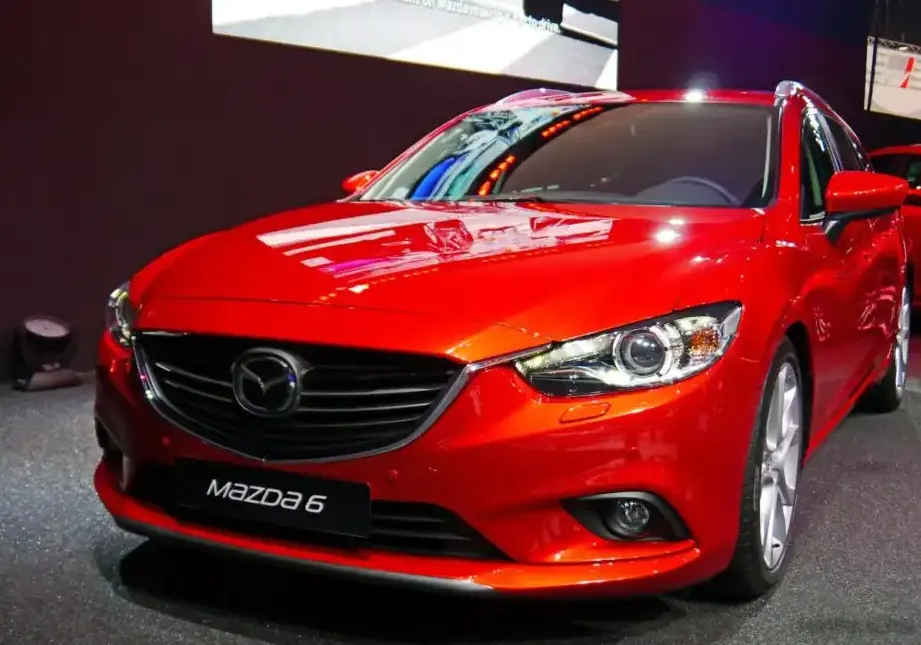
The Mazda 6 III Sport Combi (GJ) 2.2 SKYACTIV-D 150 hp variant, produced from 2012 to 2015, represents a significant offering within the third generation of Mazda’s popular mid-size wagon. Positioned as a fuel-efficient and practical option, this model combined Mazda’s innovative SKYACTIV technology with a diesel powertrain, aimed at European and Asian markets prioritizing economy and refinement. It served as a compelling alternative to gasoline-powered versions and higher-output diesel trims, appealing to drivers seeking a balance between performance and running costs. The “Combi” designation denotes the wagon (estate) body style, offering increased cargo capacity compared to the sedan version.
Powertrain & Engine Architecture
At the heart of the Mazda 6 Combi 2.2 SKYACTIV-D lies the SH-VPTS engine, a 2.2-liter four-cylinder diesel. This engine is a cornerstone of Mazda’s SKYACTIV technology, designed to maximize efficiency and reduce emissions. The engine features a high compression ratio (typically around 14:1) and a sophisticated common-rail direct injection system. The bi-turbocharger setup, utilizing two turbochargers of different sizes, provides a broad torque curve and minimizes turbo lag. One smaller turbocharger operates at lower engine speeds for immediate response, while a larger turbocharger takes over at higher speeds for increased power. The i-ELOOP system, Mazda’s mild hybrid technology, recovers kinetic energy during braking and stores it in a capacitor, providing a small boost to the engine during acceleration and reducing the load on the alternator. This particular variant was exclusively offered with a six-speed manual transmission, prioritizing driver engagement and fuel economy over the convenience of an automatic.
Driving Characteristics
The 150 hp SKYACTIV-D engine, coupled with the six-speed manual transmission, delivers a balanced driving experience. While not overtly sporty, the engine provides ample torque (380 Nm or 280 lb-ft) from low engine speeds, making it well-suited for everyday driving and overtaking maneuvers. The manual gearbox allows for precise control and contributes to the car’s overall fuel efficiency. Compared to the higher-output 175 hp version of the same engine, this variant offers slightly less acceleration (0-60 mph in approximately 8.6 seconds versus 7.9 seconds for the 175 hp model). However, the difference in real-world performance is often negligible for most drivers. The gear ratios are well-chosen, providing a good balance between acceleration and cruising comfort. The suspension is tuned for comfort, offering a smooth ride quality, although it may exhibit some body roll during spirited cornering.
Equipment & Trim Levels
The Mazda 6 Combi 2.2 SKYACTIV-D 150 hp typically came equipped with a respectable level of standard features. These included air conditioning, power windows and mirrors, a multi-function steering wheel, and a basic audio system with USB connectivity. Higher trim levels, such as Sport or Touring, added features like alloy wheels, a touchscreen infotainment system, navigation, leather upholstery, and advanced safety features like lane departure warning and automatic emergency braking. Interior upholstery was generally cloth on the base models, with leather options available on higher trims. Dashboard configuration was consistent across the range, featuring a clean and modern design with intuitive controls.
Chassis & Braking
The Mazda 6 Combi utilizes a front-wheel-drive platform with a MacPherson strut suspension in the front and a multi-link suspension in the rear. This setup provides a good balance between ride comfort and handling. The braking system typically consisted of ventilated disc brakes in the front and solid disc brakes in the rear. Anti-lock Braking System (ABS) and Electronic Brakeforce Distribution (EBD) were standard features. Stabilizer bars were fitted to both the front and rear axles to reduce body roll during cornering. The chassis was designed to be lightweight yet rigid, contributing to the car’s overall handling characteristics.
Market Reception & Comparison
The Mazda 6 Combi 2.2 SKYACTIV-D 150 hp was generally well-received by automotive critics. It was praised for its fuel efficiency, comfortable ride, and refined engine. Compared to other diesel-powered wagons in its class, such as the Volkswagen Passat Estate and the Ford Mondeo Estate, the Mazda 6 offered a more engaging driving experience and a more stylish interior. The 150 hp variant was often seen as a sweet spot in the lineup, offering a good balance between performance and economy. While the 175 hp version provided more power, it came at a higher price and with slightly lower fuel economy. The 1.8L gasoline versions were less fuel-efficient and lacked the low-end torque of the diesel engine.
Legacy
The Mazda 6 III SKYACTIV-D engines, including the 2.2-liter variant, have proven to be relatively reliable, although like all diesel engines, they require regular maintenance and the use of high-quality oil. The i-ELOOP system has also demonstrated good long-term durability. On the used car market, these models are sought after for their fuel efficiency and practicality. However, potential buyers should be aware of the potential for diesel particulate filter (DPF) issues, particularly if the vehicle has been primarily used for short journeys. Overall, the Mazda 6 Combi 2.2 SKYACTIV-D 150 hp remains a compelling option for buyers seeking a well-rounded and economical wagon.