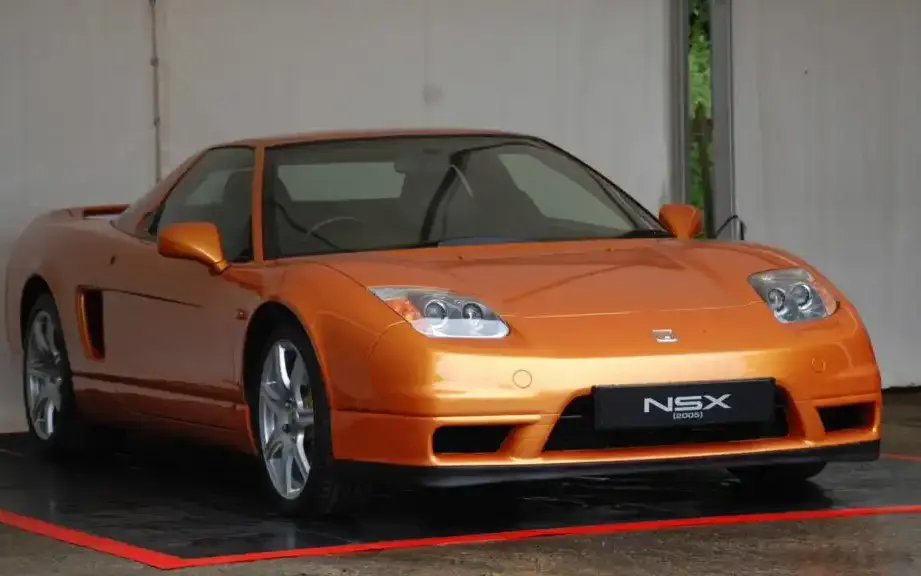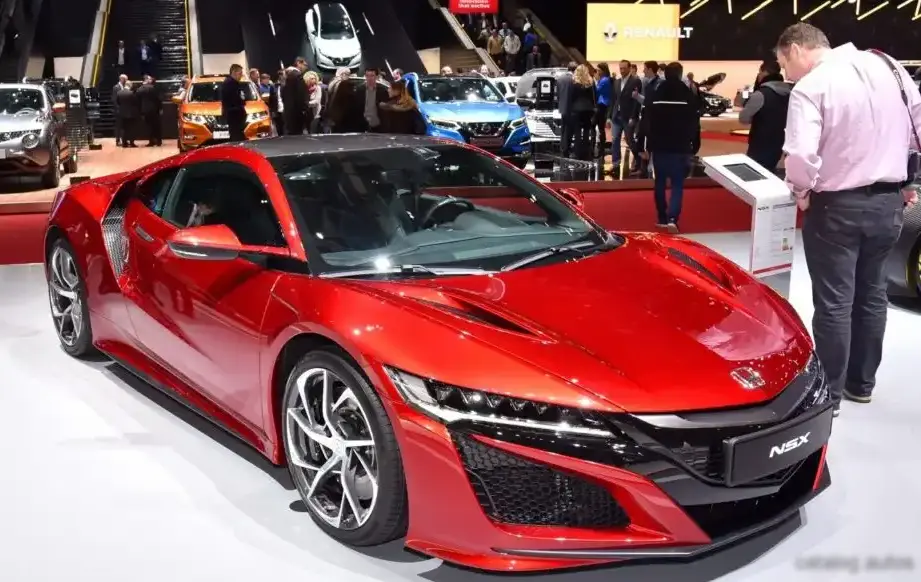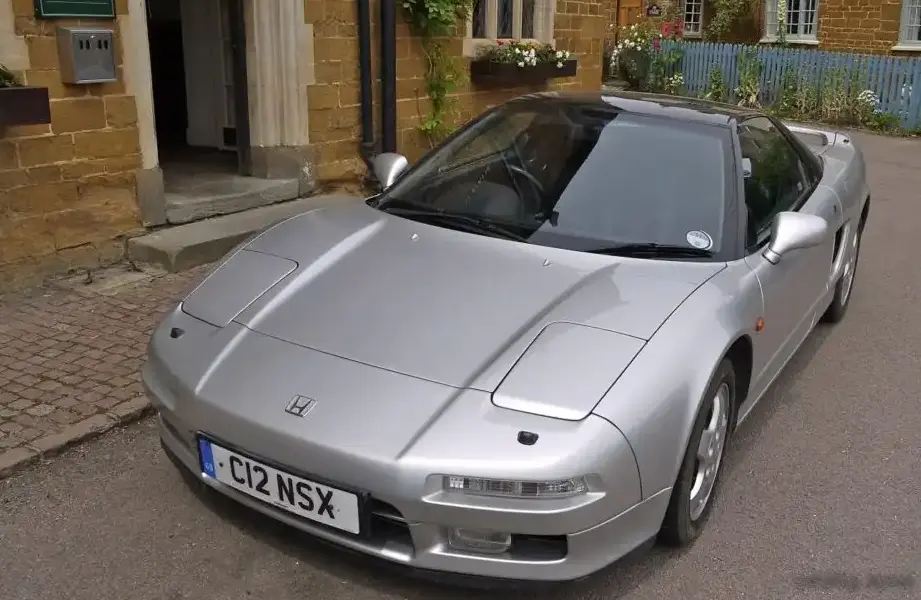
Technical Specifications
| Brand | Honda |
| Model | NSX |
| Generation | NSX I Coupe |
| Type (Engine) | 3.2 24V Vtec (280 Hp) |
| Start of production | 1997 year |
| End of production | 2002 year |
| Powertrain Architecture | Internal Combustion engine |
| Body type | Coupe |
| Seats | 2 |
| Doors | 2 |
| Fuel consumption (economy) – urban | 16.8 l/100 km (14 US mpg, 16.8 UK mpg, 6 km/l) |
| Fuel consumption (economy) – extra urban | 9.1 l/100 km (25.8 US mpg, 31 UK mpg, 11 km/l) |
| Fuel Type | Petrol (Gasoline) |
| Acceleration 0 – 100 km/h | 5.9 sec |
| Acceleration 0 – 62 mph | 5.9 sec |
| Acceleration 0 – 60 mph | 5.6 sec |
| Maximum speed | 270 km/h (167.77 mph) |
| Weight-to-power ratio | 5.2 kg/Hp, 193.1 Hp/tonne |
| Weight-to-torque ratio | 4.9 kg/Nm, 205.5 Nm/tonne |
| Power | 280 Hp @ 7300 rpm |
| Power per litre | 88.1 Hp/l |
| Torque | 298 Nm @ 5300 rpm (219.79 lb.-ft. @ 5300 rpm) |
| Engine layout | Middle, Transverse |
| Engine Model/Code | C32B2 |
| Engine displacement | 3179 cm3 (193.99 cu. in.) |
| Number of cylinders | 6 |
| Engine configuration | V-engine |
| Cylinder Bore | 93 mm (3.66 in.) |
| Piston Stroke | 78 mm (3.07 in.) |
| Compression ratio | 10:1 |
| Number of valves per cylinder | 4 |
| Fuel injection system | Multi-port manifold injection |
| Engine aspiration | Naturally aspirated engine |
| Valvetrain | DOHC |
| Engine oil capacity | 5 l (5.28 US qt | 4.4 UK qt) |
| Coolant | 16 l (16.91 US qt | 14.08 UK qt) |
| Kerb Weight | 1450 kg (3196.7 lbs.) |
| Max. weight | 1630 kg (3593.53 lbs.) |
| Max load | 180 kg (396.83 lbs.) |
| Trunk (boot) space – maximum | 154 l (5.44 cu. ft.) |
| Fuel tank capacity | 70 l (18.49 US gal | 15.4 UK gal) |
| Length | 4425 mm (174.21 in.) |
| Width | 1810 mm (71.26 in.) |
| Height | 1170 mm (46.06 in.) |
| Wheelbase | 2530 mm (99.61 in.) |
| Front track | 1510 mm (59.45 in.) |
| Rear (Back) track | 1530 mm (60.24 in.) |
| Drivetrain Architecture | The Internal combustion engine (ICE) drives the rear wheels of the vehicle. |
| Drive wheel | Rear wheel drive |
| Number of gears and type of gearbox | 6 gears, manual transmission |
| Front suspension | Double wishbone |
| Rear suspension | Double wishbone |
| Front brakes | Disc |
| Rear brakes | Disc |
| Assisting systems | ABS (Anti-lock braking system) |
| Steering type | Steering rack and pinion |
| Power steering | Hydraulic Steering |
| Tires size | 215/45 R17; 245/40 R17 |
The 3.2-liter NSX, introduced in 1997, represented a significant upgrade over the original 3.0-liter model. It was part of the NA2 series, distinguished by its revised bodywork, larger engine, and improved performance. The NSX was built upon the 1HX0/A3 platform, a lightweight and rigid aluminum chassis that was revolutionary for its time. The 3.2-liter model aimed to address criticisms of the earlier NSX regarding its power output, offering a more potent driving experience while retaining the car’s renowned handling balance and reliability. While automatic transmissions were available in some markets, the 3.2-liter NSX was exclusively offered with a six-speed manual transmission in the United States.
Powertrain & Engine Architecture
The heart of the 3.2 NSX is the C32B2 engine, a 3.2-liter naturally aspirated V6. This engine builds upon the foundation of the earlier C30A engine, featuring a larger displacement achieved through an increased bore size. The engine utilizes Honda’s VTEC (Variable Valve Timing and Lift Electronic Control) technology, with 24 valves (four per cylinder) controlled by dual overhead camshafts (DOHC). The VTEC system allows for optimized valve timing at both low and high engine speeds, providing a balance of fuel efficiency and high-performance power delivery. Fuel delivery is managed by a multi-port fuel injection system. The engine’s aluminum block and cylinder heads contribute to its relatively lightweight construction. The six-speed manual transmission, a key component of the 3.2 NSX, features close ratios designed to maximize acceleration and provide engaging driving dynamics. These ratios were carefully selected to keep the engine within its optimal powerband during spirited driving.
Driving Characteristics
The 3.2-liter NSX delivers a noticeably more responsive and powerful driving experience compared to the earlier 3.0-liter model. The increased displacement and refined VTEC system result in a broader powerband and stronger acceleration. The six-speed manual transmission allows drivers to fully exploit the engine’s capabilities, providing precise gear changes and a direct connection to the drivetrain. While not as brutally fast as some contemporary supercars, the NSX excels in its balance and predictability. The mid-engine layout contributes to exceptional handling, with minimal body roll and precise steering. The car feels planted and confident in corners, inspiring driver confidence. The power delivery is linear and progressive, making it accessible for drivers of varying skill levels. The revised suspension tuning in the NA2 model further enhanced the ride quality and handling characteristics, providing a more comfortable and controlled experience.
Equipment & Trim Levels
The 3.2-liter NSX was generally well-equipped, reflecting its position as the premium variant. Standard features included leather upholstery, power-adjustable seats, air conditioning, a premium sound system, and power windows and locks. The interior design prioritized functionality and driver focus, with a clean and uncluttered layout. Optional extras included a navigation system, upgraded sound systems, and various cosmetic enhancements. The NSX did not offer a wide range of trim levels; the focus was on providing a high level of standard equipment and allowing customers to personalize their vehicles with optional accessories. The interior materials were of high quality, contributing to the car’s overall sense of refinement.
Chassis & Braking
The NSX’s chassis is its defining feature, constructed almost entirely from aluminum. This lightweight construction significantly reduces weight, contributing to the car’s exceptional handling. The suspension utilizes a double wishbone design at both the front and rear, providing precise wheel control and a comfortable ride. The braking system features ventilated disc brakes on all four wheels, providing ample stopping power. An Anti-lock Braking System (ABS) is standard, enhancing safety and stability during hard braking. The steering is a rack-and-pinion system with hydraulic power assistance, offering precise and responsive steering feel. The chassis rigidity was a significant achievement for its time, contributing to the car’s overall stability and responsiveness.
Market Reception & Comparison
The 3.2-liter NSX was generally well-received by automotive critics, who praised its improved performance, refined handling, and overall build quality. It was often compared favorably to rivals such as the Porsche 911 and Ferrari 348/360. While the NSX offered a different driving experience – more balanced and predictable than the more raw and visceral Ferrari – it was recognized as a true performance car capable of competing with the best in the world. Fuel economy was respectable for a sports car of its caliber, and reliability was generally excellent, a hallmark of Honda engineering. Compared to the earlier 3.0-liter NSX, the 3.2-liter model offered a significant power increase and improved driving dynamics, making it the more desirable choice for enthusiasts. Some critics noted that the NSX lacked the outright drama of some of its competitors, but its overall refinement and usability were highly praised.
Legacy
The first-generation Honda NSX, particularly the 3.2-liter variant, has achieved iconic status among automotive enthusiasts. It is remembered for its innovative design, advanced technology, and exceptional driving dynamics. The NSX demonstrated that a Japanese manufacturer could build a world-class sports car capable of challenging established European brands. Today, the 3.2-liter NSX is a highly sought-after collectible, with well-maintained examples commanding premium prices. The powertrain is known for its durability and reliability, although regular maintenance is essential to keep these cars in top condition. The NSX’s influence can be seen in subsequent sports car designs, and it remains a benchmark for balanced handling and driver engagement. It proved that aluminum construction and mid-engine layouts weren’t exclusive to European exoticars, paving the way for future generations of performance vehicles.