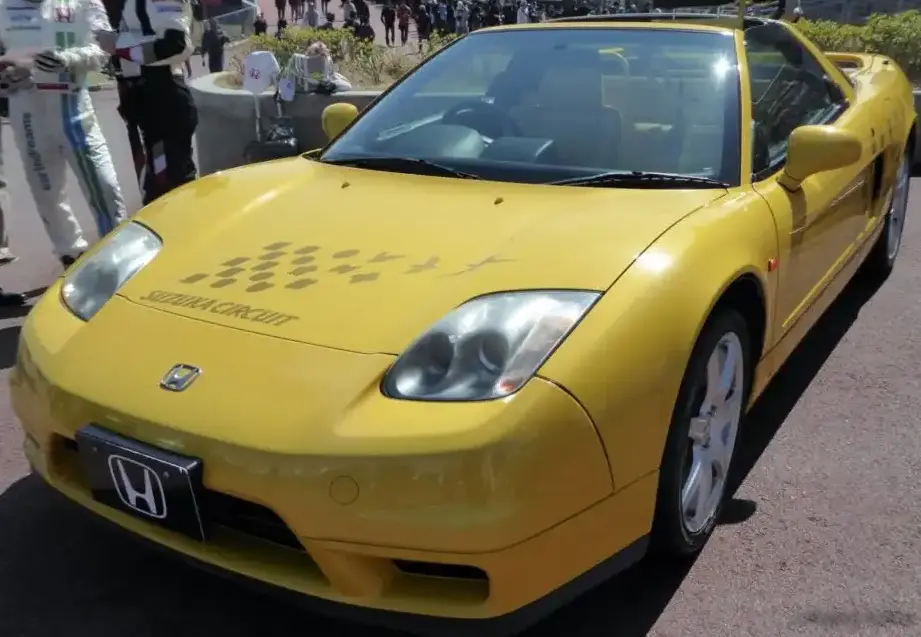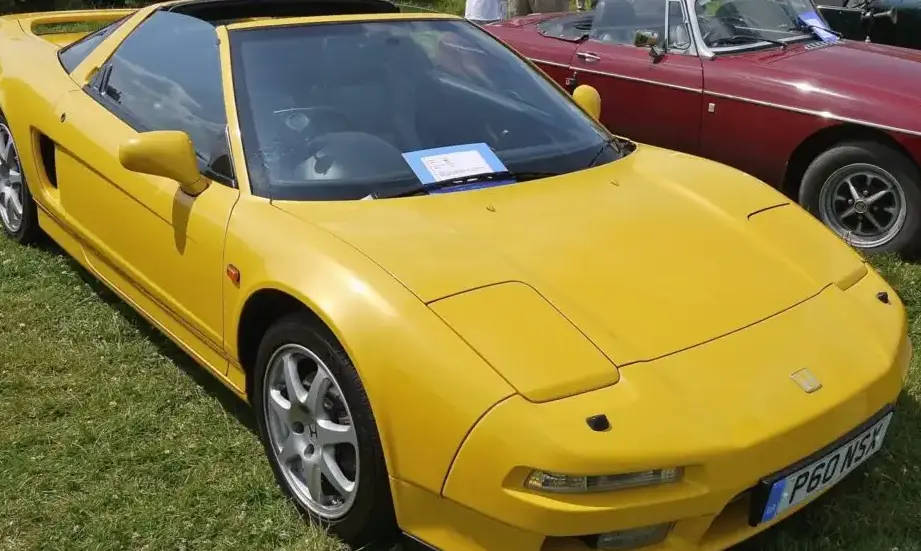
The Honda NSX-T I, powered by a 3.2-liter V6 VTEC engine producing 280 horsepower, represents a significant evolution of Honda’s iconic mid-engine sports car. Produced from 1997 to 2001, this iteration of the NSX (New Sportscar eXperimental) aimed to refine the original’s formula, offering increased performance and a more sophisticated driving experience. The NSX-T I, distinguished by its removable targa top, occupied a unique position within the NSX lineup, bridging the gap between the more focused coupe and the later, fully convertible models. It was primarily sold in the North American and Japanese markets, becoming a symbol of Japanese engineering prowess and a benchmark for attainable supercar performance.
Technical Specifications
| Brand | Honda |
| Model | NSX |
| Generation | NSX-T I |
| Type (Engine) | 3.2 V6 VTEC (280 Hp) |
| Start of production | 1997 |
| End of production | 2001 |
| Powertrain Architecture | Internal Combustion engine |
| Body type | Targa |
| Seats | 2 |
| Doors | 2 |
| Fuel consumption (economy) – urban (NEDC) | 17 l/100 km (13.8 US mpg, 16.6 UK mpg, 5.9 km/l) |
| Fuel consumption (economy) – extra urban (NEDC) | 9.1 l/100 km (25.8 US mpg, 31 UK mpg, 11 km/l) |
| Fuel consumption (economy) – combined (NEDC) | 12 l/100 km (19.6 US mpg, 23.5 UK mpg, 8.3 km/l) |
| Fuel Type | Petrol (Gasoline) |
| Maximum speed | 274 km/h (170.26 mph) |
| Weight-to-power ratio | 5.1 kg/Hp, 195.1 Hp/tonne |
| Weight-to-torque ratio | 4.8 kg/Nm, 207.7 Nm/tonne |
| Power | 280 Hp @ 7300 rpm |
| Power per litre | 88.1 Hp/l |
| Torque | 298 Nm @ 5300 rpm (219.79 lb.-ft. @ 5300 rpm) |
| Maximum engine speed | 8000 rpm |
| Engine layout | Middle, Transverse |
| Engine Model/Code | C32B2 |
| Engine displacement | 3179 cm3 (193.99 cu. in.) |
| Number of cylinders | 6 |
| Engine configuration | V-engine |
| Cylinder Bore | 93 mm (3.66 in.) |
| Piston Stroke | 78 mm (3.07 in.) |
| Compression ratio | 10.2:1 |
| Number of valves per cylinder | 4 |
| Fuel injection system | Multi-port manifold injection |
| Engine aspiration | Naturally aspirated engine |
| Valvetrain | DOHC, VTEC |
| Engine oil capacity | 5 l (5.28 US qt | 4.4 UK qt) |
| Coolant | 16 l (16.91 US qt | 14.08 UK qt) |
| Kerb Weight | 1435 kg (3163.63 lbs.) |
| Trunk (boot) space – minimum | 154 l (5.44 cu. ft.) |
| Fuel tank capacity | 70 l (18.49 US gal | 15.4 UK gal) |
| Length | 4420 mm (174.02 in.) |
| Width | 1810 mm (71.26 in.) |
| Height | 1175 mm (46.26 in.) |
| Wheelbase | 2530 mm (99.61 in.) |
| Front track | 1510 mm (59.45 in.) |
| Rear (Back) track | 1530 mm (60.24 in.) |
| Drivetrain Architecture | The Internal combustion engine (ICE) drives the rear wheels of the vehicle. |
| Drive wheel | Rear wheel drive |
| Number of gears and type of gearbox | 6 gears, manual transmission |
| Front suspension | Coil spring, Double wishbone, Transverse stabilizer |
| Rear suspension | Double wishbone, Transverse stabilizer, Coil spring |
| Front brakes | Ventilated discs, 298 mm |
| Rear brakes | Ventilated discs, 303 mm |
| Assisting systems | ABS (Anti-lock braking system) |
| Steering type | Steering rack and pinion |
| Power steering | Electric Steering |
| Tires size | Front wheel tires: 215/45 ZR16 Rear wheel tires: 245/40 ZR17 |
| Wheel rims size | Front wheel rims: 7J x 16 Rear wheel rims: 8.5J x 17 |
Powertrain & Engine Architecture
The heart of the NSX-T I is the C32B2 engine, a 3.2-liter naturally aspirated V6. This engine represents a significant upgrade from the earlier 3.0-liter powerplant found in first-generation NSXs. The C32B2 features a 93mm bore and 78mm stroke, resulting in a displacement of 3179cc. It utilizes a sophisticated DOHC (Double Overhead Camshaft) valvetrain with Honda’s renowned VTEC (Variable Valve Timing and Lift Electronic Control) system. VTEC allows the engine to seamlessly switch between two camshaft profiles, optimizing performance for both low-end torque and high-rpm power. Fuel delivery is managed by a multi-port fuel injection system. The engine produces 280 horsepower at 7300 rpm and 298 Nm (219.79 lb-ft) of torque at 5300 rpm. The engine is transversely mounted in the mid-engine layout, contributing to excellent balance and handling. The NSX-T I exclusively came with a 6-speed manual transmission, providing drivers with precise control over the engine’s power.
Driving Characteristics
The NSX-T I delivers a refined yet engaging driving experience. The 6-speed manual transmission offers crisp shifts and allows the driver to fully exploit the engine’s powerband. While not as brutally fast as some contemporary supercars, the NSX-T I excels in its balance and predictability. The mid-engine layout and relatively lightweight construction (1435 kg or 3163.63 lbs) contribute to nimble handling and responsive steering. Compared to the earlier 3.0-liter NSXs, the 3.2-liter engine provides a noticeable increase in torque, making the car feel more effortless in everyday driving situations. The gear ratios are well-matched to the engine’s characteristics, providing strong acceleration throughout the rev range. The Targa top adds a unique open-air experience, although it does slightly compromise structural rigidity compared to the coupe.
Equipment & Trim Levels
The NSX-T I was relatively well-equipped for its time, focusing on providing a comfortable and refined driving experience. Standard features included leather upholstery, power windows and locks, air conditioning, and a premium sound system. The interior design is driver-focused, with ergonomically placed controls and a clear instrument cluster. Optional extras included a navigation system, upgraded audio, and various cosmetic enhancements. The NSX-T I’s interior was generally more luxurious than that of more hardcore sports cars, reflecting its grand touring aspirations. The Targa top itself was manually removable and storable.
Chassis & Braking
The NSX-T I utilizes a lightweight aluminum monocoque chassis, a groundbreaking feature for its time. This construction technique significantly reduces weight while maintaining high levels of rigidity. The suspension consists of independent double wishbones at all four corners, with coil springs and transverse stabilizers. This setup provides excellent ride quality and precise handling. Braking duties are handled by ventilated disc brakes on all four wheels, with ABS (Anti-lock Braking System) as standard. The front brakes measure 298mm, while the rear brakes are slightly larger at 303mm. The braking system provides ample stopping power and good pedal feel.
Market Reception & Comparison
The NSX-T I was generally well-received by automotive critics, who praised its balanced handling, refined engine, and overall build quality. It was often compared to other contemporary sports cars, such as the Porsche 911 and the Ferrari 355. While the NSX-T I offered a different driving experience – more focused on balance and predictability than outright aggression – it was considered a worthy competitor. Fuel economy was reasonable for a supercar of its era, averaging around 19.6 US mpg combined. Reliability was also a strong point, with the NSX generally proving to be a durable and dependable machine. Compared to the earlier 3.0-liter NSXs, the 3.2-liter version offered improved performance and a more modern feel.
Legacy
The Honda NSX-T I remains a highly sought-after sports car among enthusiasts. Its combination of performance, reliability, and innovative engineering has cemented its place in automotive history. The C32B2 engine is known for its durability, and well-maintained examples can still provide years of enjoyable driving. The NSX-T I’s influence can be seen in many subsequent sports cars, and it continues to be a benchmark for attainable supercar performance. In the used car market, prices for well-preserved NSX-T I models have been steadily increasing, reflecting their growing desirability and collectibility. The NSX-T I represents a high point in Honda’s engineering achievements and a testament to the company’s commitment to innovation.