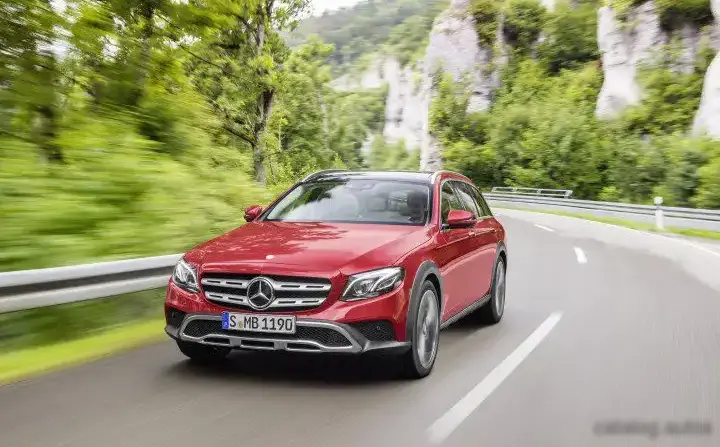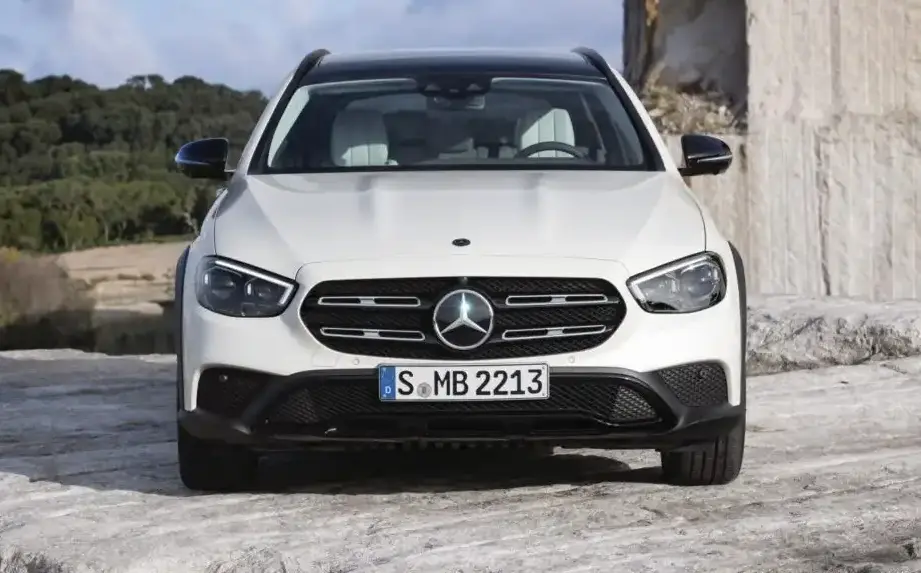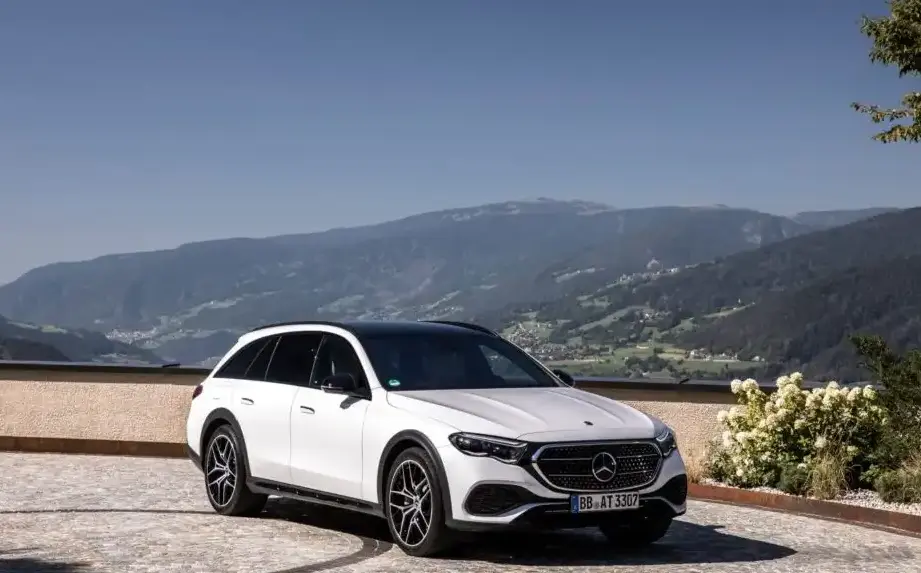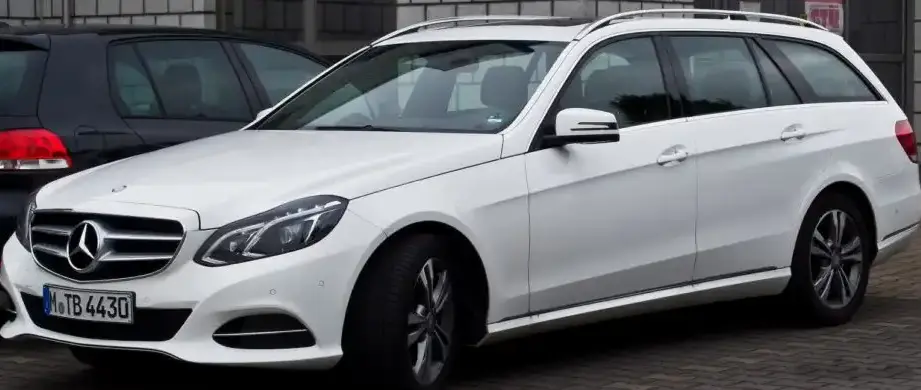
The Mercedes-Benz E-Class T-modell (S212 facelift), specifically the AMG E 63 S 4MATIC variant produced from April 2013 to July 2016, represents the pinnacle of performance within the E-Class wagon lineup. This high-performance estate combined the practicality of a family vehicle with the exhilarating power of a hand-built AMG V8 engine. Positioned as the flagship trim, it catered to buyers seeking uncompromising performance and luxury in a versatile package. The S212 facelift brought updated styling and technology to the E-Class range, further refining the already capable platform.
Technical Specifications
| Brand | Mercedes-Benz |
| Model | E-Class |
| Generation | E-Class T-modell (S212, facelift 2013) |
| Type | AMG E 63 S V8 (585 Hp) 4MATIC AMG SPEEDSHIFT MCT |
| Start of production | April, 2013 |
| End of production | July, 2016 |
| Powertrain Architecture | Internal Combustion engine |
| Body type | Station wagon (estate) |
| Seats | 5 |
| Doors | 5 |
| Fuel consumption (urban) | 14.4 l/100 km (16.3 US mpg, 19.6 UK mpg) |
| Fuel consumption (extra urban) | 8.2 l/100 km (28.7 US mpg, 34.4 UK mpg) |
| Fuel consumption (combined) | 10.5 l/100 km (22.4 US mpg, 26.9 UK mpg) |
| CO2 emissions | 246 g/km |
| Fuel Type | Petrol (Gasoline) |
| Acceleration 0 – 100 km/h | 3.7 sec |
| Acceleration 0 – 62 mph | 3.7 sec |
| Acceleration 0 – 60 mph | 3.5 sec |
| Maximum speed | 250 km/h (155.34 mph), Electronically limited |
| Emission standard | Euro 6 |
| Weight-to-power ratio | 3.4 kg/Hp |
| Weight-to-torque ratio | 2.5 kg/Nm |
| Power | 585 Hp @ 5550 rpm |
| Torque | 800 Nm @ 2000-4500 rpm (590.05 lb.-ft. @ 2000-4500 rpm) |
| Engine layout | Front, Longitudinal |
| Engine Model/Code | M 157.981 |
| Engine displacement | 5461 cm3 (333.25 cu. in.) |
| Number of cylinders | 8 |
| Engine configuration | V-engine |
| Cylinder Bore | 98 mm (3.86 in.) |
| Piston Stroke | 90.5 mm (3.56 in.) |
| Compression ratio | 10:1 |
| Number of valves per cylinder | 4 |
| Fuel injection system | Direct injection |
| Engine aspiration | BiTurbo, Intercooler |
| Valvetrain | DOHC |
| Engine oil capacity | 8.5 l (8.98 US qt | 7.48 UK qt) |
| Kerb Weight | 1970 kg (4343.11 lbs.) |
| Max. weight | 2580 kg (5687.93 lbs.) |
| Max load | 610 kg (1344.82 lbs.) |
| Trunk (boot) space – minimum | 695 l (24.54 cu. ft.) |
| Trunk (boot) space – maximum | 1950 l (68.86 cu. ft.) |
| Fuel tank capacity | 66 l (17.44 US gal | 14.52 UK gal) |
| Max. roof load | 100 kg (220.46 lbs.) |
| Length | 4904 mm (193.07 in.) |
| Width | 1873 mm (73.74 in.) |
| Width including mirrors | 2071 mm (81.54 in.) |
| Height | 1522 mm (59.92 in.) |
| Wheelbase | 2874 mm (113.15 in.) |
| Minimum turning circle | 11.75 m (38.55 ft.) |
| Drivetrain Architecture | All wheel drive (4×4) |
| Number of gears | 7 |
| Gearbox type | Automatic transmission AMG SPEEDSHIFT MCT |
| Front suspension | Coil spring, Independent multi-link suspension, Transverse stabilizer |
| Rear suspension | Independent multi-link suspension, Air suspension, Transverse stabilizer |
| Front brakes | Ventilated discs, 360×36 mm |
| Rear brakes | Ventilated discs, 360×26 mm |
| Tires size (Front) | 255/35 ZR19 |
| Tires size (Rear) | 285/30 ZR19 |
| Wheel rims size (Front) | 9J x 19 |
| Wheel rims size (Rear) | 9.5J x 19 |
INTRODUCTION
The AMG E 63 S T-modell, built on the W212 platform (facelifted in 2013), was a performance-oriented station wagon designed to appeal to enthusiasts who demanded both practicality and exhilarating driving dynamics. It represented the top-tier offering in the E-Class wagon range, boasting a powerful engine, upgraded suspension, and distinctive AMG styling cues. Production spanned from April 2013 to July 2016, solidifying its place as a desirable and capable high-performance estate car.
Powertrain & Engine Architecture
At the heart of the E 63 S T-modell lies the M157.981 5.5-liter V8 engine, hand-assembled in Affalterbach, Germany. This twin-turbocharged powerplant produced 585 horsepower at 5550 rpm and a substantial 800 Nm (590 lb-ft) of torque available from 2000 to 4500 rpm. The engine utilizes direct fuel injection and a sophisticated engine management system to optimize performance and efficiency. The ‘S’ designation indicated an increase in power over the standard E 63 wagon. The engine’s architecture features a hot-side-inside configuration for the turbochargers, reducing exhaust gas routing and improving responsiveness. Paired with the engine was the AMG SPEEDSHIFT MCT 7-speed automatic transmission. This transmission utilizes a wet multi-plate clutch instead of a traditional torque converter, resulting in faster and more direct gear changes. The MCT transmission also features a fuel-saving coasting function, disengaging the engine from the drivetrain during deceleration.
Driving Characteristics
The AMG E 63 S T-modell delivered a truly impressive driving experience. The combination of the powerful V8 engine and the quick-shifting MCT transmission resulted in blistering acceleration – 0 to 60 mph in approximately 3.5 seconds. The 4MATIC all-wheel-drive system provided exceptional traction, particularly in adverse weather conditions. While the wagon’s increased weight compared to the sedan was noticeable, the upgraded suspension – featuring adaptive dampers and air suspension on the rear axle – minimized body roll and maintained a composed ride. The steering was precise and well-weighted, providing confident handling. Compared to the standard E-Class wagons or even the E 63 with the lower-powered engine, the ‘S’ model offered a significantly more aggressive and engaging driving experience. The gear ratios were tuned for performance, prioritizing acceleration over outright fuel economy.
Equipment & Trim Levels
The AMG E 63 S T-modell came standard with a comprehensive list of features. Interior appointments included premium leather upholstery, AMG sport seats with enhanced bolstering, and carbon fiber trim. Standard technology included a high-resolution infotainment system with navigation, a premium sound system, and a suite of driver-assistance features such as adaptive cruise control, lane-keeping assist, and blind-spot monitoring. Optional extras included a panoramic sunroof, upgraded leather options, and a rear-seat entertainment system. The exterior styling was distinguished by AMG-specific body kit, including aggressive front and rear bumpers, side skirts, and a rear spoiler. Larger wheels and performance tires completed the visual transformation.
Chassis & Braking
The chassis of the E 63 S T-modell was specifically tuned to handle the increased power and performance. The suspension featured stiffer springs and dampers compared to the standard E-Class wagon, along with a thicker stabilizer bar. The rear suspension incorporated air suspension, allowing for adjustable ride height and improved comfort. The braking system was upgraded with larger, ventilated discs and multi-piston calipers, providing exceptional stopping power. The front brakes measured 360x36mm, while the rear brakes were 360x26mm. ABS (Anti-lock braking system) was standard, ensuring safe and controlled braking in all conditions.
Market Reception & Comparison
The AMG E 63 S T-modell was generally well-received by automotive critics. It was praised for its exceptional performance, luxurious interior, and surprising practicality. However, its high price tag and relatively poor fuel economy were noted drawbacks. Compared to other high-performance wagons, such as the Audi RS6 Avant, the E 63 S offered a more comfortable ride and a more refined interior, but the RS6 often edged it out in terms of outright performance. Within the E-Class lineup, the E 63 S represented a significant step up in performance and luxury compared to the standard E-Class wagons and even the E 63 models with the lower-powered engine.
Legacy
The M157 engine, while known for its power and performance, has demonstrated some potential for long-term maintenance concerns, particularly related to the valve train and turbochargers. However, with proper maintenance, these engines can remain reliable for many years. The E 63 S T-modell has become a sought-after vehicle in the used car market, appealing to enthusiasts who appreciate its unique combination of performance, luxury, and practicality. Its status as a relatively rare and highly capable performance wagon ensures its continued desirability among collectors and driving enthusiasts alike.