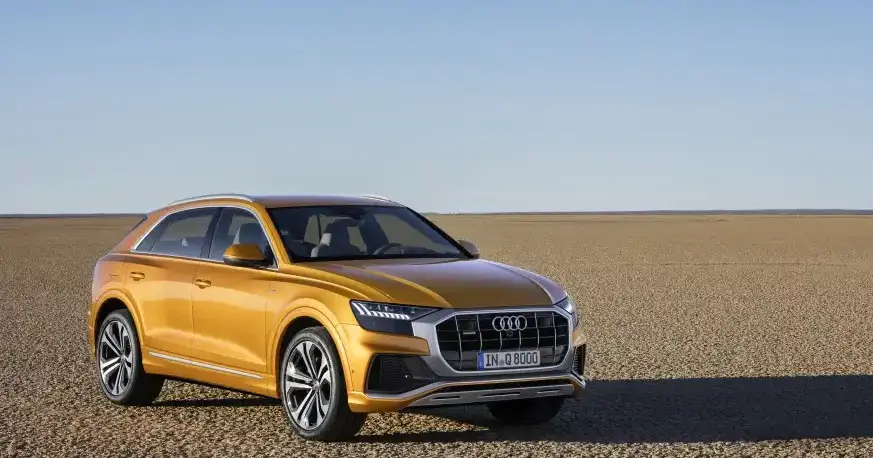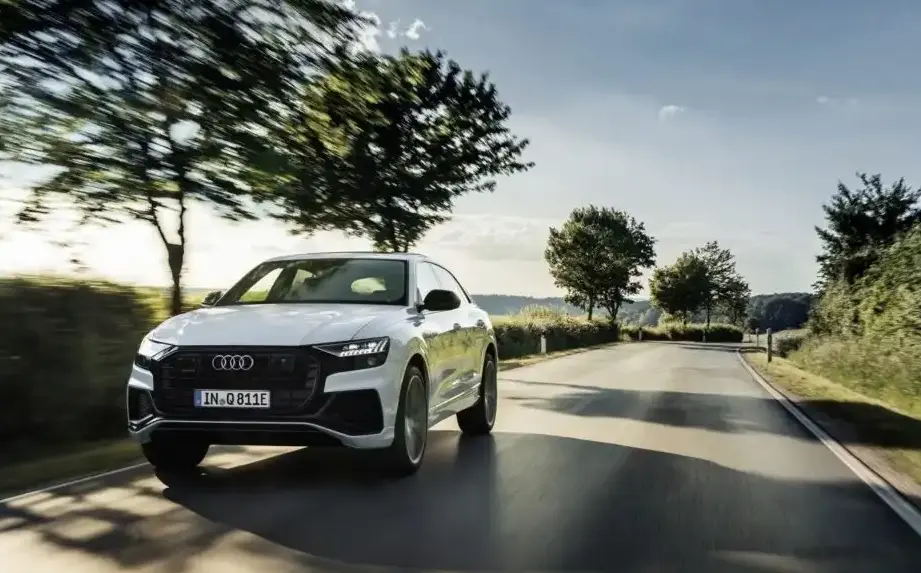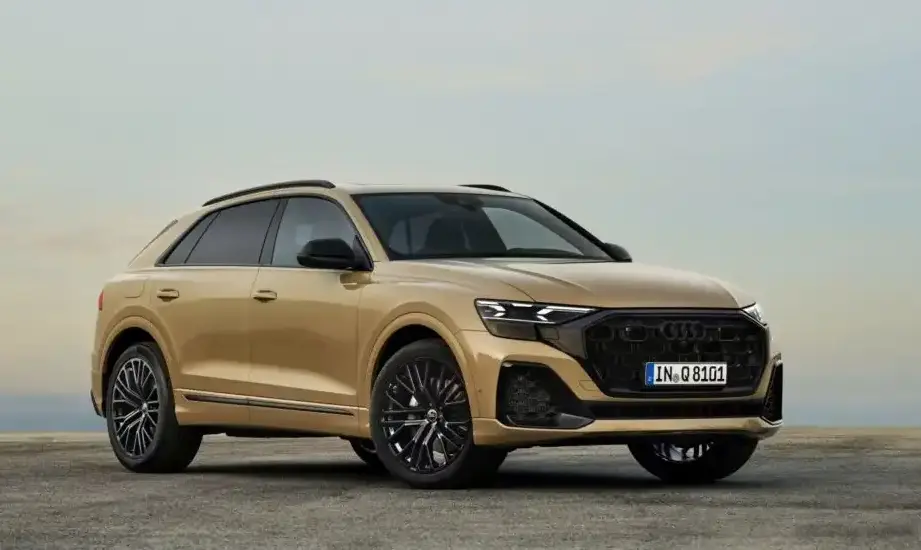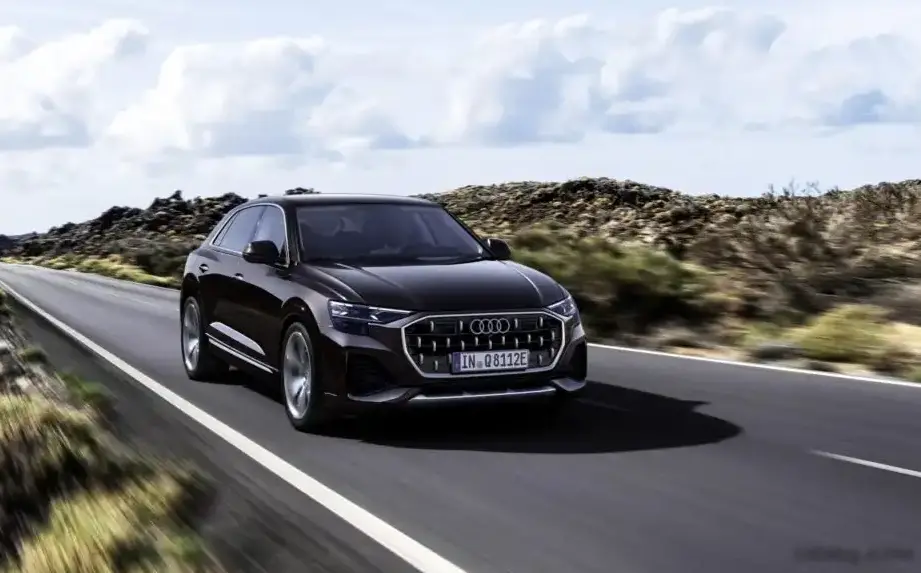
The Audi Q8 55 TFSI e quattro tiptronic, introduced in April 2024 as part of the 4M facelift generation, represents Audi’s foray into combining the luxury and space of a large SUV with the efficiency of a plug-in hybrid powertrain. Positioned as a mid-to-high range offering within the Q8 lineup, it caters to buyers seeking a premium driving experience with reduced emissions and the flexibility of all-electric driving. This variant builds upon the established Q8 platform (shared with the Lamborghini Urus and Bentley Bentayga) and integrates a sophisticated hybrid system centered around a 3.0-liter turbocharged V6 engine.
Technical Specifications
| Brand | Audi |
| Model | Q8 |
| Generation | Q8 (4M, facelift 2023) |
| Type (Engine) | 55 TFSI e V6 (394 Hp) Plug-in Hybrid quattro tiptronic |
| Start of production | April, 2024 |
| Powertrain Architecture | PHEV (Plug-in Hybrid Electric Vehicle) |
| Body type | SUV |
| Seats | 5 |
| Doors | 5 |
| Combined fuel consumption (WLTP) | 1.2-1.6 l/100 km (196 – 147 US mpg, 235.4 – 176.6 UK mpg, 83.3 – 62.5 km/l) |
| CO2 emissions (WLTP) | 27-37 g/km |
| Fuel Type | Petrol / electricity |
| Acceleration 0 – 100 km/h | 5.7 sec |
| Acceleration 0 – 62 mph | 5.7 sec |
| Acceleration 0 – 60 mph | 5.4 sec |
| Maximum speed | 240 km/h (149.13 mph) – Electronically limited |
| Emission standard | Euro 6e |
| Weight-to-power ratio | 6.1 kg/Hp, 163.1 Hp/tonne |
| Weight-to-torque ratio | 4 kg/Nm, 248.4 Nm/tonne |
| Gross battery capacity | 25.9 kWh |
| Net (usable) battery capacity | 22 kWh |
| Battery voltage | 400 V |
| Battery technology | Lithium-ion (Li-Ion) |
| Battery location | Under the trunk |
| Recuperation output | 80 kW |
| All-electric range (WLTP) | 75-85 km (46.6 – 52.82 mi) |
| Average Energy consumption (WLTP) | 27.7-30.4 kWh/100 km (44.58 – 48.92 kWh/100 mi, 76 – 69 MPGe, 3.6 – 3.3 km/kWh, 2.2 – 2 mi/kWh) |
| Max speed (electric) | 140 km/h (86.99 mph) |
| Electric motor power | 177 Hp |
| Electric motor Torque | 460 Nm (339.28 lb.-ft.) |
| Electric motor location | Between the combustion engine and the transmission |
| Electric motor type | Synchronous |
| System power | 394 Hp |
| System torque | 600 Nm (442.54 lb.-ft.) |
| Power | 340 Hp @ 5300-6400 rpm |
| Torque | 500 Nm @ 1370-5200 rpm (368.78 lb.-ft. @ 1370-5200 rpm) |
| Engine layout | Front, Longitudinal |
| Engine displacement | 2995 cm3 (182.77 cu. in.) |
| Number of cylinders | 6 |
| Engine configuration | V-engine |
| Cylinder Bore | 84.5 mm (3.33 in.) |
| Piston Stroke | 89 mm (3.5 in.) |
| Compression ratio | 11.2:1 |
| Number of valves per cylinder | 4 |
| Fuel injection system | Direct injection |
| Engine aspiration | Turbocharger, Intercooler |
| Valvetrain | DOHC |
| Engine oil capacity | 7.2 l (7.61 US qt | 6.34 UK qt) |
| Coolant | 17.4 l (18.39 US qt | 15.31 UK qt) |
| Kerb Weight | 2415 kg (5324.16 lbs.) |
| Max. weight | 3110 kg (6856.38 lbs.) |
| Max load | 695 kg (1532.21 lbs.) |
| Trunk (boot) space – minimum | 439 l (15.5 cu. ft.) |
| Trunk (boot) space – maximum | 1755 l (61.98 cu. ft.) |
| Fuel tank capacity | 75 l (19.81 US gal | 16.5 UK gal) |
| Max. roof load | 100 kg (220.46 lbs.) |
| Permitted trailer load with brakes (8%) | 2800 kg (6172.94 lbs.) |
| Permitted trailer load with brakes (12%) | 2800 kg (6172.94 lbs.) |
| Permitted trailer load without brakes | 750 kg (1653.47 lbs.) |
| Permitted towbar download | 115 kg (253.53 lbs.) |
| Length | 4992 mm (196.54 in.) |
| Width | 1995 mm (78.54 in.) |
| Width including mirrors | 2190 mm (86.22 in.) |
| Height | 1697 mm (66.81 in.) |
| Wheelbase | 2998 mm (118.03 in.) |
| Front track | 1679 mm (66.1 in.) |
| Rear (Back) track | 1691 mm (66.57 in.) |
| Front overhang | 985 mm (38.78 in.) |
| Rear overhang | 1009 mm (39.72 in.) |
| Drag coefficient (Cd) | 0.37 |
| Minimum turning circle (turning diameter) | 13.3 m (43.64 ft.) |
| Front suspension | Independent multi-link suspension, Transverse stabilizer, Air Suspension – Optional |
| Rear suspension | Independent multi-link suspension, Transverse stabilizer, Air Suspension – Optional |
| Front brakes | Ventilated discs, 400 mm |
| Rear brakes | Ventilated discs, 350 mm |
| Number of gears and type of gearbox | 8 gears, automatic transmission tiptronic |
| Tires size | 265/55 R19; 265/50 R20; 275/50 R20; 285/45 R21; 285/40 R22; 285/35 R23 |
| Wheel rims size | 8.5J x 19; 8.5J x 20; 9J x 20; 10J x 21; 10J x 22; 10J x 23 |
INTRODUCTION
The Audi Q8 55 TFSI e quattro tiptronic, launched in 2024, is a plug-in hybrid SUV that blends performance, luxury, and efficiency. It’s built on the Q8 (4M) platform, which debuted in 2018 and received a significant facelift in 2023. This variant aims to appeal to environmentally conscious buyers who don’t want to compromise on the driving experience associated with the Q8 nameplate. The “55 TFSI e” designation signifies a combined system output of 394 horsepower, while “quattro” denotes Audi’s renowned all-wheel-drive system and “tiptronic” indicates the eight-speed automatic transmission.
Powertrain & Engine Architecture
At the heart of the Q8 55 TFSI e lies a 3.0-liter turbocharged V6 engine, internally designated as the 45 TFSI. This engine produces 340 horsepower and 368.78 lb-ft of torque. It utilizes direct fuel injection and a single twin-scroll turbocharger to maximize efficiency and power delivery. The engine is paired with an electric motor integrated between the engine and the eight-speed tiptronic automatic transmission. This electric motor contributes an additional 177 horsepower and 339.28 lb-ft of torque. The combined system output is 394 horsepower and 442.54 lb-ft of torque. The 25.9 kWh (gross) / 22 kWh (net) lithium-ion battery pack is located under the trunk floor, providing a WLTP-certified all-electric range of 75-85 kilometers (46.6 – 52.82 miles). The battery supports DC fast charging, allowing for relatively quick replenishment. The transmission itself is a well-established eight-speed tiptronic, known for its smooth shifts and responsiveness.
Driving Characteristics
The Q8 55 TFSI e offers a unique driving experience. In electric-only mode, it provides near-silent and emissions-free operation, ideal for city driving. The instant torque from the electric motor provides brisk acceleration. When the battery is depleted or when more power is demanded, the V6 engine seamlessly kicks in, providing a combined output that delivers a 0-60 mph time of around 5.4 seconds. The quattro all-wheel-drive system ensures excellent traction and stability in all weather conditions. Compared to the Q8 45 TFSI (non-hybrid), the 55 TFSI e feels slightly heavier due to the battery pack, but the added torque from the electric motor compensates for this, resulting in similar overall performance. Compared to higher-performance Q8 variants like the SQ8, the 55 TFSI e prioritizes efficiency and refinement over outright speed.
Equipment & Trim Levels
The Q8 55 TFSI e typically comes well-equipped as standard. Features include Audi’s Virtual Cockpit digital instrument cluster, a large touchscreen infotainment system with navigation, leather upholstery, heated front seats, and a premium sound system. Optional extras include air suspension (which provides a remarkably comfortable ride), massaging seats, a panoramic sunroof, and advanced driver-assistance systems such as adaptive cruise control and lane-keeping assist. Interior trim options range from brushed aluminum to wood veneers, allowing buyers to personalize the cabin to their preferences. The standard upholstery is typically leather, with options for higher-grade Nappa leather available.
Chassis & Braking
The Q8 55 TFSI e utilizes a fully independent suspension system, with multi-link setups at both the front and rear. Air suspension is available as an option, providing adjustable ride height and damping for enhanced comfort and control. The braking system consists of ventilated discs at all four corners, with larger discs typically fitted to models equipped with larger wheels. Anti-lock brakes (ABS), electronic stability control (ESC), and traction control are standard features. The steering is a power-assisted rack-and-pinion system, providing precise and responsive handling.
Market Reception & Comparison
The Q8 55 TFSI e has been generally well-received by automotive critics. It’s praised for its refined driving experience, comfortable interior, and impressive fuel efficiency. Compared to the non-hybrid Q8 models, the 55 TFSI e offers significantly lower running costs, particularly for drivers who can regularly utilize the electric-only mode. However, the higher purchase price and slightly reduced trunk space (due to the battery pack) are potential drawbacks. Competitors include the BMW X5 xDrive45e and the Mercedes-Benz GLE 350e, both of which offer similar plug-in hybrid technology and luxury features.
Legacy
The Audi Q8 55 TFSI e represents a significant step towards electrification for Audi’s large SUV lineup. While long-term reliability data is still emerging, Audi’s reputation for build quality and engineering suggests that the powertrain should prove durable. The hybrid system’s complexity does introduce potential maintenance considerations, but Audi’s comprehensive warranty coverage provides some peace of mind. On the used car market, the Q8 55 TFSI e is expected to hold its value well, particularly as demand for plug-in hybrid vehicles continues to grow. Its combination of luxury, performance, and efficiency makes it an attractive option for buyers seeking a premium SUV with a reduced environmental impact.