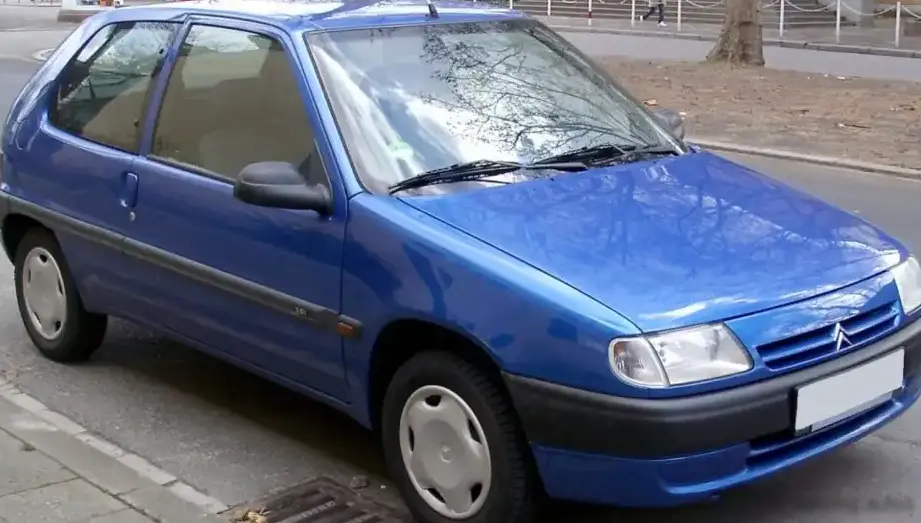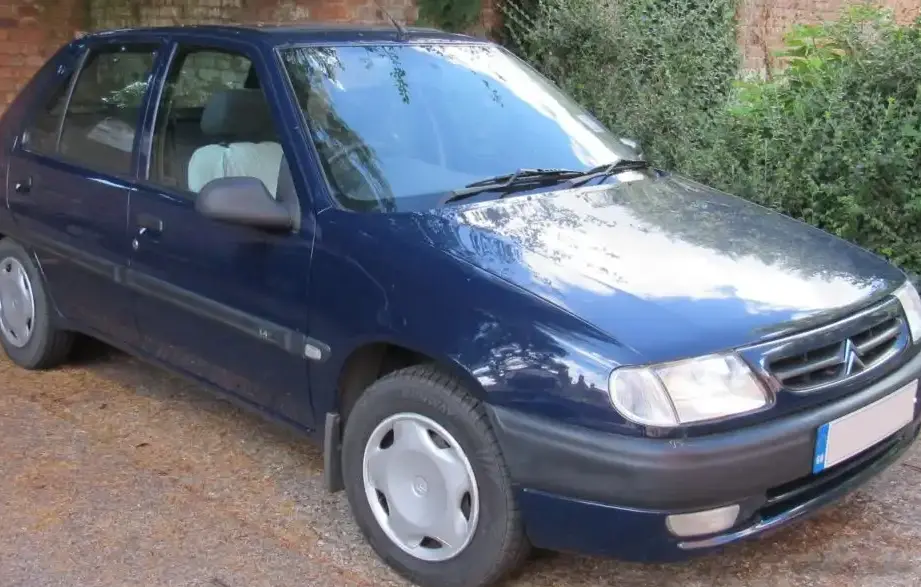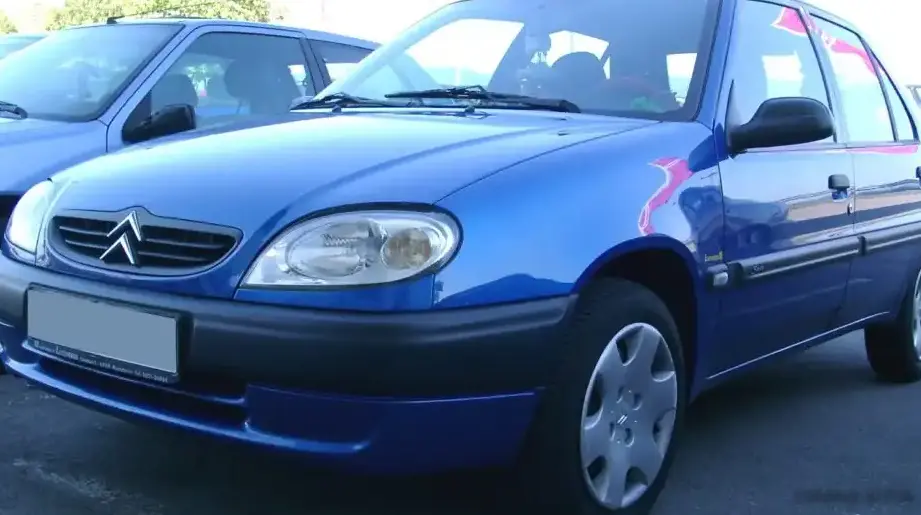
The Citroën Saxo 1.4, produced between 1999 and 2002 as part of the Phase II refresh of the Saxo model range, represented an entry-level offering within the supermini segment. Positioned as a practical and affordable vehicle, the 5-door 1.4-liter variant with 75 horsepower aimed at buyers prioritizing economy and everyday usability over outright performance. It was a key component of Citroën’s strategy to offer a diverse range of Saxo models, catering to various budgets and needs, built upon the X1 platform shared with the Peugeot 106. This generation Saxo saw updates to styling, safety features, and engine options compared to the original launch in 1996.
Technical Specifications
| Brand | Citroen |
| Model | Saxo |
| Generation | Saxo (Phase II, 1999) 5-door |
| Type (Engine) | 1.4 (75 Hp) |
| Start of production | September, 1999 |
| End of production | 2002 |
| Powertrain Architecture | Internal Combustion engine |
| Body type | Hatchback |
| Seats | 5 |
| Doors | 5 |
| Fuel consumption (urban) | 8.2 l/100 km (28.7 US mpg, 34.4 UK mpg, 12.2 km/l) |
| Fuel consumption (extra urban) | 5 l/100 km (47 US mpg, 56.5 UK mpg, 20 km/l) |
| Fuel consumption (combined) | 6.2 l/100 km (37.9 US mpg, 45.6 UK mpg, 16.1 km/l) |
| CO2 emissions | 148 g/km |
| Fuel Type | Petrol (Gasoline) |
| Acceleration 0 – 100 km/h | 12.9 sec |
| Acceleration 0 – 62 mph | 12.9 sec |
| Acceleration 0 – 60 mph | 12.3 sec |
| Maximum speed | 175 km/h (108.74 mph) |
| Emission standard | Euro 3 |
| Weight-to-power ratio | 11.5 kg/Hp |
| Weight-to-torque ratio | 7.2 kg/Nm |
| Power | 75 Hp @ 5500 rpm |
| Torque | 120 Nm @ 3400 rpm (88.51 lb.-ft. @ 3400 rpm) |
| Engine layout | Front, Transverse |
| Engine Model/Code | KFX TU3JP |
| Engine displacement | 1360 cm3 (82.99 cu. in.) |
| Number of cylinders | 4 |
| Engine configuration | Inline |
| Cylinder Bore | 75 mm (2.95 in.) |
| Piston Stroke | 77 mm (3.03 in.) |
| Compression ratio | 10.2:1 |
| Number of valves per cylinder | 2 |
| Fuel injection system | Multi-port manifold injection |
| Engine aspiration | Naturally aspirated |
| Valvetrain | SOHC |
| Engine oil capacity | 3.2 l (3.38 US qt, 2.82 UK qt) |
| Coolant capacity | 6.1 l (6.45 US qt, 5.37 UK qt) |
| Kerb Weight | 860 kg (1895.98 lbs.) |
| Max. weight | 1340 kg (2954.19 lbs.) |
| Max load | 480 kg (1058.22 lbs.) |
| Trunk (boot) space – minimum | 280 l (9.89 cu. ft.) |
| Trunk (boot) space – maximum | 953 l (33.65 cu. ft.) |
| Fuel tank capacity | 45 l (11.89 US gal, 9.9 UK gal) |
| Max. roof load | 50 kg (110.23 lbs.) |
| Permitted trailer load (braked) | 700 kg (1543.24 lbs.) |
| Permitted trailer load (unbraked) | 465 kg (1025.15 lbs.) |
| Permitted towbar download | 50 kg (110.23 lbs.) |
| Length | 3718 mm (146.38 in.) |
| Width | 1595 mm (62.8 in.) |
| Height | 1368 mm (53.86 in.) |
| Wheelbase | 2385 mm (93.9 in.) |
| Front track | 1370 mm (53.94 in.) |
| Rear track | 1305 mm (51.38 in.) |
| Minimum turning circle | 10.9 m (35.76 ft.) |
| Drivetrain | Front wheel drive |
| Number of gears | 5 |
| Gearbox type | Manual transmission |
| Front suspension | Independent type McPherson, Transverse stabilizer |
| Rear suspension | Trailing arm, Torsion |
| Front brakes | Disc |
| Rear brakes | Drum |
| Assisting systems | ABS (Anti-lock braking system) |
| Steering type | Steering rack and pinion |
| Power steering | Electric |
| Tires size | 165/70 R13; 165/65 R14 |
| Wheel rims size | 5J x 13; 5.5J x 14 |
INTRODUCTION
The Citroën Saxo 1.4 75hp, launched in September 1999 as part of the Phase II update, was a mainstay of Citroën’s supermini lineup. Built on the shared Peugeot-Citroën X1 platform, also underpinning the Peugeot 106, the Saxo aimed to provide affordable and reliable transportation. The 5-door body style offered increased practicality for families or those frequently carrying passengers. This particular variant occupied the lower-mid range of the Saxo lineup, offering a balance between cost and usability. It sat below the more powerful 1.6-liter versions and the sporty VTS models, but above the base 1.1-liter engine.
Powertrain & Engine Architecture
The heart of the Saxo 1.4 was the KFX (TU3JP) engine, a 1360cc inline-four cylinder petrol engine. This engine was a common sight in various Peugeot and Citroën models of the era. It featured a single overhead camshaft (SOHC) valvetrain with two valves per cylinder. Fuel delivery was handled by a multi-port fuel injection system, providing a reasonable compromise between efficiency and performance. The engine produced 75 horsepower at 5500 rpm and 120 Nm (88.51 lb-ft) of torque at 3400 rpm. The Saxo 1.4 was typically paired with a five-speed manual transmission, although a four-speed automatic transmission was also available, albeit less common. The automatic gearbox, while offering convenience, did impact acceleration and fuel economy compared to the manual version.
Driving Characteristics
The Saxo 1.4 with the manual transmission offered adequate, if not exhilarating, performance. Acceleration from 0-60 mph took around 12.3 seconds, and the top speed was approximately 108.74 mph. The engine felt relatively responsive at lower speeds, making it suitable for urban driving. However, overtaking maneuvers required careful planning. The automatic transmission version suffered from noticeable performance degradation due to the less efficient torque converter and fewer gear ratios. Gear ratios were geared towards economy, with a relatively tall final drive. The steering was light and easy, making it maneuverable in tight spaces, but lacked significant feedback. The suspension provided a comfortable ride, absorbing bumps reasonably well, but wasn’t particularly sporty.
Equipment & Trim Levels
The Saxo 1.4 typically came equipped with basic, but functional, features. Standard equipment included power steering, central locking, and an adjustable steering column. Interior upholstery was typically cloth, and the dashboard featured a simple, straightforward design. Optional extras included air conditioning, electric windows, and a radio/cassette player. Higher trim levels, such as the ‘X’ or ‘LX’ variants, added features like alloy wheels, upgraded interior trim, and body-colored bumpers. The 5-door configuration was a significant practical benefit, offering easier access to the rear seats compared to the 3-door model.
Chassis & Braking
The Saxo 1.4 utilized a McPherson strut front suspension with a transverse stabilizer bar, providing a decent level of handling. The rear suspension employed a trailing arm torsion beam setup, which was cost-effective and provided adequate ride comfort. Brakes were disc brakes on the front wheels and drum brakes on the rear. ABS (Anti-lock Braking System) was available as an option, enhancing safety. The relatively light weight of the Saxo (around 860 kg or 1896 lbs) helped to offset the modest power output, contributing to reasonable braking performance.
Market Reception & Comparison
The Citroën Saxo 1.4 was generally well-received as a practical and affordable supermini. Critics praised its fuel efficiency and low running costs. However, it was often criticized for its lack of refinement and relatively basic interior. Compared to the more powerful 1.6-liter Saxo, the 1.4 offered significantly less performance, but at a lower price point. The 1.6-liter models appealed to drivers seeking a more engaging driving experience, while the 1.4 catered to those prioritizing economy and practicality. The Saxo also competed with rivals such as the Renault Clio, Peugeot 106, and Volkswagen Polo.
Legacy
The Citroën Saxo 1.4, while not a particularly groundbreaking vehicle, proved to be a reliable and durable supermini. The KFX engine is known for its robustness, and with regular maintenance, can withstand high mileage. Today, the Saxo 1.4 is a relatively affordable used car, appealing to first-time drivers or those seeking a cheap and cheerful runabout. Parts availability is generally good, and maintenance is relatively straightforward. While not a collector’s item, well-maintained examples are becoming increasingly sought after by enthusiasts looking for a simple, honest, and affordable classic.