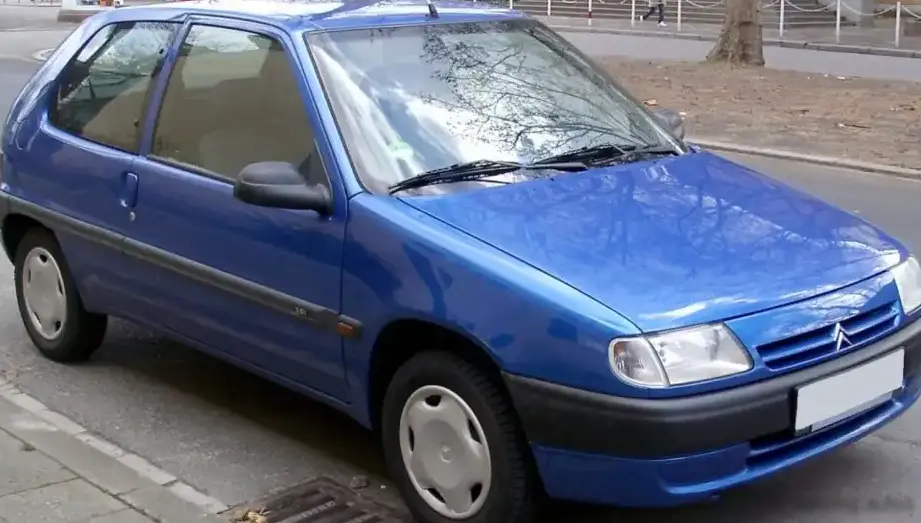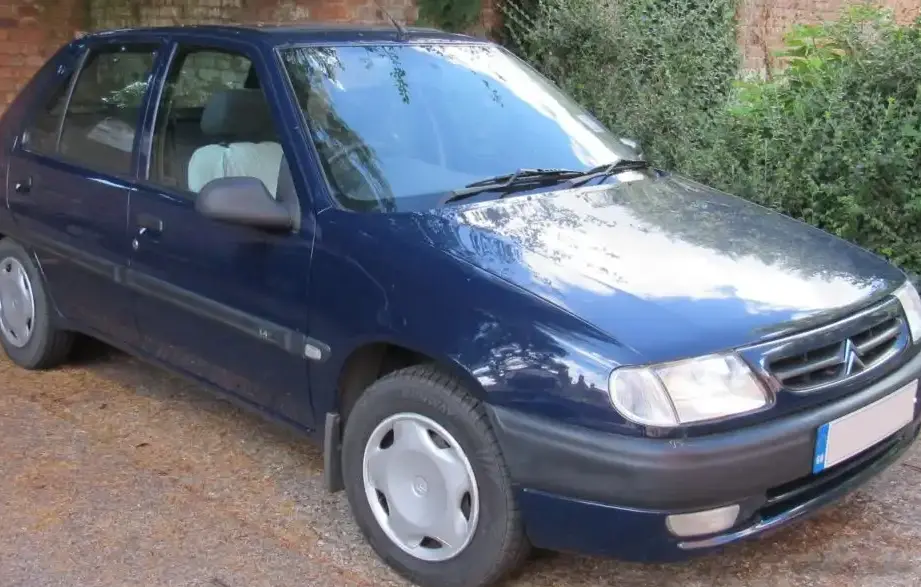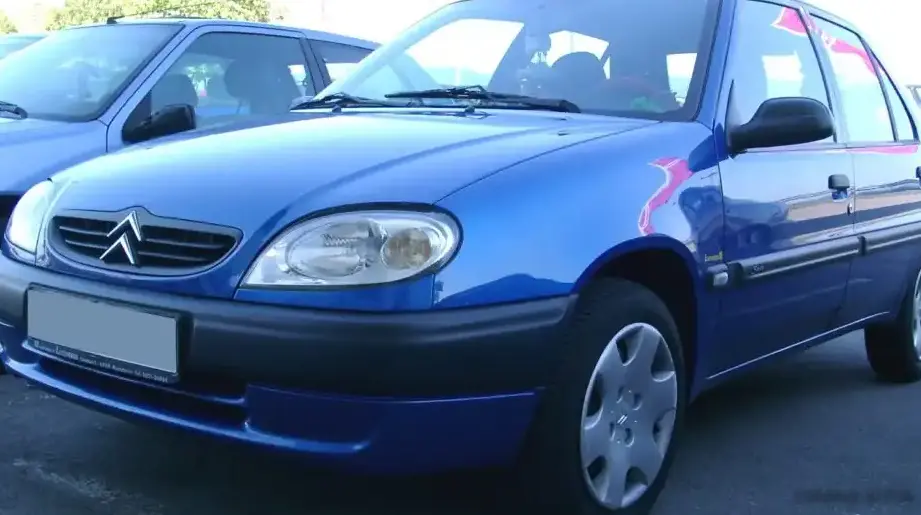
The Citroen Saxo 1.4 Automatic, produced between 1999 and 2002 as part of the Phase II refresh of the Saxo model, represented an entry-level offering within the broader Saxo range. Positioned as a practical and affordable supermini, it catered to buyers prioritizing ease of use over outright performance. This five-door hatchback variant, powered by a 1.4-liter engine paired with a three-speed automatic transmission, was primarily sold in European markets, offering a convenient alternative to manual transmission options. It sat below the more potent 1.6-liter and diesel variants in the Saxo lineup.
Technical Specifications
| Brand | Citroen |
| Model | Saxo |
| Generation | Saxo (Phase II, 1999) 5-door |
| Type (Engine) | 1.4 (75 Hp) Automatic |
| Start of production | September, 1999 |
| End of production | 2002 |
| Powertrain Architecture | Internal Combustion engine |
| Body type | Hatchback |
| Seats | 5 |
| Doors | 5 |
| Fuel consumption (urban) | 9.8 l/100 km (24 US mpg, 28.8 UK mpg, 10.2 km/l) |
| Fuel consumption (extra urban) | 6.2 l/100 km (37.9 US mpg, 45.6 UK mpg, 16.1 km/l) |
| Fuel consumption (combined) | 7.5 l/100 km (31.4 US mpg, 37.7 UK mpg, 13.3 km/l) |
| CO2 emissions | 177 g/km |
| Fuel Type | Petrol (Gasoline) |
| Acceleration 0 – 100 km/h | 17 sec |
| Acceleration 0 – 62 mph | 17 sec |
| Acceleration 0 – 60 mph | 16.2 sec |
| Maximum speed | 166 km/h (103.15 mph) |
| Emission standard | Euro 3 |
| Weight-to-power ratio | 11.7 kg/Hp, 85.2 Hp/tonne |
| Weight-to-torque ratio | 7.3 kg/Nm, 136.4 Nm/tonne |
| Power | 75 Hp @ 5500 rpm |
| Power per litre | 55.1 Hp/l |
| Torque | 120 Nm @ 3400 rpm (88.51 lb.-ft. @ 3400 rpm) |
| Engine layout | Front, Transverse |
| Engine Model/Code | KFX TU3JP |
| Engine displacement | 1360 cm3 (82.99 cu. in.) |
| Number of cylinders | 4 |
| Engine configuration | Inline |
| Cylinder Bore | 75 mm (2.95 in.) |
| Piston Stroke | 77 mm (3.03 in.) |
| Compression ratio | 10.2:1 |
| Number of valves per cylinder | 2 |
| Fuel injection system | Multi-port manifold injection |
| Engine aspiration | Naturally aspirated engine |
| Valvetrain | SOHC |
| Engine oil capacity | 3.2 l (3.38 US qt | 2.82 UK qt) |
| Coolant capacity | 6.1 l (6.45 US qt | 5.37 UK qt) |
| Kerb Weight | 880 kg (1940.07 lbs.) |
| Max. weight | 1360 kg (2998.29 lbs.) |
| Max load | 480 kg (1058.22 lbs.) |
| Trunk (boot) space – minimum | 280 l (9.89 cu. ft.) |
| Trunk (boot) space – maximum | 953 l (33.65 cu. ft.) |
| Fuel tank capacity | 45 l (11.89 US gal | 9.9 UK gal) |
| Max. roof load | 50 kg (110.23 lbs.) |
| Permitted trailer load with brakes (12%) | 500 kg (1102.31 lbs.) |
| Permitted trailer load without brakes | 475 kg (1047.2 lbs.) |
| Permitted towbar download | 50 kg (110.23 lbs.) |
| Length | 3718 mm (146.38 in.) |
| Width | 1595 mm (62.8 in.) |
| Height | 1368 mm (53.86 in.) |
| Wheelbase | 2385 mm (93.9 in.) |
| Front track | 1370 mm (53.94 in.) |
| Rear track | 1305 mm (51.38 in.) |
| Minimum turning circle | 10.9 m (35.76 ft.) |
| Drivetrain Architecture | Front wheel drive |
| Number of gears and type of gearbox | 3 gears, automatic transmission |
| Front suspension | Independent type McPherson, Transverse stabilizer |
| Rear suspension | Trailing arm, Torsion |
| Front brakes | Disc |
| Rear brakes | Drum |
| Assisting systems | ABS (Anti-lock braking system) |
| Steering type | Steering rack and pinion |
| Power steering | Electric Steering |
| Tires size | 165/70 R13; 165/65 R14 |
| Wheel rims size | 5J x 13; 5.5J x 14 |
INTRODUCTION
The Citroen Saxo, launched in 1996, was a direct replacement for the AX, aiming to provide a modern and affordable supermini for the European market. The Phase II update in 1999 brought subtle styling revisions and improvements to interior trim. The 1.4-liter engine with automatic transmission was introduced as a convenience-focused option, appealing to drivers who preferred the simplicity of an automatic gearbox, particularly in urban environments. This variant was not intended to be a performance leader, but rather a practical and economical choice for everyday driving.
Powertrain & Engine Architecture
The heart of the Saxo 1.4 Automatic is the KFX (TU3JP) engine, a naturally aspirated, inline-four cylinder petrol engine displacing 1360cc. This engine utilizes a single overhead camshaft (SOHC) valvetrain with two valves per cylinder. Fuel delivery is managed by a multi-port fuel injection system, providing adequate, though not exceptional, performance. The engine produces 75 horsepower at 5500 rpm and 120 Nm (88.51 lb-ft) of torque at 3400 rpm. The three-speed automatic transmission, while offering ease of use, is a relatively simple unit. It lacks the sophistication of more modern automatic gearboxes and contributes to the car’s somewhat leisurely acceleration. The transmission is electronically controlled, but its shift points are primarily based on throttle position and vehicle speed.
Driving Characteristics
The Saxo 1.4 Automatic’s driving experience is best described as relaxed. The three-speed automatic transmission, while convenient, results in noticeable gaps between gears. Acceleration from 0-60 mph takes around 16.2 seconds, and top speed is limited to 103.15 mph. The engine feels strained when pushed hard, and the automatic transmission doesn’t offer manual override or sport modes. The gear ratios are optimized for fuel economy rather than performance. Compared to the five-speed manual version of the 1.4, the automatic suffers a slight performance penalty. The more powerful 1.6-liter variants offer significantly more spirited driving, while the diesel models provide superior fuel economy.
Equipment & Trim Levels
The 1.4 Automatic Saxo typically came with a modest level of standard equipment. This included power steering, central locking, and an AM/FM radio. Interior trim was generally basic, with cloth upholstery and plastic dashboard components. Optional extras included air conditioning, electric windows, and alloy wheels. Higher trim levels, though rare on this specific variant, could add features like upgraded seat fabrics and a more comprehensive stereo system. The focus was on providing a functional and affordable vehicle, so luxury features were kept to a minimum.
Chassis & Braking
The Saxo utilizes a McPherson strut front suspension and a trailing arm rear suspension. The front suspension incorporates a transverse stabilizer bar to reduce body roll. Braking is handled by disc brakes on the front wheels and drum brakes on the rear. ABS (Anti-lock Braking System) was standard, enhancing safety. The suspension setup is tuned for comfort rather than sporty handling, providing a reasonably smooth ride on most road surfaces. The drum brakes on the rear are a cost-saving measure and offer less stopping power than disc brakes.
Market Reception & Comparison
The Saxo 1.4 Automatic was generally well-received as a practical and affordable city car. Critics acknowledged its ease of use and fuel efficiency, but noted its lack of performance. Compared to the manual transmission versions, the automatic suffered a slight fuel economy penalty. The 1.6-liter Saxo offered a more engaging driving experience, while the diesel models were praised for their exceptional fuel economy. The Saxo competed with other superminis like the Peugeot 206, Renault Clio, and Volkswagen Polo.
Legacy
The Citroen Saxo 1.4 Automatic, while not a particularly exciting vehicle, proved to be a reliable and durable option for many drivers. The KFX engine is known for its robustness, and the three-speed automatic transmission, though simple, is generally dependable. Today, these cars are relatively inexpensive to purchase and maintain, making them popular choices for first-time drivers or those seeking an economical runabout. Parts availability is generally good, although some trim-specific components may be harder to find. The Saxo 1.4 Automatic remains a testament to Citroen’s commitment to providing affordable and practical transportation.