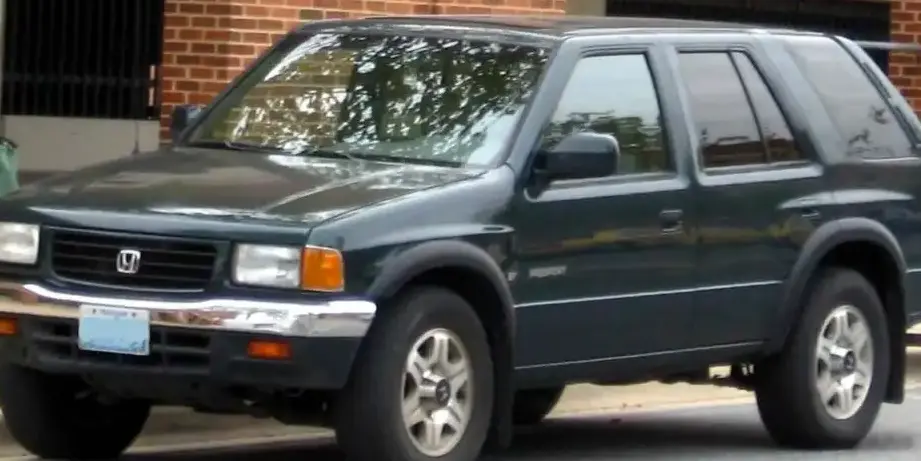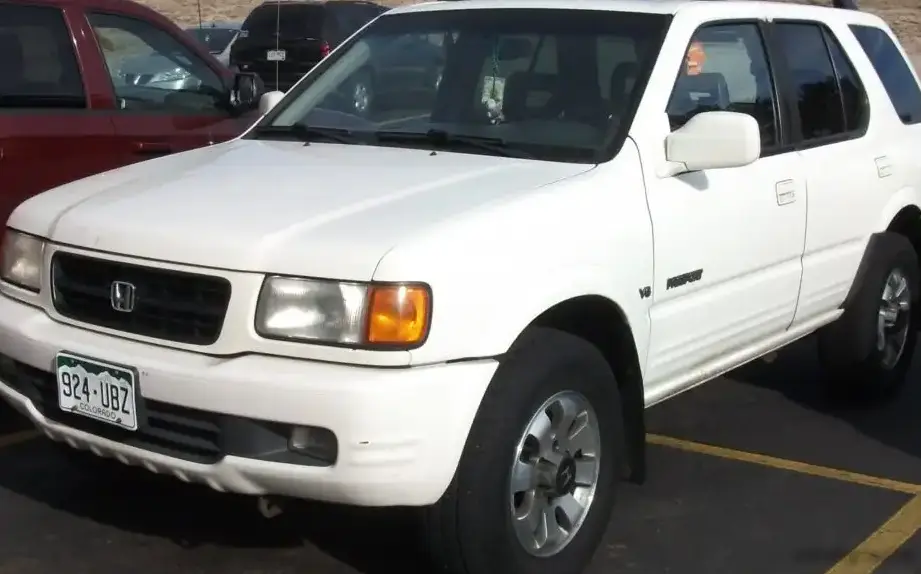
The Honda Passport II 3.2i V6 24V 4WD, produced from 1997 to 2002, represented Honda’s continued foray into the mid-size SUV market. Building upon the original Passport (a rebadged Isuzu Rodeo), the second generation offered a more refined experience with Honda’s own engine and a focus on improved comfort and capability. This particular variant, equipped with the 3.2-liter V6 engine and a five-speed manual transmission, occupied a middle ground in the Passport II lineup, offering a balance between performance and affordability. It was positioned above the base 2.5-liter four-cylinder models and below the potentially available, but less common, higher trim levels with additional luxury features.
Technical Specifications
| Brand | Honda |
| Model | Passport |
| Generation | Passport II |
| Type (Engine) | 3.2i V6 24V (205 Hp) 4WD |
| Start of production | 1997 |
| End of production | 2002 |
| Powertrain Architecture | Internal Combustion engine |
| Body type | SUV |
| Seats | 5 |
| Doors | 5 |
| Fuel consumption (urban) | 14.7 l/100 km (16 US mpg, 19.2 UK mpg) |
| Fuel consumption (extra urban) | 11.8 l/100 km (19.9 US mpg, 23.9 UK mpg) |
| Fuel Type | Petrol (Gasoline) |
| Maximum speed | 180 km/h (111.85 mph) |
| Weight-to-power ratio | 8.3 kg/Hp |
| Weight-to-torque ratio | 5.9 kg/Nm |
| Power | 205 Hp @ 5400 rpm |
| Power per litre | 64.8 Hp/l |
| Torque | 289 Nm @ 3000 rpm (213.16 lb.-ft. @ 3000 rpm) |
| Engine layout | Front, Longitudinal |
| Engine displacement | 3165 cm3 (193.14 cu. in.) |
| Number of cylinders | 6 |
| Engine configuration | V-engine |
| Cylinder Bore | 93.4 mm (3.68 in.) |
| Piston Stroke | 77 mm (3.03 in.) |
| Compression ratio | 9.1:1 |
| Number of valves per cylinder | 4 |
| Fuel injection system | Multi-port manifold injection |
| Engine aspiration | Naturally aspirated engine |
| Valvetrain | DOHC |
| Kerb Weight | 1710 kg (3769.9 lbs.) |
| Fuel tank capacity | 80 l (21.13 US gal | 17.6 UK gal) |
| Length | 4675 mm (184.06 in.) |
| Width | 1790 mm (70.47 in.) |
| Height | 1745 mm (68.7 in.) |
| Wheelbase | 2700 mm (106.3 in.) |
| Front track | 1515 mm (59.65 in.) |
| Rear track | 1520 mm (59.84 in.) |
| Drive wheel | All wheel drive (4×4) |
| Number of gears and type of gearbox | 5 gears, manual transmission |
| Front suspension | Double wishbone |
| Rear suspension | Double wishbone |
| Front brakes | Ventilated discs |
| Rear brakes | Drum |
| Assisting systems | ABS (Anti-lock braking system) |
| Steering type | Steering rack and pinion |
| Power steering | Hydraulic Steering |
| Tires size | 225/75 R16 |
Powertrain & Engine Architecture
The heart of the Passport II 3.2i was Honda’s J32A1 engine, a 3.2-liter, 60-degree V6. This engine featured a cast-iron block with aluminum cylinder heads, and a dual overhead camshaft (DOHC) valvetrain operating 24 valves (four per cylinder). The J32A1 utilized a multi-port fuel injection system, delivering fuel directly to each intake port for optimized combustion. The engine’s 9.1:1 compression ratio contributed to its balance of power and efficiency. The five-speed manual transmission provided drivers with direct control over the engine’s output, offering a more engaging driving experience than the available four-speed automatic. This manual gearbox was chosen by buyers who prioritized performance and fuel economy.
Driving Characteristics
The 3.2-liter V6, producing 205 horsepower and 213 lb-ft of torque, provided adequate power for the Passport II, especially when paired with the five-speed manual transmission. Acceleration was respectable, allowing for confident merging and highway passing. The manual transmission allowed drivers to keep the engine in its optimal power band, resulting in a more responsive feel compared to the automatic version. The 4WD system provided enhanced traction in various conditions, making the Passport II a capable vehicle for light off-roading and inclement weather. While not a dedicated off-road machine, it offered a level of all-weather confidence that appealed to many buyers. The gear ratios in the five-speed manual were well-suited to both on-road cruising and maintaining momentum on inclines.
Equipment & Trim Levels
The Passport II 3.2i 4WD with a manual transmission typically came standard with features such as air conditioning, power windows and locks, and an AM/FM stereo. Interior upholstery was generally cloth, though leather options were available on higher trim levels. The dashboard layout was functional and straightforward, prioritizing usability over luxury. Optional extras included a sunroof, upgraded audio systems, and alloy wheels. The specific trim level (LX, EX, etc.) determined the availability of these features. The EX trim, for example, often added features like cruise control and keyless entry.
Chassis & Braking
The Passport II utilized a body-on-frame construction, providing a robust and durable platform. The suspension consisted of double wishbones at both the front and rear, offering a comfortable ride quality. Front brakes were ventilated discs, providing ample stopping power, while the rear brakes were drums. This configuration was typical for SUVs of this era and weight class. An anti-lock braking system (ABS) was standard, enhancing safety by preventing wheel lockup during hard braking. The hydraulic power steering provided a reasonable level of assistance, making the vehicle easy to maneuver.
Market Reception & Comparison
The Honda Passport II 3.2i V6 4WD was generally well-received by automotive critics. It was praised for its comfortable ride, spacious interior, and capable engine. However, some reviewers noted that the interior materials were not as refined as those found in some competing SUVs. Compared to the four-cylinder Passport II models, the 3.2-liter V6 offered a significant performance upgrade, but at the cost of slightly lower fuel economy. Against competitors like the Ford Explorer and Jeep Cherokee, the Passport II offered a unique blend of Honda reliability and SUV practicality. The manual transmission version was favored by enthusiasts who appreciated its engaging driving experience.
Legacy
The Honda Passport II 3.2i V6 4WD has proven to be a relatively reliable vehicle, with the J32A1 engine known for its durability. However, like any vehicle of this age, maintenance is key to ensuring long-term reliability. Common issues include wear and tear on suspension components and potential corrosion in areas exposed to road salt. On the used car market, these Passports are often sought after by those looking for a capable and affordable SUV with a proven track record. The manual transmission versions, in particular, tend to hold their value due to their rarity and appeal to driving enthusiasts. The Passport II represents a transitional period for Honda, showcasing their ability to compete in the growing SUV segment while maintaining their reputation for quality and dependability.