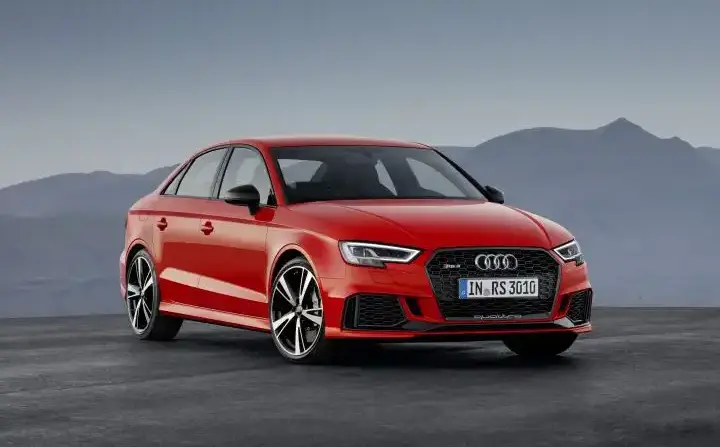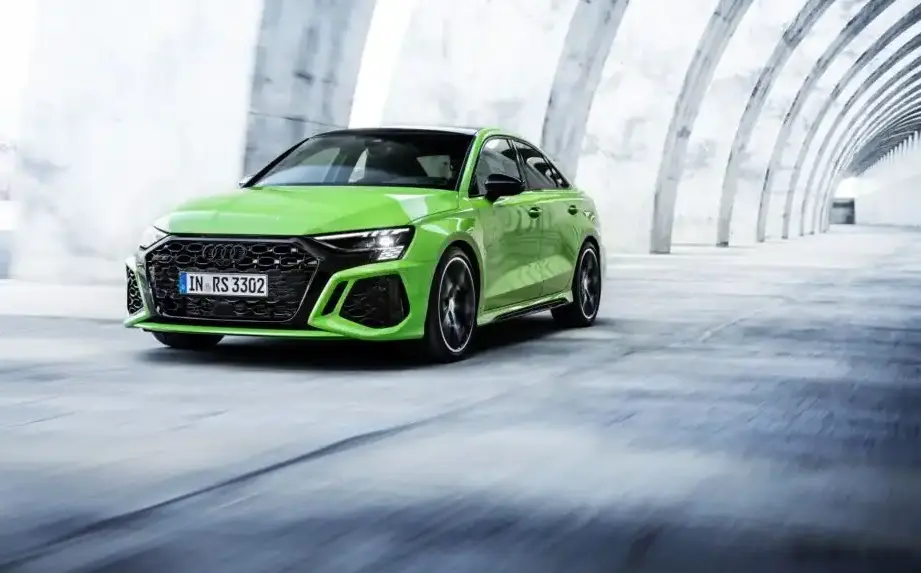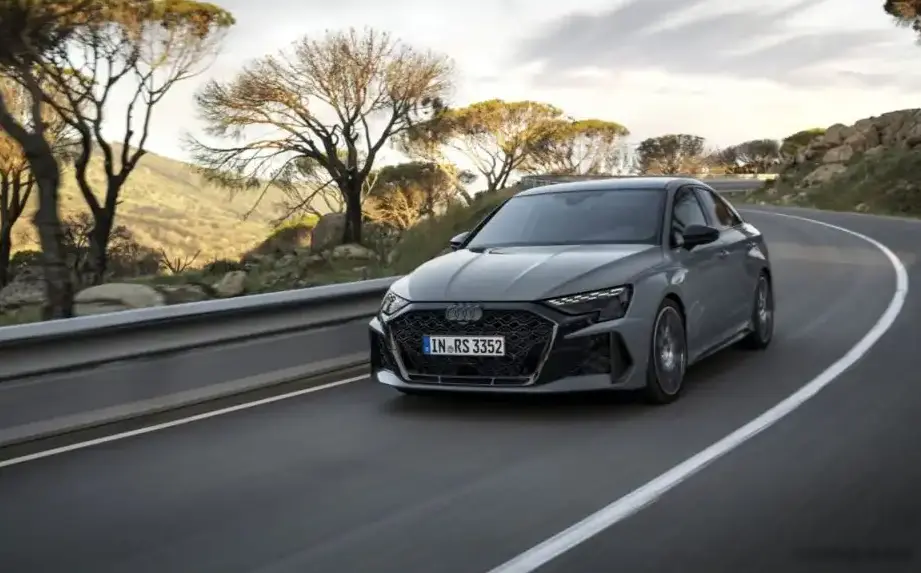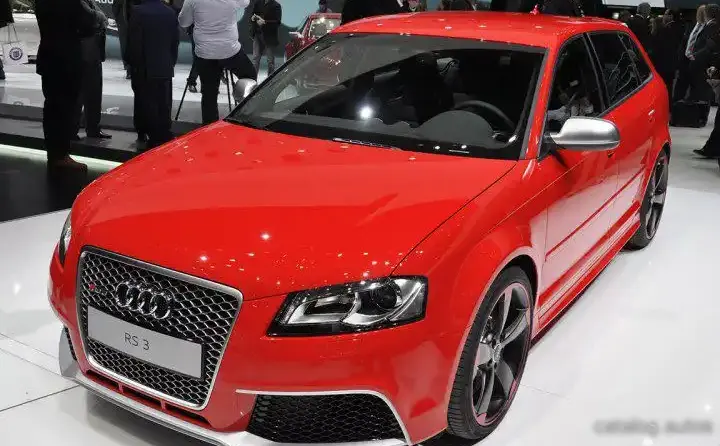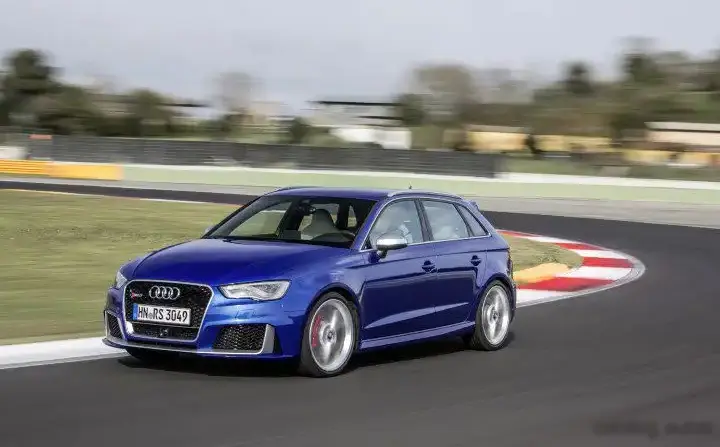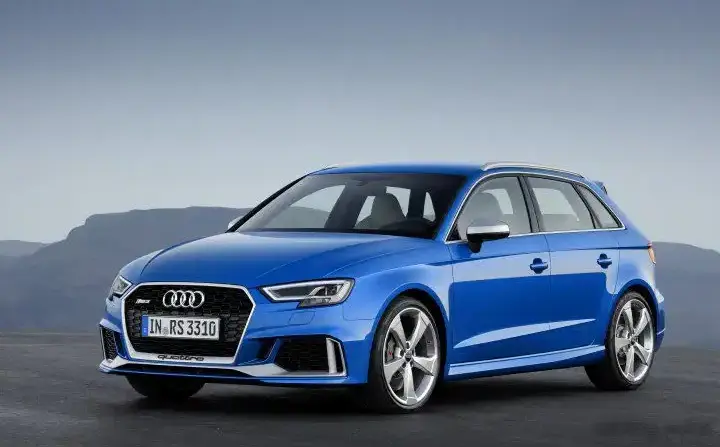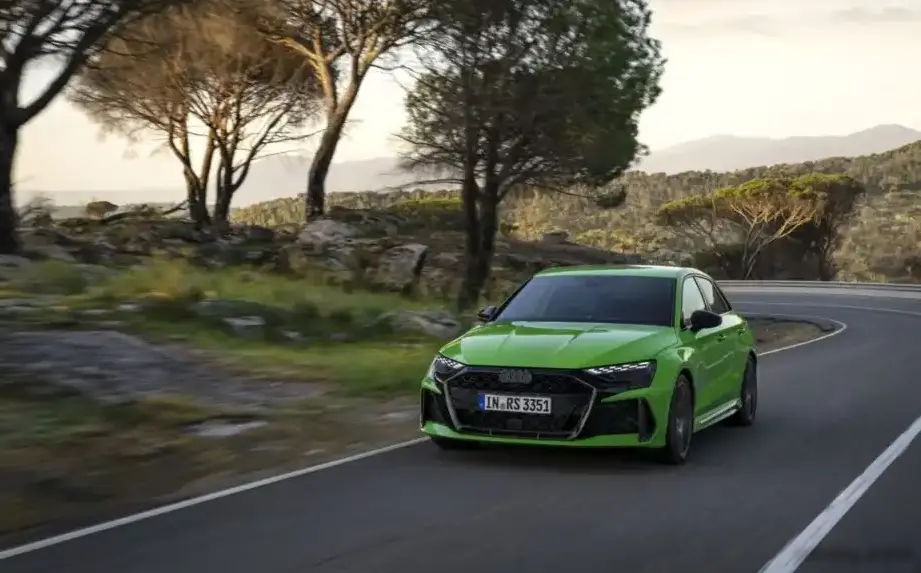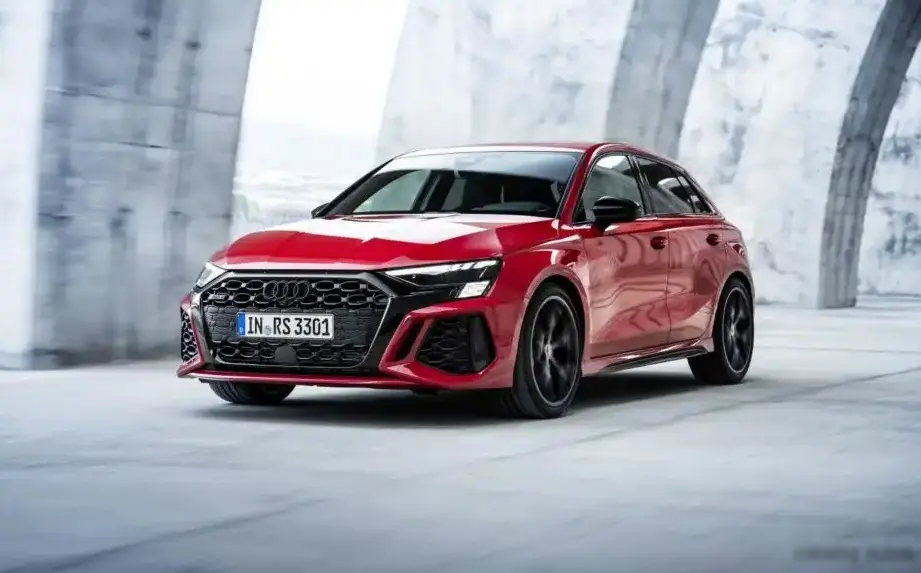
The Audi RS3 Sportback (8Y) 2.5 TFSI quattro S tronic represents the pinnacle of performance within the Audi A3 Sportback range. Introduced in 2021 and continuing through 2024 model years, this variant is characterized by its potent 2.5-liter turbocharged inline-five engine, paired exclusively with Audi’s seven-speed S tronic dual-clutch transmission and the quattro all-wheel-drive system. Positioned as the flagship model, the RS3 Sportback caters to enthusiasts seeking a compact, high-performance hatchback with track-capable credentials and everyday usability. It builds upon the foundation of the 8Y A3 platform (also shared with the Volkswagen Golf and SEAT Leon), but distinguishes itself through significant mechanical upgrades and aggressive styling cues.
Technical Specifications
| Brand | Audi |
| Model | RS3 |
| Generation | RS3 Sportback (8Y) |
| Type (Engine) | 2.5 TFSI (400 Hp) quattro S tronic |
| Start of production | 2021 year |
| End of production | 2024 year |
| Powertrain Architecture | Internal Combustion engine |
| Body type | Hatchback |
| Seats | 5 |
| Doors | 5 |
| Fuel consumption at Low speed (WLTP) | 14.1 l/100 km (16.7 US mpg, 20 UK mpg, 7.1 km/l) |
| Fuel consumption at Medium speed (WLTP) | 9 l/100 km (26.1 US mpg, 31.4 UK mpg, 11.1 km/l) |
| Fuel consumption at high speed (WLTP) | 7.6 l/100 km (30.9 US mpg, 37.2 UK mpg, 13.2 km/l) |
| Fuel consumption at very high speed (WLTP) | 8.4 l/100 km (28 US mpg, 33.6 UK mpg, 11.9 km/l) |
| Combined fuel consumption (WLTP) | 9-9.5 l/100 km (26.1 – 24.8 US mpg, 31.4 – 29.7 UK mpg, 11.1 – 10.5 km/l) |
| CO2 emissions (WLTP) | 205-216 g/km |
| Fuel consumption (economy) – urban | 11.2-11.6 l/100 km (21 – 20.3 US mpg, 25.2 – 24.4 UK mpg, 8.9 – 8.6 km/l) |
| Fuel consumption (economy) – extra urban | 6.7-7.1 l/100 km (35.1 – 33.1 US mpg, 42.2 – 39.8 UK mpg, 14.9 – 14.1 km/l) |
| Fuel consumption (economy) – combined | 8.3-8.8 l/100 km (28.3 – 26.7 US mpg, 34 – 32.1 UK mpg, 12 – 11.4 km/l) |
| CO2 emissions | 190-201 g/km |
| Fuel Type | Petrol (Gasoline) |
| Acceleration 0 – 100 km/h | 3.8 sec |
| Acceleration 0 – 62 mph | 3.8 sec |
| Acceleration 0 – 60 mph | 3.6 sec |
| Maximum speed | 250 km/h (155.34 mph), Electronically limited |
| Emission standard | Euro 6d-ISC-FCM |
| Weight-to-power ratio | 3.9 kg/Hp, 254.8 Hp/tonne |
| Weight-to-torque ratio | 3.1 kg/Nm, 318.5 Nm/tonne |
| Power | 400 Hp @ 5600-7000 rpm |
| Power per litre | 161.3 Hp/l |
| Torque | 500 Nm @ 2250-5600 rpm (368.78 lb.-ft. @ 2250-5600 rpm) |
| Engine layout | Front, Transverse |
| Engine Model/Code | EA855 evo / DNWC |
| Engine displacement | 2480 cm3 (151.34 cu. in.) |
| Number of cylinders | 5 |
| Engine configuration | Inline |
| Cylinder Bore | 82.5 mm (3.25 in.) |
| Piston Stroke | 92.8 mm (3.65 in.) |
| Compression ratio | 10:1 |
| Number of valves per cylinder | 4 |
| Fuel injection system | Direct injection and Multi-port manifold injection |
| Engine aspiration | Turbocharger, Intercooler |
| Valvetrain | DOHC |
| Engine oil capacity | 7.1 l (7.5 US qt | 6.25 UK qt) |
| Coolant | 9.8 l (10.36 US qt | 8.62 UK qt) |
| Kerb Weight | 1570 kg (3461.26 lbs.) |
| Max. weight | 2075 kg (4574.59 lbs.) |
| Max load | 505 kg (1113.33 lbs.) |
| Trunk (boot) space – minimum | 282 l (9.96 cu. ft.) |
| Trunk (boot) space – maximum | 1104 l (38.99 cu. ft.) |
| Fuel tank capacity | 55 l (14.53 US gal | 12.1 UK gal) |
| Max. roof load | 75 kg (165.35 lbs.) |
| Length | 4389 mm (172.8 in.) |
| Width | 1851 mm (72.87 in.) |
| Width including mirrors | 1984 mm (78.11 in.) |
| Height | 1436 mm (56.54 in.) |
| Wheelbase | 2631 mm (103.58 in.) |
| Front track | 1592 mm (62.68 in.) |
| Rear (Back) track | 1524 mm (60 in.) |
| Front overhang | 914 mm (35.98 in.) |
| Rear overhang | 844 mm (33.23 in.) |
| Drag coefficient (Cd) | 0.34 |
| Minimum turning circle (turning diameter) | 12 m (39.37 ft.) |
| Drivetrain Architecture | The Internal combustion engine (ICE) drives the front wheels permanently, and the rear wheels are driven through an electrically or mechanically operated clutch if necessary. |
| Drive wheel | All wheel drive (4×4) |
| Number of gears and type of gearbox | 7 gears, automatic transmission S tronic |
| Front suspension | Independent, type McPherson with coil spring and anti-roll bar |
| Rear suspension | Independent multi-link spring suspension with stabilizer |
| Front brakes | Ventilated discs, 375×36 mm |
| Rear brakes | Ventilated discs, 310×22 mm |
| Tires size | Front wheel tires: 265/30 R19 Rear wheel tires: 245/35 R19 |
| Wheel rims size | Front wheel rims: 9J x 19 Rear wheel rims: 8J x 19 |
INTRODUCTION
The Audi RS3 Sportback (8Y) 2.5 TFSI quattro S tronic, launched in 2021, represents the third generation of Audi’s high-performance compact hatchback. Built on the Volkswagen Group’s MQB platform (specifically the 8Y iteration shared with the Audi A3, Volkswagen Golf, and SEAT Leon), the RS3 Sportback distinguishes itself through a uniquely potent powertrain and a host of performance-enhancing features. It serves as Audi Sport’s entry-level offering, bridging the gap between mainstream A3 models and the more exclusive R8 supercar. The Sportback body style, a five-door hatchback, prioritizes practicality alongside exhilarating performance, making it a compelling option for drivers seeking a versatile and engaging driving experience.
Powertrain & Engine Architecture
At the heart of the RS3 Sportback lies the EA855 evo 2.5-liter inline-five cylinder engine, a powerplant with a storied history within Audi’s performance lineage. This engine, designated with the code DNWC, produces 400 horsepower at 5600-7000 rpm and 368.78 lb.-ft. of torque between 2250-5600 rpm. The engine utilizes a combination of direct injection and multi-port fuel injection to optimize combustion efficiency and power delivery. A single twin-scroll turbocharger, with an electronically controlled valve, provides significant boost, contributing to the engine’s rapid response and broad torque curve. The engine also features a reinforced crankshaft and pistons to handle the increased stresses associated with its high output. The engine is mated exclusively to Audi’s seven-speed S tronic dual-clutch transmission, which offers incredibly fast and precise gear changes. The quattro all-wheel-drive system, utilizing a multi-plate clutch, intelligently distributes torque between the front and rear axles, maximizing traction and stability.
Driving Characteristics
The RS3 Sportback delivers a thrilling driving experience characterized by its explosive acceleration and tenacious grip. The 0-60 mph sprint is dispatched in approximately 3.6 seconds, and the car is electronically limited to a top speed of 155.34 mph. The S tronic transmission provides seamless shifts, whether in automatic or manual mode, and contributes to the car’s overall responsiveness. The quattro all-wheel-drive system inspires confidence in all weather conditions, allowing drivers to exploit the engine’s power with minimal wheelspin. Compared to lower-powered A3 variants, the RS3’s suspension is significantly stiffer and more focused on performance, resulting in a more direct and engaging feel. While this enhances handling, it does come at the expense of some ride comfort. The RS3’s steering is precise and well-weighted, providing ample feedback to the driver.
Equipment & Trim Levels
The RS3 Sportback comes generously equipped as standard. Key features include sport seats upholstered in Nappa leather with diamond stitching, a flat-bottomed steering wheel, stainless steel pedal caps, and RS-specific interior trim. The infotainment system features a 10.1-inch touchscreen display with Audi’s MMI navigation plus system. Optional extras include a Bang & Olufsen sound system, a head-up display, and carbon fiber interior trim. The RS performance exhaust system, an optional upgrade, enhances the engine’s sound and adds a more aggressive exhaust note.
Chassis & Braking
The RS3 Sportback features a specially tuned suspension system designed to maximize handling performance. The front suspension utilizes McPherson struts with a coil spring and anti-roll bar, while the rear suspension employs a multi-link setup with a stabilizer bar. Braking duties are handled by ventilated discs at all four corners, measuring 375mm in diameter at the front and 310mm at the rear. The braking system is further enhanced by Audi’s ABS (Anti-lock braking system). The RS3 also benefits from a progressive steering system, which provides variable steering ratios for improved agility and stability.
Market Reception & Comparison
The Audi RS3 Sportback (8Y) has been widely praised by automotive critics for its exceptional performance, refined interior, and everyday usability. Compared to other high-performance hatchbacks, such as the Mercedes-AMG A 35 and the BMW M140i, the RS3 stands out with its unique five-cylinder engine and distinctive character. While the RS3’s fuel economy is not its strong suit (ranging from 24.8 to 26.1 US mpg combined), it is comparable to other vehicles in its class. Reliability has generally been good, although the complexity of the engine and drivetrain may result in higher maintenance costs compared to simpler A3 models.
Legacy
The 2.5 TFSI engine in the RS3 Sportback has proven to be a robust and reliable powerplant when properly maintained. The combination of performance and practicality has cemented the RS3’s position as a desirable and sought-after vehicle in the used car market. As a modern performance car, the RS3 Sportback represents a significant step forward in terms of technology and driving dynamics, continuing Audi’s tradition of building high-performance vehicles that are both exhilarating to drive and comfortable to live with.