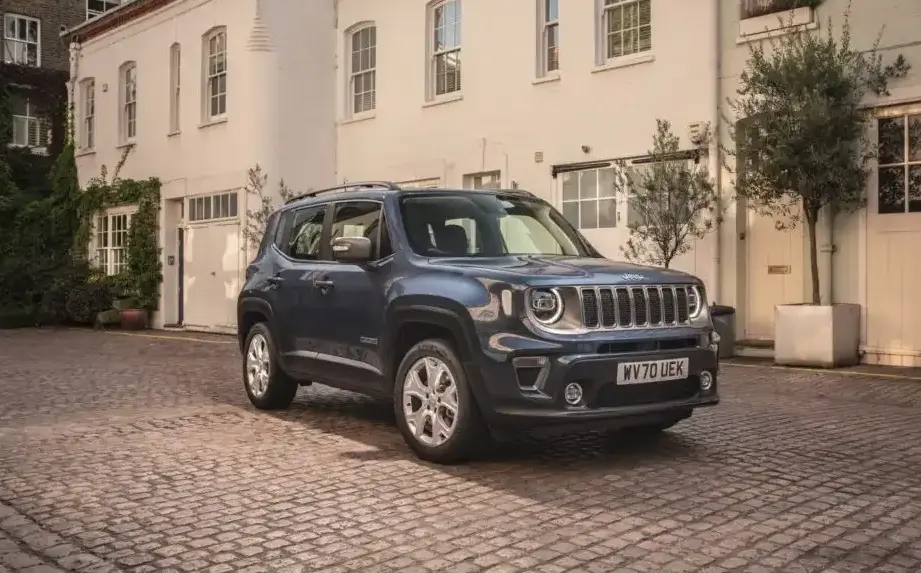
The Jeep Renegade 1.3 Turbo 4xe, introduced in June 2020, represents Jeep’s initial foray into plug-in hybrid technology within the compact SUV segment. This variant, part of the Renegade facelift (KL) generation, aimed to offer a balance of fuel efficiency, all-wheel-drive capability, and the Jeep brand’s established off-road heritage. Positioned as a mid-to-premium trim level, the 4xe distinguished itself from the standard gasoline-powered Renegades with its electrified powertrain and enhanced environmental credentials, primarily targeting European markets initially, before expanding to North America. The Renegade 4xe utilizes a sophisticated powertrain combining a turbocharged gasoline engine with an electric motor, offering multiple driving modes including fully electric operation.
Technical Specifications
| Brand | Jeep |
| Model | Renegade |
| Generation | Renegade (facelift 2018) |
| Type (Engine) | 1.3 Turbo (240 Hp) Plug-in Hybrid 4xe Automatic |
| Start of production | June, 2020 |
| Powertrain Architecture | PHEV (Plug-in Hybrid Electric Vehicle) |
| Body type | SUV, Crossover |
| Seats | 5 |
| Doors | 5 |
| Combined fuel consumption (WLTP) | 2.1 l/100 km (112 US mpg, 134.5 UK mpg, 47.6 km/l) |
| CO2 emissions (WLTP) | 49-51 g/km |
| Fuel consumption (economy) – combined (NEDC) | 2 l/100 km (117.6 US mpg, 141.2 UK mpg, 50 km/l) |
| CO2 emissions (NEDC) | 46 g/km |
| Fuel Type | Petrol / electricity |
| Acceleration 0 – 100 km/h | 7.1 sec |
| Acceleration 0 – 62 mph | 7.1 sec |
| Acceleration 0 – 60 mph | 6.7 sec |
| Maximum speed | 199 km/h (123.65 mph) |
| Emission standard | Euro 6d Final |
| Weight-to-power ratio | 7.4 kg/Hp, 135.6 Hp/tonne |
| Weight-to-torque ratio | 6.6 kg/Nm, 152.5 Nm/tonne |
| Gross battery capacity | 11.4 kWh |
| Battery technology | Lithium-ion (Li-Ion) |
| Battery location | Below the floor, under the rear seats |
| All-electric range (WLTP) | 41-42 km (25.48 – 26.1 mi) |
| Max speed (electric) | 130 km/h (80.78 mph) |
| Electric motor power | 60 Hp @ 4000 rpm |
| Electric motor Torque | 250 Nm (184.39 lb.-ft.) |
| Electric motor location | Rear axle, Transverse |
| System power | 240 Hp |
| Power | 180 Hp @ 5750 rpm |
| Torque | 270 Nm @ 1850 rpm (199.14 lb.-ft. @ 1850 rpm) |
| Engine layout | Front, Transverse |
| Engine Model/Code | 46337540 |
| Engine displacement | 1332 cm3 (81.28 cu. in.) |
| Number of cylinders | 4 |
| Engine configuration | Inline |
| Cylinder Bore | 70 mm (2.76 in.) |
| Piston Stroke | 86.5 mm (3.41 in.) |
| Compression ratio | 10.5:1 |
| Number of valves per cylinder | 4 |
| Fuel injection system | Direct injection |
| Engine aspiration | Turbocharger, Intercooler |
| Valvetrain | DOHC |
| Engine oil capacity | 4.5 l (4.76 US qt | 3.96 UK qt) |
| Coolant | 5.3 l (5.6 US qt | 4.66 UK qt) |
| Kerb Weight | 1770 kg (3902.18 lbs.) |
| Max. weight | 2315 kg (5103.7 lbs.) |
| Max load | 545 kg (1201.52 lbs.) |
| Trunk (boot) space – minimum | 330 l (11.65 cu. ft.) |
| Trunk (boot) space – maximum | 1277 l (45.1 cu. ft.) |
| Fuel tank capacity | 36 l (9.51 US gal | 7.92 UK gal) |
| Permitted trailer load with brakes (12%) | 1150 kg (2535.32 lbs.) |
| Permitted trailer load without brakes | 600 kg (1322.77 lbs.) |
| Length | 4236 mm (166.77 in.) |
| Width | 1805 mm (71.06 in.) |
| Height | 1692 mm (66.61 in.) |
| Wheelbase | 2570 mm (101.18 in.) |
| Ride height (ground clearance) | 186 mm (7.32 in.) |
| Minimum turning circle | 11.1 m (36.42 ft.) |
| Drivetrain Architecture | The Internal combustion engine (ICE) permanently drives the front wheels of the vehicle, the electric motor drives the rear wheels of the vehicle, capable of running in full electric mode, only by the Internal combustion engine (ICE) or in mixed mode. |
| Drive wheel | All wheel drive (4×4) |
| Number of gears and type of gearbox | 6 gears, automatic transmission |
| Front brakes | Disc |
| Rear brakes | Disc |
| Tires size | 235/55 R17; 235/50 R18 |
| Wheel rims size | 17; 18 |
Powertrain & Engine Architecture
The Renegade 4xe’s powertrain centers around a 1.3-liter turbocharged inline-four cylinder engine, designated as the Firefly engine family. This engine, internally coded as 46337540, produces 180 horsepower at 5750 rpm and 270 Nm (199 lb-ft) of torque at 1850 rpm. It utilizes direct fuel injection and a turbocharger with an intercooler to enhance efficiency and power output. The engine is paired with a 60 horsepower electric motor located on the rear axle. This configuration allows for all-wheel drive capability, with the gasoline engine powering the front wheels and the electric motor driving the rear wheels. The system’s combined output is 240 horsepower. A lithium-ion battery pack with a gross capacity of 11.4 kWh is positioned under the floor and rear seats, providing an all-electric range of 41-42 km (25.5-26.1 miles) according to WLTP standards. The powertrain employs a six-speed automatic transmission.
Driving Characteristics
The Renegade 4xe offers a distinct driving experience compared to its gasoline-only counterparts. In electric mode, the vehicle provides near-silent operation and instant torque, making it ideal for urban driving. Switching to hybrid mode seamlessly blends the power from both the engine and the electric motor, delivering responsive acceleration. The 0-60 mph time is approximately 6.7 seconds. The rear-mounted electric motor contributes to improved traction, particularly in slippery conditions. While the added weight of the battery pack (approximately 300 lbs) slightly impacts handling compared to lighter Renegade models, the 4xe maintains a comfortable ride quality. The automatic transmission is tuned for efficiency, prioritizing smooth gear changes over aggressive downshifts.
Equipment & Trim Levels
The Renegade 4xe typically came well-equipped, reflecting its position as a premium trim. Standard features included a touchscreen infotainment system with Apple CarPlay and Android Auto compatibility, automatic climate control, keyless entry, and a suite of advanced driver-assistance systems (ADAS) such as lane departure warning, automatic emergency braking, and adaptive cruise control. Interior upholstery was typically a combination of cloth and leatherette, with options for full leather available. Available options included a panoramic sunroof, premium audio system, and upgraded wheels. The exterior styling featured unique badging and accents to distinguish it from other Renegade models.
Chassis & Braking
The Renegade 4xe utilizes a MacPherson strut front suspension and a Chapman strut rear suspension. The suspension tuning is optimized to handle the added weight of the battery pack while maintaining a comfortable ride. Brakes are disc brakes on all four wheels, providing adequate stopping power. The electronic stability control (ESC) system is integrated with the all-wheel-drive system to enhance stability and control in various driving conditions. The vehicle’s ride height provides reasonable ground clearance for light off-road use.
Market Reception & Comparison
The Jeep Renegade 4xe was generally well-received by automotive critics, who praised its fuel efficiency, all-wheel-drive capability, and comfortable ride. Compared to the standard gasoline-powered Renegade, the 4xe offered significantly improved fuel economy and reduced emissions. However, the higher price point and added weight were noted as potential drawbacks. Compared to other plug-in hybrid SUVs in its class, the Renegade 4xe offered a compelling combination of features and affordability. Reliability reports have been generally positive, with few major issues reported with the powertrain.
Legacy
The Renegade 4xe marked a significant step for Jeep in its transition towards electrification. It demonstrated the brand’s commitment to offering more environmentally friendly vehicles without compromising its core values of capability and adventure. The 4xe powertrain technology has since been expanded to other Jeep models, including the Wrangler and Compass. On the used car market, the Renegade 4xe holds its value relatively well, due to its fuel efficiency and unique features. The long-term reliability of the battery pack remains a key consideration for potential buyers, but early indications suggest that the battery is holding up well with proper maintenance.