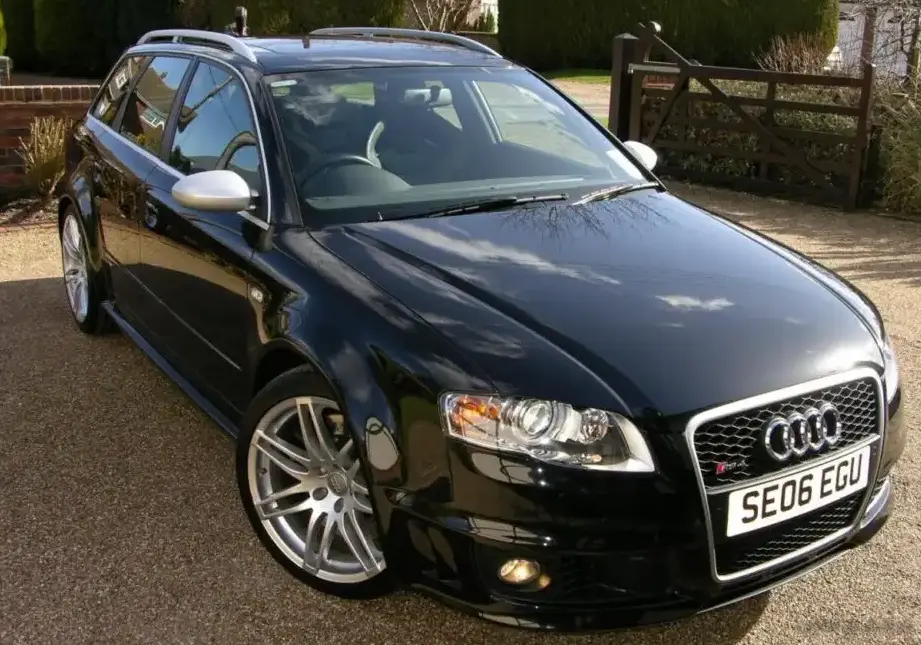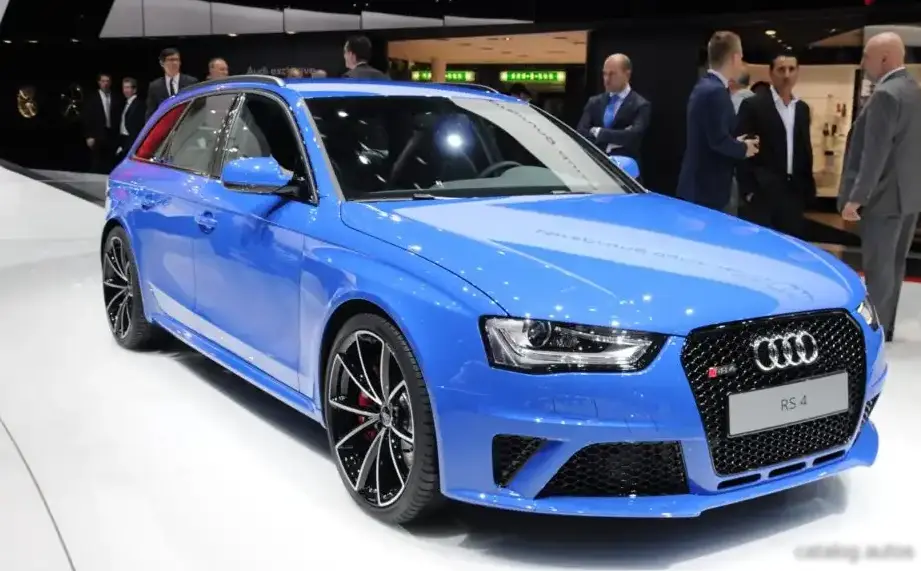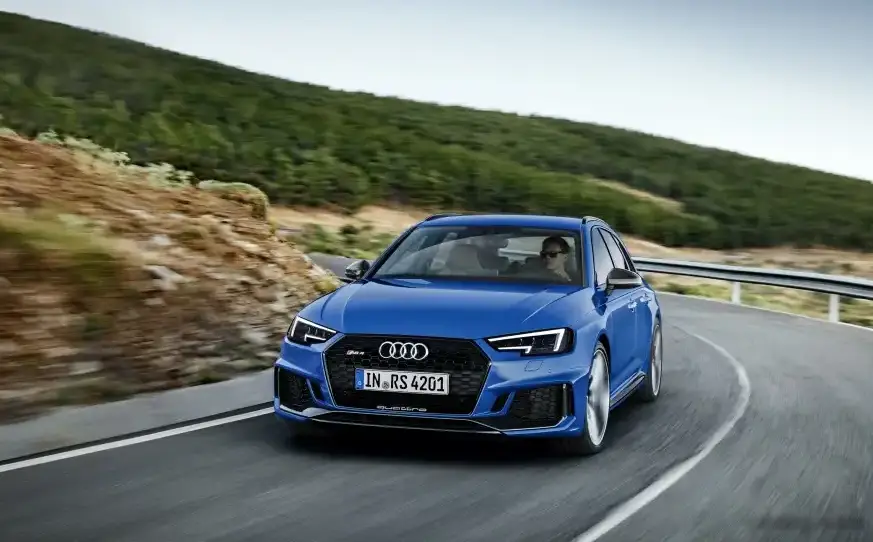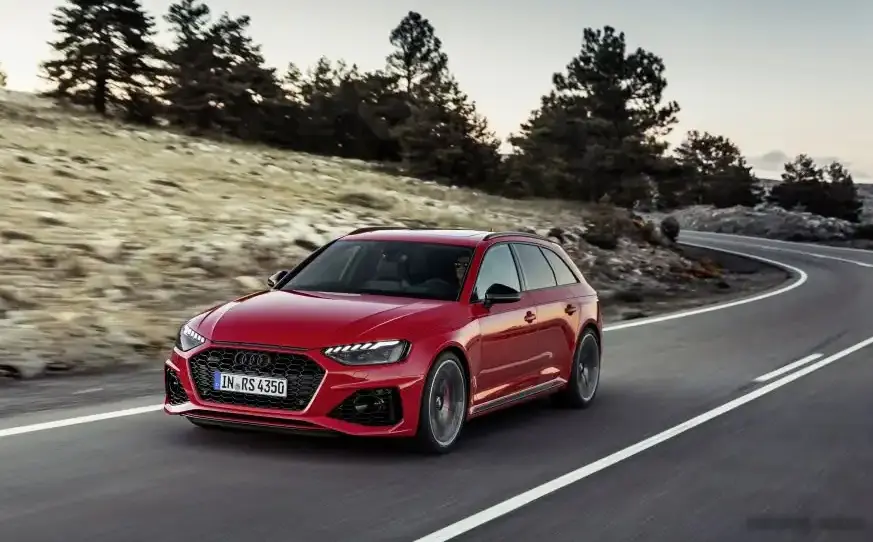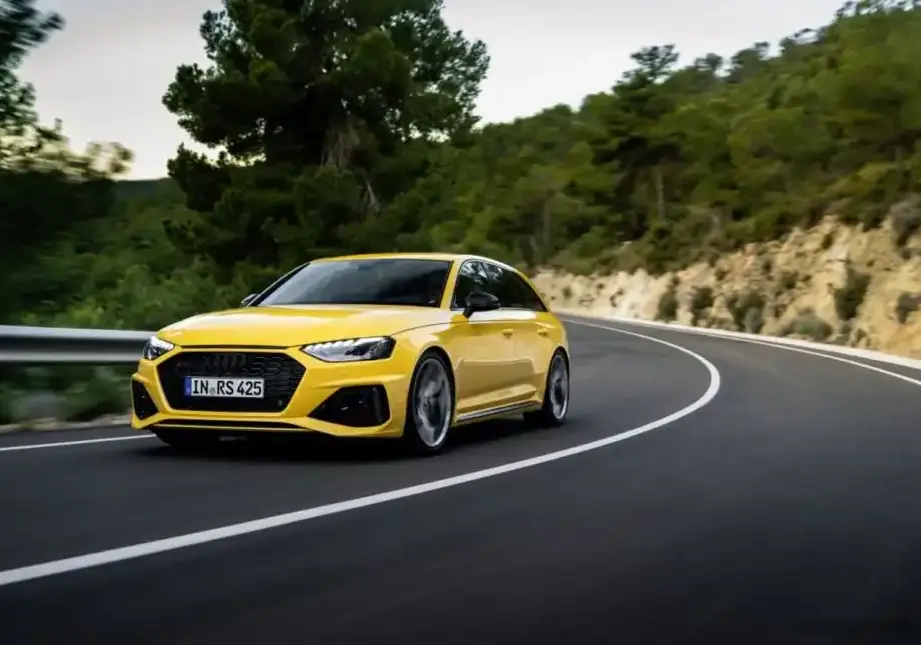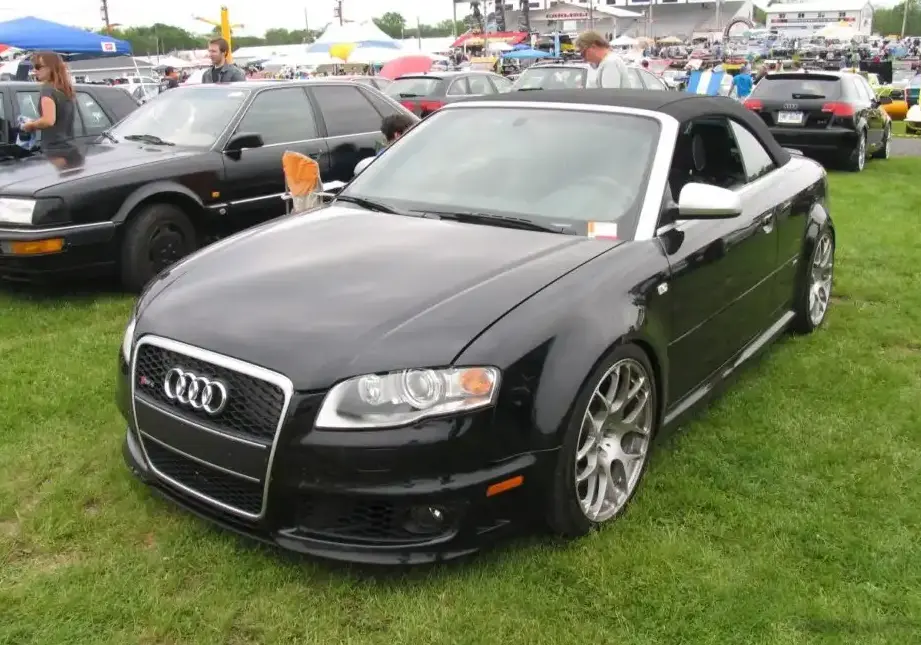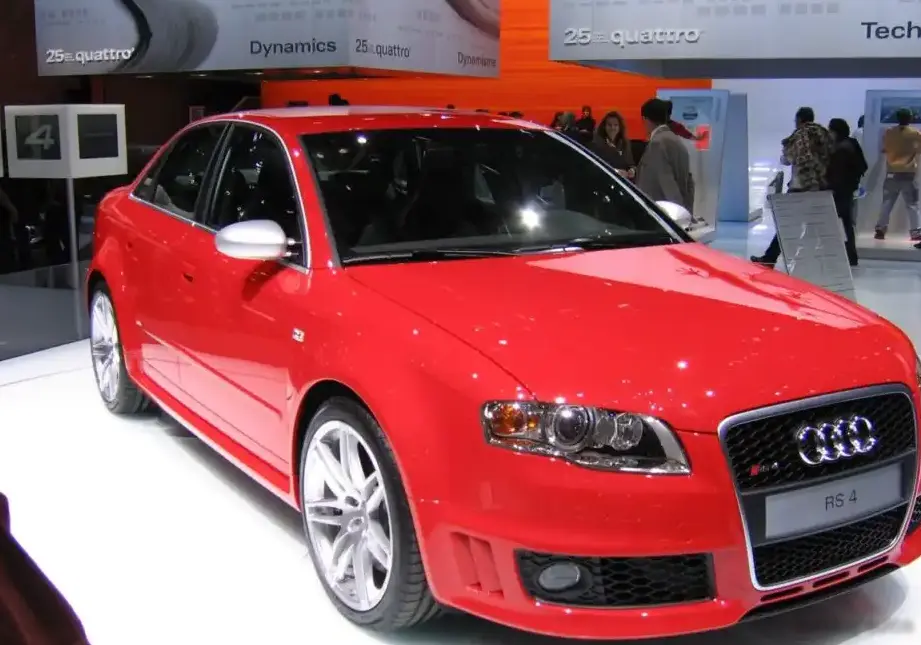
The Audi RS4 Avant (8D, B5) represented a significant step forward for Audi’s performance division, quattro GmbH, when it debuted in 1999. Based on the Audi A4 Avant (B5) platform, the RS4 was initially conceived for the European market as a homologation special for Supertouring racing, but quickly gained a devoted following among enthusiasts. Production continued through 2001, with approximately 6,030 units built. This high-performance wagon combined practicality with exhilarating performance, establishing a template for future RS models. The 2.7 T V6 engine, paired exclusively with a six-speed manual transmission, was the heart of this potent machine.
Technical Specifications
| Brand | Audi |
| Model | RS4 |
| Generation | RS4 Avant (8D, B5) |
| Type (Engine) | 2.7 T V6 (380 Hp) quattro |
| Start of production | 1999 |
| End of production | 2001 |
| Powertrain Architecture | Internal Combustion engine |
| Body type | Station wagon (estate) |
| Seats | 5 |
| Doors | 5 |
| Fuel consumption (economy) – urban | 17 l/100 km (13.8 US mpg, 16.6 UK mpg, 5.9 km/l) |
| Fuel consumption (economy) – extra urban | 9 l/100 km (26.1 US mpg, 31.4 UK mpg, 11.1 km/l) |
| Fuel consumption (economy) – combined | 12 l/100 km (19.6 US mpg, 23.5 UK mpg, 8.3 km/l) |
| CO2 emissions | 288 g/km |
| Fuel Type | Petrol (Gasoline) |
| Acceleration 0 – 100 km/h | 4.9 sec |
| Acceleration 0 – 62 mph | 4.9 sec |
| Acceleration 0 – 60 mph | 4.7 sec |
| Acceleration 0 – 200 km/h | 17.0 sec |
| Maximum speed | 250 km/h (155.34 mph) |
| Weight-to-power ratio | 4.3 kg/Hp, 234.6 Hp/tonne |
| Weight-to-torque ratio | 3.7 kg/Nm, 271.6 Nm/tonne |
| Power | 380 Hp @ 6100-7000 rpm |
| Power per litre | 142.3 Hp/l |
| Torque | 440 Nm @ 2500-6000 rpm (324.53 lb.-ft. @ 2500-6000 rpm) |
| Engine layout | Front, Longitudinal |
| Engine Model/Code | ASJ, AZR |
| Engine displacement | 2671 cm3 (162.99 cu. in.) |
| Number of cylinders | 6 |
| Engine configuration | V-engine |
| Cylinder Bore | 81 mm (3.19 in.) |
| Piston Stroke | 86.4 mm (3.4 in.) |
| Compression ratio | 9.3:1 |
| Number of valves per cylinder | 5 |
| Fuel injection system | Multi-port manifold injection |
| Engine aspiration | BiTurbo, Intercooler |
| Valvetrain | DOHC |
| Engine oil capacity | 6 l (6.34 US qt | 5.28 UK qt) |
| Coolant | 6 l (6.34 US qt | 5.28 UK qt) |
| Kerb Weight | 1620 kg (3571.49 lbs.) |
| Max. weight | 2170 kg (4784.03 lbs.) |
| Max load | 550 kg (1212.54 lbs.) |
| Trunk (boot) space – minimum | 390 l (13.77 cu. ft.) |
| Trunk (boot) space – maximum | 1250 l (44.14 cu. ft.) |
| Fuel tank capacity | 62 l (16.38 US gal | 13.64 UK gal) |
| Max. roof load | 75 kg (165.35 lbs.) |
| Length | 4525 mm (178.15 in.) |
| Width | 1799 mm (70.83 in.) |
| Height | 1386 mm (54.57 in.) |
| Wheelbase | 2607 mm (102.64 in.) |
| Front track | 1549 mm (60.98 in.) |
| Rear (Back) track | 1530 mm (60.24 in.) |
| Drag coefficient (Cd) | 0.34 |
| Minimum turning circle | 11.4 m (37.4 ft.) |
| Drive wheel | All wheel drive (4×4) |
| Number of gears and type of gearbox | 6 gears, manual transmission |
| Front suspension | Independent multi-link suspension |
| Rear suspension | Double wishbone |
| Front brakes | Ventilated discs |
| Rear brakes | Ventilated discs |
| Assisting systems | ABS (Anti-lock braking system) |
| Steering type | Steering rack and pinion |
| Power steering | Hydraulic Steering |
| Tires size | 255/35 R18 |
| Wheel rims size | 8.5J x 18 |
INTRODUCTION
The Audi RS4 Avant (8D, B5) was produced between 1999 and 2001, representing the first iteration of Audi’s high-performance RS4 model. Built on the B5 A4 platform (internally designated 8D), the RS4 Avant was exclusively offered as a wagon, catering to European buyers who desired both performance and practicality. It was a direct response to the growing demand for high-performance estates and served as a showcase for Audi’s quattro all-wheel-drive technology and potent engine development capabilities. The RS4 Avant was never officially sold in the North American market.
Powertrain & Engine Architecture
The heart of the RS4 Avant is the 2.7-liter twin-turbocharged V6 engine, internally designated as the ASJ or AZR code depending on minor specification differences. This engine is a significant evolution of the 2.7 bi-turbo found in the Audi S4, but with substantial upgrades to handle the increased power output. Key features include forged pistons, reinforced connecting rods, and a revised crankshaft. The engine utilizes a Bosch Motronic engine management system to control multi-port fuel injection and ignition timing. The twin turbochargers, supplied by BorgWarner, provide significant boost, contributing to the engine’s 380 horsepower and 440 Nm (324 lb-ft) of torque. The engine’s longitudinal layout and the quattro all-wheel-drive system contribute to balanced handling. The RS4 Avant was exclusively equipped with a six-speed manual transmission, providing precise gear changes and enhancing the driving experience.
Driving Characteristics
The RS4 Avant delivers a thrilling driving experience characterized by rapid acceleration and confident handling. The twin-turbocharged engine provides a broad torque curve, resulting in strong pull throughout the rev range. The quattro all-wheel-drive system ensures excellent traction, particularly in adverse weather conditions. The six-speed manual transmission allows for precise control over the engine’s power. While the RS4 Avant is undeniably fast, its weight (approximately 3,571 lbs) does limit its ultimate agility compared to lighter sports cars. However, the combination of power, all-wheel drive, and a well-tuned suspension makes it a capable performer on both the road and the track.
Equipment & Trim Levels
The RS4 Avant was relatively sparsely equipped compared to modern luxury vehicles, focusing instead on performance. Standard features included sport seats upholstered in a unique combination of leather and Alcantara, a leather-wrapped steering wheel, and a sport suspension. Exterior styling cues included a distinctive front bumper with larger air intakes, flared wheel arches, and a rear spoiler. Optional extras included a sunroof, xenon headlights, and a premium sound system. The interior trim was generally understated, with a focus on functionality and driver engagement.
Chassis & Braking
The RS4 Avant features a sport-tuned suspension with stiffer springs and dampers compared to the standard A4 Avant. The front suspension utilizes independent multi-link technology, while the rear suspension employs a double wishbone setup. This configuration provides excellent handling and ride comfort. The braking system consists of ventilated disc brakes on all four wheels, providing ample stopping power. Anti-lock braking system (ABS) is standard. The RS4 Avant’s chassis was specifically reinforced to handle the increased power and stresses associated with high-performance driving.
Market Reception & Comparison
The RS4 Avant was widely praised by automotive journalists for its performance, handling, and practicality. Critics lauded the engine’s power and responsiveness, as well as the effectiveness of the quattro all-wheel-drive system. Compared to other high-performance wagons of the time, such as the BMW M5 Touring (which wasn’t available in the US at the time), the RS4 Avant offered a unique combination of performance and value. The standard A4 Avant 1.8T models offered significantly lower performance and fuel economy, while the S4 Avant provided a step up in power but lacked the RS4’s ultimate performance potential.
Legacy
The Audi RS4 Avant (8D, B5) remains a highly sought-after vehicle among enthusiasts. Its limited production numbers and iconic status have contributed to its increasing value in the used car market. The 2.7-liter bi-turbo engine, while capable of producing significant power, can be prone to certain issues, such as turbocharger failure and carbon buildup. However, with proper maintenance, these engines can be remarkably reliable. The RS4 Avant established a benchmark for high-performance wagons and paved the way for future generations of RS models, solidifying Audi’s reputation as a leader in performance engineering.