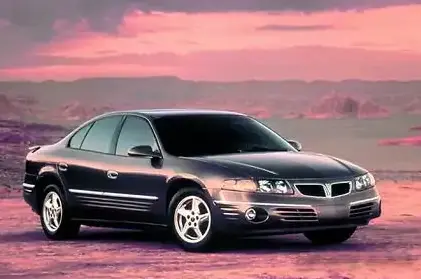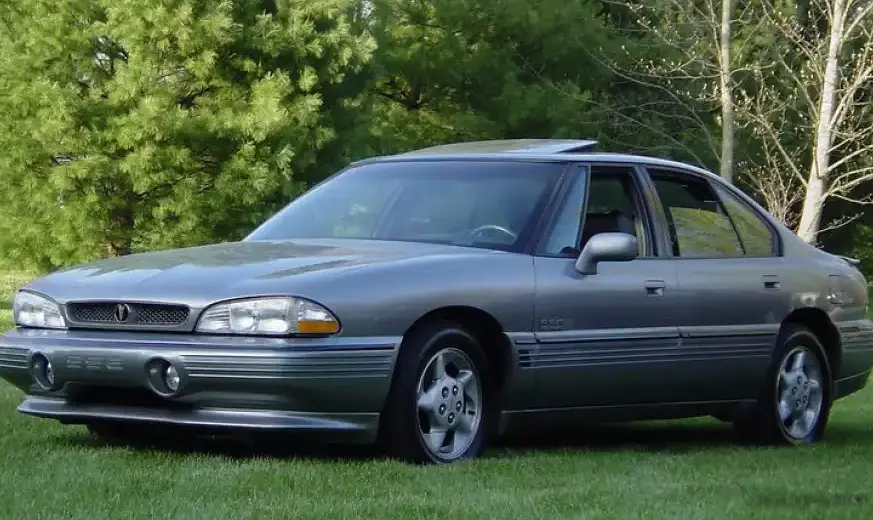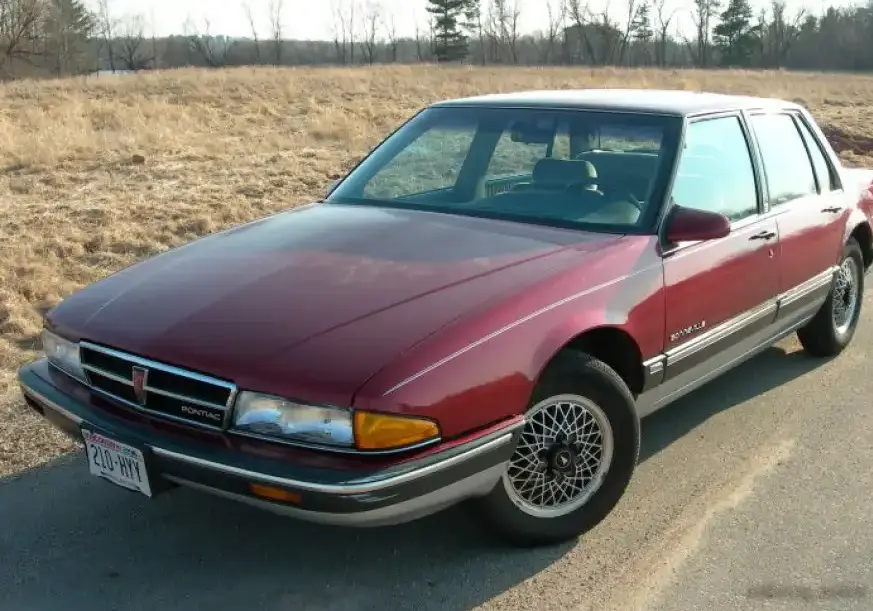
The Pontiac Bonneville 3.8i V6, produced from 1986 to 1991, represented a significant iteration of Pontiac’s flagship full-size sedan. This variant, powered by the 3.8-liter (231.34 cubic inches) LN3 V6 engine producing 167 horsepower, occupied a middle ground within the Bonneville lineup, offering a balance between performance and affordability. It was part of the broader Bonneville generation, which saw a shift towards more aerodynamic styling and improved fuel efficiency compared to its predecessors. The Bonneville, throughout its history, was a symbol of American automotive comfort and spaciousness, and this particular version aimed to continue that tradition while appealing to a wider range of buyers.
Technical Specifications
| Brand | Pontiac |
| Model | Bonneville |
| Engine Type | 3.8 i V6 (167 Hp) |
| Start of production | 1986 |
| End of production | 1991 |
| Powertrain Architecture | Internal Combustion engine |
| Body type | Sedan |
| Seats | 5 |
| Doors | 4 |
| Fuel consumption (urban) | 16 l/100 km (14.7 US mpg, 17.7 UK mpg, 6.3 km/l) |
| Fuel consumption (extra urban) | 10 l/100 km (23.5 US mpg, 28.2 UK mpg, 10 km/l) |
| Fuel Type | Petrol (Gasoline) |
| Maximum speed | 190 km/h (118.06 mph) |
| Weight-to-power ratio | 9 kg/Hp, 111.3 Hp/tonne |
| Weight-to-torque ratio | 5.3 kg/Nm, 190 Nm/tonne |
| Power | 167 Hp @ 4800 rpm |
| Power per litre | 44.1 Hp/l |
| Torque | 285 Nm @ 2000 rpm (210.21 lb.-ft. @ 2000 rpm) |
| Engine layout | Front, Longitudinal |
| Engine Model/Code | LN3 |
| Engine displacement | 3791 cm3 (231.34 cu. in.) |
| Number of cylinders | 6 |
| Engine configuration | V-engine |
| Cylinder Bore | 96.52 mm (3.8 in.) |
| Piston Stroke | 86.36 mm (3.4 in.) |
| Compression ratio | 8.5:1 |
| Number of valves per cylinder | 2 |
| Fuel injection system | Multi-port manifold injection |
| Engine aspiration | Naturally aspirated engine |
| Engine oil capacity | 4.3 l (4.54 US qt | 3.78 UK qt) |
| Coolant | 12.3 l (13 US qt | 10.82 UK qt) |
| Kerb Weight | 1500 kg (3306.93 lbs.) |
| Fuel tank capacity | 68 l (17.96 US gal | 14.96 UK gal) |
| Length | 5040 mm (198.43 in.) |
| Width | 1855 mm (73.03 in.) |
| Height | 1385 mm (54.53 in.) |
| Wheelbase | 2815 mm (110.83 in.) |
| Front track | 1530 mm (60.24 in.) |
| Rear track | 1520 mm (59.84 in.) |
| Drivetrain Architecture | The Internal combustion engine (ICE) drives the front wheels of the vehicle. |
| Drive wheel | Front wheel drive |
| Number of gears and type of gearbox | 4 gears, automatic transmission |
| Front suspension | Coil spring |
| Rear suspension | Coil spring |
| Front brakes | Ventilated discs |
| Rear brakes | Disc |
| Assisting systems | ABS (Anti-lock braking system) |
| Steering type | Steering rack and pinion |
| Power steering | Hydraulic Steering |
| Tires size | 215/65 R15 |
Powertrain & Engine Architecture
The heart of the Bonneville 3.8i was the LN3 3.8-liter V6 engine. This engine was a descendant of the Buick-derived V6 family, known for its relatively smooth operation and durability. The LN3 featured a 90-degree V-angle, two valves per cylinder, and a cast iron block with aluminum cylinder heads. Fuel delivery was managed by a multi-port fuel injection system, contributing to improved efficiency and throttle response compared to earlier carbureted designs. The engine’s 8.5:1 compression ratio was a compromise between performance and the ability to run on regular unleaded gasoline. Paired with this engine was a 4-speed automatic transmission, a TH700R4 (later known as the 4L60) unit. This transmission was chosen for its smooth shifting characteristics and suitability for comfortable cruising, aligning with the Bonneville’s intended role as a luxury-oriented sedan.
Driving Characteristics
The 167 horsepower and 285 lb-ft of torque produced by the 3.8i V6 provided adequate, though not exhilarating, performance for the Bonneville. Acceleration from 0 to 60 mph was typically in the 9-10 second range. The automatic transmission, while smooth, did contribute to some power loss compared to the available manual transmission options in other Bonneville trims. The gear ratios were optimized for cruising, making the car comfortable on highway journeys. However, passing maneuvers required careful planning. Compared to the more powerful Bonneville LE with its larger V6 or the Supercharged variants, the 3.8i felt noticeably less responsive. The front-wheel-drive configuration provided decent traction in most conditions, but lacked the sporty feel of a rear-wheel-drive setup.
Equipment & Trim Levels
The Bonneville 3.8i typically came standard with features expected of a full-size American sedan in the late 1980s and early 1990s. These included power windows, power locks, air conditioning, and an AM/FM stereo. Upholstery was typically cloth, though leather was available as an option. The dashboard featured a conventional analog gauge cluster. Optional extras included a sunroof, upgraded sound system, and cruise control. The 3.8i trim generally represented a step up from the base Bonneville, offering more standard features and a slightly more refined interior.
Chassis & Braking
The Bonneville 3.8i utilized a body-on-frame construction, a common practice for American full-size cars of the era. The suspension consisted of coil springs at all four corners, providing a comfortable ride. Front suspension utilized independent components, while the rear employed a solid axle. Braking duties were handled by ventilated discs at the front and solid discs at the rear. An anti-lock braking system (ABS) was available as an option, enhancing safety. The steering was a rack-and-pinion system with hydraulic power assist, providing relatively light and easy steering feel. The standard tire size was 215/65R15.
Market Reception & Comparison
The Bonneville 3.8i was generally well-received by critics as a comfortable and spacious family sedan. However, its performance was often criticized as being underwhelming, particularly when compared to other Bonneville trims or competing models from other manufacturers. Fuel economy was considered average for its class. The 3.8i offered a good value proposition for buyers seeking a large, comfortable car without the expense of the higher-performance models. Reliability was generally good, with the LN3 V6 engine proving to be a durable powerplant. Compared to the more expensive Bonneville LE, the 3.8i offered a more accessible price point, making it attractive to a broader range of buyers.
Legacy
The Pontiac Bonneville 3.8i V6, while not the most powerful or sporty version of the Bonneville, remains a fondly remembered example of late-1980s American automotive engineering. The LN3 V6 engine is known for its longevity and relatively simple maintenance requirements. Today, these cars can be found in the used car market at affordable prices, often appealing to enthusiasts seeking a classic American sedan. While parts availability may be diminishing, the engine’s robust design and widespread use in other GM vehicles ensure that components are still obtainable. The Bonneville 3.8i represents a transitional period in automotive design, bridging the gap between the large, body-on-frame sedans of the past and the more modern, aerodynamic designs of the future.