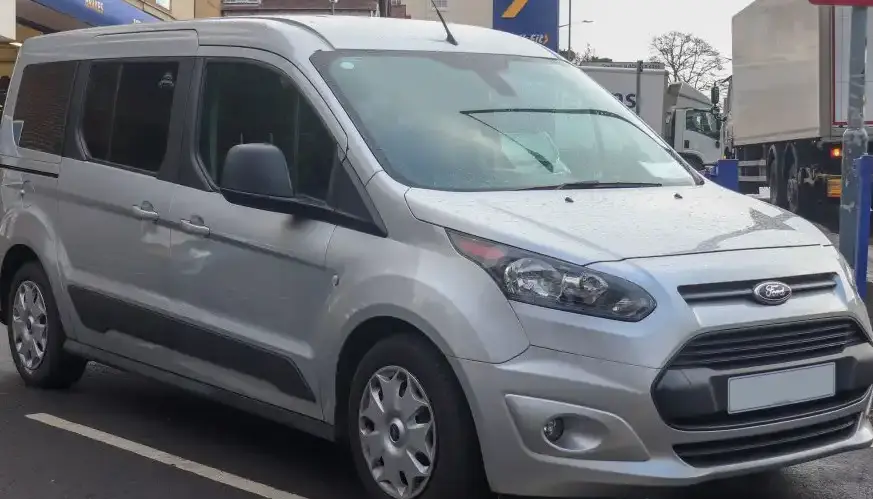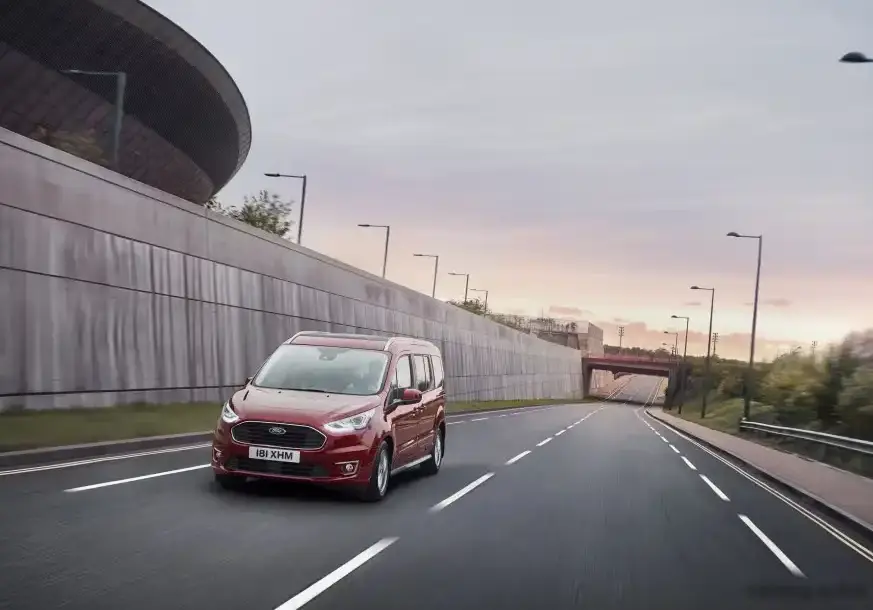
The Ford Grand Tourneo Connect II, specifically the facelifted version introduced in 2018, represented Ford’s entry into the compact people carrier segment in Europe. This variant, powered by the 1.5 EcoBlue 75 horsepower engine with Start/Stop technology, was produced from 2018 through 2020. It occupied the entry-level position within the Grand Tourneo Connect lineup, offering a practical and economical option for families and commercial users alike. The Grand Tourneo Connect, based on the Ford Focus platform, aimed to provide a versatile vehicle combining passenger comfort with van-like practicality.
Technical Specifications
| Brand | Ford |
| Model | Tourneo Connect |
| Generation | Grand Tourneo Connect II (facelift 2018) |
| Type (Engine) | 1.5 EcoBlue (75 Hp) S&S |
| Start of production | 2018 |
| End of production | 2020 |
| Powertrain Architecture | Internal Combustion engine |
| Body type | Minivan |
| Seats | 5 |
| Doors | 5 |
| Fuel consumption (urban) | 5.2-5.5 l/100 km (45.2 – 42.8 US mpg) |
| Fuel consumption (extra urban) | 4.5-4.7 l/100 km (52.3 – 50 US mpg) |
| Fuel consumption (combined) | 4.8-5.0 l/100 km (49 – 47 US mpg) |
| CO2 emissions | 125-130 g/km |
| Fuel Type | Diesel |
| Acceleration 0 – 100 km/h | 17.8 sec |
| Acceleration 0 – 62 mph | 17.8 sec |
| Acceleration 0 – 60 mph | 16.9 sec |
| Maximum speed | 155 km/h (96.31 mph) |
| Emission standard | Euro 6 d-TEMP |
| Weight-to-power ratio | 22.3 kg/Hp |
| Weight-to-torque ratio | 7.6 kg/Nm |
| Power | 75 Hp @ 3600 rpm |
| Torque | 220 Nm @ 1750-2250 rpm (162.26 lb.-ft.) |
| Engine layout | Front, Transverse |
| Engine Model/Code | BEGA |
| Engine displacement | 1499 cm3 (91.47 cu. in.) |
| Number of cylinders | 4 |
| Engine configuration | Inline |
| Number of valves per cylinder | 2 |
| Fuel injection system | Diesel Commonrail |
| Engine aspiration | Turbocharger, Intercooler |
| Engine oil capacity | 6 l (6.34 US qt | 5.28 UK qt) |
| Coolant capacity | 7 l (7.4 US qt | 6.16 UK qt) |
| Kerb Weight | 1676-1838 kg (3694.95 – 4052.1 lbs.) |
| Max. weight | 2300-2405 kg (5070.63 – 5302.12 lbs.) |
| Max load | 567-624 kg (1250.02 – 1375.68 lbs.) |
| Trunk (boot) space – minimum | 1529 l (54 cu. ft.) |
| Trunk (boot) space – maximum | 2761 l (97.5 cu. ft.) |
| Permitted trailer load with brakes (12%) | 1100-1263 kg (2425.08 – 2784.44 lbs.) |
| Permitted trailer load without brakes | 750 kg (1653.47 lbs.) |
| Permitted towbar download | 75 kg (165.35 lbs.) |
| Length | 4825 mm (189.96 in.) |
| Width | 1835 mm (72.24 in.) |
| Width with mirrors folded | 1966 mm (77.4 in.) |
| Width including mirrors | 2137 mm (84.13 in.) |
| Height | 1847 mm (72.72 in.) |
| Wheelbase | 3062 mm (120.55 in.) |
| Minimum turning circle | 12.2 m (40.03 ft.) |
| Drivetrain | Front wheel drive |
| Number of gears | 6 |
| Gearbox type | Manual transmission |
| Front suspension | Independent, McPherson with coil spring and anti-roll bar |
| Rear suspension | Semi-dependent beam with stabilizer |
| Front brakes | Ventilated discs |
| Rear brakes | Disc |
| Assisting systems | ABS |
| Steering type | Steering rack and pinion |
| Tires size | 205/60 R16 |
| Wheel rims size | 6.5J x 16 |
INTRODUCTION
The 1.5 EcoBlue 75 hp variant of the Ford Grand Tourneo Connect II (facelift) was introduced in 2018 as part of a broader refresh for the model. Built on the 1HX0/A3 platform shared with other Ford and PSA Group vehicles, the Grand Tourneo Connect aimed to offer a more spacious and versatile alternative to traditional MPVs. This particular engine and transmission combination was positioned as the entry point to the range, prioritizing fuel efficiency and affordability over outright performance. It catered to buyers who needed a practical vehicle for daily commutes, school runs, and light commercial use.
Powertrain & Engine Architecture
The heart of this Grand Tourneo Connect is the 1.5-liter EcoBlue diesel engine, designated with the code BEGA. This engine is a member of Ford’s EcoBlue family, known for its focus on efficiency and reduced emissions. It’s a four-cylinder, inline engine featuring a turbocharger and intercooler to boost power and torque. The engine utilizes a diesel common rail direct injection system, delivering fuel directly into the combustion chamber for improved combustion efficiency. The 75 horsepower output is achieved at 3600 rpm, while peak torque of 220 Nm (162.26 lb.-ft.) is available between 1750 and 2250 rpm. This engine is paired with a six-speed manual transmission, chosen for its fuel-saving characteristics and relatively low cost. The Start/Stop system further enhances fuel economy by automatically shutting off the engine when the vehicle is stationary.
Driving Characteristics
The 1.5 EcoBlue 75 hp engine, coupled with the six-speed manual transmission, delivers modest performance. Acceleration is not a strong point, with a 0-60 mph time of around 16.9 seconds. The focus is on providing adequate power for everyday driving situations rather than spirited acceleration. The gear ratios are tuned for fuel efficiency, meaning the engine needs to be revved to access its full potential. Compared to higher-output versions of the Grand Tourneo Connect, such as those with the 1.5 EcoBlue 120 hp engine, this variant feels noticeably slower, especially when fully loaded with passengers and luggage. However, the engine provides sufficient torque for comfortable cruising on highways, and the manual transmission allows for greater driver control.
Equipment & Trim Levels
The 1.5 EcoBlue 75 hp variant typically came with a base level of equipment, focusing on practicality and essential features. Standard equipment generally included air conditioning, power steering, electric front windows, a basic audio system with USB connectivity, and ABS brakes. Interior upholstery was typically cloth, and the dashboard featured a functional, if somewhat basic, design. Optional extras available for this trim level included alloy wheels, parking sensors, a touchscreen infotainment system with navigation, and cruise control. The Grand Tourneo Connect offered a flexible seating configuration, with the rear seats capable of being folded or removed to maximize cargo space.
Chassis & Braking
The Grand Tourneo Connect’s chassis is designed to provide a comfortable ride and stable handling. The front suspension utilizes an independent McPherson strut setup with coil springs and an anti-roll bar, while the rear suspension employs a semi-dependent beam with a stabilizer. This configuration strikes a balance between ride comfort and handling precision. Braking duties are handled by ventilated discs at the front and solid discs at the rear, providing adequate stopping power for the vehicle’s weight. ABS (Anti-lock Braking System) is standard, enhancing safety during emergency braking situations.
Market Reception & Comparison
The 1.5 EcoBlue 75 hp Grand Tourneo Connect was generally well-received by critics as a practical and economical option. Its fuel economy figures of 4.8-5.0 l/100 km (49-47 US mpg) were a major selling point, making it an attractive choice for budget-conscious buyers. However, some reviewers criticized its lack of power, particularly when fully loaded. Compared to the 1.5 EcoBlue 120 hp variant, the 75 hp model offered significantly less performance but at a lower price point. The 1.5 EcoBlue 75 hp also offered better fuel economy than petrol-powered alternatives, making it a more cost-effective option for high-mileage drivers.
Legacy
The 1.5 EcoBlue engine has proven to be a relatively reliable unit, although, like all diesel engines, it’s important to ensure regular maintenance, including oil changes and filter replacements. The Grand Tourneo Connect II, in general, has established a reputation for practicality and durability. On the used car market, the 1.5 EcoBlue 75 hp variant represents an affordable entry point into the compact people carrier segment. Its fuel efficiency and spacious interior continue to make it a popular choice for families and small businesses. While not the most exciting vehicle to drive, it provides a dependable and economical solution for those seeking a versatile and practical vehicle.