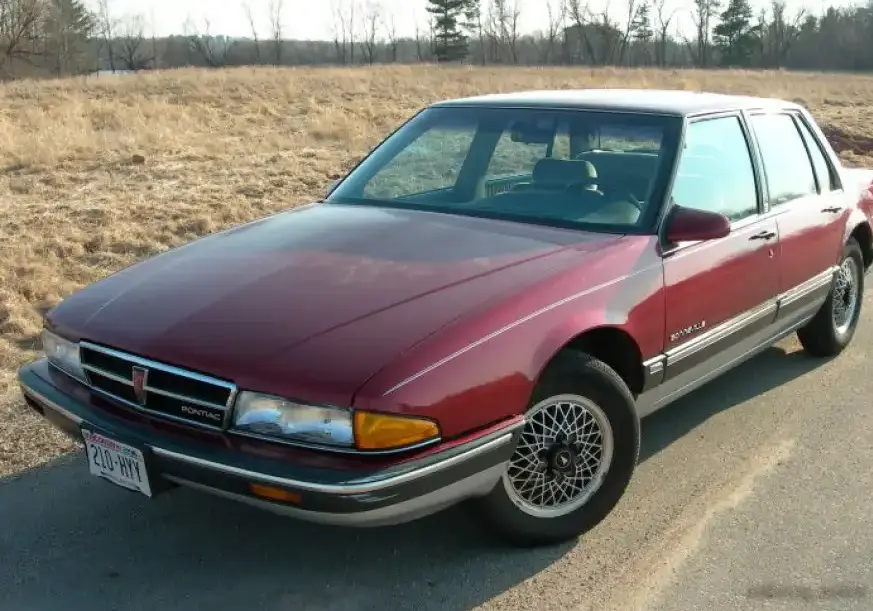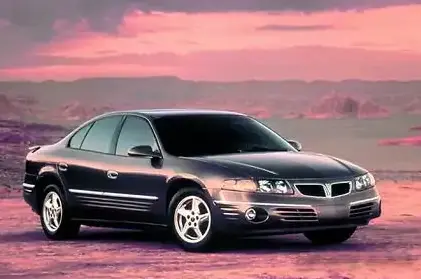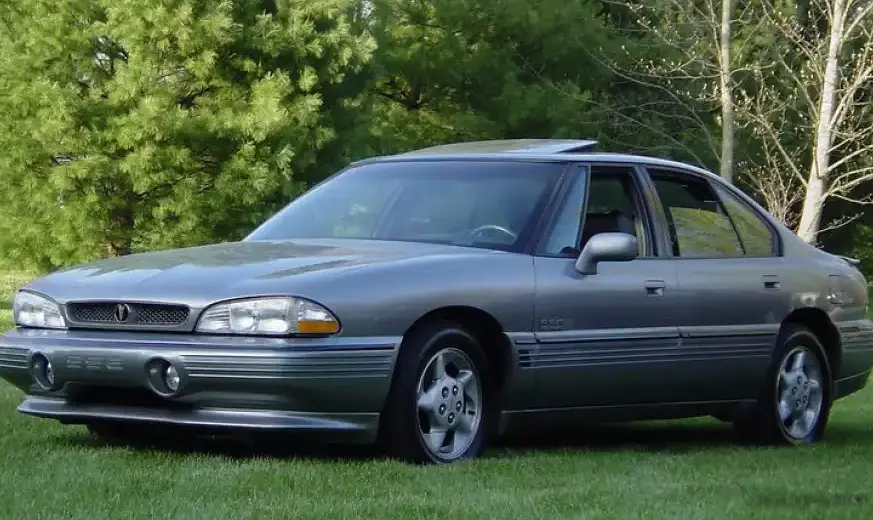
The Pontiac Bonneville II 3.8i V6 SSE, produced from 1991 to 1999, represented a significant iteration of Pontiac’s flagship full-size sedan. Positioned as a mid-to-upper trim level within the Bonneville II range, the SSE (Special Sport Edition) offered a blend of comfort, performance, and features aimed at buyers seeking a refined driving experience. This generation, built on the GM K-body platform, aimed to modernize the Bonneville while retaining its reputation for spaciousness and a smooth ride. The 3.8i V6 with automatic transmission was a popular configuration, balancing affordability with adequate power for highway cruising and daily driving.
Technical Specifications
| Brand | Pontiac |
| Model | Bonneville |
| Generation | Bonneville II |
| Type (Engine) | 3.8 i V6 SSE (205 Hp) |
| Start of production | 1991 |
| End of production | 1999 |
| Powertrain Architecture | Internal Combustion engine |
| Body type | Sedan |
| Seats | 5 |
| Doors | 4 |
| Fuel consumption (combined) | 10.6 l/100 km |
| Fuel consumption (US mpg) | 22.2 US mpg |
| Fuel consumption (UK mpg) | 26.6 UK mpg |
| Fuel consumption (km/l) | 9.4 km/l |
| Fuel Type | Petrol (Gasoline) |
| Weight-to-power ratio | 7.9 kg/Hp |
| Power | 205 Hp @ 5200 rpm |
| Power per litre | 54.1 Hp/l |
| Torque | 305 Nm @ 3200 rpm |
| Torque (lb.-ft.) | 224.96 lb.-ft. @ 3200 rpm |
| Engine layout | Front, Transverse |
| Engine Model/Code | L36 |
| Engine displacement | 3791 cm3 |
| Engine displacement (cu. in.) | 231.34 cu. in. |
| Number of cylinders | 6 |
| Engine configuration | V-engine |
| Cylinder Bore | 96.5 mm |
| Cylinder Bore (in.) | 3.8 in. |
| Piston Stroke | 86.4 mm |
| Piston Stroke (in.) | 3.4 in. |
| Compression ratio | 9:1 |
| Number of valves per cylinder | 2 |
| Fuel injection system | Multi-port manifold injection |
| Engine aspiration | Naturally aspirated engine |
| Engine oil capacity | 4.3 l |
| Engine oil capacity (US qt) | 4.54 US qt |
| Engine oil capacity (UK qt) | 3.78 UK qt |
| Coolant | 12.3 l |
| Coolant (US qt) | 13 US qt |
| Coolant (UK qt) | 10.82 UK qt |
| Kerb Weight | 1627 kg |
| Kerb Weight (lbs.) | 3586.92 lbs. |
| Trunk (boot) space – minimum | 506 l |
| Trunk (boot) space (cu. ft.) | 17.87 cu. ft. |
| Fuel tank capacity | 68 l |
| Fuel tank capacity (US gal) | 17.96 US gal |
| Fuel tank capacity (UK gal) | 14.96 UK gal |
| Length | 5107 mm |
| Length (in.) | 201.06 in. |
| Width | 1892 mm |
| Width (in.) | 74.49 in. |
| Height | 1415 mm |
| Height (in.) | 55.71 in. |
| Wheelbase | 2815 mm |
| Wheelbase (in.) | 110.83 in. |
| Front track | 1545 mm |
| Front track (in.) | 60.83 in. |
| Rear (Back) track | 1547 mm |
| Rear (Back) track (in.) | 60.91 in. |
| Drivetrain Architecture | Front wheel drive |
| Number of gears | 4 |
| Gearbox type | automatic transmission |
| Front suspension | Spring Strut |
| Rear suspension | Coil spring |
| Front brakes | Ventilated discs |
| Rear brakes | Drum |
| Assisting systems | ABS (Anti-lock braking system) |
| Steering type | Steering rack and pinion |
| Power steering | Hydraulic Steering |
| Tires size | 225/60 R16 |
Powertrain & Engine Architecture
The heart of the Bonneville II 3.8i SSE was the 3.8-liter (3791 cc) L36 V6 engine. This engine, a member of GM’s robust 3800 series, featured a 90-degree V-configuration, two valves per cylinder, and a cast iron block with aluminum cylinder heads. The L36 utilized multi-port fuel injection (MPFI) for precise fuel delivery, contributing to improved efficiency and responsiveness. The engine’s 9:1 compression ratio was a compromise between performance and the ability to run on regular unleaded gasoline. Paired with the engine was a 4-speed automatic transmission (typically the 4T60 or 4T65E), chosen for its smooth operation and ease of use. This transmission was electronically controlled, adapting shift points based on driving conditions. The front-wheel-drive configuration was standard for all Bonneville II models.
Driving Characteristics
The 205 horsepower and 225 lb-ft of torque produced by the 3.8L V6 were adequate for comfortable highway cruising and passing maneuvers. However, it wasn’t a particularly sporty setup. Acceleration from 0 to 60 mph typically took around 8-9 seconds. The automatic transmission, while smooth, sometimes felt hesitant during quick acceleration, especially compared to the available manual transmission options in other Bonneville trims. The gear ratios were tuned for fuel economy and relaxed driving, prioritizing comfort over outright performance. The Bonneville II’s substantial weight (around 3,600 lbs) also contributed to a less agile feel. The focus was on providing a comfortable and isolated ride, which it largely achieved.
Equipment & Trim Levels
The SSE trim level included a number of standard features designed to enhance comfort and convenience. These typically included power windows, power locks, power mirrors, cruise control, air conditioning, and an upgraded sound system. Upholstery was usually cloth, though leather was often an available option. The dashboard featured a straightforward layout with easy-to-read gauges. Optional extras included a sunroof, upgraded audio systems (including Bose), and traction control. The SSE also often featured unique exterior trim elements, such as alloy wheels and body-colored moldings, to distinguish it from lower trim levels.
Chassis & Braking
The Bonneville II utilized a front-wheel-drive chassis with independent front suspension featuring coil springs and a strut design. The rear suspension employed a coil-spring independent setup. Front brakes were ventilated discs, providing adequate stopping power, while rear brakes were drums. ABS (Anti-lock Braking System) was standard equipment, enhancing safety. Steering was rack-and-pinion with hydraulic power assist, offering a relatively light and easy steering feel. Tire size was typically 225/60R16, balancing ride comfort with handling.
Market Reception & Comparison
The Bonneville II 3.8i V6 SSE was generally well-received by critics as a comfortable and spacious family sedan. However, it wasn’t often praised for its performance. Compared to the higher-output 3.8L Supercharged variants, the 205 hp version felt noticeably slower. The 3.8L was also seen as more reliable and less prone to issues than the supercharged engine. Fuel economy was respectable for a full-size sedan, averaging around 22 mpg in combined driving. Compared to the 3.1L V6 models, the 3.8L offered a significant power upgrade, making it a more desirable choice for those who frequently drove on the highway or carried passengers.
Legacy
The 3800 V6 engine, in its various iterations, proved to be remarkably durable and reliable. The L36 version found in the Bonneville II is known for its longevity, with many examples exceeding 200,000 miles with proper maintenance. Today, the Bonneville II 3.8i SSE represents an affordable and relatively reliable option in the used car market. While not a collector’s item, it remains a popular choice for those seeking a comfortable and spacious full-size sedan. Common issues include minor oil leaks and occasional intake manifold gasket failures, but these are generally inexpensive to repair. The Bonneville II, and particularly the 3.8L V6 version, holds a place in automotive history as a representative of American full-size sedan design and engineering from the 1990s.