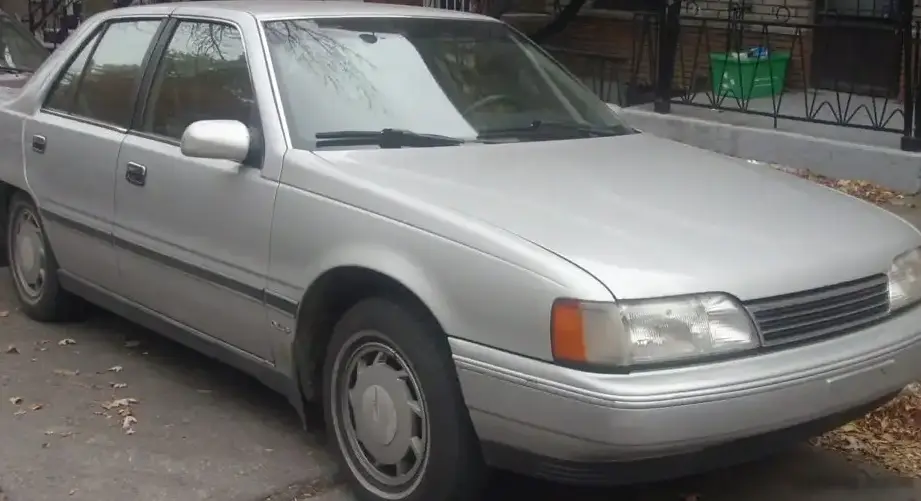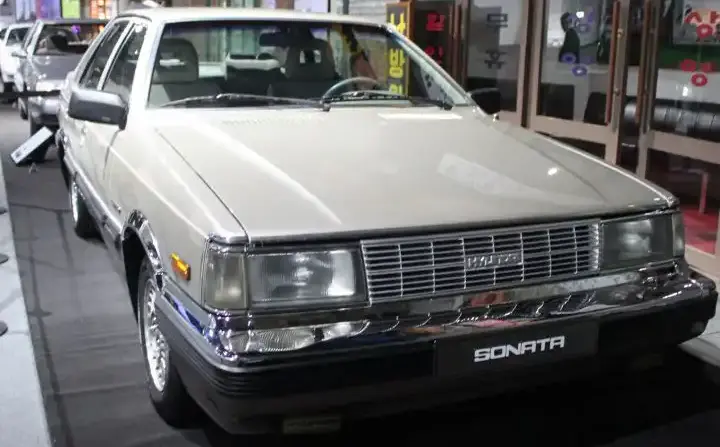
The Hyundai Sonata I (Y) 1.8i Automatic, produced between 1985 and 1987, represents a pivotal moment for the South Korean automaker. This variant, positioned as a mid-range offering within the first-generation Sonata lineup, aimed to provide a comfortable and relatively affordable family sedan for the burgeoning Korean middle class. While Hyundai was largely unknown in North American and European markets at this time, the Sonata I was a crucial step in establishing the brand’s ambitions for global recognition. The ‘Y’ designation refers to the first generation of the Sonata, which was based on the Mitsubishi Galant platform, a licensing agreement that provided Hyundai with a technological foundation for its own designs. This 1.8-liter, automatic transmission combination was designed to appeal to buyers prioritizing ease of use and convenience over outright performance.
Technical Specifications
| Brand | Hyundai |
| Model | Sonata |
| Generation | Sonata I (Y) |
| Type (Engine) | 1.8i (100 Hp) Automatic |
| Start of production | 1985 |
| End of production | 1987 |
| Powertrain Architecture | Internal Combustion engine |
| Body type | Sedan |
| Seats | 5 |
| Doors | 4 |
| Fuel Type | Petrol (Gasoline) |
| Power | 100 Hp @ 5500 rpm |
| Power per litre | 55.7 Hp/l |
| Torque | 147 Nm @ 3500 rpm |
| Torque (lb-ft) | 108.42 lb.-ft. @ 3500 rpm |
| Engine Model/Code | G4BM |
| Engine displacement | 1795 cm3 |
| Engine displacement (cu. in.) | 109.54 cu. in. |
| Number of cylinders | 4 |
| Engine configuration | Inline |
| Number of valves per cylinder | 2 |
| Fuel injection system | Multi-port manifold injection |
| Engine aspiration | Naturally aspirated engine |
| Valvetrain | SOHC |
| Fuel tank capacity | 60 l |
| Fuel tank capacity (US gal) | 15.85 US gal |
| Fuel tank capacity (UK gal) | 13.2 UK gal |
| Length | 4578 mm |
| Length (in.) | 180.24 in. |
| Width | 1755 mm |
| Width (in.) | 69.09 in. |
| Height | 1381 mm |
| Height (in.) | 54.37 in. |
| Wheelbase | 2579 mm |
| Wheelbase (in.) | 101.54 in. |
| Front track | 1445 mm |
| Front track (in.) | 56.89 in. |
| Rear track | 1425 mm |
| Rear track (in.) | 56.1 in. |
| Drivetrain Architecture | Rear wheel drive |
| Drive wheel | Rear wheel drive |
| Number of gears | 4 |
| Gearbox type | automatic transmission |
| Tires size | 185/70 R14 |
| Wheel rims size | 5.5J x 14 |
Powertrain & Engine Architecture
The heart of the Sonata I 1.8i Automatic is the G4BM engine, a 1.8-liter (1795 cc) inline-four cylinder gasoline engine. This engine utilizes a single overhead camshaft (SOHC) valvetrain with two valves per cylinder. The G4BM featured multi-port fuel injection, a relatively modern technology for the mid-1980s, which improved fuel efficiency and responsiveness compared to carbureted engines. The engine produced 100 horsepower at 5500 rpm and 147 Nm (108.42 lb-ft) of torque at 3500 rpm. Paired with this engine was a four-speed automatic transmission. This transmission, while providing convenient operation, was not known for its particularly quick shifts or sporty feel. It was selected for its smoothness and ease of use, aligning with the target demographic’s preferences.
Driving Characteristics
The 1.8-liter engine and automatic transmission combination delivered adequate, but not exhilarating, performance. Acceleration was modest, and the car was best suited for relaxed cruising rather than spirited driving. The automatic transmission’s gear ratios were geared towards fuel economy and smooth operation, resulting in a noticeable delay during kickdown for overtaking maneuvers. Compared to the later, more powerful 2.0-liter versions of the Sonata I, the 1.8i Automatic felt noticeably slower. Manual transmission versions of the 1.8 offered a slightly more engaging driving experience, but the automatic was favored by those seeking convenience. The rear-wheel-drive configuration provided a balanced feel, though handling was not particularly sharp by contemporary standards.
Equipment & Trim Levels
The 1.8i Automatic trim level typically included features such as cloth upholstery, a basic AM/FM radio, and manual windows and door locks. Air conditioning was often an optional extra. Interior appointments were functional and durable, reflecting the car’s focus on practicality and affordability. Higher trim levels, available with the 2.0-liter engine, offered features like power windows, upgraded audio systems, and more luxurious interior materials. The dashboard layout was straightforward and easy to use, prioritizing functionality over aesthetics.
Chassis & Braking
The Sonata I utilized a conventional rear-wheel-drive chassis with independent front suspension and a solid rear axle. The suspension was tuned for comfort, providing a relatively smooth ride over uneven surfaces. Braking was accomplished via disc brakes on the front wheels and drum brakes on the rear. The braking system was adequate for normal driving conditions, but lacked the stopping power of more modern systems. Stabilizer bars were typically fitted to improve handling and reduce body roll, though their effectiveness was limited by the car’s overall weight and suspension design.
Market Reception & Comparison
The Hyundai Sonata I 1.8i Automatic was generally well-received in the Korean domestic market as a comfortable and affordable family sedan. Critics praised its spacious interior and relatively modern features for its price point. However, it was often criticized for its lack of performance and somewhat unrefined driving experience compared to established Japanese competitors. Compared to the 2.0-liter Sonata I variants, the 1.8i Automatic offered better fuel economy but significantly less power. The 2.0-liter models were favored by those seeking more spirited performance, while the 1.8i appealed to buyers prioritizing economy and ease of use.
Legacy
The Hyundai Sonata I 1.8i Automatic, while not a groundbreaking vehicle, played a significant role in establishing Hyundai as a viable automaker. The G4BM engine proved to be reasonably reliable, and many examples remain on the road today, albeit often as classic or collector’s items. The automatic transmission, while not particularly advanced, was generally durable and required minimal maintenance. In the used car market, these Sonatas are valued for their simplicity, affordability, and historical significance as one of Hyundai’s first forays into the global automotive market. The lessons learned from the development and production of the Sonata I paved the way for Hyundai’s subsequent success and its emergence as a major player in the automotive industry.