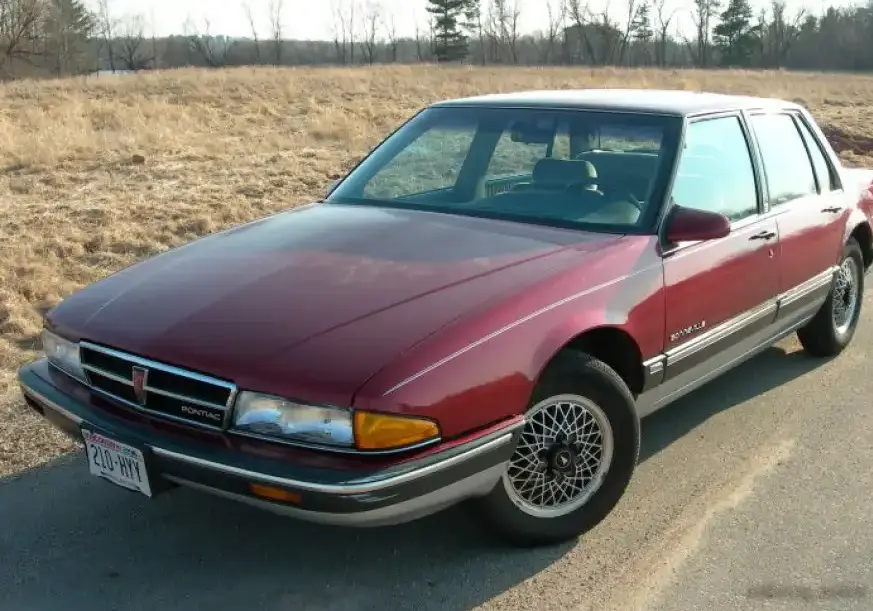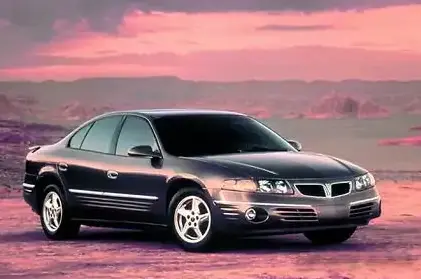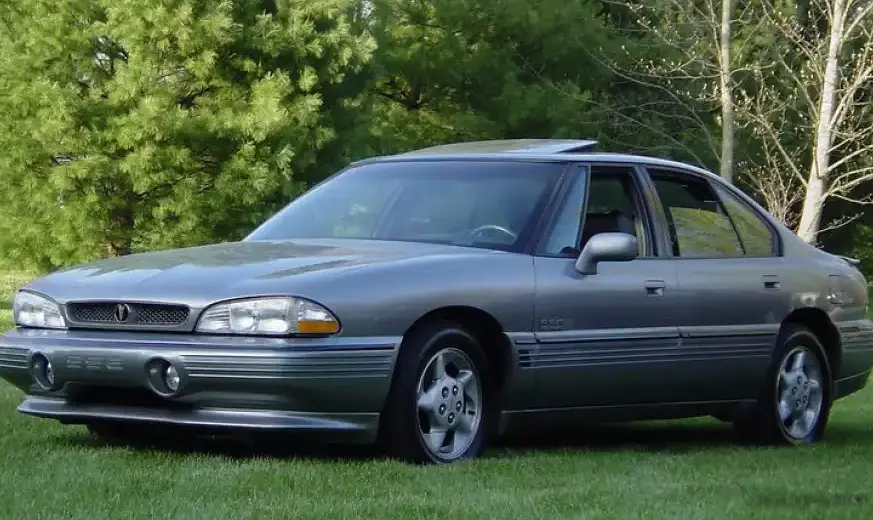
The Pontiac Bonneville II 3.8i V6 SSEi, produced from 1995 to 1999, represented a significant iteration of Pontiac’s flagship full-size sedan. Positioned as a premium trim within the Bonneville II generation, the SSEi offered a blend of performance and luxury. It was built on the GM K-body platform, a front-wheel-drive architecture shared with other GM vehicles of the era, and aimed to compete with offerings from Ford and Chrysler in the American large sedan market. This variant, with its supercharged 3.8L V6 and automatic transmission, was a popular choice for buyers seeking a comfortable and relatively powerful family car.
Technical Specifications
| Brand | Pontiac |
| Model | Bonneville |
| Generation | Bonneville II |
| Type (Engine) | 3.8 i V6 SSEi (240 Hp) |
| Start of production | 1995 |
| End of production | 1999 |
| Powertrain Architecture | Internal Combustion engine |
| Body type | Sedan |
| Seats | 5 |
| Doors | 4 |
| Fuel consumption (combined) | 11.6 l/100 km (20.3 US mpg, 24.4 UK mpg, 8.6 km/l) |
| Fuel Type | Petrol (Gasoline) |
| Weight-to-power ratio | 6.6 kg/Hp, 152.4 Hp/tonne |
| Weight-to-torque ratio | 4.1 kg/Nm, 241.3 Nm/tonne |
| Power | 240 Hp @ 5200 rpm |
| Power per litre | 63.3 Hp/l |
| Torque | 380 Nm @ 3200 rpm (280.27 lb.-ft. @ 3200 rpm) |
| Engine layout | Front, Transverse |
| Engine Model/Code | L67 |
| Engine displacement | 3791 cm3 (231.34 cu. in.) |
| Number of cylinders | 6 |
| Engine configuration | V-engine |
| Cylinder Bore | 96.5 mm (3.8 in.) |
| Piston Stroke | 86.4 mm (3.4 in.) |
| Compression ratio | 8.5:1 |
| Number of valves per cylinder | 2 |
| Fuel injection system | Multi-port manifold injection |
| Engine aspiration | Supercharger |
| Engine oil capacity | 4.3 l (4.54 US qt | 3.78 UK qt) |
| Coolant | 12.3 l (13 US qt | 10.82 UK qt) |
| Kerb Weight | 1575 kg (3472.28 lbs.) |
| Trunk (boot) space – minimum | 506 l (17.87 cu. ft.) |
| Fuel tank capacity | 68 l (17.96 US gal | 14.96 UK gal) |
| Length | 5066 mm (199.45 in.) |
| Width | 1892 mm (74.49 in.) |
| Height | 1416 mm (55.75 in.) |
| Wheelbase | 2815 mm (110.83 in.) |
| Front track | 1535 mm (60.43 in.) |
| Rear (Back) track | 1533 mm (60.35 in.) |
| Drivetrain Architecture | The Internal combustion engine (ICE) drives the front wheels of the vehicle. |
| Drive wheel | Front wheel drive |
| Number of gears and type of gearbox | 4 gears, automatic transmission |
| Front suspension | Spring Strut |
| Rear suspension | Coil spring |
| Front brakes | Ventilated discs |
| Rear brakes | Drum |
| Assisting systems | ABS (Anti-lock braking system) |
| Steering type | Steering rack and pinion |
| Power steering | Hydraulic Steering |
| Tires size | 225/60 R16 H |
Powertrain & Engine Architecture
The heart of the Bonneville II SSEi was the 3.8L (3791 cc) L67 V6 engine. This engine was a member of GM’s “Series III” 3800 V6 family, known for its durability and relatively smooth operation. The key distinguishing feature of the L67 was its Roots-type supercharger, which significantly boosted power output compared to naturally aspirated 3800 variants. The supercharger, coupled with multi-port fuel injection, allowed the engine to produce 240 horsepower at 5200 rpm and 280 lb-ft of torque at 3200 rpm. The engine featured a 90-degree V-angle, two valves per cylinder, and a cast iron block with aluminum cylinder heads. The 4T65E four-speed automatic transmission was the sole transmission offering for the SSEi. This transmission was electronically controlled and featured overdrive for improved highway fuel economy. It was a robust unit, but known to require fluid changes at recommended intervals to maintain reliability.
Driving Characteristics
The combination of the supercharged 3.8L V6 and the four-speed automatic provided brisk acceleration for a full-size sedan. While not a sports car, the SSEi offered ample power for merging onto highways and passing maneuvers. The supercharger provided instant torque, making the car feel responsive in everyday driving situations. Compared to the base 3.8L Bonneville, the SSEi offered a noticeable performance advantage. The automatic transmission, while smooth, wasn’t particularly sporty. Gear ratios were tuned for comfort and fuel efficiency rather than aggressive acceleration. Manual shift capability was limited, and the transmission sometimes hesitated during downshifts. The front-wheel-drive configuration contributed to predictable handling, but also exhibited some understeer when pushed hard.
Equipment & Trim Levels
The SSEi trim level was well-equipped, offering a range of comfort and convenience features as standard. Interior appointments typically included leather upholstery, power-adjustable front seats, a premium sound system, and automatic climate control. Exterior features included alloy wheels, body-colored side moldings, and a rear spoiler. Optional extras included a sunroof, upgraded sound systems, and traction control. The SSEi was positioned as the luxury-oriented trim, offering a more refined interior and a more comprehensive list of standard features than lower-spec Bonneville models.
Chassis & Braking
The Bonneville II utilized a front-wheel-drive chassis with independent front suspension featuring coil springs and a multi-link rear suspension. The suspension was tuned for a comfortable ride, prioritizing smoothness over sporty handling. The SSEi came equipped with ventilated disc brakes at the front and drum brakes at the rear. Anti-lock braking system (ABS) was standard. Steering was provided by a power-assisted rack-and-pinion system. The tires were typically 225/60R16 size, providing a good balance of ride comfort and grip.
Market Reception & Comparison
The Bonneville II SSEi was generally well-received by automotive critics. It was praised for its comfortable ride, spacious interior, and strong performance from the supercharged V6. However, some critics noted the somewhat dated interior design and the lack of sporty handling. Compared to other trims in the Bonneville lineup, the SSEi offered a significant performance upgrade, but at a higher price point. Fuel economy was reasonable for a large sedan, averaging around 20 mpg in combined driving. Reliability was generally good, although the 4T65E transmission required regular maintenance to prevent issues.
Legacy
The Pontiac Bonneville II 3.8i V6 SSEi remains a popular choice among enthusiasts seeking a comfortable and reliable American full-size sedan. The L67 supercharged engine is known for its durability and potential for modification. While parts availability is becoming more challenging as the car ages, the engine and transmission are generally well-supported by aftermarket suppliers. The SSEi’s blend of performance, luxury, and affordability has ensured its continued presence on the used car market. Today, well-maintained examples are sought after by collectors and enthusiasts who appreciate the Bonneville’s classic American styling and robust powertrain.