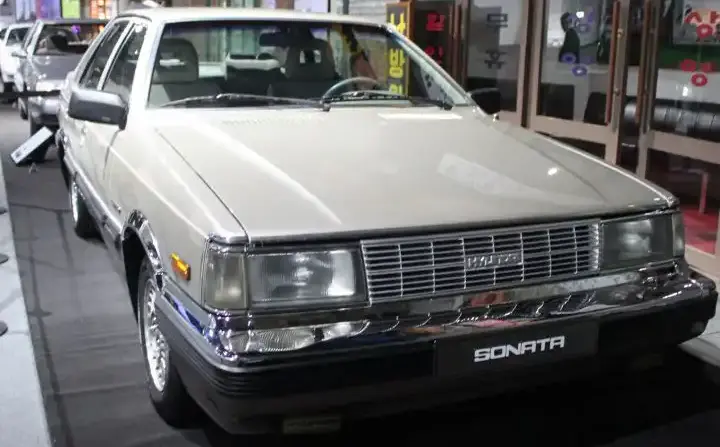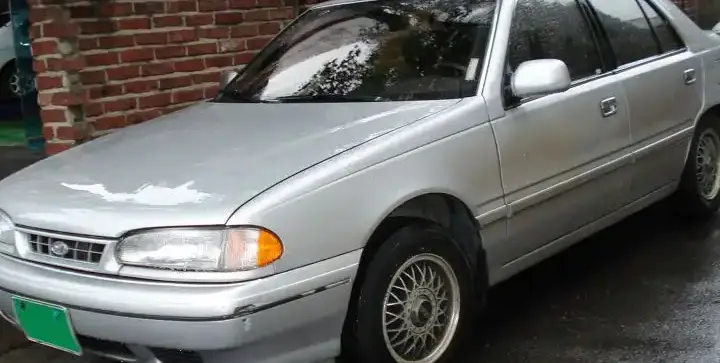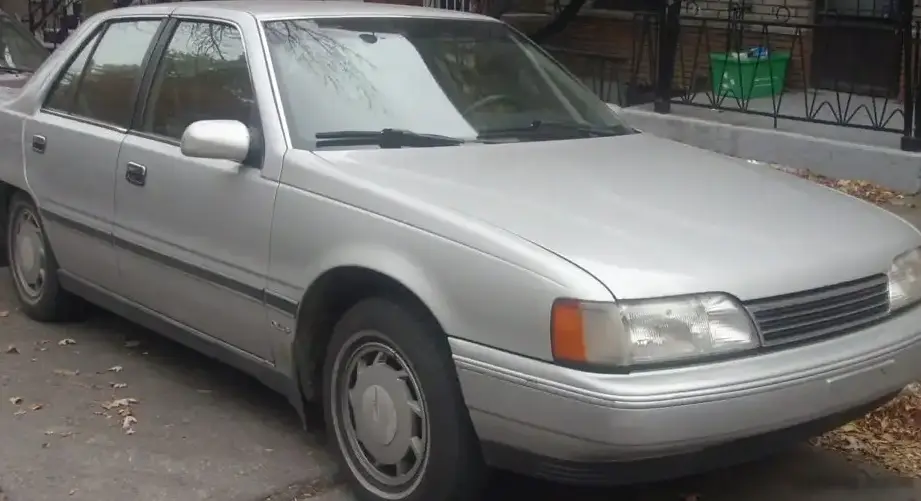
The Hyundai Sonata II (Y2), produced between 1988 and 1991, represented a significant step forward for the South Korean automaker in the mid-size sedan segment. This generation, built upon the platform designated Y2, aimed to establish Hyundai as a credible competitor in international markets, particularly as demand for reliable and affordable transportation grew. The 1.8-liter (95 hp) variant, equipped with a catalytic converter (CAT), served as a key model within the lineup, offering a balance of fuel efficiency and acceptable performance for everyday driving. It was positioned as a more accessible entry point into the Sonata range, appealing to buyers prioritizing economy over outright speed.
Technical Specifications
| Brand | Hyundai |
| Model | Sonata |
| Generation | Sonata II (Y2) |
| Type (Engine) | 1.8 (95 Hp) CAT |
| Start of production | 1988 |
| End of production | 1991 |
| Powertrain Architecture | Internal Combustion engine |
| Body type | Sedan |
| Seats | 5 |
| Doors | 4 |
| Fuel consumption (urban) | 11.4 l/100 km (20.6 US mpg) |
| Fuel consumption (extra urban) | 6.7 l/100 km (35.1 US mpg) |
| Fuel consumption (combined) | 8.8 l/100 km (26.7 US mpg) |
| Fuel Type | Petrol (Gasoline) |
| Acceleration 0 – 100 km/h | 13 sec |
| Acceleration 0 – 62 mph | 13 sec |
| Acceleration 0 – 60 mph | 12.4 sec |
| Maximum speed | 160 km/h (99.42 mph) |
| Weight-to-power ratio | 12.6 kg/Hp |
| Weight-to-torque ratio | 8.4 kg/Nm |
| Power | 95 Hp @ 5250 rpm |
| Torque | 143 Nm @ 4000 rpm (105.47 lb.-ft. @ 4000 rpm) |
| Engine layout | Front, Transverse |
| Engine displacement | 1796 cm3 (109.6 cu. in.) |
| Number of cylinders | 4 |
| Engine configuration | Inline |
| Cylinder Bore | 80.6 mm (3.17 in.) |
| Piston Stroke | 88 mm (3.46 in.) |
| Compression ratio | 8.8:1 |
| Number of valves per cylinder | 2 |
| Fuel injection system | Multi-port manifold injection |
| Engine aspiration | Naturally aspirated |
| Valvetrain | OHC |
| Kerb Weight | 1200 kg (2645.55 lbs.) |
| Trunk (boot) space | 473 l (16.7 cu. ft.) |
| Fuel tank capacity | 60 l (15.85 US gal | 13.2 UK gal) |
| Length | 4680 mm (184.25 in.) |
| Width | 1750 mm (68.9 in.) |
| Height | 1410 mm (55.51 in.) |
| Wheelbase | 2650 mm (104.33 in.) |
| Front track | 1455 mm (57.28 in.) |
| Rear track | 1444 mm (56.85 in.) |
| Drivetrain Architecture | Front wheel drive |
| Number of gears | 5 gears, manual transmission |
| Front suspension | Independent, McPherson with coil spring and anti-roll bar |
| Rear suspension | Coil spring |
| Front brakes | Ventilated discs |
| Rear brakes | Disc |
| Assisting systems | ABS (Anti-lock braking system) |
| Steering type | Steering rack and pinion |
| Power steering | Hydraulic |
| Tires size | 185/70 R14 |
| Wheel rims size | 5.5J x 14 |
Powertrain & Engine Architecture
The heart of the Sonata II 1.8 was the Mitsubishi-sourced 4G31 inline-four cylinder engine. Displacing 1796 cc, this engine featured a single overhead camshaft (OHC) design operating two valves per cylinder. The multi-port fuel injection system, a relatively modern feature for the time, helped improve fuel efficiency and throttle response compared to carbureted engines. The 8.8:1 compression ratio was a compromise between performance and the fuel quality available in various markets. The engine produced 95 horsepower at 5250 rpm and 143 Nm (105.47 lb-ft) of torque at 4000 rpm. The five-speed manual transmission was the standard offering, providing a reasonable level of control for the driver. The engine was transversely mounted, a common layout for front-wheel-drive vehicles, contributing to a more compact engine bay and improved space utilization.
Driving Characteristics
The 1.8-liter Sonata offered modest, but adequate, performance. Acceleration from 0 to 60 mph took approximately 12.4 seconds, and top speed was around 99 mph. While not a sports sedan, the 1.8 provided sufficient power for everyday commuting and highway cruising. The five-speed manual transmission allowed drivers to keep the engine in its optimal power band, but the relatively low horsepower meant that frequent downshifts were necessary for overtaking maneuvers. Compared to the later 2.0-liter versions, the 1.8 felt noticeably less powerful, but it also offered better fuel economy. The suspension, while comfortable, wasn’t particularly sporty, prioritizing ride quality over handling precision. The steering, aided by hydraulic power assistance, was light and easy to use, making it well-suited for urban driving.
Equipment & Trim Levels
The 1.8-liter Sonata typically came with a fairly basic level of equipment, reflecting its position as the entry-level model. Standard features generally included cloth upholstery, a basic AM/FM radio, and manual windows and door locks. Air conditioning was often an optional extra. Interior trim was functional and durable, prioritizing practicality over luxury. Higher trim levels, available with the larger engines, offered features such as power windows, upgraded audio systems, and more comfortable seating. The dashboard layout was straightforward and easy to use, with clearly labeled controls.
Chassis & Braking
The Sonata II utilized a front-wheel-drive layout with an independent McPherson strut suspension in the front and a coil spring suspension in the rear. The front suspension incorporated an anti-roll bar to reduce body roll during cornering. Braking duties were handled by ventilated discs in the front and solid discs in the rear. An anti-lock braking system (ABS) was available as an option, enhancing safety by preventing wheel lockup during hard braking. The chassis was designed to provide a comfortable ride and reasonable handling characteristics, but it wasn’t engineered for aggressive driving. The 185/70 R14 tires provided adequate grip for most driving conditions.
Market Reception & Comparison
The Hyundai Sonata II 1.8 was generally well-received as an affordable and reliable family sedan. Critics praised its spacious interior, comfortable ride, and competitive price. However, some reviewers noted its lack of refinement and modest performance compared to established Japanese competitors. The 1.8-liter engine offered better fuel economy than the larger 2.0-liter engine, making it a popular choice for budget-conscious buyers. Compared to the 2.0-liter, the 1.8 was noticeably slower, but it also required less maintenance and was less prone to mechanical issues. The manual transmission, while offering more driver involvement, was less popular than the optional automatic transmission.
Legacy
The Hyundai Sonata II 1.8 played a crucial role in establishing Hyundai’s presence in the global automotive market. While not a groundbreaking vehicle, it demonstrated Hyundai’s commitment to building reliable and affordable cars. The 4G31 engine proved to be a durable and long-lasting powerplant, and many examples of the Sonata II 1.8 are still on the road today. In the used car market, these Sonatas are valued for their simplicity, affordability, and ease of maintenance. They represent a significant milestone in Hyundai’s history, marking the company’s transition from a domestic manufacturer to a global automotive player. Parts availability can be a challenge, but the relatively simple mechanical design makes them accessible to home mechanics.