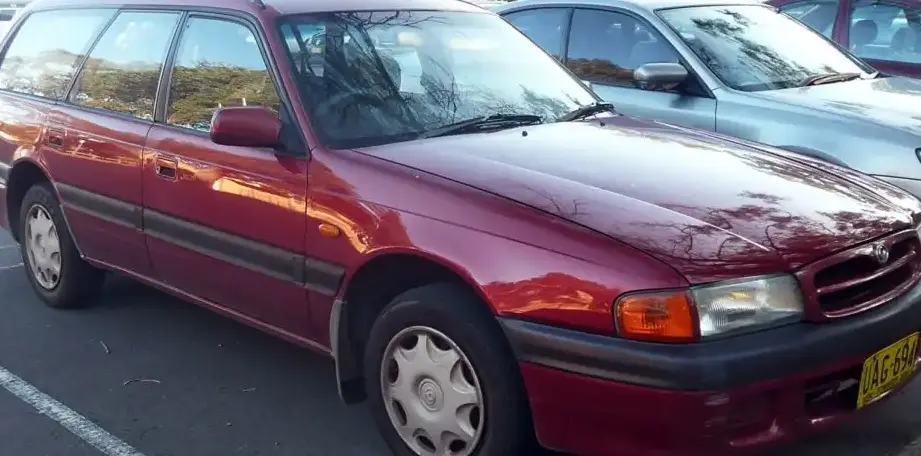
The Mazda 626 III Station Wagon (GV) 2.2 12V 4WD, produced from 1991 to 1992, represents a relatively uncommon and specialized variant within the broader third-generation Mazda 626 lineup (GV). This model, distinguished by its all-wheel-drive system and 2.2-liter, 12-valve engine producing 116 horsepower, catered to a niche market seeking practicality, all-weather capability, and a degree of refinement in a mid-size station wagon. It was positioned as a more capable, though not necessarily performance-oriented, option within the 626 range, appealing to families and individuals in regions experiencing inclement weather or requiring enhanced traction.
Technical Specifications
| Brand | Mazda |
| Model | 626 |
| Generation | 626 III Station Wagon (GV) |
| Type (Engine) | 2.2 12V 4WD (116 Hp) |
| Start of production | 1991 |
| End of production | 1992 |
| Powertrain Architecture | Internal Combustion engine |
| Body type | Station wagon (estate) |
| Fuel Type | Petrol (Gasoline) |
| Power | 116 Hp |
| Engine aspiration | Naturally aspirated engine |
Introduction
The Mazda 626, throughout its various generations, established itself as a solid competitor in the mid-size family car segment. The third generation, introduced in 1987 and continuing through 1992, saw Mazda refine the 626’s formula, offering improved styling, comfort, and technology. The GV series specifically denotes the station wagon body style. The 2.2 12V 4WD variant was a relatively late addition to the GV lineup, primarily aimed at markets where all-wheel drive was valued for its enhanced safety and traction. Production numbers for this specific configuration were lower than those of the front-wheel-drive models, making it a somewhat rare find today. It represented a blend of practicality and capability, offering the spaciousness of a station wagon with the added security of all-wheel drive.
Powertrain & Engine Architecture
The heart of the 626 III Station Wagon 2.2 12V 4WD is the Mazda F2 engine, a 2.2-liter (2189cc) inline-four cylinder gasoline engine. This engine utilizes a single overhead camshaft (SOHC) design operating 12 valves (three per cylinder). The engine is naturally aspirated, meaning it doesn’t employ forced induction like a turbocharger or supercharger. Fuel delivery is managed by a multi-point fuel injection system, contributing to improved fuel efficiency and smoother operation compared to earlier carbureted engines. The 12-valve configuration, while simpler than a 16-valve setup, prioritized low-end torque and reliability over outright peak horsepower. The engine’s output of 116 hp at approximately 5200 rpm and 137 lb-ft of torque at 3000 rpm was considered adequate for the vehicle’s weight and intended purpose. The engine is paired with a four-speed automatic transmission. This transmission, while providing convenience, wasn’t known for its particularly sporty or efficient operation. It was selected for its smoothness and ease of use, aligning with the car’s overall focus on comfort and practicality.
Driving Characteristics
The driving experience in the 626 III Station Wagon 2.2 12V 4WD is best described as comfortable and composed. The four-speed automatic transmission provides smooth, if not particularly quick, shifts. Acceleration is adequate for everyday driving, but the 116 horsepower engine doesn’t offer exhilarating performance. The all-wheel-drive system significantly enhances traction, particularly on slippery surfaces like snow or gravel. This makes the vehicle feel more stable and secure in adverse conditions compared to its front-wheel-drive counterparts. However, the all-wheel-drive system does add weight, which slightly impacts fuel economy and handling responsiveness. Compared to the 2.2-liter engine paired with a manual transmission, the automatic version feels noticeably less engaging and slightly slower. The manual transmission allowed for better control and more efficient use of the engine’s power. The suspension is tuned for comfort, absorbing bumps and irregularities in the road surface effectively. Steering is light and easy, making the car maneuverable in urban environments.
Equipment & Trim Levels
The 626 III Station Wagon 2.2 12V 4WD typically came with a reasonable level of standard equipment for its time. This included power steering, power brakes, and a basic audio system. Interior upholstery was typically cloth, with options for upgraded materials available. Air conditioning was a common option, as were power windows and door locks. The dashboard layout is functional and straightforward, with clearly labeled controls. Higher trim levels might have included features such as a sunroof, upgraded audio systems, and alloy wheels. The specific trim level and available options varied depending on the market. The focus was on providing a comfortable and well-equipped interior without excessive luxury.
Chassis & Braking
The 626 III Station Wagon utilizes a MacPherson strut front suspension and a multi-link rear suspension. This setup provides a good balance of ride comfort and handling stability. The all-wheel-drive system employs a viscous coupling to distribute power between the front and rear axles as needed. Braking duties are handled by disc brakes on the front wheels and drum brakes on the rear wheels. This configuration was common for vehicles in this class during the early 1990s. Anti-lock brakes (ABS) were available as an option, enhancing braking performance and safety. The stabilizer bars, both front and rear, help to reduce body roll during cornering. The chassis is relatively robust, providing a solid foundation for the vehicle’s all-wheel-drive system and station wagon body style.
Market Reception & Comparison
The Mazda 626 III Station Wagon 2.2 12V 4WD received generally positive reviews, particularly for its all-weather capability and spacious interior. Critics praised the car’s comfortable ride and practical design. However, some reviewers noted that the engine’s performance was adequate but not particularly exciting. Fuel economy was also considered average for the time. Compared to other trims in the 626 lineup, the 2.2 12V 4WD offered a unique combination of features. The front-wheel-drive models were more fuel-efficient and slightly more affordable, while the higher-output engine options provided more spirited performance. The 4WD model filled a niche for buyers who prioritized all-weather traction and stability. Competitors in the mid-size station wagon segment included the Toyota Camry Wagon, Honda Accord Wagon, and Subaru Legacy Wagon.
Legacy
The Mazda 626 III Station Wagon 2.2 12V 4WD, while not a high-volume seller, holds a certain appeal for enthusiasts and collectors today. The F2 engine is known for its reliability and durability, although regular maintenance is essential to prevent issues. The all-wheel-drive system, when properly maintained, can provide years of dependable service. Finding parts for this specific model can be challenging, as it was a relatively rare variant. However, many parts are still available through aftermarket suppliers and salvage yards. In the used car market, these wagons are often sought after by those looking for a unique and practical vehicle with a touch of vintage charm. The 626 III Station Wagon 2.2 12V 4WD represents a well-engineered and thoughtfully designed vehicle that offered a compelling combination of practicality, capability, and comfort.