Technical Specifications
| Brand | Audi |
| Model | A5 |
| Generation | A5 Coupe (8T3, facelift 2011) |
| Type (Engine) | 3.0 TDI V6 (204 Hp) |
| Start of production | 2011 |
| End of production | 2015 |
| Powertrain Architecture | Internal Combustion engine |
| Body type | Coupe |
| Seats | 4 |
| Doors | 2 |
| Fuel consumption (urban) | 6.4 l/100 km (36.8 US mpg, 44.1 UK mpg, 15.6 km/l) |
| Fuel consumption (extra urban) | 4.3 l/100 km (54.7 US mpg, 65.7 UK mpg, 23.3 km/l) |
| Fuel consumption (combined) | 5.1 l/100 km (46.1 US mpg, 55.4 UK mpg, 19.6 km/l) |
| CO2 emissions | 133 g/km |
| Fuel Type | Diesel |
| Acceleration 0 – 100 km/h | 7.6 sec |
| Acceleration 0 – 62 mph | 7.6 sec |
| Acceleration 0 – 60 mph | 7.2 sec |
| Maximum speed | 244 km/h (151.61 mph) |
| Emission standard | Euro 5 |
| Weight-to-power ratio | 7.5 kg/Hp, 132.5 Hp/tonne |
| Weight-to-torque ratio | 3.9 kg/Nm, 259.7 Nm/tonne |
| Power | 204 Hp @ 3750-4500 rpm |
| Power per litre | 68.8 Hp/l |
| Torque | 400 Nm @ 1250-3500 rpm (295.02 lb.-ft. @ 1250-3500 rpm) |
| Engine layout | Front, Longitudinal |
| Engine Model/Code | CLAB |
| Engine displacement | 2967 cm3 (181.06 cu. in.) |
| Number of cylinders | 6 |
| Engine configuration | V-engine |
| Cylinder Bore | 83 mm (3.27 in.) |
| Piston Stroke | 91.4 mm (3.6 in.) |
| Compression ratio | 17:1 |
| Number of valves per cylinder | 4 |
| Fuel injection system | Diesel Commonrail |
| Engine aspiration | Turbocharger, Intercooler |
| Valvetrain | DOHC |
| Engine oil capacity | 6.4 l (6.76 US qt | 5.63 UK qt) |
| Kerb Weight | 1540 kg (3395.12 lbs.) |
| Max. weight | 2040 kg (4497.43 lbs.) |
| Max load | 500 kg (1102.31 lbs.) |
| Trunk (boot) space – minimum | 455 l (16.07 cu. ft.) |
| Trunk (boot) space – maximum | 829 l (29.28 cu. ft.) |
| Fuel tank capacity | 63 l (16.64 US gal | 13.86 UK gal) |
| Max. roof load | 75 kg (165.35 lbs.) |
| Permitted trailer load with brakes (8%) | 1800 kg (3968.32 lbs.) |
| Permitted trailer load with brakes (12%) | 1600 kg (3527.4 lbs.) |
| Permitted trailer load without brakes | 750 kg (1653.47 lbs.) |
| Permitted towbar download | 80 kg (176.37 lbs.) |
| Length | 4626 mm (182.13 in.) |
| Width | 1854 mm (72.99 in.) |
| Width including mirrors | 2020 mm (79.53 in.) |
| Height | 1372 mm (54.02 in.) |
| Wheelbase | 2751 mm (108.31 in.) |
| Front track | 1590 mm (62.6 in.) |
| Rear (Back) track | 1577 mm (62.09 in.) |
| Front overhang | 861 mm (33.9 in.) |
| Rear overhang | 1014 mm (39.92 in.) |
| Minimum turning circle (turning diameter) | 11.4 m (37.4 ft.) |
| Drivetrain Architecture | The Internal combustion engine (ICE) drives the front wheels of the vehicle. |
| Drive wheel | Front wheel drive |
| Number of gears and type of gearbox | 6 gears, manual transmission |
| Front suspension | Independent multi-link suspension |
| Rear suspension | Independent on trapezoidal lever |
| Front brakes | Ventilated discs |
| Rear brakes | Disc |
| Assisting systems | ABS (Anti-lock braking system) |
| Steering type | Steering rack and pinion |
| Power steering | Electric Steering |
| Tires size | 225/50 R17 |
| Wheel rims size | 7.5J x 17 |
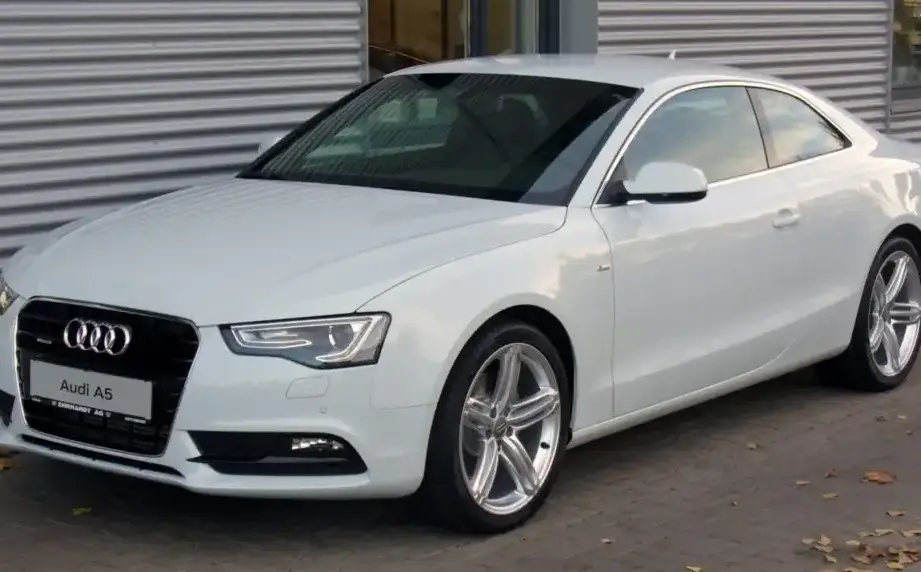
The Audi A5 Coupe (8T3), specifically the facelifted version introduced in 2011, represented a significant refinement of Audi’s mid-size luxury coupe. The 3.0 TDI V6 variant, producing 204 horsepower, was a popular choice in European markets from 2011 to 2015. Positioned as a mid-range option within the A5 lineup, it bridged the gap between the more economical 2.0 TDI models and the higher-performance S5. This variant was designed to appeal to buyers seeking a blend of refined performance, fuel efficiency, and sophisticated styling. It was built upon the Volkswagen Group’s PL46 platform, also known as the A4/A5 platform, which provided a solid foundation for the vehicle’s dynamics and packaging.
Powertrain & Engine Architecture
The core of this A5 variant is the CLAB engine code, a 3.0-liter V6 turbocharged diesel engine. This engine is part of the Volkswagen Group’s modular engine family, recognized for its robust construction and relatively simple maintenance procedures. The CLAB utilizes a common rail direct injection system, delivering fuel at extremely high pressures for optimized combustion efficiency. A single turbocharger, coupled with an intercooler, increases air density and boosts power output. The valvetrain employs a dual overhead camshaft (DOHC) design with four valves per cylinder, contributing to efficient gas exchange. The engine’s longitudinal mounting and front-wheel-drive configuration were standard for this A5 model. A 6-speed manual transmission was the standard offering, providing a direct and engaging connection between the engine and the wheels.
Driving Characteristics
The 204 horsepower and 400 Nm (295 lb-ft) of torque generated by the 3.0 TDI V6 delivered a comfortable and capable driving experience. While not focused on outright sportiness, the engine offered ample power for both highway cruising and overtaking. The broad torque curve, peaking between 1250 and 3500 rpm, meant that strong acceleration was readily available across a wide range of engine speeds. Compared to the 1.8 TFSI or 2.0 TDI variants, the 3.0 TDI offered noticeably more effortless performance, especially when fully loaded or navigating inclines. The 6-speed manual transmission provided precise shifts, although the gear ratios were tuned more towards fuel economy than aggressive acceleration. The front-wheel-drive configuration, while competent, didn’t provide the same level of traction or handling balance as the quattro all-wheel-drive system available on other A5 models.
Equipment & Trim Levels
The 3.0 TDI V6 typically came equipped with a generous array of standard features. Interior appointments included cloth upholstery, with leather options available as upgrades. Standard equipment often included automatic climate control, a multi-function steering wheel, and an Audi Concert audio system. Optional extras included a sunroof, navigation system, parking sensors, and upgraded leather upholstery. Trim levels varied slightly depending on the market, but generally, the 3.0 TDI occupied the mid-range position in the A5 lineup, offering a step up in luxury and performance compared to the base models.
Chassis & Braking
The A5 Coupe’s chassis featured an independent multi-link suspension at the front and an independent trapezoidal lever suspension at the rear, providing a comfortable ride and good handling characteristics. The front brakes were ventilated discs, while the rear brakes were solid discs. An anti-lock braking system (ABS) was standard. Stabilizer bars were fitted to both the front and rear axles to minimize body roll during cornering. The suspension tuning prioritized a balance between comfort and handling, making it suitable for both daily commutes and longer journeys.
Market Reception & Comparison
The Audi A5 Coupe 3.0 TDI V6 was generally well-received by automotive critics. It was praised for its refined engine, comfortable ride, and stylish design. Fuel economy was a significant advantage, with combined figures around 5.1 l/100 km (46.1 US mpg). Compared to the 2.0 TDI, the 3.0 TDI offered considerably more power and refinement, but at a higher price point. The 1.8 TFSI offered comparable performance but lacked the low-end torque characteristic of the diesel engine. Reliability was generally good, although diesel particulate filter (DPF) issues could arise with infrequent long-distance driving.
Legacy
The 3.0 TDI V6 engine proved to be a durable and reliable powerplant. In the used car market, A5 Coupes equipped with this engine are often sought after by buyers looking for a combination of performance, fuel efficiency, and long-term dependability. While maintenance costs may be higher than those of smaller-engined models, the robust construction of the engine and its relatively straightforward design contribute to its longevity. The CLAB engine continues to be a popular choice for those seeking a refined and capable diesel coupe, offering a compelling blend of performance and economy.