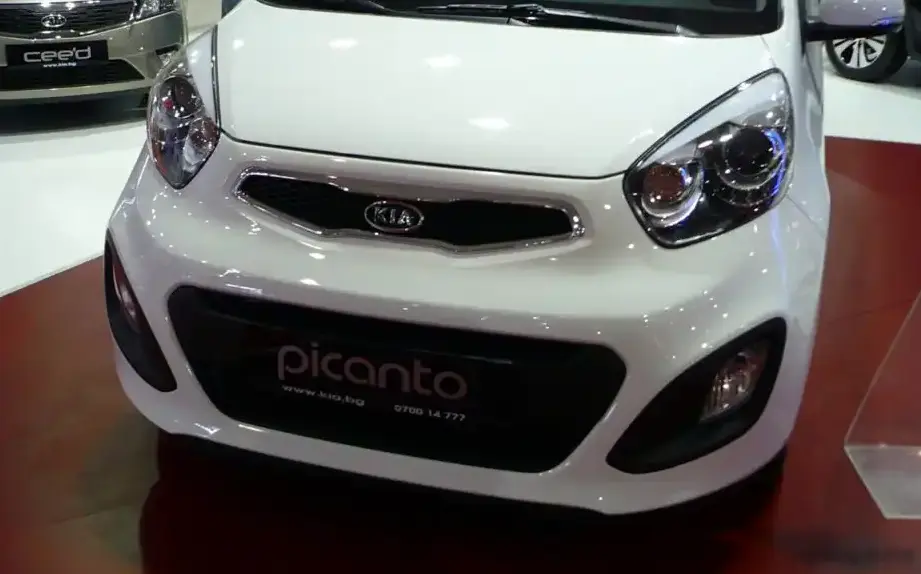
The Kia Picanto II 3D 1.0 16V, produced from 2011 to 2015, represents the second generation of Kia’s city car, the Picanto. This particular variant, powered by a 1.0-liter inline-three engine producing 69 horsepower, was a key offering in the Picanto lineup, primarily aimed at the budget-conscious buyer seeking an economical and practical vehicle. It sat as the entry-level engine option, positioned below the more powerful 1.2-liter variants. The Picanto II, designated internally as the TA series, was a significant step forward for Kia in terms of design, build quality, and overall refinement, particularly within the competitive European and Asian city car segments.
Technical Specifications
| Brand | Kia |
| Model | Picanto |
| Generation | Picanto II 3D |
| Type (Engine) | 1.0 16V (69 Hp) |
| Start of production | 2011 |
| End of production | 2015 |
| Powertrain Architecture | Internal Combustion engine |
| Body type | Hatchback |
| Seats | 5 |
| Doors | 3 |
| Fuel consumption (urban) | 5.4 l/100 km (43.6 US mpg) |
| Fuel consumption (extra urban) | 3.6 l/100 km (65.3 US mpg) |
| Fuel consumption (combined) | 4.2 l/100 km (56 US mpg) |
| Fuel Type | Petrol (Gasoline) |
| Acceleration 0 – 100 km/h | 14.4 sec |
| Acceleration 0 – 62 mph | 14.4 sec |
| Acceleration 0 – 60 mph | 13.7 sec |
| Maximum speed | 153 km/h (95.07 mph) |
| Emission standard | Euro 5 |
| Weight-to-power ratio | 12.2 kg/Hp |
| Weight-to-torque ratio | 8.8 kg/Nm |
| Power | 69 Hp |
| Power per litre | 69.1 Hp/l |
| Torque | 95 Nm @ 3500 rpm (70.07 lb.-ft. @ 3500 rpm) |
| Engine layout | Front, Transverse |
| Engine Model/Code | G3LA |
| Engine displacement | 998 cm3 (60.9 cu. in.) |
| Number of cylinders | 3 |
| Engine configuration | Inline |
| Fuel injection system | Multi-port manifold injection |
| Engine aspiration | Naturally aspirated engine |
| Engine oil capacity | 2.9 l (3.06 US qt | 2.55 UK qt) |
| Coolant capacity | 5.1 l (5.39 US qt | 4.49 UK qt) |
| Kerb Weight | 840 kg (1851.88 lbs.) |
| Max. weight | 1300 kg (2866.01 lbs.) |
| Max load | 460 kg (1014.13 lbs.) |
| Trunk (boot) space – minimum | 200 l (7.06 cu. ft.) |
| Trunk (boot) space – maximum | 605 l (21.37 cu. ft.) |
| Fuel tank capacity | 35 l (9.25 US gal | 7.7 UK gal) |
| Length | 3595 mm (141.54 in.) |
| Width | 1595 mm (62.8 in.) |
| Height | 1480 mm (58.27 in.) |
| Wheelbase | 2385 mm (93.9 in.) |
| Front track | 1421 mm (55.94 in.) |
| Rear track | 1424 mm (56.06 in.) |
| Minimum turning circle | 9.8 m (32.15 ft.) |
| Drivetrain | Front wheel drive |
| Number of gears | 5 gears, manual transmission |
| Assisting systems | ABS (Anti-lock braking system) |
| Steering type | Steering rack and pinion |
| Tires size | 165/60 R14 |
| Wheel rims size | 14 |
Powertrain & Engine Architecture
The heart of the Picanto II 3D 1.0 16V is the Kia G3LA engine, a 998cc inline-three cylinder gasoline engine. This engine utilizes a multi-point fuel injection system and a double overhead camshaft (DOHC) valvetrain, contributing to its relatively efficient operation. The G3LA engine, while modest in output, was designed for fuel economy and low emissions, meeting Euro 5 standards. The 69 horsepower and 95 Nm (70 lb-ft) of torque are delivered at 3500 rpm. The engine’s compact size and lightweight construction helped contribute to the Picanto’s nimble handling. The engine was paired with a five-speed manual transmission, which was the standard offering for this trim level. While an automatic transmission was available on some Picanto II models, it was typically reserved for the higher-specification 1.2-liter engines.
Driving Characteristics
The 1.0-liter Picanto, with its 69 horsepower, wasn’t designed for outright speed. Acceleration from 0 to 60 mph took around 13.7 seconds, and its top speed was approximately 95 mph. However, within the urban environment for which it was intended, the Picanto proved to be surprisingly capable. The five-speed manual transmission allowed drivers to keep the engine in its optimal power band, making it feel more responsive around town. Compared to the 1.2-liter versions, the 1.0-liter felt noticeably less powerful, especially when fully loaded or tackling inclines. The gear ratios were tuned for economy, meaning the engine could feel strained at higher speeds. The light weight of the vehicle helped mitigate the lack of power, providing a reasonably engaging driving experience for a city car.
Equipment & Trim Levels
The 1.0 16V Picanto typically came with a basic, yet functional, level of equipment. Standard features included central locking, power steering, electric front windows, and an ABS anti-lock braking system. Interior upholstery was typically cloth, and the dashboard featured a simple, straightforward design. Optional extras included air conditioning, alloy wheels, and a radio/CD player. The trim level for this engine was generally considered the base model, focusing on affordability and practicality. It was aimed at first-time car buyers, city dwellers, and those seeking a low-cost runabout.
Chassis & Braking
The Picanto II 3D featured a front-wheel-drive layout with a MacPherson strut front suspension and a torsion beam rear suspension. The rear brakes were typically drum brakes, while the front brakes were disc brakes. This configuration was chosen to keep costs down and maintain a reasonable level of performance for the vehicle’s weight class. The steering was a rack and pinion system, providing light and precise steering feel. Stabilizer bars were fitted to both the front and rear axles to reduce body roll during cornering.
Market Reception & Comparison
The Kia Picanto II 3D 1.0 16V was generally well-received by critics as an affordable and economical city car. Its fuel economy – around 56 US mpg combined – was a major selling point. However, its lack of power was often noted, particularly when compared to competitors like the Fiat Panda or Volkswagen Up!. Reliability was generally good, with few major issues reported. The Picanto offered a longer warranty than many of its rivals, further enhancing its appeal. Compared to the 1.2-liter Picanto variants, the 1.0-liter offered lower running costs but sacrificed performance and refinement.
Legacy
The Kia Picanto II 3D 1.0 16V remains a popular choice in the used car market, particularly for those seeking a cheap and reliable city car. The G3LA engine is known for its durability, and maintenance costs are relatively low. While not a performance car, the Picanto II 3D 1.0 16V provides a practical and economical solution for urban transportation. Its simple design and robust construction have ensured its longevity, and it continues to be a viable option for budget-conscious buyers today. The Picanto II helped establish Kia as a serious contender in the European and Asian city car segments, paving the way for future models.