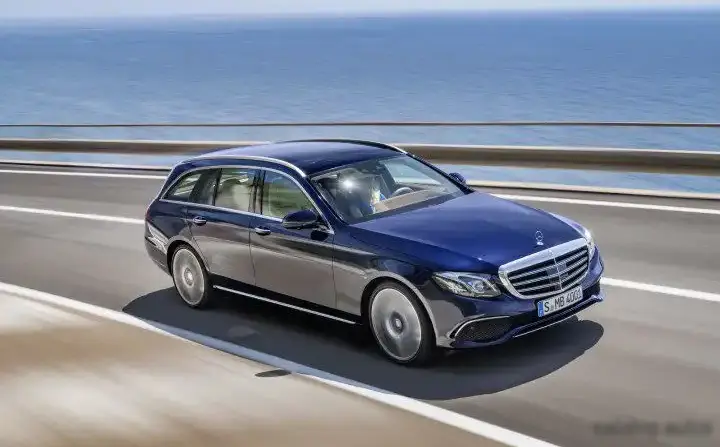
The Mercedes-Benz E-Class T-modell (S213) E 250 9G-TRONIC, produced from July 2016 to April 2018, represents a compelling blend of practicality, performance, and luxury within the fifth generation of the E-Class estate (wagon) range. Positioned as a mid-range offering, it catered to buyers seeking a balance between the more economical base models and the higher-performance variants like the E 300 or AMG models. This variant was primarily sold in the European market, where the estate body style enjoys significant popularity, and to a lesser extent in other regions where wagons are preferred. The S213 generation marked a significant step forward in technology and refinement for the E-Class, and the E 250 9G-TRONIC exemplified these advancements.
Technical Specifications
| Brand | Mercedes-Benz |
| Model | E-Class |
| Generation | E-Class T-modell (S213) |
| Type (Engine) | E 250 (211 Hp) 9G-TRONIC |
| Start of production | July, 2016 |
| End of production | April, 2018 |
| Powertrain Architecture | Internal Combustion engine |
| Body type | Station wagon (estate) |
| Seats | 5 |
| Doors | 5 |
| Fuel consumption (urban) | 8.2-7.8 l/100 km (28.7 – 30.2 US mpg, 34.4 – 36.2 UK mpg, 12.2 – 12.8 km/l) |
| Fuel consumption (extra urban) | 5.6-5.2 l/100 km (42 – 45.2 US mpg, 50.4 – 54.3 UK mpg, 17.9 – 19.2 km/l) |
| Fuel consumption (combined) | 6.6-6.2 l/100 km (35.6 – 37.9 US mpg, 42.8 – 45.6 UK mpg, 15.2 – 16.1 km/l) |
| CO2 emissions | 149-138 g/km |
| Fuel Type | Petrol (Gasoline) |
| Acceleration 0 – 100 km/h | 7.2 sec |
| Acceleration 0 – 62 mph | 7.2 sec |
| Acceleration 0 – 60 mph | 6.8 sec |
| Maximum speed | 243 km/h (150.99 mph) |
| Emission standard | Euro 6 |
| Weight-to-power ratio | 7.8 kg/Hp, 128.3 Hp/tonne |
| Weight-to-torque ratio | 4.7 kg/Nm, 212.8 Nm/tonne |
| Power | 211 Hp @ 5500 rpm |
| Power per litre | 106 Hp/l |
| Torque | 350 Nm @ 1200-4000 rpm (258.15 lb.-ft. @ 1200-4000 rpm) |
| Engine layout | Front, Longitudinal |
| Engine Model/Code | M 274.920 |
| Engine displacement | 1991 cm3 (121.5 cu. in.) |
| Number of cylinders | 4 |
| Engine configuration | Inline |
| Compression ratio | 9.8:1 |
| Fuel injection system | Direct injection |
| Engine aspiration | Turbocharger, Intercooler |
| Engine oil capacity | 7 l (7.4 US qt | 6.16 UK qt) |
| Coolant | 12 l (12.68 US qt | 10.56 UK qt) |
| Kerb Weight | 1645 kg (3626.6 lbs.) |
| Max. weight | 2390 kg (5269.05 lbs.) |
| Max load | 745 kg (1642.44 lbs.) |
| Trunk (boot) space – minimum | 640 l (22.6 cu. ft.) |
| Trunk (boot) space – maximum | 1820 l (64.27 cu. ft.) |
| Fuel tank capacity | 50 l (13.21 US gal | 11 UK gal) |
| Max. roof load | 100 kg (220.46 lbs.) |
| Permitted trailer load with brakes (12%) | 2100 kg (4629.71 lbs.) |
| Permitted trailer load without brakes | 750 kg (1653.47 lbs.) |
| Length | 4933 mm (194.21 in.) |
| Width | 1852 mm (72.91 in.) |
| Width including mirrors | 2065 mm (81.3 in.) |
| Height | 1475 mm (58.07 in.) |
| Wheelbase | 2939 mm (115.71 in.) |
| Front track | 1600 mm (62.99 in.) |
| Rear (Back) track | 1609 mm (63.35 in.) |
| Front overhang | 841 mm (33.11 in.) |
| Rear overhang | 1153 mm (45.39 in.) |
| Drag coefficient (Cd) | 0.29 |
| Minimum turning circle (turning diameter) | 11.6 m (38.06 ft.) |
| Drivetrain Architecture | The Internal combustion engine (ICE) drives the rear wheels of the vehicle. |
| Drive wheel | Rear wheel drive |
| Number of gears and type of gearbox | 9 gears, automatic transmission G-TRONIC |
| Front suspension | Independent multi-link suspension |
| Rear suspension | Independent multi-link suspension |
| Front brakes | Ventilated discs |
| Rear brakes | Ventilated discs |
| Assisting systems | ABS (Anti-lock braking system) |
| Steering type | Steering rack and pinion |
| Power steering | Electric Steering |
| Tires size | 225/55 R17 |
| Wheel rims size | 17 |
Powertrain & Engine Architecture
The E 250 T-modell utilized the M274.920 2.0-liter inline-four cylinder gasoline engine. This engine is a key member of Mercedes-Benz’s modular engine family, featuring direct injection and a single turbocharger with an intercooler. The direct injection system, operating at pressures up to 200 bar, ensures precise fuel delivery for optimal combustion efficiency and reduced emissions. The engine’s aluminum block and head contribute to weight reduction. The 9G-TRONIC nine-speed automatic transmission was standard, offering a wide range of gear ratios to optimize fuel economy and performance. This transmission is known for its smooth shifts and responsiveness. The engine produces 211 horsepower at 5500 rpm and 350 Nm (258 lb-ft) of torque between 1200 and 4000 rpm, providing a broad torque band for effortless cruising and overtaking.
Driving Characteristics
The E 250 9G-TRONIC offered a comfortable and refined driving experience. While not as overtly sporty as the E 300 or AMG variants, it provided ample power for everyday driving and long-distance journeys. The 9G-TRONIC transmission played a crucial role in delivering smooth acceleration and maintaining low engine speeds at highway speeds, contributing to fuel efficiency. The wide gear spread allowed the engine to operate within its optimal torque band more frequently. Compared to the manual transmission options available on other E-Class models, the 9G-TRONIC prioritized comfort and ease of use over outright driver engagement. The rear-wheel drive configuration provided balanced handling, although it wasn’t as agile as the available 4MATIC all-wheel drive system.
Equipment & Trim Levels
The E 250 T-modell typically came well-equipped as standard. Common features included automatic climate control, a high-resolution infotainment system with a central display screen, power-adjustable front seats, and a leather-wrapped steering wheel. Standard upholstery was typically a high-quality cloth, with leather upholstery available as an option. Optional extras included a panoramic sunroof, advanced driver-assistance systems (such as adaptive cruise control and lane-keeping assist), premium sound systems, and various interior trim packages. The Avantgarde and AMG Line trim packages offered different styling cues and additional features, such as sport suspension and unique alloy wheel designs.
Chassis & Braking
The S213 E-Class T-modell featured an independent multi-link suspension at both the front and rear axles, providing a comfortable ride and good handling characteristics. The suspension was tuned to prioritize comfort, but still offered a reasonable level of control in corners. The E 250 typically came equipped with ventilated disc brakes on all four wheels, providing ample stopping power. Anti-lock braking system (ABS) and electronic stability control (ESC) were standard safety features. Stabilizer bars were fitted front and rear to reduce body roll during cornering.
Market Reception & Comparison
The E 250 9G-TRONIC was generally well-received by automotive critics. It was praised for its comfortable ride, refined engine, and fuel efficiency. However, some reviewers noted that it lacked the outright performance of the more powerful E-Class variants. Compared to the E 300, the E 250 offered a more affordable entry point into the E-Class range, but with a noticeable reduction in power and acceleration. The E 250 also offered better fuel economy than the E 300. In terms of reliability, the M274 engine proved to be generally robust, although some owners have reported issues with the turbocharger and fuel injectors.
Legacy
The Mercedes-Benz E-Class T-modell (S213) E 250 9G-TRONIC remains a popular choice in the used car market. Its combination of practicality, comfort, and fuel efficiency makes it a compelling option for buyers seeking a premium estate car. The 9G-TRONIC transmission has proven to be durable and reliable, and the M274 engine, while requiring regular maintenance, is generally considered to be a dependable unit. The S213 generation E-Class established a new benchmark for technology and refinement in the executive estate car segment, and the E 250 9G-TRONIC represents a well-rounded and capable member of the lineup.