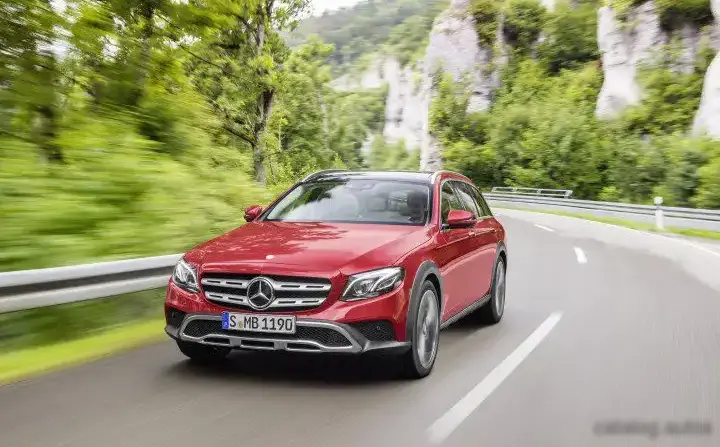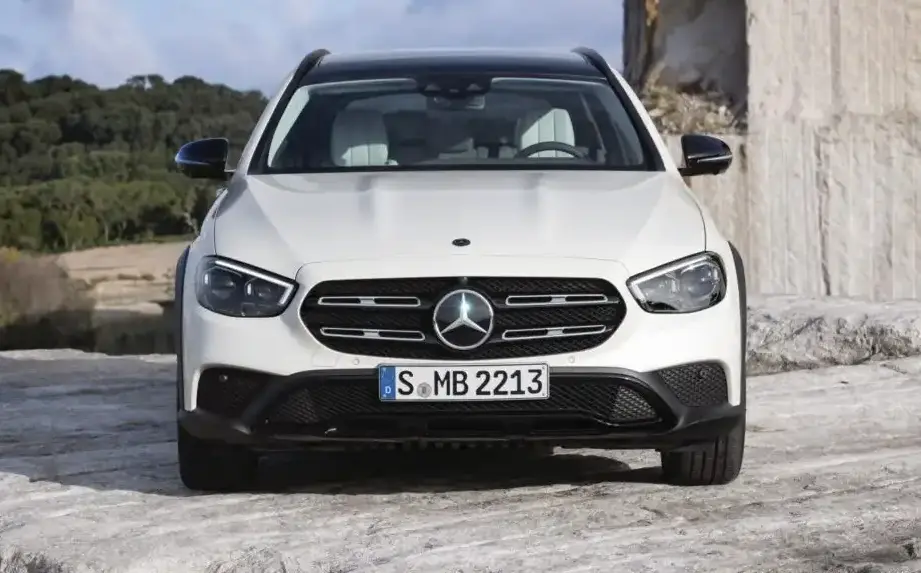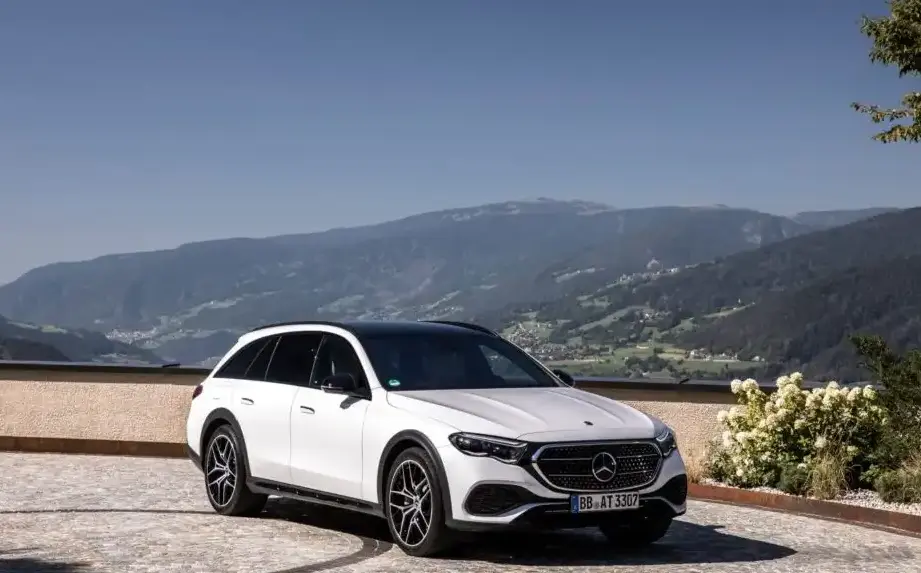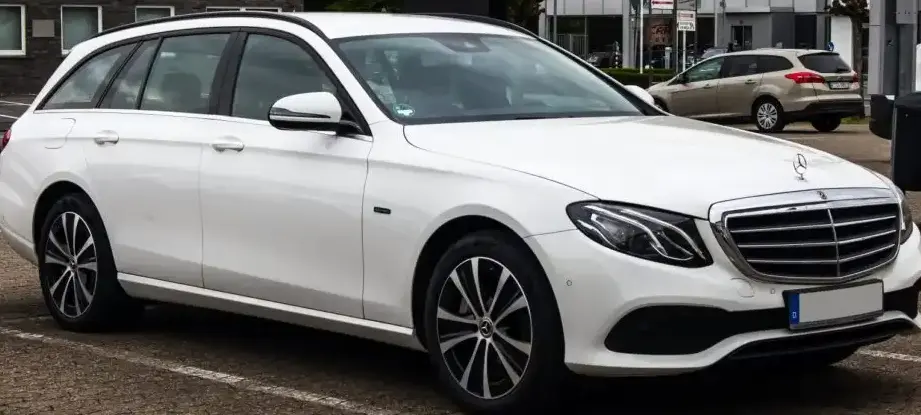
The Mercedes-Benz E 300 de T-modell (S213), produced from October 2018 to 2020, represents a significant step in the brand’s push towards electrified vehicles. This plug-in hybrid estate combined a diesel engine with an electric motor, offering a blend of efficiency, performance, and practicality within the popular E-Class range. Positioned as a premium offering, the E 300 de aimed to appeal to buyers seeking reduced running costs and environmental impact without sacrificing the luxury and refinement expected from Mercedes-Benz. It was part of the S213 series, the fifth generation of the E-Class estate, known for its spacious interior and advanced technology.
Technical Specifications
| Brand | Mercedes-Benz |
| Model | E-class |
| Generation | E-class T-modell (S213) |
| Type | E 300de (306 Hp) Plug-In Hybrid 9G-TRONIC |
| Start of production | October, 2018 |
| End of production | 2020 |
| Powertrain Architecture | PHEV (Plug-in Hybrid Electric Vehicle) |
| Body type | Station wagon (estate) |
| Seats | 5 |
| Doors | 5 |
| Fuel consumption at Low speed (WLTP) | 1.5 l/100 km (156.8 US mpg, 188.3 UK mpg, 66.7 km/l) |
| Fuel consumption at very high speed (WLTP) | 1.6 l/100 km (147 US mpg, 176.6 UK mpg, 62.5 km/l) |
| CO2 emissions (WLTP) | 38-43 g/km |
| Fuel consumption (economy) – combined | 1.41 l/100 km (166.8 US mpg, 200.3 UK mpg, 70.9 km/l) |
| CO2 emissions | 44 g/km |
| Fuel Type | Diesel / electricity |
| Acceleration 0 – 100 km/h | 6 sec |
| Acceleration 0 – 62 mph | 6 sec |
| Acceleration 0 – 60 mph | 5.7 sec |
| Maximum speed | 250 km/h (155.34 mph) |
| Emission standard | Euro 6 |
| Weight-to-power ratio | 7 kg/Hp, 143 Hp/tonne |
| Weight-to-torque ratio | 3.1 kg/Nm, 327.1 Nm/tonne |
| Gross battery capacity | 13.5 kWh |
| Battery technology | Lithium-ion (Li-Ion) |
| Average Energy consumption | 20 kWh/100 km (32.19 kWh/100 mi, 105 MPGe, 5 km/kWh, 3.1 mi/kWh) |
| Electric motor power | 122 Hp @ 2500 rpm (440 Nm @ 0-2000 rpm / 324.53 lb.-ft. @ 0-2000 rpm) |
| Electric motor location | Between the combustion engine and the transmission |
| System power | 306 Hp @ 3500-4000 rpm (700 Nm / 516.29 lb.-ft.) |
| Internal combustion engine power | 194 Hp @ 3800 rpm (400 Nm @ 1600-2800 rpm / 295.02 lb.-ft. @ 1600-2800 rpm) |
| Engine layout | Front, Longitudinal |
| Engine Model/Code | OM 654 D 20 SCR |
| Engine displacement | 1950 cm3 (119 cu. in.) |
| Number of cylinders | 4 |
| Engine configuration | Inline |
| Compression ratio | 15.5:1 |
| Number of valves per cylinder | 4 |
| Fuel injection system | Diesel Commonrail |
| Kerb Weight | 2140 kg (4717.89 lbs.) |
| Max. weight | 2800 kg (6172.94 lbs.) |
| Max load | 660 kg (1455.05 lbs.) |
| Fuel tank capacity | 66 l (17.44 US gal | 14.52 UK gal) |
| Permitted trailer load with brakes (12%) | 2100 kg (4629.71 lbs.) |
| Permitted trailer load without brakes | 750 kg (1653.47 lbs.) |
| Length | 4933 mm (194.21 in.) |
| Width | 1852 mm (72.91 in.) |
| Width including mirrors | 2065 mm (81.3 in.) |
| Height | 1475 mm (58.07 in.) |
| Wheelbase | 2939 mm (115.71 in.) |
| Front track | 1600 mm (62.99 in.) |
| Rear (Back) track | 1609 mm (63.35 in.) |
| Front overhang | 841 mm (33.11 in.) |
| Rear overhang | 1153 mm (45.39 in.) |
| Minimum turning circle (turning diameter) | 11.6 m (38.06 ft.) |
| Drive wheel | Rear wheel drive |
| Number of gears and type of gearbox | 9 gears, automatic transmission G-TRONIC |
| Front suspension | Independent multi-link suspension |
| Rear suspension | Independent multi-link suspension |
| Front brakes | Ventilated discs |
| Rear brakes | Ventilated discs |
| Assisting systems | ABS (Anti-lock braking system) |
| Steering type | Steering rack and pinion |
| Power steering | Electric Steering |
| Tires size | Front wheel tires: 245/45 R18 Rear wheel tires: 275/40 R18 |
| Wheel rims size | Front wheel rims: 9J x 18 Rear wheel rims: 8J x 18 |
Powertrain & Engine Architecture
The E 300 de’s powertrain centered around a 2.0-liter inline-four diesel engine (OM 654 D 20 SCR) paired with a 122 hp electric motor. The diesel engine, producing 194 hp and 400 Nm of torque, featured a sophisticated diesel commonrail injection system and a turbocharger with intercooler. The electric motor, positioned between the engine and the 9G-TRONIC nine-speed automatic transmission, contributed an additional 440 Nm of torque. Combined, the system delivered a total output of 306 hp and 700 Nm of torque. The 13.5 kWh lithium-ion battery pack provided an all-electric range of approximately 50 kilometers (31 miles) under WLTP testing. The 9G-TRONIC transmission was specifically calibrated to work seamlessly with the electric motor, optimizing efficiency and providing smooth gear changes.
Driving Characteristics
The E 300 de offered a unique driving experience. In electric mode, it provided near-silent and emissions-free operation, ideal for urban commutes. Switching to hybrid mode allowed the car to intelligently manage power delivery between the diesel engine and the electric motor, prioritizing efficiency. The combined output resulted in a 0-60 mph acceleration time of around 5.7 seconds, making it a surprisingly quick estate car. The 9G-TRONIC transmission, with its nine forward gears, helped to keep the engine in its optimal power band, contributing to both performance and fuel economy. Compared to the petrol-powered E 300, the E 300 de offered superior torque at lower engine speeds, making it feel more responsive in everyday driving situations. However, the added weight of the battery pack and electric motor did slightly impact handling compared to lighter E-Class variants.
Equipment & Trim Levels
The E 300 de T-modell typically came well-equipped, reflecting its premium positioning. Standard features included Mercedes-Benz’s MBUX infotainment system with a large touchscreen display, leather upholstery, automatic climate control, and a comprehensive suite of safety features such as adaptive cruise control, lane keeping assist, and automatic emergency braking. Optional extras included a panoramic sunroof, upgraded sound system, and various driver assistance packages. Interior trim options ranged from wood veneers to aluminum accents, allowing buyers to personalize the cabin to their preferences. The estate body style provided a generous 640 liters of cargo space with the rear seats up, expanding to 1820 liters with the seats folded down.
Chassis & Braking
The E 300 de utilized a sophisticated chassis setup featuring independent multi-link suspension at both the front and rear. This provided a comfortable ride quality while maintaining good handling characteristics. Ventilated disc brakes were fitted on all four wheels, ensuring strong stopping power. The car’s electronic stability program (ESP) worked in conjunction with the anti-lock braking system (ABS) to enhance safety and control. Due to the increased weight from the hybrid components, the suspension was slightly stiffer compared to standard E-Class models to maintain stability and prevent excessive body roll.
Market Reception & Comparison
The E 300 de was generally well-received by automotive critics, who praised its fuel efficiency, smooth ride, and refined interior. It was often compared to other plug-in hybrid estates, such as the Volvo V60 Recharge and the BMW 330e Touring. The E 300 de’s diesel-electric powertrain offered a unique advantage in terms of long-distance fuel economy, particularly for drivers who frequently undertake long journeys. However, some critics noted that the all-electric range was relatively modest compared to some competitors. The diesel engine also faced scrutiny due to ongoing concerns about diesel emissions, although Mercedes-Benz emphasized the E 300 de’s compliance with Euro 6 emission standards.
Legacy
The Mercedes-Benz E 300 de T-modell represents an important step in the brand’s transition towards electrification. While production was relatively short-lived, the model demonstrated the potential of combining diesel and electric power to deliver a compelling blend of efficiency, performance, and practicality. On the used car market, the E 300 de remains a desirable option for buyers seeking a premium estate car with low running costs. The OM 654 diesel engine has proven to be a reliable unit, and the 9G-TRONIC transmission is known for its smooth operation. However, potential buyers should be aware of the potential costs associated with replacing the high-voltage battery pack after several years of use.