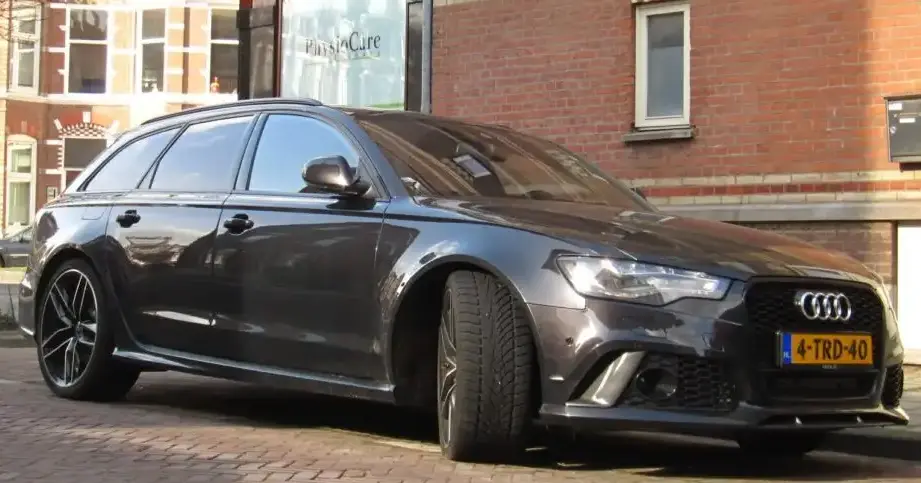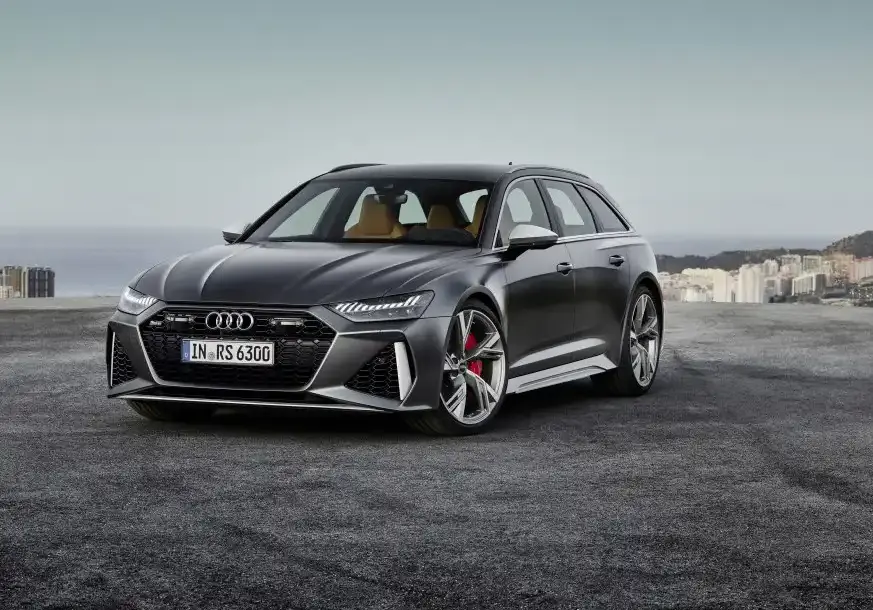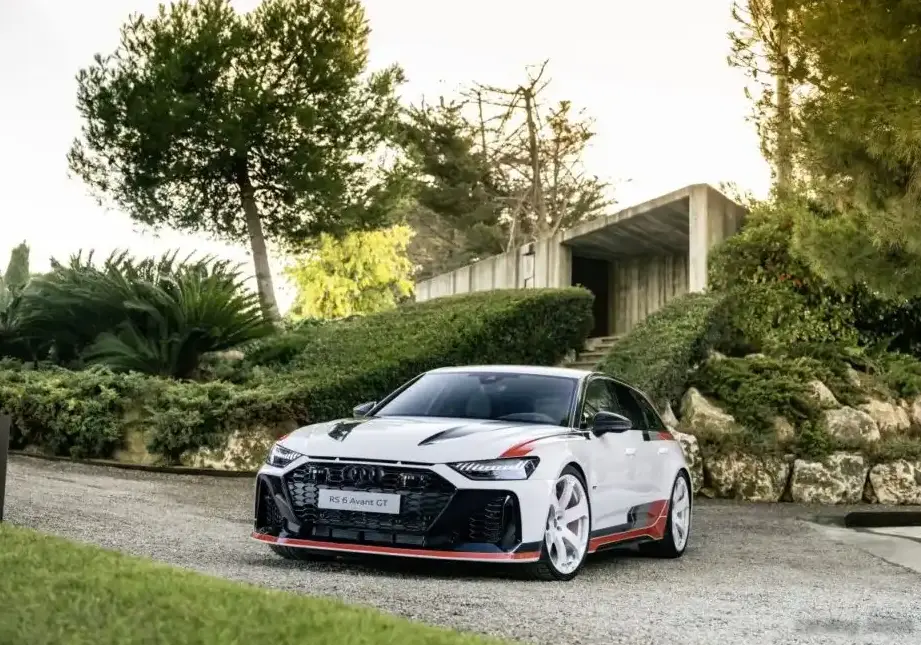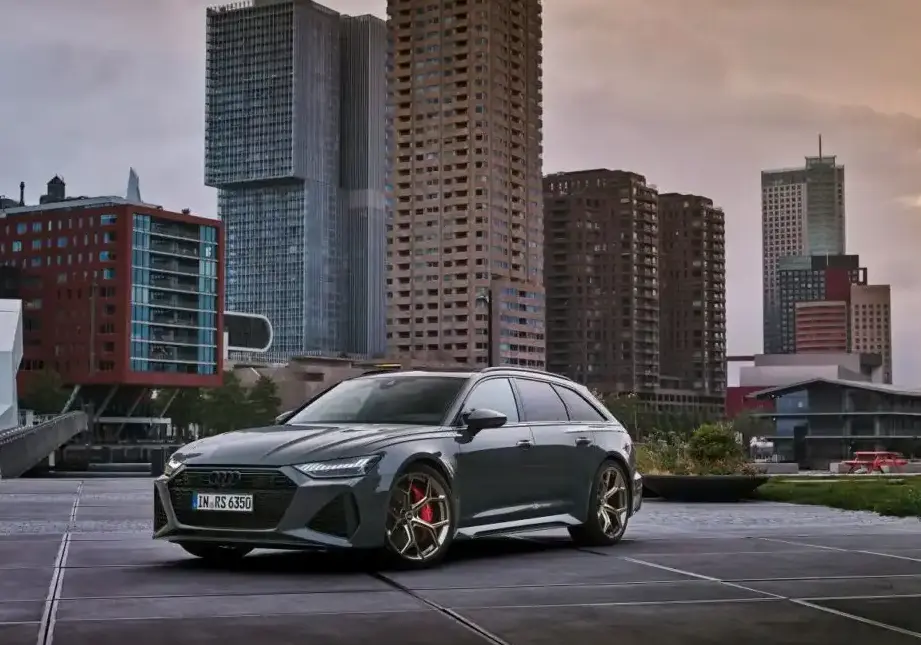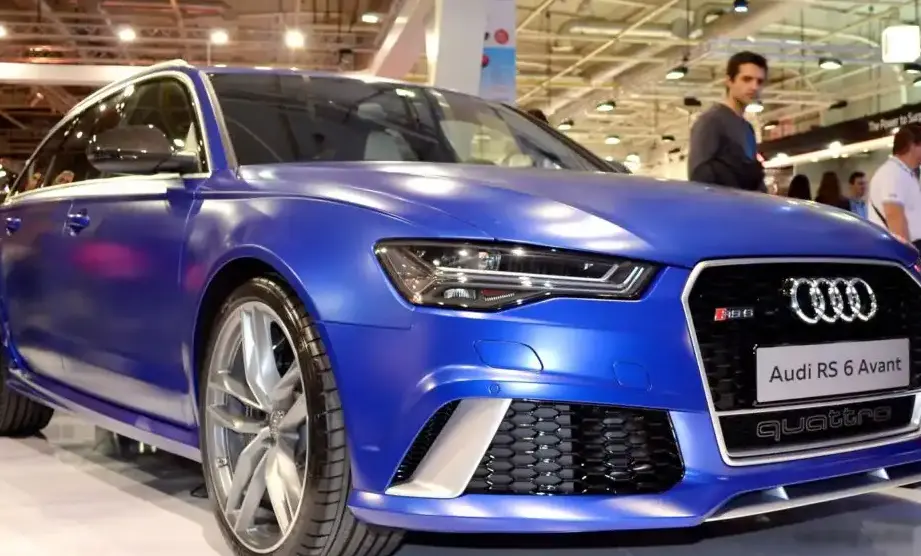
The Audi RS6 Avant (C7, facelift) with the 4.0 TFSI V8 performance engine, producing 605 horsepower, represents the pinnacle of the C7 generation RS6 model line. Introduced in October 2015 and continuing through April 2018, this variant was positioned as the highest-performance iteration of the RS6 Avant, building upon the already potent base model. It catered to enthusiasts seeking uncompromising speed and luxury within a practical, family-oriented station wagon body style. The “performance” designation signified a substantial upgrade over the standard RS6, focusing on increased power output and enhanced driving dynamics. This model is part of the C7 generation (2013-2018) which itself is based on the Volkswagen Group’s MLB platform.
Technical Specifications
| Brand | Audi |
| Model | RS6 |
| Generation | RS6 Avant (C7, facelift 2014) |
| Type (Engine) | 4.0 TFSI V8 performance (605 Hp) quattro tiptronic |
| Start of production | October, 2015 |
| End of production | April, 2018 |
| Powertrain Architecture | Internal Combustion engine |
| Body type | Station wagon (estate) |
| Seats | 5 |
| Doors | 5 |
| Fuel consumption (economy) – urban | 13.4 l/100 km (17.6 US mpg, 21.1 UK mpg, 7.5 km/l) |
| Fuel consumption (economy) – extra urban | 7.4 l/100 km (31.8 US mpg, 38.2 UK mpg, 13.5 km/l) |
| Fuel consumption (economy) – combined | 9.6 l/100 km (24.5 US mpg, 29.4 UK mpg, 10.4 km/l) |
| CO2 emissions | 223 g/km |
| Fuel Type | Petrol (Gasoline) |
| Acceleration 0 – 100 km/h | 3.7 sec |
| Acceleration 0 – 62 mph | 3.7 sec |
| Acceleration 0 – 60 mph | 3.5 sec |
| Maximum speed | 250 km/h (155.34 mph), Electronically limited |
| Emission standard | Euro 6 |
| Weight-to-power ratio | 3.2 kg/Hp, 310.3 Hp/tonne |
| Weight-to-torque ratio | 2.6 kg/Nm, 384.6 Nm/tonne |
| Power | 605 Hp @ 6100-6800 rpm |
| Power per litre | 151.5 Hp/l |
| Torque | 750 Nm @ 2500-5500 rpm (553.17 lb.-ft. @ 2500-5500 rpm) |
| Engine layout | Front, Longitudinal |
| Engine Model/Code | CWUC |
| Engine displacement | 3993 cm3 (243.67 cu. in.) |
| Number of cylinders | 8 |
| Engine configuration | V-engine |
| Cylinder Bore | 84.5 mm (3.33 in.) |
| Piston Stroke | 89 mm (3.5 in.) |
| Compression ratio | 9.3:1 |
| Number of valves per cylinder | 4 |
| Fuel injection system | Direct injection |
| Engine aspiration | BiTurbo, Intercooler |
| Valvetrain | DOHC |
| Engine oil capacity | 8.3 l (8.77 US qt | 7.3 UK qt) |
| Coolant | 13 l (13.74 US qt | 11.44 UK qt) |
| Kerb Weight | 1950 kg (4299.01 lbs.) |
| Max. weight | 2580 kg (5687.93 lbs.) |
| Max load | 630 kg (1388.91 lbs.) |
| Trunk (boot) space – minimum | 565 l (19.95 cu. ft.) |
| Trunk (boot) space – maximum | 1680 l (59.33 cu. ft.) |
| Fuel tank capacity | 75 l (19.81 US gal | 16.5 UK gal) |
| Max. roof load | 100 kg (220.46 lbs.) |
| Permitted trailer load with brakes (8%) | 2100 kg (4629.71 lbs.) |
| Permitted trailer load with brakes (12%) | 2100 kg (4629.71 lbs.) |
| Permitted trailer load without brakes | 750 kg (1653.47 lbs.) |
| Permitted towbar download | 85 kg (187.39 lbs.) |
| Length | 4979 mm (196.02 in.) |
| Width | 1936 mm (76.22 in.) |
| Width including mirrors | 2086 mm (82.13 in.) |
| Height | 1461 mm (57.52 in.) |
| Wheelbase | 2915 mm (114.76 in.) |
| Front track | 1662 mm (65.43 in.) |
| Rear (Back) track | 1663 mm (65.47 in.) |
| Front overhang | 939 mm (36.97 in.) |
| Rear overhang | 1125 mm (44.29 in.) |
| Minimum turning circle (turning diameter) | 11.9 m (39.04 ft.) |
| Drivetrain Architecture | The Internal combustion engine (ICE) drives permanently the four wheels of the vehicle. |
| Drive wheel | All wheel drive (4×4) |
| Number of gears and type of gearbox | 8 gears, automatic transmission tiptronic |
| Front suspension | Independent multi-link suspension, Transverse stabilizer, Air suspension |
| Rear suspension | Independent on trapezoidal lever, Air suspension, Transverse stabilizer |
| Front brakes | Ventilated discs |
| Rear brakes | Ventilated discs |
| Assisting systems | ABS (Anti-lock braking system) |
| Steering type | Steering rack and pinion |
| Power steering | Electric Steering |
| Tires size | 275/35 R20; 285/30 R21 |
| Wheel rims size | 9.5J x 20; 9.5J x 21 |
Powertrain & Engine Architecture
The heart of the RS6 Avant performance is the 4.0-liter twin-turbocharged V8 engine, designated internally as the CWUC. This engine builds upon the already impressive 4.0 TFSI unit found in the standard RS6, but with significant enhancements. These include revised turbochargers for increased boost pressure, a modified engine management system, and strengthened internal components. The engine utilizes direct fuel injection and a dual-clutch (S tronic) transmission, delivering power to all four wheels via Audi’s quattro all-wheel-drive system. The valvetrain employs double overhead camshafts (DOHC) with four valves per cylinder, optimizing airflow for increased power output. The engine also features a cylinder deactivation system and a start/stop system to improve fuel efficiency during cruising and idling.
Driving Characteristics
The 605 horsepower and 750 Nm (553 lb-ft) of torque, coupled with the eight-speed tiptronic automatic transmission, result in breathtaking acceleration. The 0-60 mph sprint is dispatched in approximately 3.5 seconds, and the car is electronically limited to a top speed of 155 mph (250 km/h). The tiptronic transmission is tuned for both rapid shifts during aggressive driving and smooth, comfortable gear changes in everyday situations. Compared to the standard RS6, the performance variant offers a noticeably more urgent throttle response and a more aggressive power delivery. While the standard RS6 is already a very fast car, the performance model elevates the experience to another level, providing a truly visceral and engaging driving experience. The quattro all-wheel-drive system ensures excellent traction and stability, even in challenging conditions.
Equipment & Trim Levels
The RS6 Avant performance came standard with a comprehensive array of luxury and performance features. Interior appointments typically included Valcona leather upholstery, carbon fiber trim, and RS sport seats. Standard equipment also included Audi’s MMI navigation plus system with a touchscreen display, a Bang & Olufsen sound system, and a suite of driver-assistance features such as adaptive cruise control and blind-spot monitoring. Optional extras included ceramic brakes, dynamic ride control (adjustable suspension), and various customization options for the interior and exterior. The overall aesthetic was focused on sporty elegance, with subtle but purposeful design cues that distinguished it from the standard A6 Avant.
Chassis & Braking
The RS6 Avant performance features a specially tuned suspension system designed to maximize handling and stability. The front suspension utilizes an independent multi-link setup with a transverse stabilizer, while the rear suspension employs an independent trapezoidal lever design, also with a stabilizer. Air suspension is standard, allowing for adjustable ride height and damping. The braking system consists of ventilated discs at all four corners, providing ample stopping power. Larger brake rotors and calipers were often specified as an option, particularly with the ceramic brake upgrade. The chassis is reinforced to handle the increased power and torque, ensuring a rigid and responsive driving experience.
Market Reception & Comparison
The RS6 Avant performance was widely praised by automotive critics for its exceptional performance, luxurious interior, and practicality. It was often compared favorably to other high-performance station wagons, such as the Mercedes-AMG E63 Wagon and the Porsche Panamera Sport Turismo. While the RS6 Avant performance offered slightly lower fuel economy than some of its competitors, its combination of speed, comfort, and versatility made it a compelling choice for discerning buyers. The higher price point compared to the standard RS6 reflected the significant performance upgrades and exclusive features.
Legacy
The 4.0 TFSI V8 engine in the RS6 Avant performance has proven to be a robust and reliable powertrain. While maintenance costs can be higher than those of more mainstream vehicles, the engine is generally considered to be well-engineered and durable. On the used car market, the RS6 Avant performance commands a premium price due to its rarity and performance capabilities. It remains a highly sought-after vehicle among enthusiasts who appreciate its blend of speed, luxury, and practicality. The C7 generation RS6 Avant, particularly the performance variant, has cemented its place as a modern classic in the high-performance wagon segment.