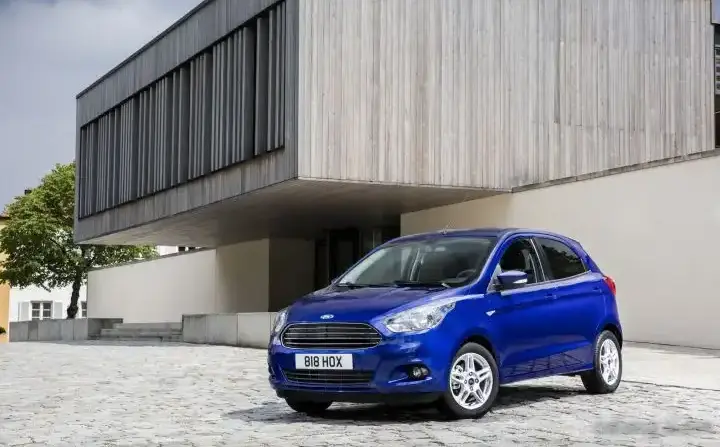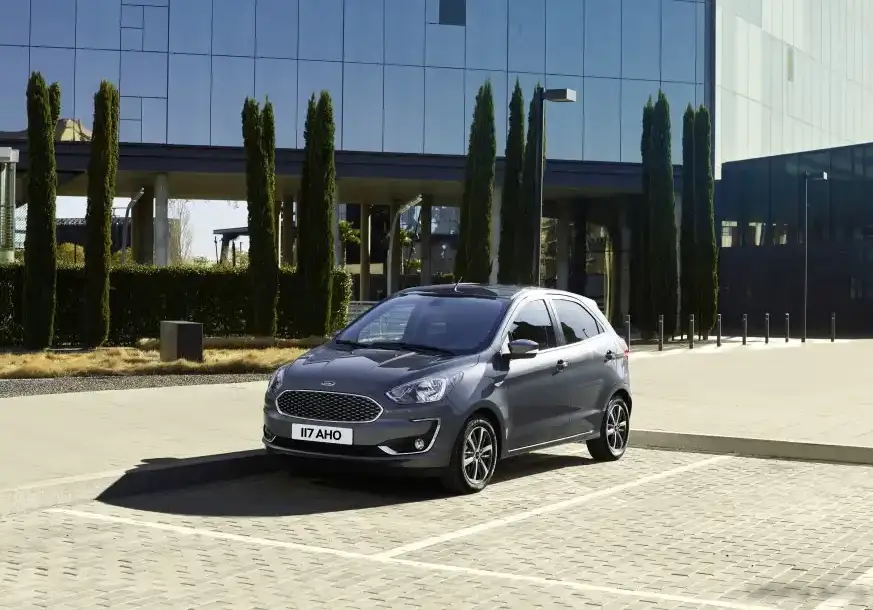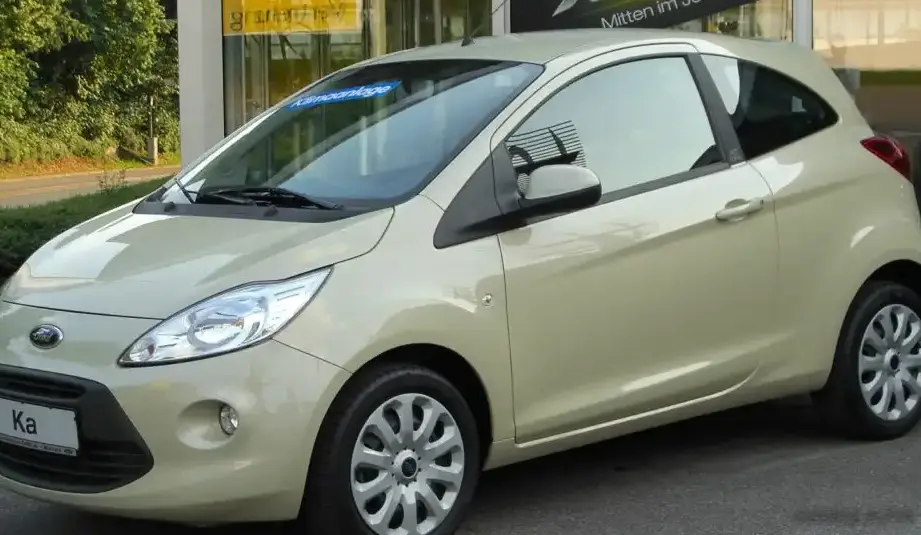
The Ford KA II 1.3 TDCi (75 hp) DPF, produced from 2009 to 2016, represented an entry-level diesel offering within the second generation of the Ford KA. Positioned as the most fuel-efficient variant of the KA II range, it aimed to provide economical transportation for urban drivers. This model was primarily sold in Europe, where small, fuel-efficient diesel hatchbacks were highly popular. It utilized Ford’s Duratorque engine family and was a key component in Ford’s strategy to offer a diverse range of KA models to suit varying customer needs. The KA II itself was built on the Fiat Punto-derived platform, a result of a joint venture between Ford and Fiat.
Technical Specifications
| Brand | Ford |
| Model | KA |
| Generation | KA II |
| Type (Engine) | 1.3 TDCi (75 Hp) DPF |
| Start of production | 2009 |
| End of production | 2016 |
| Powertrain Architecture | Internal Combustion engine |
| Body type | Hatchback |
| Seats | 4 |
| Doors | 3 |
| Fuel consumption (urban) | 5.2 l/100 km (45.2 US mpg, 54.3 UK mpg, 19.2 km/l) |
| Fuel consumption (extra urban) | 3.7 l/100 km (63.6 US mpg, 76.3 UK mpg, 27 km/l) |
| Fuel consumption (combined) | 4.2 l/100 km (56 US mpg, 67.3 UK mpg, 23.8 km/l) |
| CO2 emissions | 112 g/km |
| Fuel Type | Diesel |
| Acceleration 0 – 100 km/h | 13.1 sec |
| Acceleration 0 – 62 mph | 13.1 sec |
| Acceleration 0 – 60 mph | 12.4 sec |
| Maximum speed | 161 km/h (100.04 mph) |
| Emission standard | Euro 4 |
| Weight-to-power ratio | 13.1 kg/Hp |
| Weight-to-torque ratio | 6.8 kg/Nm |
| Power | 75 Hp @ 4000 rpm |
| Torque | 145 Nm @ 1500-3500 rpm (106.95 lb.-ft. @ 1500-3500 rpm) |
| Engine layout | Front, Transverse |
| Engine Model/Code | 169A5000 |
| Engine displacement | 1248 cm3 (76.16 cu. in.) |
| Number of cylinders | 4 |
| Engine configuration | Inline |
| Number of valves per cylinder | 4 |
| Fuel injection system | Diesel Commonrail |
| Engine aspiration | Turbocharger, Intercooler |
| Valvetrain | DOHC |
| Engine oil capacity | 3 l (3.17 US qt | 2.64 UK qt) |
| Kerb Weight | 980 kg (2160.53 lbs.) |
| Max. weight | 1415 kg (3119.54 lbs.) |
| Max load | 435 kg (959.01 lbs.) |
| Trunk (boot) space – minimum | 224 l (7.91 cu. ft.) |
| Trunk (boot) space – maximum | 710 l (25.07 cu. ft.) |
| Fuel tank capacity | 35 l (9.25 US gal | 7.7 UK gal) |
| Max. roof load | 50 kg (110.23 lbs.) |
| Length | 3620 mm (142.52 in.) |
| Width | 1658 mm (65.28 in.) |
| Width with mirrors folded | 1703 mm (67.05 in.) |
| Width including mirrors | 1894 mm (74.57 in.) |
| Height | 1506 mm (59.29 in.) |
| Wheelbase | 2300 mm (90.55 in.) |
| Front track | 1409 mm (55.47 in.) |
| Rear track | 1397 mm (55 in.) |
| Minimum turning circle | 10.12 m (33.2 ft.) |
| Drivetrain Architecture | Front wheel drive |
| Number of gears | 5 |
| Gearbox type | Manual transmission |
| Front suspension | Independent type McPherson, Transverse stabilizer |
| Rear suspension | Transverse stabilizer, Torsion |
| Front brakes | Disc |
| Rear brakes | Drum |
| Assisting systems | ABS (Anti-lock braking system) |
| Steering type | Steering rack and pinion |
| Power steering | Electric Steering |
| Tires size | 175/65 R14 |
| Wheel rims size | 5.5J x 14 |
INTRODUCTION
The Ford KA II 1.3 TDCi (75 hp) DPF, launched in 2009, was a significant addition to the KA II lineup. The KA II, itself a replacement for the original KA, was a collaborative effort between Ford and Fiat, sharing its platform with the Fiat Punto. This particular diesel variant was designed to appeal to cost-conscious buyers seeking low running costs and reasonable fuel economy. The “DPF” designation indicates the inclusion of a Diesel Particulate Filter, a crucial component for meeting increasingly stringent European emission standards. This model occupied the entry-level position in the KA II range, below the 1.2-liter petrol variants and any potential higher-powered diesel options.
Powertrain & Engine Architecture
At the heart of the KA II 1.3 TDCi is Ford’s 169A5000 engine, a 1.3-liter inline-four cylinder diesel engine. This engine belongs to the Duratorque family, known for its compact size and relatively efficient operation. The engine utilizes a common rail direct injection system, delivering fuel directly into the combustion chamber at high pressure for improved combustion and reduced emissions. A turbocharger with an intercooler is employed to boost power output and improve torque across a wider rev range. The engine features a double overhead camshaft (DOHC) valvetrain with four valves per cylinder, optimizing gas flow for enhanced performance. The 75 horsepower and 145 Nm (107 lb-ft) of torque are modest, but sufficient for city driving and shorter journeys. The engine is paired with a five-speed manual transmission, chosen for its simplicity and contribution to fuel efficiency. While an automatic transmission was offered on some KA II models, it was not available with the 1.3 TDCi engine.
Driving Characteristics
The driving experience in the KA II 1.3 TDCi is characterized by its economy-focused nature. Acceleration is not brisk, with a 0-60 mph time of around 12.4 seconds. The engine feels most comfortable in the mid-range, providing adequate torque for everyday driving situations. The five-speed manual transmission is light and easy to operate, but the gear ratios are geared towards maximizing fuel efficiency rather than outright performance. Compared to the 1.2-liter petrol versions, the 1.3 TDCi offers significantly more torque, making it feel more relaxed on the highway and when carrying a full load. However, the petrol engines provide quicker acceleration and a more responsive feel. The diesel engine’s turbocharger does introduce a slight amount of turbo lag, but it’s generally manageable. Overall, the KA II 1.3 TDCi prioritizes fuel economy and practicality over sporty driving dynamics.
Equipment & Trim Levels
The KA II 1.3 TDCi typically came with a relatively basic level of equipment, reflecting its position as the entry-level model. Standard features generally included central locking, power steering, an adjustable steering column, and a basic audio system. Safety features such as ABS and driver and passenger airbags were also standard. Interior upholstery was typically cloth, and the dashboard featured a simple, functional design. Optional extras included air conditioning, electric front windows, and alloy wheels. Higher trim levels, such as the Zetec, offered additional features like body-colored bumpers, upgraded interior trim, and a more comprehensive audio system. The overall interior ambiance was functional and durable, prioritizing practicality over luxury.
Chassis & Braking
The KA II utilizes a McPherson strut front suspension and a torsion beam rear suspension. This setup provides a reasonable balance between ride comfort and handling. The front suspension incorporates a transverse stabilizer bar to reduce body roll during cornering. The rear brakes are drums, while the front brakes are discs. This configuration was common for vehicles in this weight class and price range. The steering is rack and pinion with electric power assistance, providing light and precise steering feel. The tires are typically 175/65 R14, offering a good compromise between grip and rolling resistance. The chassis is designed to be lightweight and agile, contributing to the KA II’s nimble handling characteristics.
Market Reception & Comparison
The Ford KA II 1.3 TDCi was generally well-received by critics for its fuel efficiency and low running costs. It was praised as an ideal city car, offering a practical and economical solution for urban commuters. However, some reviewers criticized its lack of power and relatively basic interior. Compared to other small diesel hatchbacks on the market, such as the Volkswagen Polo 1.4 TDI and the Renault Clio 1.5 dCi, the KA II 1.3 TDCi offered a more affordable price point but lacked the refinement and features of its rivals. In terms of reliability, the Duratorque engine proved to be generally robust, but the DPF system could be prone to issues if the vehicle was primarily used for short journeys, where it didn’t have sufficient opportunity to regenerate.
Legacy
The Ford KA II 1.3 TDCi remains a popular choice in the used car market, particularly for buyers seeking an affordable and fuel-efficient city car. The Duratorque engine, while not known for its blistering performance, has proven to be relatively reliable with proper maintenance. The DPF system remains a potential weak point, and prospective buyers should ensure that the vehicle has been regularly serviced and that the DPF has been functioning correctly. The KA II, in general, is remembered as a practical and affordable small car that provided a valuable option for budget-conscious buyers in Europe. Its simple design and relatively low running costs continue to appeal to a wide range of drivers.