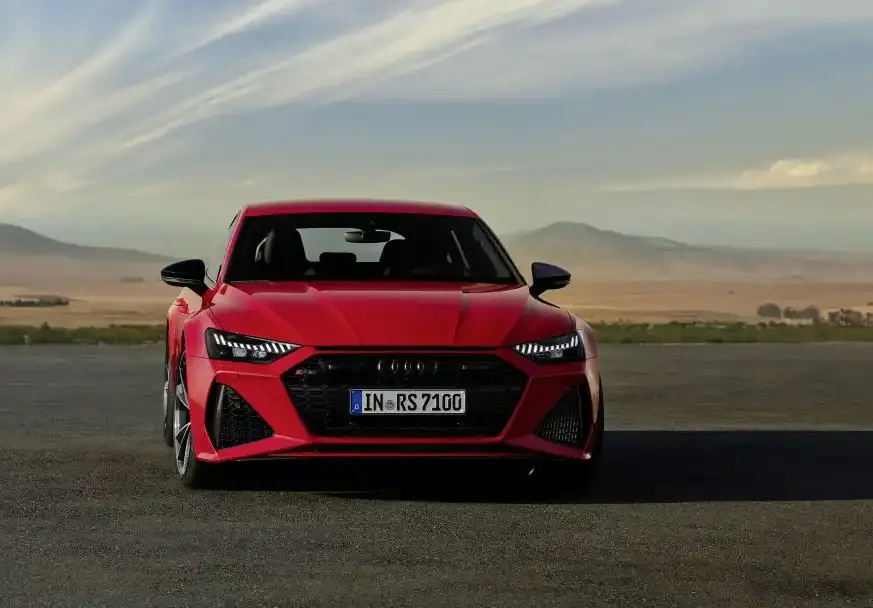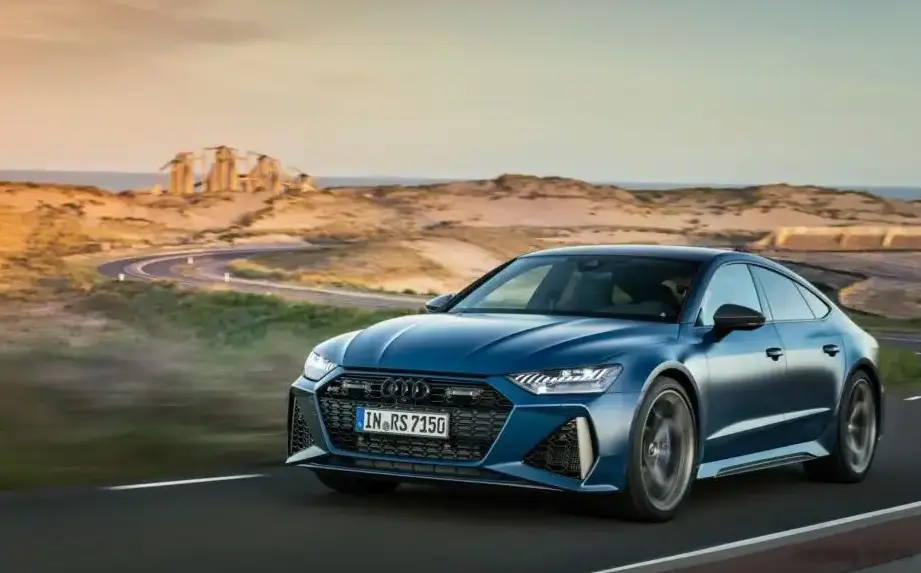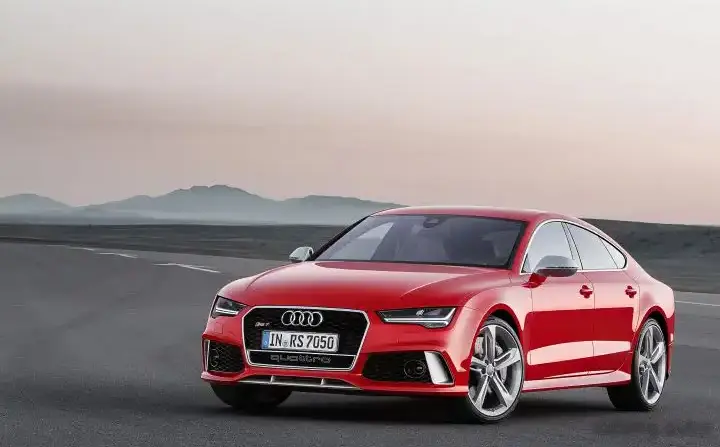
The Audi RS7 Sportback (C7) 4.0 TFSI V8 performance, produced from 2015 to 2019, represents the highest-performance iteration of the C7 generation RS7. Positioned as the flagship variant within the RS7 lineup, it offered a substantial power increase over the standard RS7, targeting enthusiasts seeking uncompromising performance and luxury in a practical liftback package. This model built upon Audi’s reputation for sophisticated engineering and quattro all-wheel drive, establishing itself as a formidable competitor in the high-performance luxury car segment, primarily aimed at the North American and European markets.
Technical Specifications
| Brand | Audi |
| Model | RS7 |
| Generation | RS7 Sportback (C7) |
| Type (Engine) | 4.0 TFSI V8 performance (605 Hp) quattro Tiptronic |
| Start of production | 2015 |
| End of production | 2019 |
| Powertrain Architecture | Internal Combustion engine |
| Body type | Liftback |
| Seats | 4 |
| Doors | 5 |
| Fuel consumption (urban) | 13.3 l/100 km (17.7 US mpg, 21.2 UK mpg, 7.5 km/l) |
| Fuel consumption (extra urban) | 7.3 l/100 km (32.2 US mpg, 38.7 UK mpg, 13.7 km/l) |
| Fuel consumption (combined) | 9.5 l/100 km (24.8 US mpg, 29.7 UK mpg, 10.5 km/l) |
| CO2 emissions | 221 g/km |
| Fuel Type | Petrol (Gasoline) |
| Acceleration 0 – 100 km/h | 3.7 sec |
| Acceleration 0 – 62 mph | 3.7 sec |
| Acceleration 0 – 60 mph | 3.5 sec |
| Maximum speed | 250 km/h (155.34 mph) |
| Emission standard | Euro 6 |
| Weight-to-power ratio | 3.2 kg/Hp, 313.5 Hp/tonne |
| Weight-to-torque ratio | 2.8 kg/Nm, 362.7 Nm/tonne |
| Power | 605 Hp @ 6100-6800 rpm |
| Power per litre | 151.5 Hp/l |
| Torque | 700 Nm @ 1750-6000 rpm (516.29 lb.-ft. @ 1750-6000 rpm) |
| Engine layout | Front, Longitudinal |
| Engine Model/Code | CWUC |
| Engine displacement | 3993 cm3 (243.67 cu. in.) |
| Number of cylinders | 8 |
| Engine configuration | V-engine |
| Number of valves per cylinder | 4 |
| Fuel injection system | Direct injection |
| Engine aspiration | BiTurbo, Intercooler |
| Valvetrain | DOHC |
| Engine oil capacity | 8.7 l (9.19 US qt | 7.65 UK qt) |
| Kerb Weight | 1930 kg (4254.92 lbs.) |
| Max. weight | 2515 kg (5544.63 lbs.) |
| Max load | 585 kg (1289.7 lbs.) |
| Trunk (boot) space – minimum | 535 l (18.89 cu. ft.) |
| Fuel tank capacity | 75 l (19.81 US gal | 16.5 UK gal) |
| Max. roof load | 100 kg (220.46 lbs.) |
| Length | 5012 mm (197.32 in.) |
| Width | 1911 mm (75.24 in.) |
| Width including mirrors | 2139 mm (84.21 in.) |
| Height | 1419 mm (55.87 in.) |
| Wheelbase | 2915 mm (114.76 in.) |
| Front track | 1634 mm (64.33 in.) |
| Rear (Back) track | 1625 mm (63.98 in.) |
| Drive wheel | All wheel drive (4×4) |
| Number of gears and type of gearbox | 8 gears, automatic transmission tiptronic |
| Front suspension | Independent multi-link suspension |
| Rear suspension | Independent on trapezoidal lever |
| Front brakes | Ventilated discs |
| Rear brakes | Ventilated discs |
| Assisting systems | ABS (Anti-lock braking system) |
| Steering type | Steering rack and pinion |
| Tires size | 275/30 R21 |
| Wheel rims size | 9J x 21 |
Powertrain & Engine Architecture
At the heart of the RS7 performance lies the 4.0-liter twin-turbocharged V8 engine, designated internally as the CWUC. This engine builds upon the already potent 4.0 TFSI unit found in the standard RS7, but with significant enhancements. These include revised turbochargers, a strengthened crankshaft, and optimized engine management software, resulting in an increase of 45 horsepower and 50 lb-ft of torque. The engine utilizes a direct fuel injection system, delivering fuel directly into the combustion chambers for improved efficiency and responsiveness. The valvetrain employs double overhead camshafts (DOHC) with four valves per cylinder, optimizing airflow for increased power output. The eight-speed tiptronic automatic transmission, specifically tuned for the performance model, provides quick and smooth gear changes. Audi’s quattro all-wheel drive system distributes power between all four wheels, enhancing traction and stability, particularly during acceleration and cornering.
Driving Characteristics
The RS7 Sportback (C7) 4.0 TFSI V8 performance delivers exhilarating acceleration, achieving 0-60 mph in approximately 3.5 seconds. The increased power and torque, combined with the quick-shifting tiptronic transmission and quattro all-wheel drive, provide a seamless and confident driving experience. While the automatic transmission doesn’t offer the same level of driver engagement as a manual gearbox, it excels in providing consistent and rapid shifts. Compared to the standard RS7, the performance model exhibits a noticeably more aggressive throttle response and a more urgent power delivery. The suspension, while firm, provides a reasonable level of comfort for everyday driving, striking a balance between performance and usability.
Equipment & Trim Levels
The RS7 performance came standard with a comprehensive array of luxury and performance features. Interior appointments included Valcona leather upholstery, heated and ventilated front sport seats with massage function, and carbon fiber trim accents. Standard technology features included Audi’s MMI navigation plus system with a touchscreen display, a Bang & Olufsen sound system, and a suite of driver-assistance systems such as adaptive cruise control and blind-spot monitoring. Optional extras included ceramic brakes, dynamic ride control (adjustable suspension), and a variety of customization options for interior and exterior finishes.
Chassis & Braking
The RS7 performance features a sport-tuned suspension with adaptive dampers, allowing drivers to adjust the ride quality to suit their preferences. The front suspension utilizes an independent multi-link setup, while the rear employs an independent trapezoidal link design. Braking duties are handled by large, ventilated discs on all four wheels, providing ample stopping power. The standard ABS (Anti-lock Braking System) enhances braking performance and stability. The chassis is reinforced to handle the increased power and torque, ensuring rigidity and responsiveness.
Market Reception & Comparison
The RS7 Sportback (C7) 4.0 TFSI V8 performance was widely praised by automotive critics for its exceptional performance, luxurious interior, and practical liftback design. It was often compared to rivals such as the Porsche Panamera Turbo and the BMW M6 Gran Coupe. While the RS7 offered a more understated aesthetic than some of its competitors, it delivered comparable performance and a more spacious interior. Fuel economy, while not a primary concern for buyers in this segment, was reasonable for a high-performance vehicle of its size and capability. Reliability was generally good, although the complex twin-turbocharged engine and advanced technology systems could potentially require more expensive maintenance over the long term.
Legacy
The Audi RS7 Sportback (C7) 4.0 TFSI V8 performance remains a highly sought-after vehicle in the used car market. Its combination of performance, luxury, and practicality has ensured its enduring appeal. The 4.0 TFSI V8 engine, while complex, has proven to be relatively reliable when properly maintained. The RS7 performance represents a pinnacle of Audi’s engineering prowess and continues to be regarded as a benchmark in the high-performance luxury car segment. Its influence can be seen in subsequent generations of Audi RS models, which continue to push the boundaries of performance and technology.