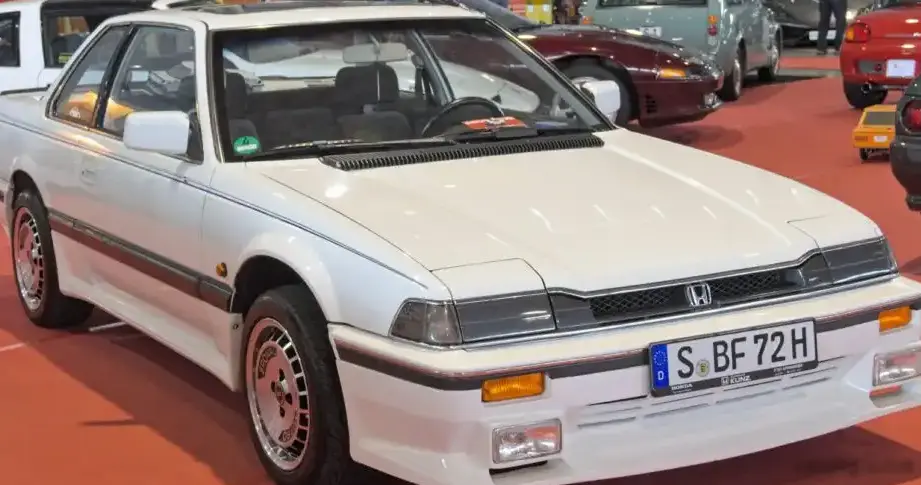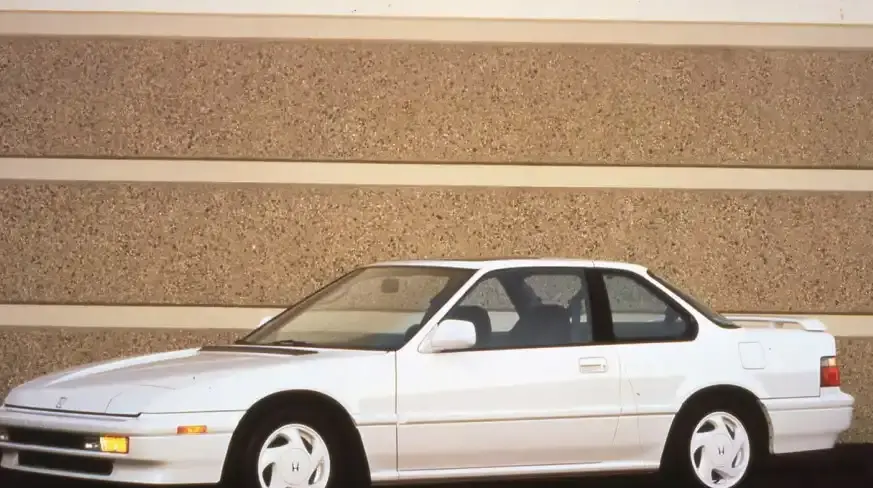
The Honda Prelude III (BA), specifically the 2.0 i EX 16V (BA4) CAT variant produced between 1987 and 1992, represents a significant evolution in Honda’s personal luxury coupe offerings. Falling within the third generation of the Prelude (BA chassis code), this model aimed to balance sporty handling with a comfortable and refined driving experience. The BA4, distinguished by its 137 horsepower engine and catalytic converter, was primarily targeted at the North American and European markets, offering a step up in performance and features compared to the base model Preludes while remaining more accessible than the flagship Si models. It played a key role in establishing the Prelude’s reputation as a technologically advanced and driver-focused coupe.
Technical Specifications
| Brand | Honda |
| Model | Prelude |
| Generation | Prelude III (BA) |
| Type | 2.0 i EX 16V (BA4) CAT (137 Hp) |
| Start of Production | 1987 |
| End of Production | 1992 |
| Powertrain Architecture | Internal Combustion Engine |
| Body Type | Coupe |
| Fuel Type | Petrol (Gasoline) |
| Engine Power | 137 Hp |
| Engine Aspiration | Naturally Aspirated |
| Engine Displacement | 1955 cc (2.0 Liters) |
| Engine Code | F20A SOHC |
| Transmission | 4-Speed Automatic |
| Drivetrain | Front-Wheel Drive |
| Weight (approx.) | 2,600 lbs (1,180 kg) |
| Top Speed (approx.) | 125 mph (201 km/h) |
| 0-60 mph (approx.) | 9.5 seconds |
Powertrain & Engine Architecture
The heart of the 2.0 i EX 16V (BA4) is the F20A engine, a 1955cc, naturally aspirated, inline-four cylinder powerplant. This engine utilizes a single overhead camshaft (SOHC) design, featuring 16 valves (four valves per cylinder). The “16V” designation is crucial, as it signified a move towards more sophisticated engine technology compared to earlier Preludes. Fuel delivery is managed by Honda’s Programmed Fuel Injection (PGM-FI) system, a multi-point electronic fuel injection system that optimizes fuel efficiency and performance. The F20A engine produces 137 horsepower at 5,800 rpm and 133 lb-ft of torque at 4,500 rpm. The engine is paired with a four-speed automatic transmission, offering smooth shifts but sacrificing some of the responsiveness found in the available five-speed manual. The catalytic converter (“CAT” in the model designation) was standard equipment, reflecting increasing emissions regulations. The engine block is constructed from cast iron, while the cylinder head is made of aluminum, contributing to a reasonable weight balance.
Driving Characteristics
The 2.0 i EX 16V automatic offered a comfortable and refined driving experience, prioritizing ease of use over outright performance. While the 137 hp engine provided adequate power for everyday driving and highway cruising, it wasn’t as exhilarating as the more powerful 2.1-liter engine found in the Si models. The four-speed automatic transmission, while smooth, resulted in slightly slower acceleration compared to the manual transmission. Gear ratios were tuned for fuel efficiency and comfortable cruising, rather than aggressive acceleration. The automatic transmission did offer a “Sport” mode, which held gears longer and provided more responsive downshifts, but it didn’t fully replicate the control offered by a manual gearbox. Steering was light and precise, typical of Honda’s engineering philosophy, and the suspension provided a good balance between ride comfort and handling. Compared to the manual transmission versions, the automatic felt less engaging, but it appealed to buyers who preferred a more relaxed driving experience.
Equipment & Trim Levels
The 2.0 i EX 16V (BA4) trim level represented a mid-range offering within the Prelude III lineup. Standard features included power windows, power door locks, a tilt steering wheel, and a decent sound system. The interior typically featured cloth upholstery, although leather options were sometimes available. The dashboard layout was clean and functional, with easy-to-read gauges. Optional extras included a sunroof, upgraded sound systems, and alloy wheels. The EX trim also included features like cruise control and a more comprehensive instrument cluster compared to the base model. The overall interior ambiance was geared towards comfort and convenience, reflecting the car’s positioning as a personal luxury coupe. The BA4 often featured a more refined interior finish compared to the base models, with higher-quality materials used in certain areas.
Chassis & Braking
The Prelude III (BA) utilized a front-wheel-drive layout with an independent suspension system. The front suspension consisted of MacPherson struts with stabilizer bar, while the rear suspension employed a double-wishbone setup, also with a stabilizer bar. This suspension configuration provided excellent handling characteristics and a comfortable ride. Braking duties were handled by disc brakes on the front wheels and drum brakes on the rear wheels. The braking system was adequate for the car’s weight and performance, but it lacked the stopping power of the larger brakes found on the Si models. The chassis was relatively lightweight, contributing to the car’s nimble handling. The steering system was a rack-and-pinion setup, providing precise and responsive steering feel. The BA4’s suspension tuning was slightly softer than the Si models, prioritizing ride comfort over ultimate handling performance.
Market Reception & Comparison
The 2.0 i EX 16V (BA4) was generally well-received by automotive critics. It was praised for its comfortable ride, refined interior, and reliable engine. However, some critics noted that the automatic transmission detracted from the car’s sporty image and that the engine lacked the punch of the Si models. Compared to the 2.1-liter Si, the BA4 offered a more affordable entry point into the Prelude lineup, appealing to buyers who prioritized comfort and convenience over outright performance. Fuel economy was a strong point for the BA4, averaging around 22 mpg city and 29 mpg highway. Reliability was also a key strength, with the F20A engine proving to be durable and long-lasting. Compared to European coupes of the same era, the Prelude offered a compelling combination of features, performance, and reliability at a competitive price point.
Legacy
The Honda Prelude III (BA) 2.0 i EX 16V (BA4) CAT has maintained a respectable reputation in the used car market. The F20A engine is known for its durability and relatively low maintenance costs. While finding pristine examples can be challenging, well-maintained BA4s continue to offer a comfortable and enjoyable driving experience. Parts availability is generally good, although some trim-specific components may be difficult to source. The BA4 is often seen as a good entry point into the world of classic Honda coupes, offering a blend of style, reliability, and affordability. Its influence can be seen in subsequent generations of the Prelude and other Honda models, which continued to prioritize driver engagement and technological innovation. The BA4 represents a sweet spot in the Prelude lineage, offering a balance of performance, comfort, and practicality that continues to appeal to enthusiasts today.