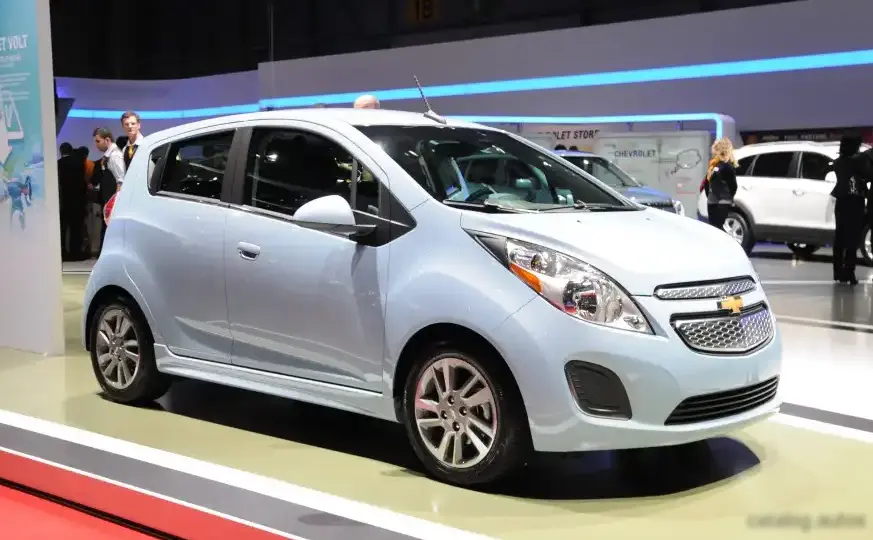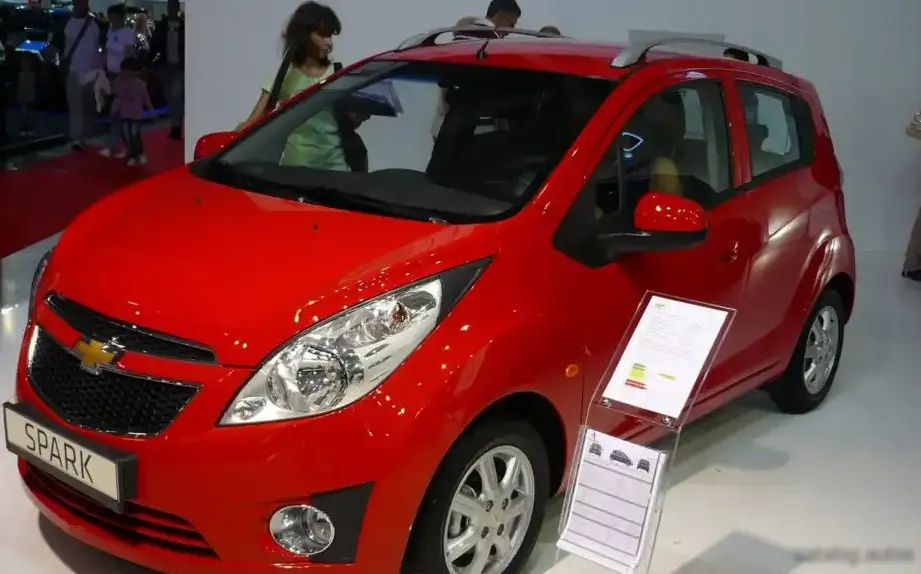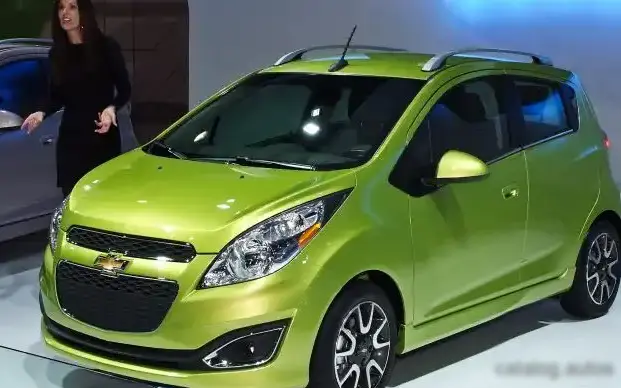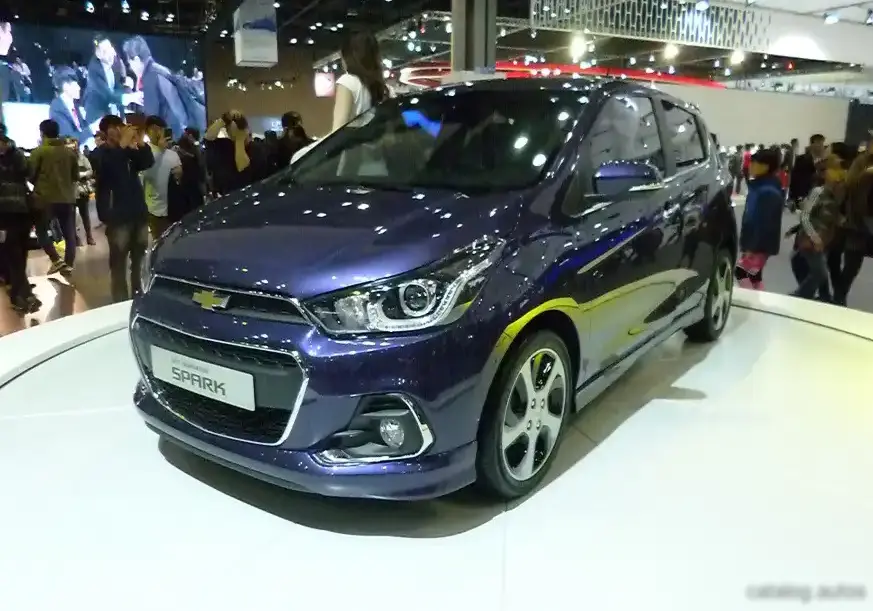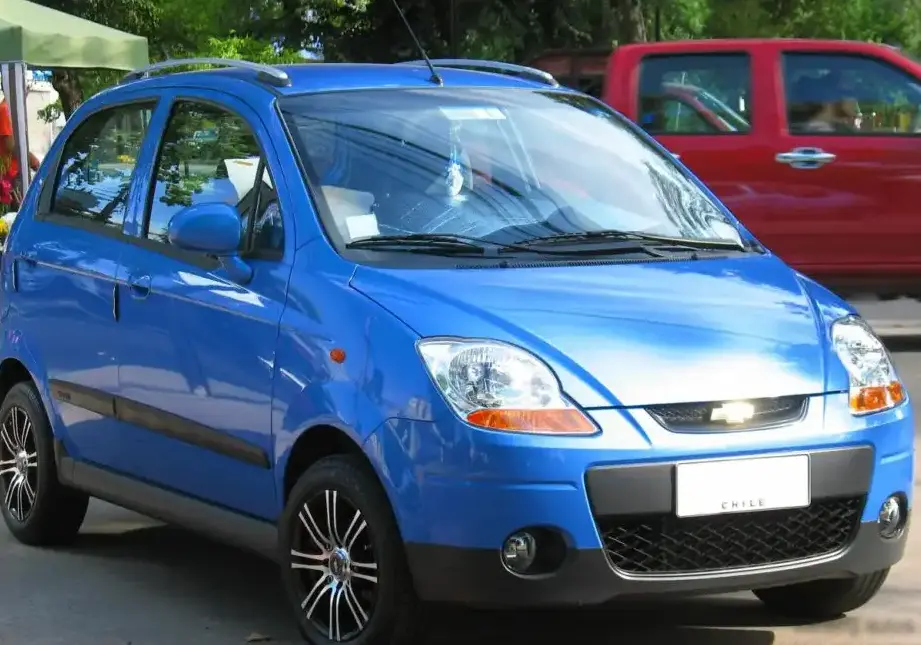
The Chevrolet Spark II 0.8 i, produced from 2005 to 2009, represented the entry point into the second generation of Chevrolet’s subcompact hatchback. Positioned as an affordable and economical city car, this variant was primarily aimed at budget-conscious buyers and those seeking a nimble vehicle for urban environments. It was a key offering in European and Asian markets, where demand for small, fuel-efficient vehicles was high. The Spark II, built on the GM M300 platform (internally designated as the 1HX0), aimed to provide a more refined and spacious alternative to its predecessor, while maintaining a low purchase price. This 0.8-liter version, with its modest 52 horsepower, was the base model, offering a no-frills transportation solution.
Technical Specifications
| Brand | Chevrolet |
| Model | Spark |
| Generation | Spark II |
| Type (Engine) | 0.8 i (52 Hp) |
| Start of production | 2005 |
| End of production | 2009 |
| Powertrain Architecture | Internal Combustion engine |
| Body type | Hatchback |
| Seats | 5 |
| Doors | 5 |
| Fuel consumption (urban) | 6.9 l/100 km (34.1 US mpg) |
| Fuel consumption (extra urban) | 4.2 l/100 km (56 US mpg) |
| Fuel consumption (combined) | 5.2 l/100 km (45.2 US mpg) |
| Fuel Type | Petrol (Gasoline) |
| Acceleration 0 – 100 km/h | 17.6 sec |
| Acceleration 0 – 62 mph | 17.6 sec |
| Acceleration 0 – 60 mph | 16.7 sec |
| Maximum speed | 144 km/h (89.48 mph) |
| Weight-to-power ratio | 14.9 kg/Hp |
| Weight-to-torque ratio | 11.2 kg/Nm |
| Power | 52 Hp @ 6000 rpm |
| Torque | 69 Nm @ 4600 rpm (50.89 lb.-ft. @ 4600 rpm) |
| Engine layout | Front, Transverse |
| Engine Model/Code | LQ2, LBF |
| Engine displacement | 796 cm3 (48.57 cu. in.) |
| Number of cylinders | 3 |
| Engine configuration | Inline |
| Cylinder Bore | 68.5 mm (2.7 in.) |
| Piston Stroke | 72 mm (2.83 in.) |
| Compression ratio | 9.3:1 |
| Number of valves per cylinder | 2 |
| Fuel injection system | Multi-port manifold injection |
| Engine aspiration | Naturally aspirated engine |
| Valvetrain | OHC |
| Engine oil capacity | 2.7 l (2.85 US qt | 2.38 UK qt) |
| Coolant capacity | 4 l (4.23 US qt | 3.52 UK qt) |
| Kerb Weight | 776 kg (1710.79 lbs.) |
| Max. weight | 1210 kg (2667.59 lbs.) |
| Max load | 434 kg (956.81 lbs.) |
| Trunk (boot) space – minimum | 145 l (5.12 cu. ft.) |
| Trunk (boot) space – maximum | 830 l (29.31 cu. ft.) |
| Fuel tank capacity | 38 l (10.04 US gal | 8.36 UK gal) |
| Length | 3495 mm (137.6 in.) |
| Width | 1495 mm (58.86 in.) |
| Height | 1485 mm (58.46 in.) |
| Wheelbase | 2340 mm (92.13 in.) |
| Front track | 1315 mm (51.77 in.) |
| Rear track | 1280 mm (50.39 in.) |
| Minimum turning circle | 9.2 m (30.18 ft.) |
| Drivetrain | Front wheel drive |
| Number of gears | 5 gears, manual transmission |
| Front suspension | Spring Strut |
| Rear suspension | Coil spring |
| Front brakes | Disc |
| Rear brakes | Drum |
| Assisting systems | ABS (Anti-lock braking system) |
| Steering type | Steering rack and pinion |
| Tires size | 145/70 R13; 155/65 R13 |
| Wheel rims size | 4.5Jx13 |
Powertrain & Engine Architecture
The heart of the Spark II 0.8 i is the LQ2 or LBF engine, a 796cc inline three-cylinder petrol engine. This engine, a member of GM’s small engine family, utilizes a single overhead camshaft (OHC) valvetrain with two valves per cylinder. It employs multi-point fuel injection to deliver fuel into the intake ports, optimizing combustion efficiency. The engine’s relatively low compression ratio of 9.3:1 was a design choice aimed at accommodating lower-octane fuels commonly available in many markets. The 5-speed manual transmission was the only gearbox option for this variant, chosen for its simplicity and contribution to fuel economy. The engine’s design prioritized reliability and low running costs over outright performance.
Driving Characteristics
The 0.8-liter engine, producing just 52 horsepower, resulted in modest performance. Acceleration from 0 to 60 mph took approximately 16.7 seconds, and the top speed was around 89 mph. The car felt best suited to city driving, where its nimble handling and small size were advantageous. The 5-speed manual transmission allowed drivers to keep the engine in its optimal power band, but frequent downshifting was necessary for overtaking or climbing hills. Compared to the later 1.0-liter and 1.2-liter variants, the 0.8 i felt noticeably slower, but it offered a more economical driving experience. The gear ratios were tuned for maximizing fuel efficiency rather than providing spirited acceleration.
Equipment & Trim Levels
The Spark II 0.8 i was typically offered with a basic level of equipment. Standard features generally included power steering, central locking, and front airbags. Interior upholstery was typically cloth, and the dashboard featured a simple, functional design. Optional extras were limited, often including air conditioning and power windows. The focus was on providing essential features at a low price point. The trim level was generally considered the base model, with higher trims offering more features and larger engines.
Chassis & Braking
The Spark II utilized a front-engine, front-wheel-drive layout. The front suspension employed a MacPherson strut setup, while the rear suspension featured a coil spring arrangement. Braking was handled by disc brakes at the front and drum brakes at the rear. Anti-lock Braking System (ABS) was included as a standard safety feature. The chassis was designed to be lightweight, contributing to the car’s fuel efficiency. Stabilizer bars were relatively thin, reflecting the car’s focus on comfort and economy rather than sporty handling.
Market Reception & Comparison
The Chevrolet Spark II 0.8 i was generally well-received as an affordable and practical city car. Critics praised its fuel economy and ease of parking, but noted its limited performance. Compared to other small cars in its class, such as the Fiat Panda or the Renault Twingo, the Spark II offered a competitive price point but lacked some of the refinement and driving dynamics of its rivals. The 0.8-liter engine was considered adequate for urban driving, but less suitable for longer journeys or highway use. Fuel economy figures of around 45.2 US mpg combined were a significant selling point.
Legacy
The Chevrolet Spark II 0.8 i, while not known for its performance, proved to be a reliable and economical vehicle. The LQ2/LBF engine, despite its small displacement, is generally considered durable and relatively easy to maintain. In the used car market, these Sparks are often sought after by first-time drivers or those needing a cheap and cheerful runabout. Parts availability remains reasonable, and the simple mechanical design makes it accessible for DIY repairs. The Spark II 0.8 i represents a practical and affordable solution for basic transportation, and its legacy lies in its contribution to accessible motoring.