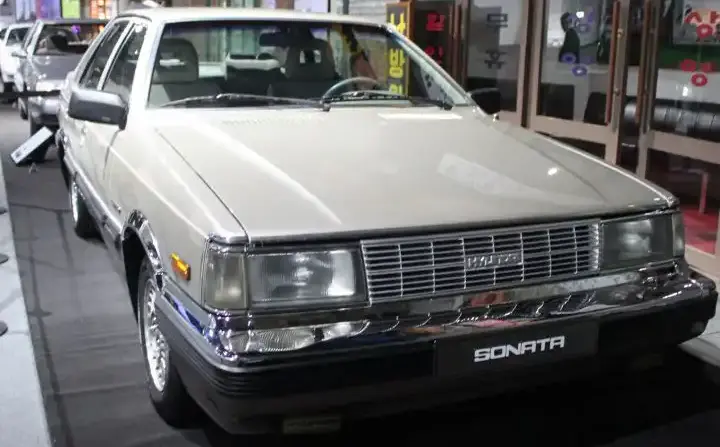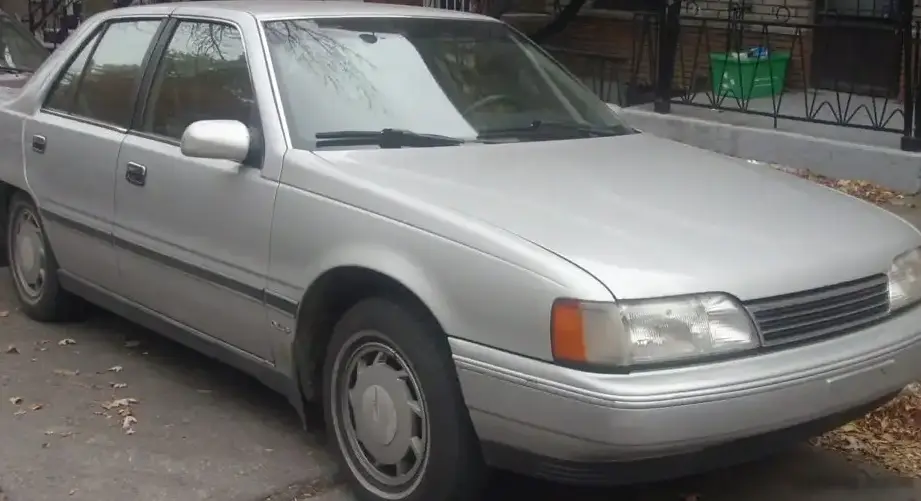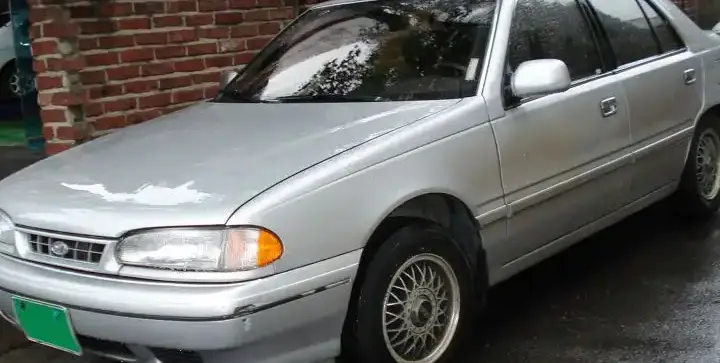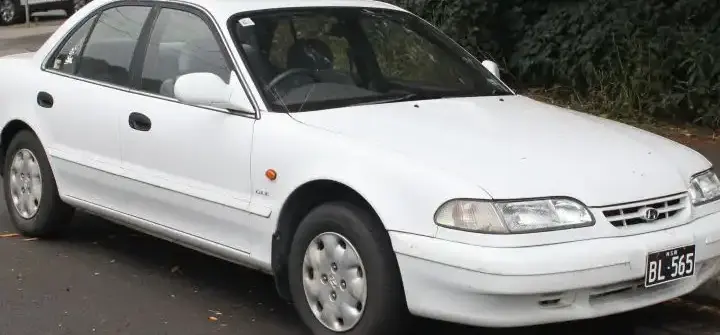
The Hyundai Sonata III (Y3) 3.0i GLS V6 Automatic, produced between 1993 and 1996, represented a significant step forward for Hyundai in the mid-size sedan segment. Positioned as a near-premium offering within the Y3 generation (1988-1993), this variant featured a 3.0-liter V6 engine paired with a four-speed automatic transmission. It aimed to provide a more refined and powerful alternative to the base four-cylinder models, targeting buyers seeking a comfortable and well-equipped family sedan. The Y3 Sonata was crucial in establishing Hyundai’s presence in the North American market, offering a compelling value proposition against established Japanese and American competitors.
Technical Specifications
| Brand | Hyundai |
| Model | Sonata |
| Generation | Sonata III (Y3) |
| Type (Engine) | 3.0i GLS V6 (146 Hp) Automatic |
| Start of production | 1993 |
| End of production | 1996 |
| Powertrain Architecture | Internal Combustion engine |
| Body type | Sedan |
| Seats | 5 |
| Doors | 4 |
| Fuel consumption (urban) | 12.5 l/100 km (18.8 US mpg, 22.6 UK mpg, 8 km/l) |
| Fuel consumption (extra urban) | 7.7 l/100 km (30.5 US mpg, 36.7 UK mpg, 13 km/l) |
| Fuel consumption (combined) | 10 l/100 km (23.5 US mpg, 28.2 UK mpg, 10 km/l) |
| Fuel Type | Petrol (Gasoline) |
| Acceleration 0 – 100 km/h | 10.1 sec |
| Acceleration 0 – 62 mph | 10.1 sec |
| Acceleration 0 – 60 mph | 9.6 sec |
| Maximum speed | 200 km/h (124.27 mph) |
| Emission standard | Euro 1 |
| Weight-to-power ratio | 8.7 kg/Hp, 115.2 Hp/tonne |
| Weight-to-torque ratio | 5.5 kg/Nm, 182.3 Nm/tonne |
| Power | 146 Hp @ 5000 rpm |
| Power per litre | 49.1 Hp/l |
| Torque | 231 Nm @ 2400 rpm (170.38 lb.-ft. @ 2400 rpm) |
| Engine layout | Front, Transverse |
| Engine Model/Code | Sigma / G6AT |
| Engine displacement | 2972 cm3 (181.36 cu. in.) |
| Number of cylinders | 6 |
| Engine configuration | V-engine |
| Cylinder Bore | 91.1 mm (3.59 in.) |
| Piston Stroke | 76 mm (2.99 in.) |
| Compression ratio | 8.9:1 |
| Number of valves per cylinder | 2 |
| Fuel injection system | Multi-port manifold injection |
| Engine aspiration | Naturally aspirated engine |
| Valvetrain | SOHC |
| Engine oil capacity | 4 l (4.23 US qt | 3.52 UK qt) |
| Coolant capacity | 8.6 l (9.09 US qt | 7.57 UK qt) |
| Kerb Weight | 1267 kg (2793.26 lbs.) |
| Max. weight | 1800 kg (3968.32 lbs.) |
| Max load | 533 kg (1175.06 lbs.) |
| Trunk (boot) space – minimum | 373 l (13.17 cu. ft.) |
| Fuel tank capacity | 65 l (17.17 US gal | 14.3 UK gal) |
| Max. roof load | 70 kg (154.32 lbs.) |
| Permitted trailer load with brakes (12%) | 1500 kg (3306.93 lbs.) |
| Permitted trailer load without brakes | 500 kg (1102.31 lbs.) |
| Length | 4700 mm (185.04 in.) |
| Width | 1770 mm (69.69 in.) |
| Height | 1405 mm (55.31 in.) |
| Wheelbase | 2700 mm (106.3 in.) |
| Front track | 1515 mm (59.65 in.) |
| Rear (Back) track | 1500 mm (59.06 in.) |
| Drag coefficient (Cd) | 0.35 |
| Minimum turning circle | 10.5 m (34.45 ft.) |
| Drivetrain Architecture | Front wheel drive |
| Number of gears and type of gearbox | 4 gears, automatic transmission |
| Front suspension | Independent, type McPherson with coil spring and anti-roll bar |
| Rear suspension | Independent multi-link suspension |
| Front brakes | Ventilated discs |
| Rear brakes | Disc |
| Assisting systems | ABS (Anti-lock braking system) |
| Steering type | Steering rack and pinion |
| Power steering | Hydraulic Steering |
| Tires size | 205/60 R15 |
| Wheel rims size | 15 |
Powertrain & Engine Architecture
The heart of the 3.0i GLS was the Hyundai Sigma engine, internally designated G6AT. This 2.972-liter (181.36 cubic inches) V6 engine featured a single overhead camshaft (SOHC) valvetrain with two valves per cylinder. It utilized a multi-port fuel injection system, delivering fuel directly into the intake ports. The engine produced 146 horsepower at 5000 rpm and 231 Nm (170.38 lb-ft) of torque at 2400 rpm. The four-speed automatic transmission was a typical torque-converter type, offering smooth but not particularly sporty shifts. The transmission was chosen to prioritize comfort and ease of use, aligning with the GLS trim’s focus on a refined driving experience. The engine’s architecture was relatively conventional for the time, prioritizing reliability and affordability over cutting-edge performance.
Driving Characteristics
The 3.0i GLS Automatic offered a noticeable step up in performance compared to the base 2.0-liter four-cylinder Sonatas. While not a sports sedan, the V6 provided adequate power for comfortable highway cruising and passing maneuvers. Acceleration from 0-60 mph took around 9.6 seconds, and top speed was rated at 200 km/h (124 mph). The automatic transmission, while smooth, did detract somewhat from the engine’s potential, resulting in slightly slower acceleration times than the available five-speed manual. The gear ratios were tuned for fuel efficiency and relaxed cruising, rather than aggressive acceleration. Compared to the later, more powerful V6 options in subsequent Sonata generations, this 3.0-liter engine felt less refined and offered less immediate throttle response.
Equipment & Trim Levels
The GLS trim level represented a mid-range offering in the Sonata III lineup. Standard features typically included air conditioning, power windows and locks, a basic sound system, and cloth upholstery. The interior was generally functional and comfortable, though materials were not as luxurious as those found in some competing models. Optional extras included a sunroof, upgraded sound system, and alloy wheels. The GLS aimed to strike a balance between affordability and features, appealing to a broad range of buyers. The dashboard layout was straightforward and easy to use, with clearly labeled controls.
Chassis & Braking
The Sonata III utilized an independent suspension setup, with McPherson struts at the front and a multi-link system at the rear. This provided a reasonably comfortable ride, though handling was not particularly sporty. The front brakes were ventilated discs, while the rear brakes were solid discs. Anti-lock braking system (ABS) was included as standard equipment, enhancing safety. The chassis was designed to prioritize ride comfort and noise isolation, rather than sharp handling. The steering was a rack-and-pinion system with hydraulic power assistance, providing light and easy steering feel.
Market Reception & Comparison
The 3.0i GLS V6 Automatic Sonata was generally well-received by critics as a solid and reliable family sedan. It offered a good value for the money, providing a spacious interior, comfortable ride, and a reasonably powerful engine at a competitive price point. However, some reviewers noted that the automatic transmission dulled the engine’s performance and that the interior materials were not as refined as those found in some Japanese competitors. Fuel economy was average for the class, with combined fuel consumption around 10 l/100 km (23.5 US mpg). Compared to the four-cylinder Sonatas, the V6 offered significantly more power, but at the cost of slightly lower fuel economy.
Legacy
The Hyundai Sonata III 3.0i GLS V6 Automatic, while not a particularly rare or collectible vehicle today, remains a testament to Hyundai’s early efforts to establish itself in the global automotive market. The G6AT engine proved to be relatively reliable, and many examples are still on the road today. However, age and mileage can lead to issues with sensors, fuel injectors, and the automatic transmission. The car’s affordability and simple mechanical design make it relatively easy to maintain and repair. In the used car market, these Sonatas are typically valued for their low price and practicality, offering a budget-friendly option for those seeking a reliable and spacious sedan.