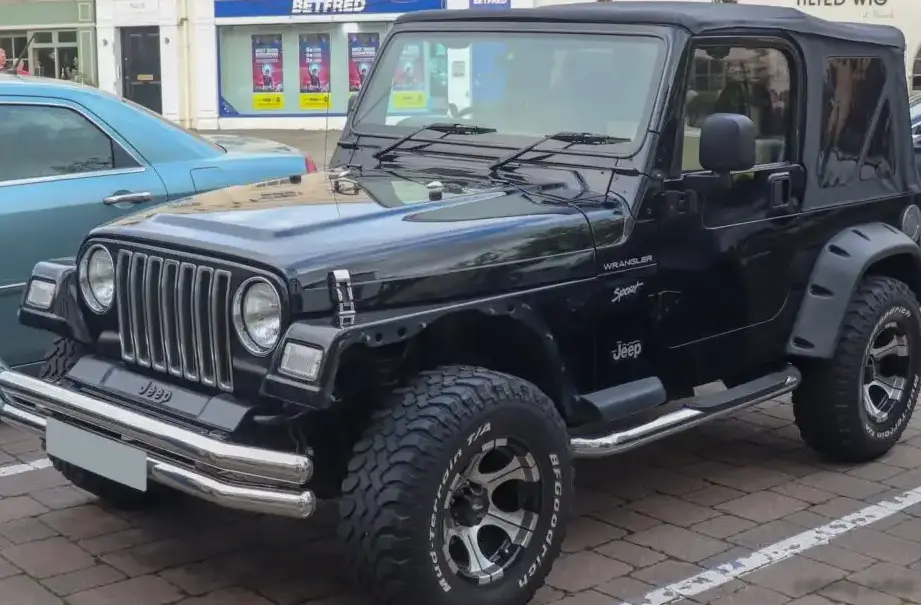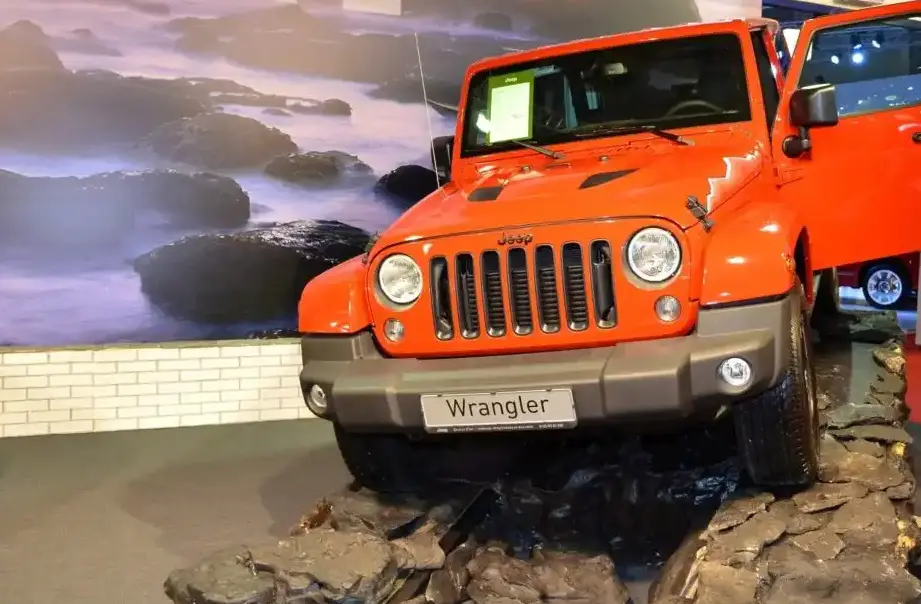
The Jeep Wrangler JK Rubicon 3.8i V6 4×4 Automatic, produced from 2007 to 2009, represents a significant evolution in the iconic Wrangler lineage. Falling within the third generation (JK) of the Wrangler, this variant occupied a key position as a capable and relatively accessible entry point into the Rubicon sub-trim, known for its enhanced off-road prowess. It served as a bridge between the base Wrangler models and the more powerful, later introduced 3.8L and 3.6L engine options. The JK platform brought a much-needed modernization to the Wrangler, improving on-road refinement and interior comfort while retaining its legendary off-road capabilities.
Technical Specifications
| Brand | Jeep |
| Model | Wrangler |
| Generation | Wrangler III (JK) |
| Type | Rubicon 3.8i V6 (196 Hp) 4×4 Automatic |
| Start of production | 2007 |
| End of production | 2009 |
| Powertrain Architecture | Internal Combustion engine |
| Body type | Off-road vehicle |
| Seats | 4 |
| Doors | 2 |
| Fuel consumption (urban) | 16.4 l/100 km (14.3 US mpg, 17.2 UK mpg, 6.1 km/l) |
| Fuel consumption (extra urban) | 8.8 l/100 km (26.7 US mpg, 32.1 UK mpg, 11.4 km/l) |
| Fuel consumption (combined) | 11.6 l/100 km (20.3 US mpg, 24.4 UK mpg, 8.6 km/l) |
| CO2 emissions | 275 g/km |
| Fuel Type | Petrol (Gasoline) |
| Acceleration 0 – 100 km/h | 11.1 sec |
| Acceleration 0 – 62 mph | 11.1 sec |
| Acceleration 0 – 60 mph | 10.5 sec |
| Maximum speed | 180 km/h (111.85 mph) |
| Emission standard | Euro 4 |
| Weight-to-power ratio | 8.9 kg/Hp, 112.6 Hp/tonne |
| Weight-to-torque ratio | 5.5 kg/Nm, 181 Nm/tonne |
| Power | 196 Hp @ 5000 rpm |
| Power per litre | 51.9 Hp/l |
| Torque | 315 Nm @ 4000 rpm (232.33 lb.-ft. @ 4000 rpm) |
| Maximum engine speed | 5600 rpm |
| Engine layout | Front, Longitudinal |
| Engine Model/Code | EGT |
| Engine displacement | 3778 cm3 (230.55 cu. in.) |
| Number of cylinders | 6 |
| Engine configuration | V-engine |
| Cylinder Bore | 96 mm (3.78 in.) |
| Piston Stroke | 87 mm (3.43 in.) |
| Compression ratio | 9.6:1 |
| Number of valves per cylinder | 2 |
| Fuel injection system | Multi-port manifold injection |
| Engine aspiration | Naturally aspirated engine |
| Valvetrain | OHV |
| Engine oil capacity | 5.7 l (6.02 US qt | 5.02 UK qt) |
| Coolant | 12 l (12.68 US qt | 10.56 UK qt) |
| Kerb Weight | 1740 kg (3836.04 lbs.) |
| Max. weight | 2220 kg (4894.26 lbs.) |
| Max load | 480 kg (1058.22 lbs.) |
| Trunk (boot) space – minimum | 142 l (5.01 cu. ft.) |
| Trunk (boot) space – maximum | 430 l (15.19 cu. ft.) |
| Fuel tank capacity | 70 l (18.49 US gal | 15.4 UK gal) |
| Permitted trailer load with brakes (12%) | 2000 kg (4409.25 lbs.) |
| Permitted trailer load without brakes | 750 kg (1653.47 lbs.) |
| Length | 4223 mm (166.26 in.) |
| Width | 1873 mm (73.74 in.) |
| Height | 1800 mm (70.87 in.) |
| Wheelbase | 2424 mm (95.43 in.) |
| Front track | 1572 mm (61.89 in.) |
| Rear (Back) track | 1572 mm (61.89 in.) |
| Ride height (ground clearance) | 261 mm (10.28 in.) |
| Drag coefficient (Cd) | 0.495 |
| Minimum turning circle (turning diameter) | 10.36 m (33.99 ft.) |
| Approach angle | 38.1° |
| Departure angle | 31.3° |
| Ramp-over (brakeover) angle | 25.9° |
| Drive wheel | All wheel drive (4×4) |
| Number of gears and type of gearbox | 4 gears, automatic transmission |
| Front suspension | Rigid axle suspension |
| Rear suspension | Rigid axle suspension |
| Front brakes | Ventilated discs |
| Rear brakes | Disc |
| Assisting systems | ABS (Anti-lock braking system) |
| Tires size | 255/75 R17 |
| Wheel rims size | 17 |
Powertrain & Engine Architecture
The JK Rubicon 3.8i V6 utilized the Chrysler EGT engine, a 3.8-liter (230.55 cubic inches) naturally aspirated V6. This engine, a staple in Chrysler’s lineup for years, featured a 90-degree V-angle and an overhead valve (OHV) valvetrain. Fuel delivery was managed by a multi-port fuel injection system. The engine produced 196 horsepower at 5000 rpm and 232 lb-ft of torque at 4000 rpm. The automatic transmission was a 4-speed unit, known for its durability but not its efficiency compared to later transmissions. This combination, while providing adequate power for most situations, wasn’t known for blistering acceleration. The engine’s longitudinal mounting and the 4×4 drivetrain contributed to the Wrangler’s robust off-road capability.
Driving Characteristics
The 3.8L V6 with the 4-speed automatic delivered a driving experience focused on usability rather than outright performance. Acceleration was adequate, with a 0-60 mph time around 10.5 seconds, but the engine felt strained when pushed hard. The automatic transmission’s gear ratios were geared more towards low-end torque for off-roading, resulting in a less responsive feel on the highway. Compared to the manual transmission versions of the same engine, the automatic felt noticeably slower. Higher-output engines, like those introduced in later JK models, offered significantly improved performance. However, the automatic provided a more relaxed driving experience, particularly in urban environments and during technical off-road maneuvers.
Equipment & Trim Levels
The Rubicon trim, even in this early JK iteration, came standard with a substantial list of off-road focused equipment. This included heavy-duty axles, a transfer case with a low-range gear, electronic front and rear locking differentials, and rock rails. Interior features included cloth upholstery, air conditioning, and a basic audio system. Optional extras included power windows and locks, upgraded audio systems, and a premium interior package. The Rubicon’s interior, while functional, was relatively spartan compared to more luxurious SUVs of the time, prioritizing durability and ease of cleaning over refinement.
Chassis & Braking
The JK Rubicon featured a body-on-frame construction, providing a robust foundation for off-road use. The suspension utilized a solid front and rear axle setup, offering excellent articulation and durability. Braking duties were handled by ventilated discs at the front and solid discs at the rear. ABS (Anti-lock Braking System) was standard. The relatively high ground clearance (10.28 inches) and aggressive approach, departure, and breakover angles were key to the Rubicon’s off-road prowess. The chassis was designed to withstand significant torsional stress, essential for navigating challenging terrain.
Market Reception & Comparison
The JK Rubicon, including the 3.8i V6 Automatic variant, was generally well-received by automotive critics. It was praised for its significantly improved on-road manners compared to previous Wrangler generations, while still maintaining its legendary off-road capability. The 3.8L engine and 4-speed automatic were seen as adequate but not exceptional. Fuel economy was a common criticism, with combined figures around 20.3 US mpg. Compared to other trims in the JK lineup, the Rubicon commanded a premium price due to its enhanced off-road features. The base Wrangler models offered better fuel economy, while the later 3.6L engine provided superior performance.
Legacy
The 3.8L V6 engine, while eventually superseded by the more modern 3.6L Pentastar V6, proved to be a relatively reliable powertrain. The 4-speed automatic transmission, while not as efficient as later designs, is known for its durability. Today, JK Rubicons with the 3.8L engine are sought after by enthusiasts who appreciate their simplicity and affordability. Common maintenance items include regular oil changes, coolant flushes, and inspection of the suspension components. While not the fastest or most fuel-efficient Wrangler variant, the JK Rubicon 3.8i V6 4×4 Automatic remains a capable and iconic off-road vehicle, representing a pivotal moment in the Wrangler’s evolution.