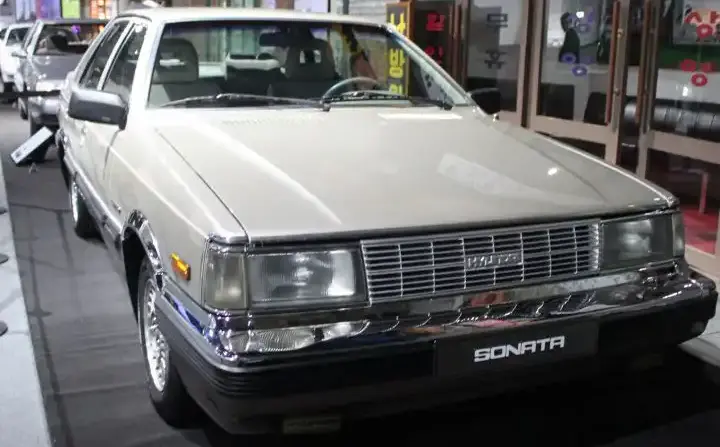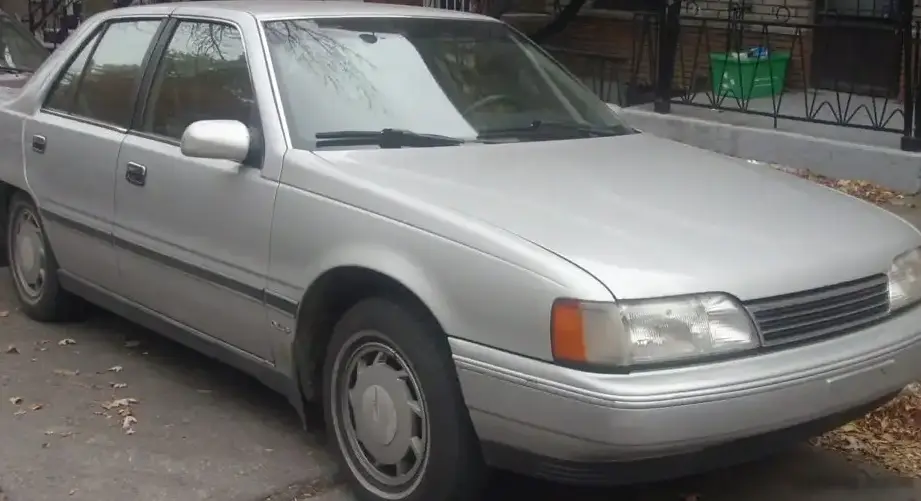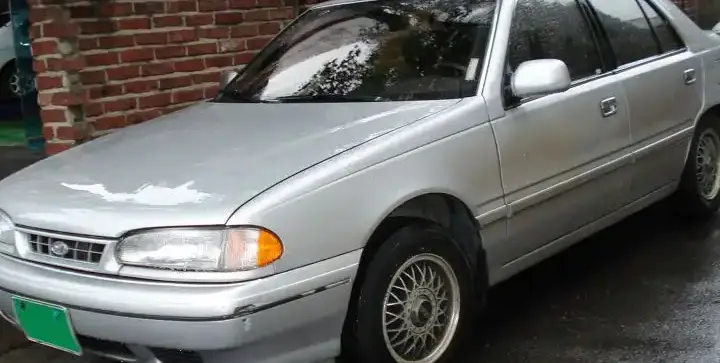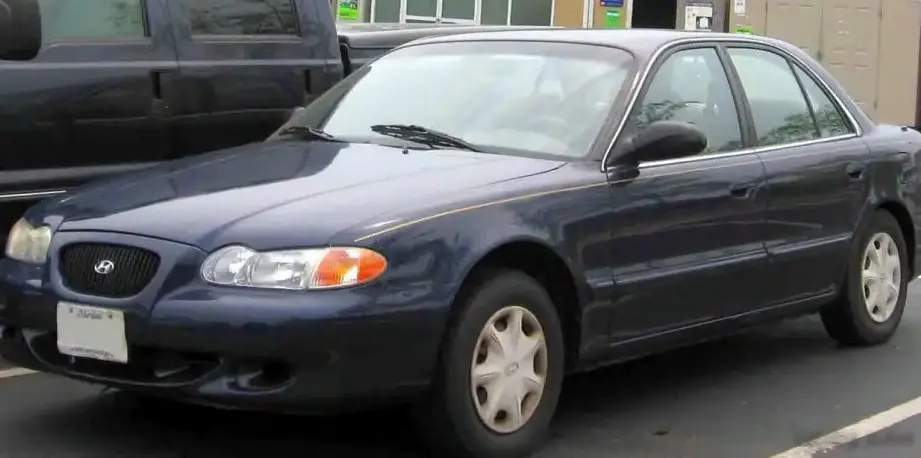
The Hyundai Sonata III (Y3), particularly the facelifted version introduced in 1996, represented a significant step forward for the South Korean automaker in establishing a presence in global markets. Produced from 1996 to 1998, the Y3 Sonata aimed to offer a compelling blend of affordability, practicality, and increasingly, modern features. Within the Sonata III range, the 1.8-liter (86 horsepower) variant with an automatic transmission occupied a crucial position as the entry-level offering, targeting budget-conscious buyers and those prioritizing ease of driving over outright performance. This model was primarily sold in Asian and some European markets, and saw limited import into the United States.
Technical Specifications
| Brand | Hyundai |
| Model | Sonata |
| Generation | Sonata III (Y3, facelift 1996) |
| Type (Engine) | 1.8 (86 Hp) |
| Start of production | 1996 |
| End of production | 1998 |
| Powertrain Architecture | Internal Combustion engine |
| Body type | Sedan |
| Seats | 5 |
| Doors | 4 |
| Fuel Type | Petrol (Gasoline) |
| Acceleration 0 – 100 km/h | 11.9 sec |
| Acceleration 0 – 62 mph | 11.9 sec |
| Acceleration 0 – 60 mph | 11.3 sec |
| Maximum speed | 170 km/h (105.63 mph) |
| Emission standard | Euro 2 |
| Power | 86 Hp @ 5000 rpm |
| Power per litre | 47.9 Hp/l |
| Torque | 132 Nm @ 2400 rpm (97.36 lb.-ft. @ 2400 rpm) |
| Engine layout | Front, Transverse |
| Engine displacement | 1796 cm3 (109.6 cu. in.) |
| Number of cylinders | 4 |
| Engine configuration | Inline |
| Cylinder Bore | 80.6 mm (3.17 in.) |
| Piston Stroke | 88 mm (3.46 in.) |
| Compression ratio | 8.9:1 |
| Number of valves per cylinder | 2 |
| Fuel injection system | Multi-port manifold injection |
| Engine aspiration | Naturally aspirated engine |
| Valvetrain | SOHC |
| Trunk (boot) space – minimum | 375 l (13.24 cu. ft.) |
| Fuel tank capacity | 65 l (17.17 US gal | 14.3 UK gal) |
| Max. roof load | 70 kg (154.32 lbs.) |
| Length | 4700 mm (185.04 in.) |
| Width | 1770 mm (69.69 in.) |
| Height | 1405 mm (55.31 in.) |
| Wheelbase | 2700 mm (106.3 in.) |
| Front track | 1520 mm (59.84 in.) |
| Rear (Back) track | 1510 mm (59.45 in.) |
| Ride height (ground clearance) | 170 mm (6.69 in.) |
| Drag coefficient (Cd) | 0.35 |
| Minimum turning circle (turning diameter) | 10.5 m (34.45 ft.) |
| Drivetrain Architecture | The Internal combustion engine (ICE) drives the front wheels of the vehicle. |
| Drive wheel | Front wheel drive |
| Number of gears and type of gearbox | 5 gears, automatic transmission |
| Front suspension | Independent, type McPherson with coil spring and anti-roll bar |
| Rear suspension | Independent multi-link suspension |
| Front brakes | Ventilated discs |
| Rear brakes | Drum |
| Assisting systems | ABS (Anti-lock braking system) |
| Steering type | Steering rack and pinion |
| Power steering | Hydraulic Steering |
| Tires size | 195/70 R14 |
| Wheel rims size | 14 |
Powertrain & Engine Architecture
The heart of this Sonata variant was the Hyundai G4CS 1.8-liter inline-four cylinder engine. This engine, a naturally aspirated unit, utilized a single overhead camshaft (SOHC) valvetrain with two valves per cylinder. Fuel delivery was managed by a multi-port fuel injection system, a common setup for the time, contributing to improved fuel efficiency and smoother operation compared to earlier carburetor-based systems. The engine produced 86 horsepower at 5000 rpm and 132 Nm (97.36 lb-ft) of torque at 2400 rpm. The automatic transmission was typically a four-speed unit, designed for comfortable and convenient driving. While not known for its sporting character, the transmission was geared for reasonable acceleration and highway cruising.
Driving Characteristics
The 1.8L automatic Sonata offered a comfortable, if not particularly exciting, driving experience. Acceleration from a standstill to 60 mph took around 11.3 seconds, making it slower than the manual transmission versions or those equipped with the larger 2.0-liter engine. The automatic transmission’s gear ratios were optimized for fuel economy and smooth shifts, rather than aggressive performance. The engine felt adequate for everyday driving, providing sufficient power for merging onto highways and navigating city streets. However, overtaking maneuvers required careful planning, and the engine could feel strained when fully loaded or climbing steep hills. The steering was light and easy, making it maneuverable in urban environments, but lacked the feedback desired by more enthusiastic drivers.
Equipment & Trim Levels
The 1.8-liter automatic Sonata typically came with a fairly basic level of equipment, reflecting its position as the entry-level model. Standard features generally included power steering, air conditioning, and a basic audio system. Interior upholstery was typically cloth, and the dashboard featured a functional, if somewhat plain, design. Optional extras could include power windows, central locking, and an upgraded audio system. The trim level often denoted the availability of these optional features, with higher trims offering more comfort and convenience items.
Chassis & Braking
The Sonata III utilized a front-wheel-drive layout with an independent McPherson strut suspension in the front and an independent multi-link suspension in the rear. This suspension setup provided a reasonably comfortable ride, absorbing bumps and imperfections in the road surface effectively. Front brakes were ventilated discs, offering adequate stopping power, while the rear brakes were drums, a cost-saving measure common in this class of vehicle. Anti-lock Braking System (ABS) was often included as standard equipment, enhancing safety by preventing wheel lockup during hard braking.
Market Reception & Comparison
The 1.8-liter automatic Sonata was generally well-received as an affordable and reliable family sedan. Critics acknowledged its practicality and comfortable ride, but often noted its lack of performance compared to competitors or higher-trim Sonata models. Compared to the 2.0-liter versions, the 1.8L offered better fuel economy but significantly less power. The manual transmission variants provided a more engaging driving experience and slightly improved acceleration. The Sonata’s main competitors in this segment included the Toyota Corolla, Honda Civic, and Nissan Sentra, all of which offered similar levels of practicality and affordability.
Legacy
The Hyundai Sonata III 1.8L automatic, while not a performance icon, played a vital role in establishing Hyundai’s reputation for building reliable and affordable vehicles. The G4CS engine proved to be durable and relatively easy to maintain, contributing to the car’s longevity. Today, these Sonatas are relatively common in the used car market, often prized for their low cost and simple mechanicals. While finding parts may become increasingly challenging over time, the engine’s robust design and the car’s overall simplicity make it a viable option for budget-conscious buyers seeking a dependable and economical mode of transportation. The 1.8L automatic variant remains a testament to Hyundai’s early efforts to compete in the global automotive landscape.