
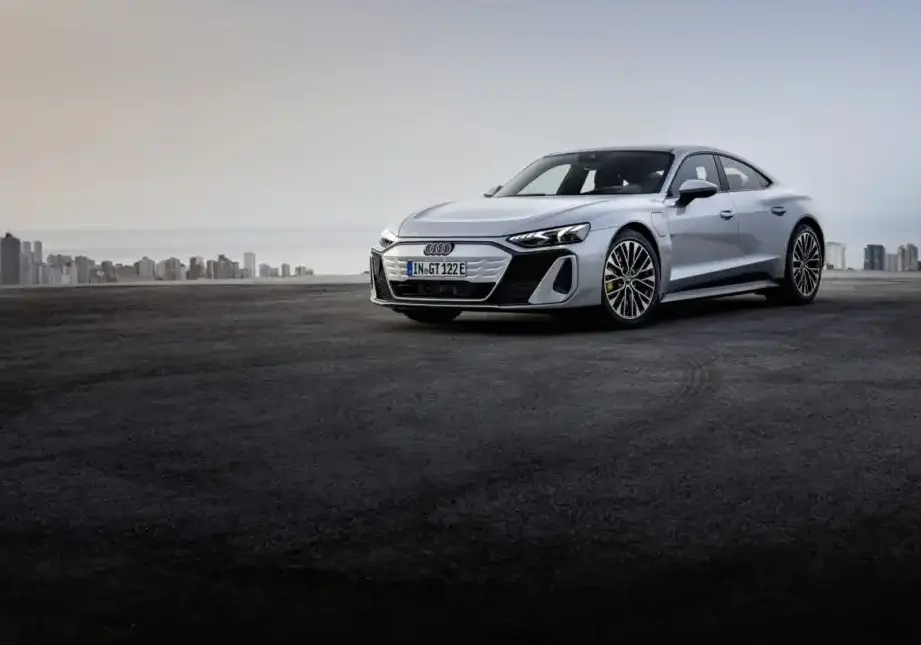
The Audi S e-tron GT 105 kWh quattro, launched in June 2024, represents Audi’s high-performance foray into the all-electric grand touring segment. Built on the J1 platform shared with the Porsche Taycan, the S e-tron GT distinguishes itself through a blend of blistering acceleration, sophisticated technology, and luxurious appointments. It serves as the performance-oriented variant within the e-tron GT lineup, positioned above the standard e-tron GT and below the even more focused RS e-tron GT (when available). This model aims to deliver a compelling alternative to traditional gasoline-powered grand tourers, appealing to drivers seeking both environmental responsibility and exhilarating performance.
Technical Specifications
| Brand | Audi |
| Model | S e-tron GT |
| Generation | S e-tron GT |
| Type (Engine) | 105 kWh (679 Hp) quattro |
| Start of production | June, 2024 |
| Powertrain Architecture | BEV (Electric Vehicle) |
| Body type | Grand Tourer |
| Seats | 5 |
| Doors | 4 |
| Fuel Type | Electricity |
| Acceleration 0 – 100 km/h | 3.4 sec |
| Acceleration 0 – 62 mph | 3.4 sec |
| Acceleration 0 – 60 mph | 3.2 sec |
| Maximum speed | 245 km/h (152.24 mph) |
| Weight-to-power ratio | 3.4 kg/Hp, 293.9 Hp/tonne |
| Weight-to-torque ratio | 3.1 kg/Nm, 320.3 Nm/tonne |
| Gross battery capacity | 105 kWh |
| Net (usable) battery capacity | 97 kWh |
| Battery voltage | 800 V |
| Battery technology | Lithium-ion (Li-Ion) |
| Battery weight | 625 kg (1377.89 lbs) |
| Battery location | Below the floor |
| Recuperation output | 400 kW |
| All-electric range (WLTP) | 565-609 km (351.07 – 378.42 mi) |
| Average Energy consumption (WLTP) | 18-19.7 kWh/100 km (28.97 – 31.7 kWh/100 mi) |
| MPGe | 116 – 106 |
| km/kWh | 5.6 – 5.1 |
| mi/kWh | 3.5 – 3.2 |
| Kerb Weight | 2310 kg (5092.68 lbs) |
| Max. weight | 2840 kg (6261.13 lbs) |
| Max load | 530 kg (1168.45 lbs) |
| Trunk (boot) space – minimum | 405 l (14.3 cu. ft) |
| Max. roof load | 75 kg (165.35 lbs) |
| Length | 4997 mm (196.73 in) |
| Width | 1964 mm (77.32 in) |
| Width including mirrors | 2158 mm (84.96 in) |
| Height | 1369-1402 mm (53.9 – 55.2 in) |
| Wheelbase | 2900 mm (114.17 in) |
| Front track | 1702 mm (67.01 in) |
| Rear (Back) track | 1667 mm (65.63 in) |
| Drag coefficient (Cd) | 0.24 |
| Minimum turning circle | 11.6 m (38.06 ft) |
| Approach angle | 12.1° |
| Departure angle | 14.5° |
| Drivetrain Architecture | One electric motor drives the front wheels, one electric motor drives the rear wheels. |
| Drive wheel | All wheel drive (4×4) |
| Number of gears | 2 gears, automatic transmission |
| Front suspension | Double wishbone, Air suspension |
| Rear suspension | Independent multi-link suspension, Air suspension |
| Front brakes | Ventilated discs, 390 mm |
| Rear brakes | Ventilated discs, 358 mm |
| Front tires | 245/45 R20; 265/35 R21 |
| Rear tires | 285/40 R20; 305/30 R21 |
Powertrain & Engine Architecture
The S e-tron GT utilizes a dual-motor, all-wheel-drive (quattro) powertrain. The front motor produces 239 hp and 305 Nm (224.96 lb-ft) of torque, while the rear motor generates a substantial 564 hp and 590 Nm (435.16 lb-ft) of torque. Combined, the system delivers a total output of 679 hp and 740 Nm (545.8 lb-ft). Both motors are permanently excited synchronous motors, chosen for their efficiency and power density. The 105 kWh battery pack, with 97 kWh usable capacity, operates at a high 800-volt architecture, enabling faster charging times – capable of adding approximately 180 miles of range in around 22.5 minutes with a compatible DC fast charger. The two-speed automatic transmission on the rear axle provides both strong acceleration from a standstill and efficient high-speed cruising. The transmission automatically selects the optimal gear based on driving conditions.
Driving Characteristics
The S e-tron GT delivers exceptionally quick acceleration, achieving 0-60 mph in approximately 3.2 seconds. The instant torque characteristic of electric motors provides immediate responsiveness. The dual-motor setup and sophisticated torque vectoring system contribute to impressive handling and stability, even under hard acceleration. Compared to the standard e-tron GT, the S model offers a noticeably more aggressive power delivery and a more engaging driving experience. While the standard model prioritizes range and comfort, the S e-tron GT leans towards performance. The air suspension provides a comfortable ride quality, while also allowing for a lower ride height for improved aerodynamics and handling. The steering is precise and well-weighted, providing good feedback to the driver.
Equipment & Trim Levels
The S e-tron GT comes standard with a comprehensive suite of features, including a panoramic sunroof, adaptive air suspension, premium leather upholstery, and a 12.3-inch touchscreen infotainment system with Audi’s MMI interface. Standard safety features include Audi pre sense basic, side assist, and lane departure warning. Optional extras include carbon fiber trim packages, massaging seats, a Bang & Olufsen sound system, and a head-up display. Interior color options typically include black, grey, and various two-tone combinations. The dashboard layout is modern and minimalist, emphasizing the large central touchscreen and digital instrument cluster.
Chassis & Braking
The S e-tron GT features a double-wishbone front suspension and an independent multi-link rear suspension, both incorporating air suspension with adaptive damping control. This system allows for adjustable ride height and damping characteristics, optimizing comfort and handling. Braking duties are handled by ventilated disc brakes on all four wheels, with 390mm rotors up front and 358mm rotors at the rear. The regenerative braking system captures energy during deceleration, increasing efficiency and extending range. Available options include carbon ceramic brakes for even greater stopping power and fade resistance. The car also features electromechanical power steering with a variable ratio for optimized steering feel.
Market Reception & Comparison
The Audi S e-tron GT has been generally well-received by automotive critics, praised for its performance, handling, and luxurious interior. Comparisons are frequently drawn to the Porsche Taycan, given their shared platform. While the Taycan is often considered the more focused driver’s car, the S e-tron GT offers a more comfortable and refined experience. Fuel economy, expressed as MPGe, ranges from 106 to 116, depending on driving conditions. Reliability reports are still emerging, given the relatively recent launch, but Audi’s reputation for build quality suggests a high level of long-term dependability. Compared to the standard e-tron GT, the S model commands a premium price, reflecting its increased performance and enhanced features.
Legacy
The Audi S e-tron GT represents a significant step forward in Audi’s electrification strategy. Its combination of performance, luxury, and technology positions it as a key competitor in the growing electric grand touring segment. The 800-volt charging architecture and advanced battery technology demonstrate Audi’s commitment to innovation. As the electric vehicle market matures, the S e-tron GT is likely to be remembered as a pivotal model that helped to redefine the expectations for electric performance and luxury. Its long-term reliability will be a key factor in its lasting legacy, and early indications suggest it will hold its value well in the used car market.
