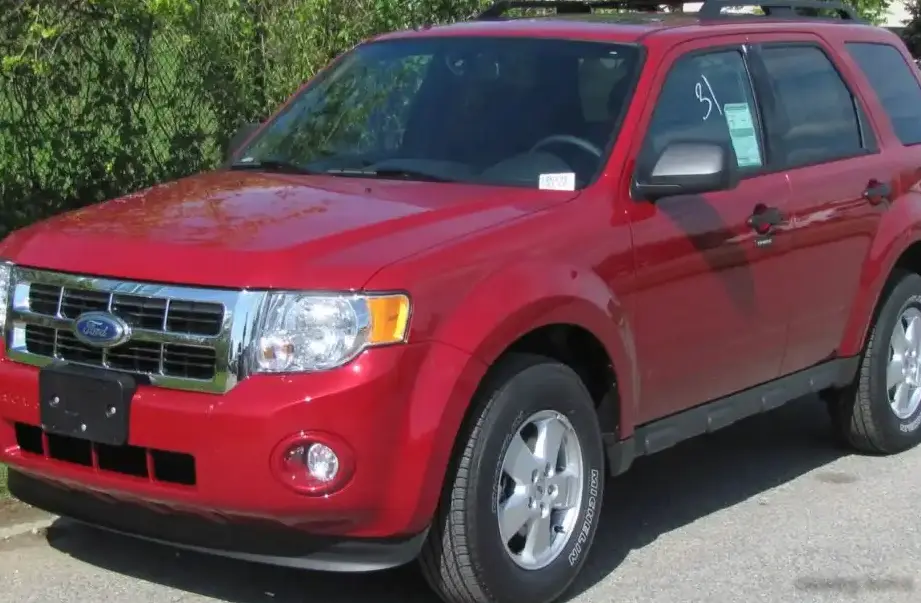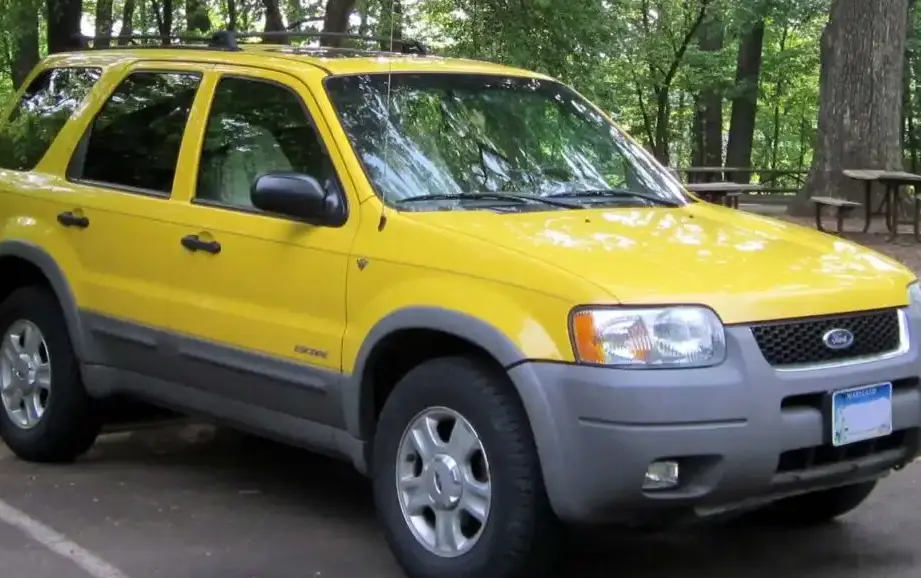
The Ford Escape, launched in 2000, represented Ford’s entry into the rapidly growing compact SUV segment. The first generation Escape (2001-2007, though 2000 models were pre-sold) was a significant vehicle for the brand, offering a more affordable and fuel-efficient alternative to larger, truck-based SUVs. The 2.0L i 16V XLS 4WD variant, producing 129 horsepower, occupied a middle ground within the Escape lineup, positioned as a practical and capable all-wheel-drive option for buyers prioritizing versatility over outright performance. It was built on the Ford Focus C170 platform, sharing many components with its smaller sibling.
Technical Specifications
| Brand | Ford |
| Model | Escape |
| Generation | Escape I |
| Type | 2.0 i 16V XLS 4WD (129 Hp) |
| Start of production | 2000 |
| End of production | 2007 |
| Powertrain Architecture | Internal Combustion engine |
| Body type | SUV |
| Seats | 5 |
| Doors | 5 |
| Fuel consumption (urban) | 10.7 l/100 km (22 US mpg) |
| Fuel consumption (extra urban) | 9.4 l/100 km (25 US mpg) |
| Fuel Type | Petrol (Gasoline) |
| Maximum speed | 165 km/h (102.53 mph) |
| Weight-to-power ratio | 11.1 kg/Hp |
| Weight-to-torque ratio | 7.8 kg/Nm |
| Power | 129 Hp @ 5400 rpm |
| Power per litre | 64.9 Hp/l |
| Torque | 183 Nm @ 4500 rpm (134.97 lb.-ft. @ 4500 rpm) |
| Engine layout | Front, Transverse |
| Engine displacement | 1988 cm3 (121.32 cu. in.) |
| Number of cylinders | 4 |
| Engine configuration | Inline |
| Cylinder Bore | 84.8 mm (3.34 in.) |
| Piston Stroke | 88 mm (3.46 in.) |
| Compression ratio | 9.6:1 |
| Number of valves per cylinder | 4 |
| Fuel injection system | Multi-port manifold injection |
| Engine aspiration | Naturally aspirated |
| Engine oil capacity | 4.25 l (4.49 US qt | 3.74 UK qt) |
| Coolant capacity | 5 l (5.28 US qt | 4.4 UK qt) |
| Kerb Weight | 1435 kg (3163.63 lbs.) |
| Max. weight | 1942 kg (4281.38 lbs.) |
| Max load | 507 kg (1117.74 lbs.) |
| Trunk (boot) space – minimum | 934 l (32.98 cu. ft.) |
| Trunk (boot) space – maximum | 1835 l (64.8 cu. ft.) |
| Fuel tank capacity | 58 l (15.32 US gal | 12.76 UK gal) |
| Length | 4394 mm (172.99 in.) |
| Width | 1780 mm (70.08 in.) |
| Height | 1702 mm (67.01 in.) |
| Wheelbase | 2619 mm (103.11 in.) |
| Front track | 1554 mm (61.18 in.) |
| Rear track | 1550 mm (61.02 in.) |
| Drive wheel | All wheel drive (4×4) |
| Number of gears | 5 |
| Gearbox type | Manual transmission |
| Front suspension | Coil spring |
| Rear suspension | Coil spring |
| Front brakes | Ventilated discs |
| Rear brakes | Drum |
| Assisting systems | ABS (Anti-lock braking system) |
| Steering type | Steering rack and pinion |
| Power steering | Hydraulic |
| Tires size | 225/70 R15 |
Powertrain & Engine Architecture
The 2.0L inline-four engine, designated as the Zetec-E, was a mainstay of the Ford lineup during this period, also found in the Ford Focus and other models. This engine utilized a single overhead camshaft (SOHC) design with four valves per cylinder, contributing to its relatively efficient operation. The 16-valve configuration, combined with multi-port fuel injection, allowed for a reasonable balance of power and fuel economy. The engine code for this specific configuration varied depending on the market, but commonly included variations of the B2D1. The 5-speed manual transmission provided adequate gear ratios for everyday driving, though it wasn’t designed for particularly spirited performance. The transmission was a standard manual unit, known for its durability but lacking the refinement of more modern gearboxes.
Driving Characteristics
The 129 hp 2.0L engine in the Escape XLS 4WD delivered adequate, but not exhilarating, performance. Acceleration from 0-60 mph was estimated around 10-11 seconds. The all-wheel-drive system provided enhanced traction in inclement weather and on loose surfaces, making it a practical choice for drivers in regions with snow or gravel roads. Compared to the available V6 engine, the 2.0L offered significantly less power, resulting in slower acceleration and a less responsive feel. However, it also provided better fuel economy. The manual transmission allowed for more driver control than the optional automatic, and the gear ratios were spaced to maximize fuel efficiency rather than outright speed. The 4WD system was primarily reactive, engaging the rear wheels when slippage was detected, rather than offering a driver-selectable mode.
Equipment & Trim Levels
The XLS trim level represented a mid-range offering in the Escape lineup. Standard features typically included air conditioning, power windows and locks, a CD player, and cloth upholstery. The 4WD system was a key feature of the XLS, differentiating it from the base models. Optional extras included alloy wheels, a sunroof, upgraded audio systems, and side airbags. Interior materials were durable and practical, reflecting the Escape’s focus on functionality. The dashboard layout was straightforward and easy to use, prioritizing ergonomics over stylistic flair.
Chassis & Braking
The Escape utilized a MacPherson strut front suspension and a multi-link rear suspension, providing a comfortable ride quality for a compact SUV. The suspension was tuned for everyday driving, prioritizing comfort over sporty handling. The front brakes were ventilated discs, offering adequate stopping power, while the rear brakes were drums, a cost-saving measure common in this class of vehicle. ABS (Anti-lock Braking System) was standard, enhancing safety during emergency braking situations. The stabilizer bars were of moderate thickness, providing a reasonable level of body roll control.
Market Reception & Comparison
The Ford Escape was generally well-received by critics as a practical and affordable compact SUV. The 2.0L engine, while not particularly powerful, was praised for its fuel efficiency and reliability. Compared to the V6-powered Escapes, the 2.0L offered a more economical option for buyers who didn’t require the extra performance. However, some reviewers noted that the 2.0L engine could feel strained when fully loaded or climbing steep hills. Fuel economy figures were competitive for the time, averaging around 22 mpg in the city and 25 mpg on the highway. Reliability was generally good, with the Zetec-E engine proving to be a durable and long-lasting unit.
Legacy
The first-generation Ford Escape established a strong foothold for Ford in the compact SUV market. The 2.0L engine, while not the most exciting option, proved to be a reliable and economical choice for many owners. Today, these Escapes are relatively common on the used car market, often prized for their affordability and practicality. The Zetec-E engine is known for its durability, though regular maintenance is essential to prevent issues such as oil leaks and timing belt failure. The 4WD system remains a valuable feature for drivers in regions with challenging weather conditions. The Escape’s success paved the way for subsequent generations of the vehicle, which have continued to evolve and improve upon the original’s formula.