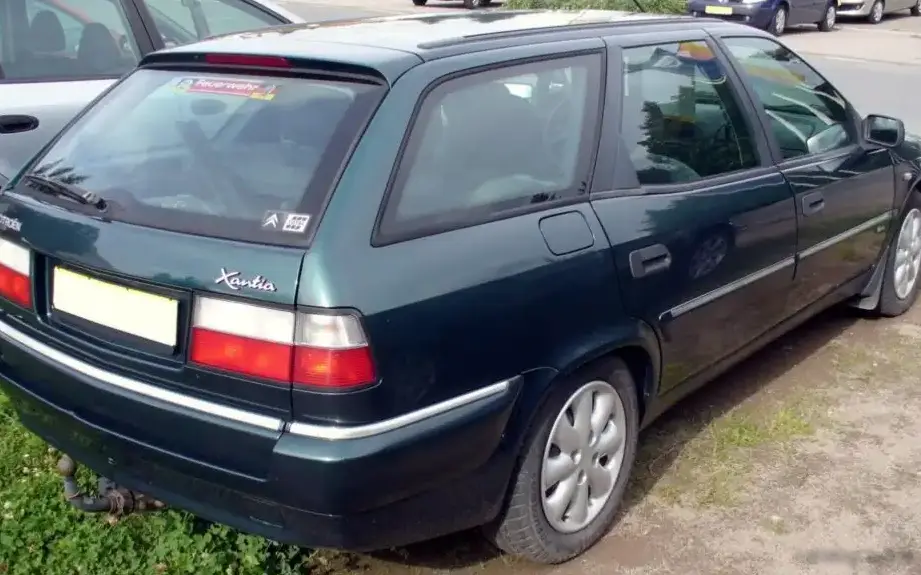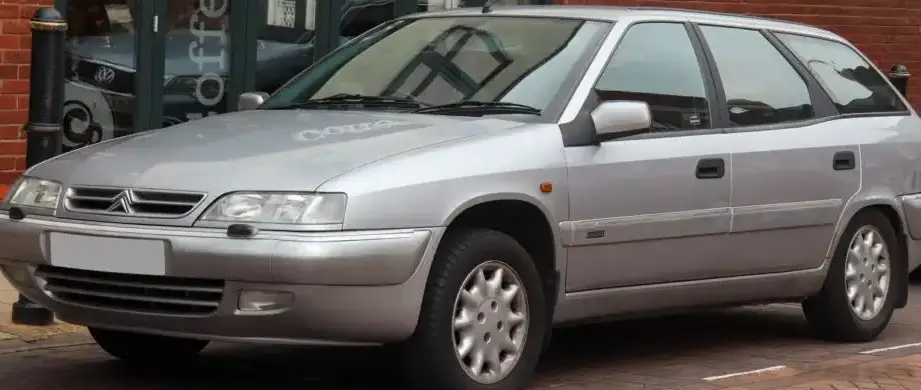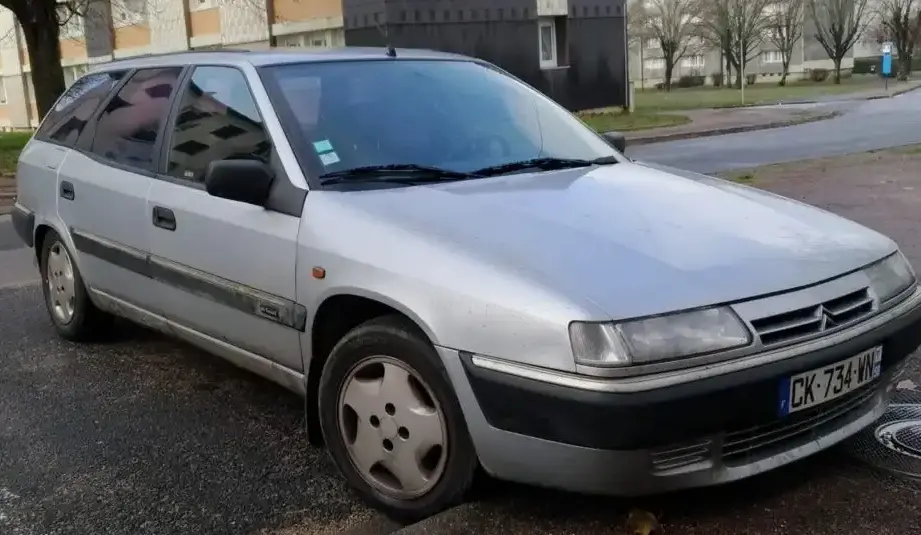
The Citroën Xantia Break 1.8 i 16V, produced between 1995 and 1998, was a popular variant of the X1 series, Citroën’s large family car. Positioned as a mid-range offering within the Xantia Break (estate) lineup, it provided a balance between performance, fuel economy, and practicality. The Xantia, launched in 1993, was intended as a replacement for the BX, offering a more modern and refined driving experience while retaining Citroën’s signature hydropneumatic suspension. The Break body style, a station wagon, further enhanced the Xantia’s appeal to families and those requiring substantial cargo space. This particular 1.8L 16V engine paired with an automatic transmission aimed to provide comfortable and convenient transportation for a broad customer base.
Technical Specifications
| Brand | Citroen |
| Model | Xantia |
| Generation | Xantia Break (X1) |
| Type (Engine) | 1.8 i 16V (110 Hp) |
| Start of production | 1995 |
| End of production | 1998 |
| Powertrain Architecture | Internal Combustion engine |
| Body type | Station wagon (estate) |
| Seats | 5 |
| Doors | 5 |
| Fuel consumption (combined) | 7.8 l/100 km |
| Fuel consumption (US mpg) | 30.2 |
| Fuel consumption (UK mpg) | 36.2 |
| Fuel consumption (km/l) | 12.8 |
| Fuel Type | Petrol (Gasoline) |
| Acceleration 0 – 100 km/h | 14.4 sec |
| Acceleration 0 – 62 mph | 14.4 sec |
| Acceleration 0 – 60 mph | 13.7 sec |
| Maximum speed | 194 km/h (120.55 mph) |
| Weight-to-power ratio | 11.7 kg/Hp |
| Weight-to-torque ratio | 8.3 kg/Nm |
| Power | 110 Hp @ 5500 rpm |
| Power per litre | 62.4 Hp/l |
| Torque | 155 Nm @ 4250 rpm (114.32 lb.-ft. @ 4250 rpm) |
| Engine layout | Front, Transverse |
| Engine Model/Code | LFY XU7JP4 |
| Engine displacement | 1762 cm3 (107.52 cu. in.) |
| Number of cylinders | 4 |
| Engine configuration | Inline |
| Cylinder Bore | 83 mm (3.27 in.) |
| Piston Stroke | 81.4 mm (3.2 in.) |
| Compression ratio | 10.4:1 |
| Number of valves per cylinder | 4 |
| Fuel injection system | Multi-port manifold injection |
| Engine aspiration | Naturally aspirated |
| Valvetrain | DOHC |
| Engine oil capacity | 4.25 l (4.49 US qt | 3.74 UK qt) |
| Coolant capacity | 7.5 l (7.93 US qt | 6.6 UK qt) |
| Kerb Weight | 1285 kg (2832.94 lbs.) |
| Max. weight | 1870 kg (4122.64 lbs.) |
| Max load | 585 kg (1289.7 lbs.) |
| Trunk (boot) space – minimum | 512 l (18.08 cu. ft.) |
| Trunk (boot) space – maximum | 1144 l (40.4 cu. ft.) |
| Fuel tank capacity | 65 l (17.17 US gal | 14.3 UK gal) |
| Length | 4660 mm (183.46 in.) |
| Width | 1755 mm (69.09 in.) |
| Height | 1416 mm (55.75 in.) |
| Wheelbase | 2740 mm (107.87 in.) |
| Front track | 1488 mm (58.58 in.) |
| Rear track | 1442 mm (56.77 in.) |
| Front overhang | 931 mm (36.65 in.) |
| Rear overhang | 989 mm (38.94 in.) |
| Drivetrain Architecture | Front wheel drive |
| Number of gears | 5 |
| Gearbox type | Automatic transmission |
| Front suspension | Hydro-pneumatic |
| Rear suspension | Hydro-pneumatic |
| Front brakes | Ventilated discs |
| Rear brakes | Disc |
| Assisting systems | ABS (Anti-lock braking system) |
| Steering type | Steering rack and pinion |
| Power steering | Hydraulic |
| Tires size | 185/65 R14 |
Powertrain & Engine Architecture
The Citroën Xantia Break 1.8 i 16V utilized the XU7JP4 engine, a 1.8-liter inline-four cylinder gasoline engine. This engine was part of the XU series, developed jointly by Peugeot and Renault (though primarily used by Peugeot and Citroën). The “16V” designation indicates a four-valve-per-cylinder configuration, enhancing breathing and contributing to improved power output. Fuel delivery was managed by a multi-port fuel injection system, providing precise fuel metering for optimal combustion. The engine featured a double overhead camshaft (DOHC) valvetrain, further optimizing valve timing and engine efficiency. The automatic transmission paired with this engine was typically a four-speed unit, designed to provide smooth and effortless gear changes. While not known for blistering acceleration, the combination was geared towards comfortable cruising and ease of driving.
Driving Characteristics
The 1.8L 16V automatic Xantia Break offered a comfortable and refined driving experience. With 110 horsepower, acceleration was adequate for everyday driving, but it wasn’t a particularly sporty vehicle. The automatic transmission, while convenient, did slightly diminish the engine’s responsiveness compared to the available five-speed manual. The gear ratios were optimized for fuel efficiency and smooth cruising, rather than rapid acceleration. The Xantia’s defining characteristic, however, was its hydropneumatic suspension. This system provided an exceptionally smooth ride, absorbing bumps and imperfections in the road with remarkable ease. The suspension also allowed for self-leveling, maintaining a consistent ride height regardless of load. Compared to the more powerful 2.0L 16V or V6 models, the 1.8L automatic felt less eager to accelerate, but it offered a more relaxed and fuel-efficient driving experience.
Equipment & Trim Levels
The 1.8 i 16V automatic Xantia Break typically came equipped with a reasonable level of standard features. These included power steering, central locking, electric front windows, and an AM/FM radio. Interior upholstery was generally cloth, with options for upgraded materials available. Higher trim levels could add features like air conditioning, a sunroof, and upgraded audio systems. The dashboard layout was functional and ergonomically designed, with easy-to-read gauges and intuitive controls. Optional extras included alloy wheels, rear headrests, and a trip computer.
Chassis & Braking
The Xantia Break featured independent suspension on all four wheels, utilizing Citroën’s renowned hydropneumatic system. This system not only provided a comfortable ride but also allowed for adjustable ride height. The front brakes were ventilated discs, providing ample stopping power, while the rear brakes were typically solid discs. Anti-lock Braking System (ABS) was standard, enhancing safety and control during emergency braking. The steering was a rack-and-pinion system with hydraulic power assistance, offering precise and responsive steering feel.
Market Reception & Comparison
The Xantia Break 1.8 i 16V automatic was generally well-received by automotive critics as a practical and comfortable family car. It was praised for its smooth ride, spacious interior, and fuel efficiency. However, some critics noted that the engine lacked the punch of the more powerful alternatives. Compared to the 2.0L 16V or V6 models, the 1.8L offered lower running costs and a more relaxed driving experience, making it an attractive option for those prioritizing comfort and economy. Fuel economy was a strong point, averaging around 30-36 mpg in real-world driving conditions. Reliability was generally good, although the hydropneumatic suspension required periodic maintenance.
Legacy
The Citroën Xantia Break 1.8 i 16V remains a fondly remembered vehicle among enthusiasts. While the hydropneumatic suspension can require specialized maintenance, the powertrain itself is generally considered reliable. Today, well-maintained examples are becoming increasingly sought after by classic car collectors and Citroën aficionados. The Xantia’s unique blend of comfort, practicality, and innovative technology continues to appeal to those seeking a distinctive and rewarding driving experience. The 1.8L automatic variant, while not the most powerful, offers a particularly accessible entry point into the world of Citroën’s iconic hydropneumatic suspension.