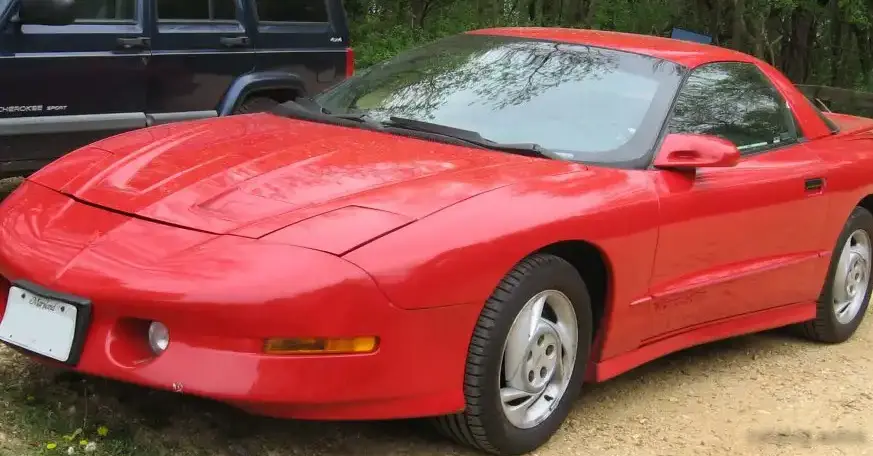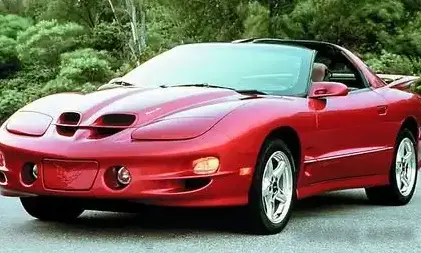
The Pontiac Firebird IV Cabrio 3.8 i V6, produced from 1995 to 2002, represented a significant iteration of the iconic Firebird lineage. Falling within the fourth generation (1993-2002) of the Firebird, the Cabriolet offered open-air motoring while retaining the sporty character of the coupe. This particular variant, equipped with the 3.8-liter V6 engine and a four-speed automatic transmission, occupied a middle ground in the Firebird lineup, offering a balance between performance and affordability. It served as a more accessible alternative to the higher-performance V8-powered models, appealing to buyers seeking a stylish and comfortable grand tourer.
Technical Specifications
| Brand | Pontiac |
| Model | Firebird |
| Generation | Firebird IV Cabrio |
| Type (Engine) | 3.8 i V6 (203 Hp) |
| Start of production | 1995 |
| End of production | 2002 |
| Powertrain Architecture | Internal Combustion engine |
| Body type | Cabriolet |
| Seats | 4 |
| Doors | 2 |
| Fuel consumption (urban) | 12.4 l/100 km (19 US mpg) |
| Fuel consumption (extra urban) | 8.4 l/100 km (28 US mpg) |
| Fuel Type | Petrol (Gasoline) |
| Maximum speed | 200 km/h (124.27 mph) |
| Weight-to-power ratio | 7.8 kg/Hp |
| Weight-to-torque ratio | 5.1 kg/Nm |
| Power | 203 Hp @ 5200 rpm |
| Power per litre | 53.5 Hp/l |
| Torque | 312 Nm @ 3600 rpm (230.12 lb.-ft. @ 3600 rpm) |
| Engine layout | Front, Longitudinal |
| Engine Model/Code | L36 |
| Engine displacement | 3791 cm3 (231.34 cu. in.) |
| Number of cylinders | 6 |
| Engine configuration | V-engine |
| Cylinder Bore | 96.5 mm (3.8 in.) |
| Piston Stroke | 86.4 mm (3.4 in.) |
| Compression ratio | 9.4:1 |
| Number of valves per cylinder | 2 |
| Fuel injection system | Multi-port manifold injection |
| Engine aspiration | Naturally aspirated engine |
| Engine oil capacity | 4.3 l (4.54 US qt | 3.78 UK qt) |
| Coolant | 11.8 l (12.47 US qt | 10.38 UK qt) |
| Kerb Weight | 1585 kg (3494.33 lbs.) |
| Trunk (boot) space – minimum | 365 l (12.89 cu. ft.) |
| Trunk (boot) space – maximum | 955 l (33.73 cu. ft.) |
| Fuel tank capacity | 59 l (15.59 US gal | 12.98 UK gal) |
| Length | 4920 mm (193.7 in.) |
| Width | 1890 mm (74.41 in.) |
| Height | 1340 mm (52.76 in.) |
| Wheelbase | 2570 mm (101.18 in.) |
| Front track | 1540 mm (60.63 in.) |
| Rear (Back) track | 1540 mm (60.63 in.) |
| Drivetrain Architecture | Rear wheel drive |
| Number of gears and type of gearbox | 4 gears, automatic transmission |
| Front suspension | Spring Strut |
| Rear suspension | Coil spring |
| Front brakes | Ventilated discs |
| Rear brakes | Ventilated discs |
| Assisting systems | ABS (Anti-lock braking system) |
| Steering type | Steering rack and pinion |
| Power steering | Hydraulic Steering |
| Tires size | 215/60 R16 |
Powertrain & Engine Architecture
The heart of the Firebird IV Cabrio 3.8 i V6 was the 3.8-liter (3791 cc) L36 V6 engine. This engine, a member of the GM 3800 series, was known for its durability and smooth operation. It featured a 90-degree V-configuration, two valves per cylinder, and a multi-port fuel injection system. The L36 produced 203 horsepower at 5200 rpm and 230 lb-ft of torque at 3600 rpm. The engine’s longitudinal mounting and rear-wheel-drive configuration were hallmarks of the Firebird’s sporting character. Paired with the engine was a four-speed automatic transmission (4T60E), chosen for its ease of use and suitability for cruising. This transmission featured electronic control for smoother shifts and improved fuel efficiency.
Driving Characteristics
The 3.8L V6 automatic Firebird offered a comfortable and refined driving experience. While not as overtly sporty as the V8-equipped models, it provided adequate acceleration for everyday driving and highway cruising. The automatic transmission, while smooth, did result in some power loss compared to the available five-speed manual. The gear ratios were tuned for fuel economy and relaxed cruising, rather than aggressive acceleration. The 0-60 mph time was typically in the 7.5-8.5 second range, making it competitive with other personal luxury cars of the era. The rear-wheel-drive layout contributed to balanced handling, although the relatively soft suspension tuning prioritized ride comfort over sharp cornering.
Equipment & Trim Levels
The Firebird IV Cabrio 3.8 i V6 typically came standard with features such as air conditioning, power windows and locks, a premium sound system, and cruise control. Interior upholstery was usually cloth, though leather was available as an option. The dashboard featured analog gauges and a center console with controls for the audio system and climate control. Optional extras included a power-adjustable driver’s seat, upgraded sound systems, and a removable hardtop for increased weather protection. The Cabriolet trim generally included specific badging and styling cues to differentiate it from the coupe.
Chassis & Braking
The Firebird IV Cabrio utilized a unibody construction for rigidity. The front suspension employed a strut design, while the rear featured a coil-spring setup. The braking system consisted of ventilated discs on all four wheels, providing adequate stopping power for the vehicle’s weight. An Anti-lock Braking System (ABS) was standard, enhancing safety and control during emergency braking situations. The Cabriolet’s chassis was reinforced to compensate for the lack of a fixed roof, maintaining structural integrity and minimizing body flex.
Market Reception & Comparison
The Firebird IV Cabrio 3.8 i V6 was generally well-received by automotive critics as a stylish and affordable alternative to more expensive sports cars. It was praised for its comfortable ride, smooth engine, and attractive styling. However, some reviewers noted that the automatic transmission dulled the driving experience compared to the manual transmission. Compared to the Firebird V8 models, the 3.8L V6 offered better fuel economy (around 19 mpg city and 28 mpg highway) but significantly less performance. Against competitors like the Ford Mustang Convertible and Chevrolet Camaro Convertible, the Firebird offered a unique blend of style and value.
Legacy
The Pontiac Firebird IV Cabrio 3.8 i V6 remains a popular choice among enthusiasts and collectors today. The 3800 V6 engine is known for its reliability and longevity, making these Firebirds relatively easy and inexpensive to maintain. Parts availability is generally good, and the engine is known to withstand high mileage with proper care. While not as highly sought after as the V8-powered models, the 3.8L Cabriolet offers a compelling combination of style, comfort, and affordability, making it a desirable classic car for those seeking a taste of American automotive history.