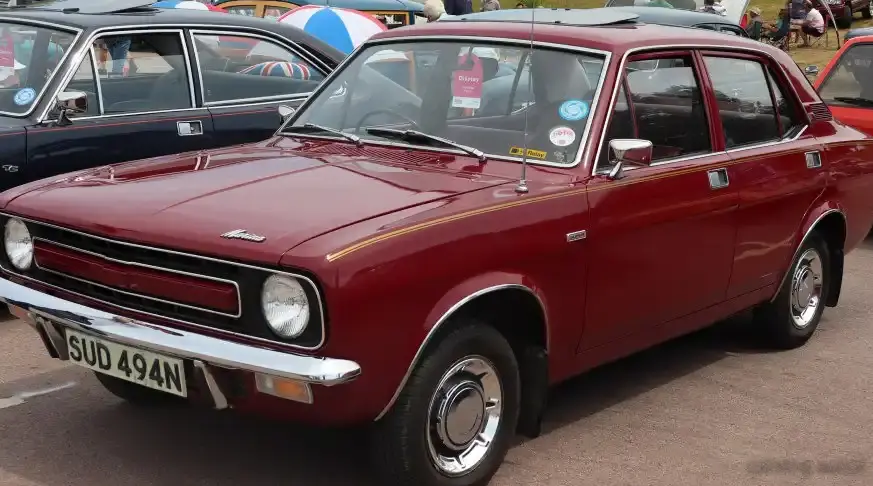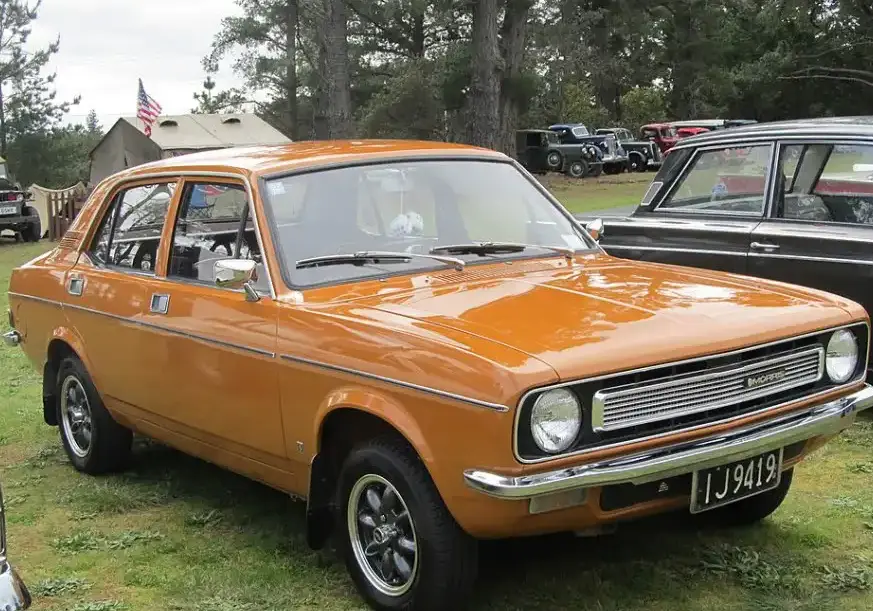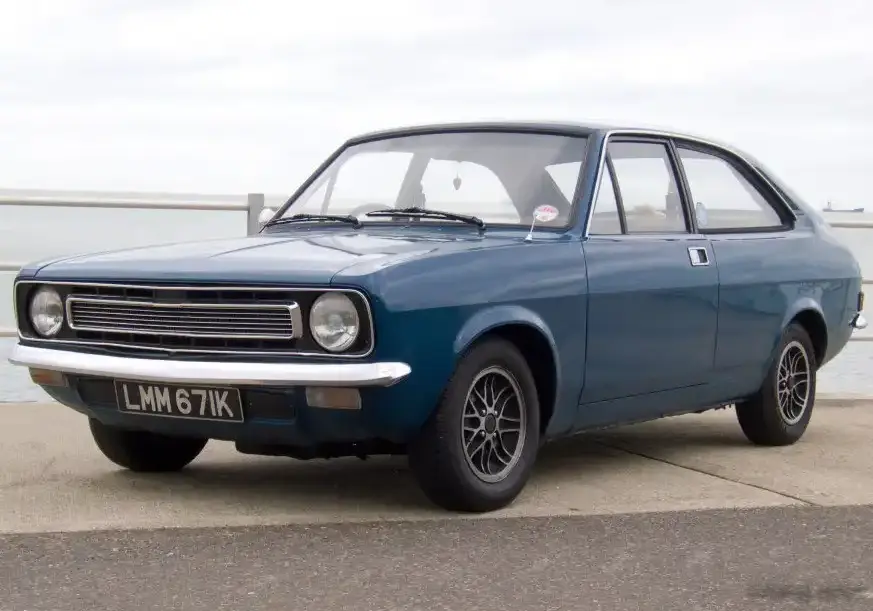
The Morris Marina Coupe I 1800 TC, produced between 1971 and 1975, represented a significant attempt by British Leyland to modernize and consolidate its offerings in the medium-sized family car market. Positioned as a stylish coupe variant of the broader Marina range, the 1800 TC (Touring Coupe) aimed to appeal to buyers seeking a more sporting aesthetic than the standard saloon. It was built during a period of considerable upheaval for British Leyland, and its design and engineering reflect both the ambitions and the compromises of the era. The Marina itself was conceived as a ‘universal’ car, intended to replace a multitude of aging models across the BL portfolio, including the Morris Minor, Austin Cambridge, and Wolseley 18/88. The Coupe, and specifically the 1800 TC, occupied a mid-range position within the Marina lineup, offering a balance between performance, equipment, and price.
Technical Specifications
| Brand | Morris |
| Model | Marina |
| Generation | Marina Coupe I |
| Type (Engine) | 1800 TC (95 Hp) |
| Start of Production | 1971 |
| End of Production | 1975 |
| Powertrain Architecture | Internal Combustion Engine |
| Body Type | Coupe |
| Fuel Type | Petrol (Gasoline) |
| Power | 95 Hp |
| Engine Aspiration | Naturally Aspirated |
Powertrain & Engine Architecture
The heart of the Marina 1800 TC was the B-Series engine, a 1798cc (approximately 1.8 liters) inline-four cylinder unit. This engine, while a long-standing design within the British Leyland family, had undergone several revisions over the years. In the 1800 TC application, it featured a single Zenith 36mm carburetor, a relatively simple fuel delivery system for the time. The engine utilized a pushrod valvetrain, with two valves per cylinder, and was known for its robust construction, though not for its particularly high performance. The 95 horsepower output was achieved at 5,000 rpm, with peak torque of around 109 lb-ft at 3,000 rpm. The transmission was a Borg Warner Type 35 automatic, a three-speed unit. This automatic transmission, while providing convenience, was often criticized for its somewhat sluggish shifts and tendency to hunt for gears, particularly on undulating roads. The automatic gearbox was a key differentiator for the TC model, aimed at buyers prioritizing ease of driving over outright performance. The engine was mounted longitudinally in the front of the car, driving the rear wheels.
Driving Characteristics
The driving experience in the Marina 1800 TC was generally considered comfortable, but not particularly engaging. The automatic transmission, while smooth in operation, contributed to a noticeable lack of responsiveness compared to the manual transmission versions of the 1800. Acceleration was adequate for the time, with a 0-60 mph time of around 12-13 seconds, but it lacked the punch of some of its competitors. The gear ratios in the Borg Warner automatic were spaced to prioritize fuel economy and cruising comfort rather than outright acceleration. The suspension, consisting of independent front suspension with coil springs and a live axle rear suspension with leaf springs, provided a reasonably compliant ride, but the car was prone to body roll in corners. Steering was by a recirculating ball system, which offered reasonable precision but lacked the feel of more modern steering technologies. Compared to the 1.3-liter Marina models, the 1800 TC offered significantly more power and torque, making it more suitable for longer journeys and overtaking maneuvers. However, it wasn’t as nimble or fuel-efficient as the smaller-engined variants.
Equipment & Trim Levels
The 1800 TC was positioned as a relatively well-equipped version of the Marina Coupe. Standard features included reclining front seats, a wood-rimmed steering wheel, and a comprehensive instrument panel with gauges for fuel level, coolant temperature, oil pressure, and ammeter. The interior trim was typically cloth upholstery, available in a range of colors. The dashboard layout was functional but somewhat dated, even for the early 1970s. Optional extras included a vinyl roof, a radio, and heated rear window. The TC trim level also featured distinctive exterior styling cues, such as chrome trim around the windows and on the bumpers, and often came with upgraded wheel covers. The overall interior ambiance was intended to be more refined than the basic Marina models, appealing to buyers seeking a touch of sophistication.
Chassis & Braking
The Marina Coupe I utilized a body-on-frame construction, a relatively traditional approach for the time. The chassis was designed to provide a balance between strength and weight. The front suspension featured independent wishbones and coil springs, while the rear suspension employed a live axle with leaf springs. Braking was initially provided by Dunlop disc brakes on the front wheels and drum brakes on the rear. Later models saw the introduction of rear disc brakes on some variants, but the 1800 TC typically retained the drum brake setup at the rear. The braking system was hydraulic, with a dual-circuit master cylinder for added safety. The car’s overall weight, around 2,300 lbs, contributed to its moderate handling characteristics. Stabilizer bars were fitted to both the front and rear axles to help reduce body roll, but their effectiveness was limited by the car’s overall design.
Market Reception & Comparison
The Morris Marina Coupe I 1800 TC received a mixed reception from automotive critics. While the styling was generally praised as attractive and modern, the car was often criticized for its lack of refinement, its somewhat agricultural engine, and the sluggishness of the automatic transmission. Compared to rivals such as the Ford Cortina Coupe and the Vauxhall Firenza, the Marina 1800 TC was often seen as being less sophisticated and less enjoyable to drive. However, it was generally more affordable than many of its competitors. Fuel economy was reasonable for the time, averaging around 25-30 mpg. Reliability was a mixed bag, with some owners reporting frequent mechanical issues, while others experienced relatively trouble-free ownership. The automatic transmission, in particular, was a common source of complaints. The 1800 TC offered a compromise between the more economical 1.3-liter models and the higher-performance 1.8 TC with a manual gearbox.
Legacy
The Morris Marina, and the 1800 TC variant, ultimately proved to be a flawed but important car in the history of British Leyland. While it didn’t achieve the sales success that the company had hoped for, it represented a significant attempt to modernize its product range. Today, the Marina 1800 TC is a relatively rare sight on the roads, and well-maintained examples are becoming increasingly sought after by classic car enthusiasts. The B-Series engine, while not known for its high performance, is relatively easy to maintain and parts are still readily available. The automatic transmission, however, remains a potential weak point. The car’s legacy lies in its role as a symbol of a bygone era of British automotive manufacturing, and as a reminder of the challenges faced by British Leyland during a period of intense competition and economic uncertainty. The 1800 TC, in particular, represents a specific attempt to cater to a market segment seeking a stylish and comfortable coupe, even if it didn’t quite live up to the expectations of all its potential buyers.