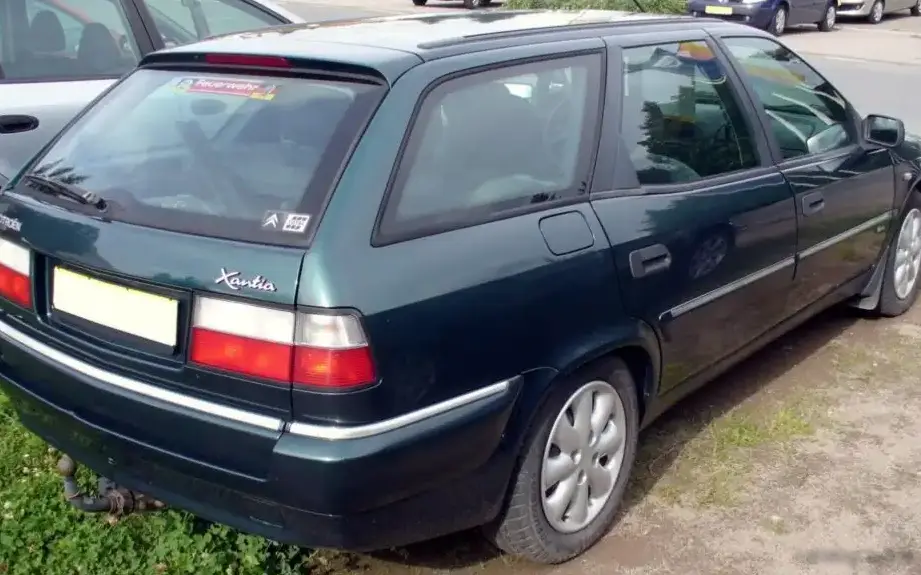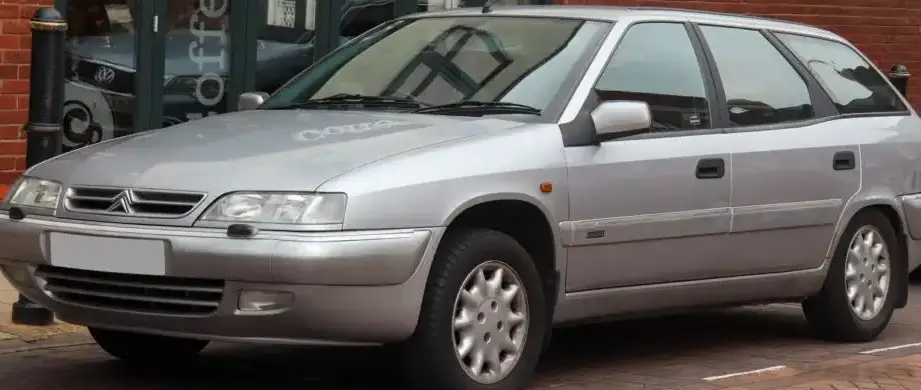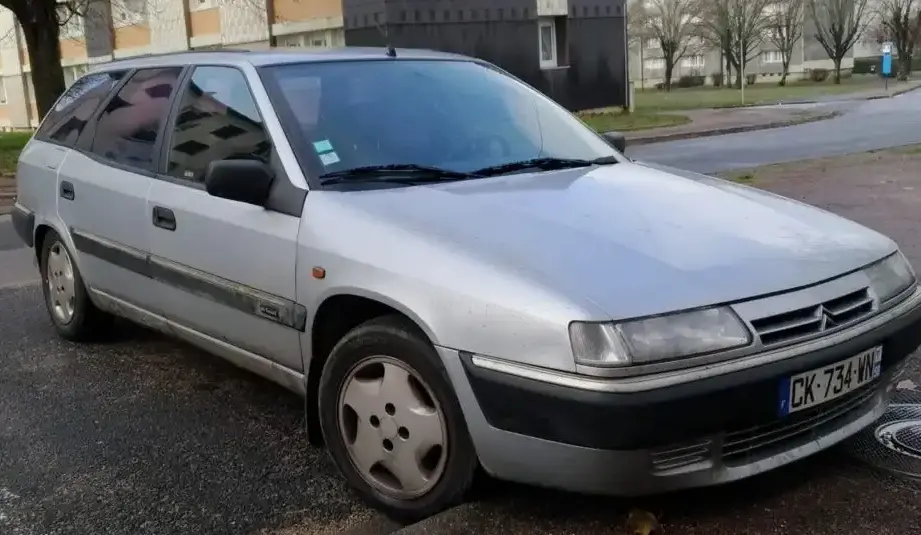
The Citroen Xantia Break 2.0i 16V, produced between 1995 and 1998, represents a compelling blend of practicality, comfort, and performance within the Xantia (X1) range. As a station wagon (estate) variant, it catered to buyers needing increased cargo capacity without sacrificing the innovative hydropneumatic suspension and distinctive styling that characterized the Xantia. This particular engine and trim level occupied a mid-range position in the Xantia Break lineup, offering a step up in power and refinement compared to the base 1.6-liter models, while remaining more accessible than the flagship 2.1 TD or V6 options. The Xantia itself was a significant vehicle for Citroen, embodying the company’s commitment to advanced technology and comfortable ride quality, and served as a key competitor in the European mid-size family car segment.
Technical Specifications
| Brand | Citroen |
| Model | Xantia |
| Generation | Xantia Break (X1) |
| Type (Engine) | 2.0 i 16V (132 Hp) |
| Start of production | 1995 |
| End of production | 1998 |
| Powertrain Architecture | Internal Combustion engine |
| Body type | Station wagon (estate) |
| Seats | 5 |
| Doors | 5 |
| Fuel consumption (urban) | 11.5 l/100 km (20.5 US mpg, 24.6 UK mpg, 8.7 km/l) |
| Fuel consumption (extra urban) | 6.3 l/100 km (37.3 US mpg, 44.8 UK mpg, 15.9 km/l) |
| Fuel consumption (combined) | 8.6 l/100 km (27.4 US mpg, 32.8 UK mpg, 11.6 km/l) |
| Fuel Type | Petrol (Gasoline) |
| Acceleration 0 – 100 km/h | 11.4 sec |
| Acceleration 0 – 62 mph | 11.4 sec |
| Acceleration 0 – 60 mph | 10.8 sec |
| Maximum speed | 198 km/h (123.03 mph) |
| Weight-to-power ratio | 10.2 kg/Hp, 97.6 Hp/tonne |
| Weight-to-torque ratio | 7.5 kg/Nm, 133.1 Nm/tonne |
| Power | 132 Hp @ 5500 rpm |
| Power per litre | 66.1 Hp/l |
| Torque | 180 Nm @ 4200 rpm (132.76 lb.-ft. @ 4200 rpm) |
| Engine layout | Front, Transverse |
| Engine Model/Code | RFV XU10J4R |
| Engine displacement | 1998 cm3 (121.93 cu. in.) |
| Number of cylinders | 4 |
| Engine configuration | Inline |
| Cylinder Bore | 86 mm (3.39 in.) |
| Piston Stroke | 86 mm (3.39 in.) |
| Compression ratio | 10.4:1 |
| Number of valves per cylinder | 4 |
| Fuel injection system | Multi-port manifold injection |
| Engine aspiration | Naturally aspirated engine |
| Valvetrain | DOHC |
| Engine oil capacity | 4.25 l (4.49 US qt | 3.74 UK qt) |
| Coolant | 8 l (8.45 US qt | 7.04 UK qt) |
| Kerb Weight | 1352 kg (2980.65 lbs.) |
| Max. weight | 1960 kg (4321.06 lbs.) |
| Max load | 608 kg (1340.41 lbs.) |
| Trunk (boot) space – minimum | 512 l (18.08 cu. ft.) |
| Trunk (boot) space – maximum | 1144 l (40.4 cu. ft.) |
| Fuel tank capacity | 65 l (17.17 US gal | 14.3 UK gal) |
| Max. roof load | 75 kg (165.35 lbs.) |
| Permitted trailer load with brakes (12%) | 1200 kg (2645.55 lbs.) |
| Permitted trailer load without brakes | 675 kg (1488.12 lbs.) |
| Length | 4660 mm (183.46 in.) |
| Width | 1755 mm (69.09 in.) |
| Height | 1416 mm (55.75 in.) |
| Wheelbase | 2740 mm (107.87 in.) |
| Front track | 1488-1502 mm (58.58 – 59.13 in.) |
| Rear (Back) track | 1464 mm (57.64 in.) |
| Front overhang | 931 mm (36.65 in.) |
| Rear overhang | 989 mm (38.94 in.) |
| Drivetrain Architecture | The Internal combustion engine (ICE) drives the front wheels of the vehicle. |
| Drive wheel | Front wheel drive |
| Number of gears and type of gearbox | 5 gears, manual transmission |
| Front suspension | Independent type McPherson, Wishbone |
| Rear suspension | Hydro-pneumatic element, Trailing arm |
| Front brakes | Ventilated discs |
| Rear brakes | Disc |
| Assisting systems | ABS (Anti-lock braking system) |
| Steering type | Steering rack and pinion |
| Power steering | Hydraulic Steering |
| Tires size | 185/65 R15 |
Powertrain & Engine Architecture
The heart of the Xantia Break 2.0i 16V is the RFV engine, a member of the Peugeot-Citroen (PSA) XU10J4R family. This 1998cc, inline-four cylinder engine features a double overhead camshaft (DOHC) valvetrain with four valves per cylinder, contributing to its relatively high output for its displacement. Fuel delivery is managed by a multi-port fuel injection system, ensuring precise fuel metering for optimal combustion. The engine produces 132 horsepower at 5500 rpm and 180 Nm (132.76 lb-ft) of torque at 4200 rpm. The engine’s design prioritized smooth operation and reasonable fuel efficiency, rather than outright performance. The Xantia Break 2.0i 16V was typically paired with a five-speed manual transmission, although a four-speed automatic transmission was also available. The automatic, while offering convenience, did impact acceleration and fuel economy compared to the manual version.
Driving Characteristics
The 2.0i 16V engine in the Xantia Break provided a comfortable and capable driving experience. Acceleration to 60 mph took around 10.8 seconds, and top speed was approximately 123 mph. While not a sports car, the engine offered sufficient power for everyday driving and overtaking maneuvers. The automatic transmission, while smooth, resulted in slightly slower acceleration times than the manual counterpart. The Xantia’s defining characteristic, however, remained its hydropneumatic suspension. This system provided an exceptionally smooth and comfortable ride, absorbing bumps and imperfections in the road with ease. The suspension also allowed for self-leveling, maintaining a consistent ride height regardless of load. The steering was light and precise, contributing to a relaxed driving experience.
Equipment & Trim Levels
The Xantia Break 2.0i 16V typically came equipped with a reasonable level of standard features. These included power steering, central locking, electric front windows, and an adjustable steering column. Higher trim levels added features such as air conditioning, alloy wheels, a sunroof, and upgraded interior upholstery. The interior was generally well-appointed, with comfortable seats and a functional dashboard layout. Optional extras included a CD changer, leather seats, and a more advanced audio system.
Chassis & Braking
The Xantia Break featured an independent McPherson strut front suspension and a hydro-pneumatic trailing arm rear suspension. This combination provided excellent ride quality and handling. The braking system consisted of ventilated discs on the front wheels and discs on the rear, offering adequate stopping power. Anti-lock braking system (ABS) was standard, enhancing safety. The Xantia’s chassis was designed to prioritize comfort and stability, rather than sporty handling.
Market Reception & Comparison
The Xantia Break 2.0i 16V was generally well-received by automotive critics. It was praised for its comfortable ride, spacious interior, and practical estate car body style. However, some critics noted that the engine, while adequate, lacked the punch of some of its competitors. Compared to the 1.6-liter Xantia Break, the 2.0i 16V offered a noticeable improvement in performance. Compared to the more expensive 2.1 TD or V6 models, it provided a more affordable option with reasonable fuel economy. The Xantia competed with other mid-size estate cars such as the Ford Mondeo Estate, Vauxhall/Opel Vectra Estate, and Volvo V70.
Legacy
The Citroen Xantia Break 2.0i 16V has proven to be a relatively reliable vehicle, particularly when well-maintained. The XU10J4R engine is known for its durability, although regular servicing is essential. The hydropneumatic suspension requires periodic maintenance and can be expensive to repair if neglected. Today, the Xantia Break 2.0i 16V is a popular choice among classic car enthusiasts and those seeking a comfortable and practical family car. Its unique styling and innovative suspension system continue to set it apart from more conventional vehicles. Finding well-preserved examples can be challenging, but the Xantia Break 2.0i 16V remains a testament to Citroen’s engineering ingenuity and commitment to driver comfort.